Primarily a writing exercise, this dream journal-inspired blog is a quiet introspective sojourn into the process that we traverse in going from private dream to public art. I see our dreaming as an internalized mythmaking. As I philosophize and expressively exhibit dreams, both private and public, I encourage and delight in creative language as a way to practice experiential metaphors through a “public dreaming." Writing Theory: Creative Dream Fiction
Showing posts with label youth. Show all posts

Monday, 11 November 2013

Fear, Incorporated: The Transformative Theatrics of Living


"Never ever forget that you are the future of this country…You mustn't be frightened of life, it's a very exciting life because you can make your dreams come true" Pieter-Dirk Uys, from the documentary Darling! The Pieter-Dirk Uys Story

“In the end it will be up to audiences each time in the event because they will determine the stories,” says Diamond. “My hope is that we have the courage, in a way, not to look at how to change that thing out there, but how to change ourselves.”

That self-reflexive and socially conscious attitude has defined the theatre company right from its humble beginnings in Vancouver in 1981, and it continues to exemplify creative leadership around the most sensitive topics in contemporary public debate. Diamond’s first prominent role in the company, as associate director of the 1982 production Right to Fight, addressed affordable housing. Later, Diamond wrote The Enemy Within, which satirized B.C. politics in 1986. Two years later, he had his directorial debut for the company with one of its Power Plays, which use theatre games and exercises to explore social issues and create community-specific theatre.

Corporations in Our Heads is one of Diamond’s more experimental works in his effort to reach out to community through art. Based on the work of Brazilian theatre visionary Augusto Boal, creator of Theatre for the Oppressed, Diamond’s new work is an original interpretation of Boal’s Cops in the Head, but takes an entirely different approach. “The rules of the Theatre of the Oppressed, I’ve thrown them right out the window,” says Diamond.

The production asks Calgary residents to reflect on, share, act on and change the dominant messages that influence society . “The reason to do the thing for me is there’s a lot of good work happening out there on how the messages of corporations affect our consuming,” says Diamond. “But I don’t think we’re doing a lot of talking about how those messages affect our own images, not just of ourselves but of our relationships with each other. And it’s at the relationship level, in fact, that our consuming originates.

Corporations in Our Heads will be facilitated by (or “joked by,” as Theatre for Living puts it) Diamond himself, who incites the audience to participate. “The power of it, for me, is that it really is a democratic thing,” he says. “While we are framing the general subject matter, Corporations in Our Heads, the actual content really is going to be determined by the people who enter the room that night. And nobody — not me, not the sponsoring groups, nobody — is going to be able to predetermine the content.”

This article, titled, New theatre work examines corporate psychology, continues where it was originally published on November 7 in Fast Forward Weekly. The piece is a continuity on the theme presented by Pieter-Dirk Uys and his arts activism in South Africa, as David Diamond represents a similar following in social consciousness and public engagement in Canada.
__________
Chinatown Delight
_________
Following the trend of the album, Sketches of Style, this sounding is an amalgamation of three instrumental improvisations harmonized and syncopated together with a synthetic rhythm. The beat creeps in, reminding the listener of the abstract organ that touches on soul, as the reeded music blends with darbuka.

Originally published in a comic, the poem that led to the musical expression of the same title, "find Inspiration!" first appeared in Maad Sheep, an illustrated print publication of cartoon and literature that I once found while sitting in an open-air cafe. The issue in which my piece was featured was displayed at a Comic Convention in Canada.

Lyrically, the piece is a foray into the bitter savagery that cooks the great mass of minds; all who are saturated by the consumptive bread of modern life. The challenge of simply being creative in confrontation with the overwhelming burst and pop mirrorscape of infinite self-deception is the subject and of this sketch of style.

The rest of the chapbook is a fourteen page collection of poetry on the subject of gaining respect and appreciation for the superhuman qualities of nature, as more than grandiose, and more than human intellect and possession could ever capture or convey. Many are observational, and drawn from insights into the ground of being as the naked soul of humanity.

Monday, 20 May 2013

Dreamers Reconcile with Harsh Truths: S. Sudan and the Music of Memory


One thing that keeps me pushing these painful stories; the dreams I have. Sometimes, like, the voices of the dead that I have seen would tell me don't give up, keep on going, because sometimes I feel like stopping and not doing it, because I didn't know what I was putting myself into. (Emmanuel Jal, 2009)

What are your hopes and dreams?

I want to fly an airplane.

What else?

I want to be able to study in the daytime. And in the morning. And I want a day that I can just live…so I can build my house…where there aren't any problems that could destroy it.

Emmanuel Jal, age 9 (War Child)

On April 8, the Peace and Reconciliation Conference in Juba, the capital of South Sudan, began an unprecedented step forward in the nation’s history. On Monday April 15, South Sudan President Salva Kiir Mayardit suspended the conference indefinitely. Besides the $885 million contributed by the Canadian federal government to Sudan for humanitarian assistance between 2006-2012, many of the 4 million plus South Sudanese displaced have resettled in Canada to remain active in community rehabilitation. Activist groups, both based in South Sudanese communities as well as larger Canadian social organizations continue to sustain the meaning of reconciliation not only as an example for South Sudan, but for the globe.

            The most pressing issue with regard to reconciliation in South Sudan is creating an inclusive society where larger social participation is grassroots-oriented. In a country with one of the lowest literacy rates in the world, with over sixty unique spoken languages, democracy is a precarious notion for most. In an open letter to South Sudanese Vice-President, Dr. Riek Machar, David Mabior Atem of New Sudan Vision wrote:

Healing those long inflicted wounds against one another cannot be dealt with in 3-4 days as well as top down approach instead of bottom up approach…Another added advantage of beginning at grassroots level is the flexibility of language (dialects), which can result into high interactive and productive engagement.

            Dr. Riek Machar launched the official opening of the conference, which trains 200 peace and reconciliation mobilizers. “The newest nation on earth has embarked on a journey of healing for the national reconciliation,” the Sudan Tribune noted. Dr. Machar had also been married to British aid worker Emma McCune. International recording artist Emmanuel Jal, winner of the 2013 Calgary Peace Prize, had been rescued from Waat, South Sudan by Emma McCune as a Lost Boy. Jal took refuge in Kenya, eventually leading him to the UK, and Canada. Emmanuel Jal’s acceptance of the Calgary Peace Prize on behalf of all South Sudanese marks an especially significant moment in the common reconciliation efforts of Canada and South Sudan.

            “He uses himself as an example in his storytelling of how hard and difficult and long it's taken for him to begin the process of healing and of reconciliation with his former enemies, and that's the story that he told,” Consortium for Peace Studies director George Melnyk told The Media Co-op. “He's also very careful to not critique the South Sudanese who made him a child soldier.” The Consortium awards the Calgary Peace Prize to global visionaries working towards peace, beginning with Hiroshima Mayor Tadatoshi Akiba in 2006. The Consortium is currently the only post-secondary Peace Studies initiative in Calgary.

            James Nguen, founder of Biluany Literacy and Water project, responded with deep concern in an Op-Ed piece in South Sudan News Agency, decrying the indefinite suspension of the Peace and Reconciliation Conference in Juba. “This unfortunate development shocked everyone in South Sudan and around the world. There were no further details why the project was suspended,” Nguen wrote to The Media Co-op via email. “If people reconciled, then there will be no petty tribal raids which the past 8 years cost South Sudan government and the international community millions of dollars.”

            Although the Second Sudanese Civil War, which ultimately led to an independent South Sudan, started in 1984, the world did not respond until 2004. The political situation in Sudan, and now in South Sudan as well, is very complex and is steeped in both European colonial history as well as Egyptian foreign policy. The legalities of genocide with regard to reconciliation have remained unparalleled in controversy ever since the United Nations adopted the Genocide Convention in 1948. “There was a genocide in Darfur, and there was genocide in South Sudan from the beginning,” James Nguen said to The Media Co-op. “In order to secure the CPA [Comprehensive Peace Agreement], they could not force Al-Bashir to step down without confidence that his successor would respect the CPA. Only one of the three agreements of the CPA was met, which included peace agreements with Abyei, secondly, and Blue Nile and Nuba Mountains as a third agreement.”

            The outstanding agreement to respect the right to self-determination with the people in the Nuba Mountains has especially intensified on the issue of genocide. Global activism in solidarity with the Nuba people has followed in the wake of the independence of South Sudan in 2011, including the End the Nuba Genocide Coalition. The only area not consulted in drawing the new national border, Abyei, is directly impacted and holds outstanding land disputes. Abyei territory is a priority for the Juba Conference.

            South Sudan’s independence was “the most significant redrawing of the map of Africa since the colonization,” Angel Batiste, Area Specialist with the Africa and Middle Eastern Division of the Library of Congress in Washington D.C., noted, before introducing the lecture, Cultural Heritage in South Sudan in November 2012. 

            During the Calgary Peace Prize events this March, Emmanuel Jal raised eyebrows concerning the latest news from South Kordofan, where another genocide in Sudan seems to be taking shape with unprecedented momentum. “UN people down in Sudan are saying there’s a possibility that in South Kordofan that the genocide there could be worse than in Darfur,” said Jal to an eager crowd at the University of Calgary on March 1, 2013.

            The diaspora is truly integral to peace activism for South Sudanese. “They actually support their family members more than even the government does,” Jal told The Media Co-op, referring to the diaspora of South Sudan and their role in the reconciliation efforts ahead. “If you’re educated, if you have a degree in whatever form, don’t go home to look like you’re going to be employed by the government. You go there as an employer. Go there and use the skills we have there and establish something, because the country is still new. Whatever you touch will prosper.”

            Since late last year over sixty genocide scholars and anti-genocide activists initiated a letter writing campaign in response to the genocide atrocities in the Blue Nile and Nuba Mountains. These letters have fallen on what South Sudan’s leading independent news source, South Sudan News Agency has called, “absolute silence”. The Atrocities Prevention Board (APB), founded by U.S. President Obama specifically in response to the lack of U.S. governmental initiative towards preventing crimes against humanity and genocide, became the most important, and also most unresponsive, target audience. This April, South Sudan News Agency published the latest letter, sent to U.S. Ambassador to the United Nations Susan Rice. An excerpt from the letter reads:

We never expected, though, to have our letter (and now letters) go unanswered… when we, scholars of genocide studies and human rights activists, fail to receive a reply to a letter that we first wrote back in December 2012 and have now sent five times to four different individuals affiliated with the APB, it, indeed, feels as if the APB and its focus/work is little more than “a sideline in our foreign policy.”

             Similarly, in recent news, the only head of state in the Americas to be tried for genocide crimes, U.S.-backed Guatemalan dictator Efraín Ríos Montt, saw amnesty on April 18 after the current Guatemalan president intervened to have the case annulled. “It was the first time that any nation had been able to use its domestic criminal courts to try a former head of state for genocide,” said investigative journalist Allan Nairn on Democracy Now!

            Despite ineffective government intervention, independent non-profit and charity organizations, spearheaded by leaders from South Sudan, continue to work towards a sustainable society through reconciliation efforts. Biluany Literacy and Water Project, a development initiative led by James Nguen based in Calgary, has been active for over three years in building wells and providing educational resources in South Sudan. “There is no sustainable infrastructure in South Sudan, and without a lot of assistance from the international community, trust cannot be rebuilt,” Nguen said to The Media Co-op. “The greatest struggle is to represent ourselves, to know who we are as one community. The war eroded our cultural values, our history, our society.” Nguen recently partnered with Gua Africa, the charity of Emmanuel Jal, to fund well development and to organize a conference in Canada to mirror the Peace and Reconciliation Conference in Juba.

            Since winning national independence, other organizations in the Calgary area, home to the predominant South Sudanese community in Canada, are working towards reconciliation. South Sudan Peace Building International Foundation Inc. (SSPBIF) is one among them. Secretary of the SSPBIF Kuir ë Garang is also a prolific multi-genre author of six books. “People in South Sudan tend to regard literature as ornamental, they don't see how it can help relate people, to help people find relations between one another, so they can get together and have mutual understanding through education,” Garang told The Media Co-op. “Through literature, we can better represent ourselves. Now up to 70% [of people in South Sudan] are dissatisfied with their government.” Garang is currently working with a publishing house and bookstore in Juba to open a forum on multiculturalism and diversity for professional writers from Canada and South Sudan.

            Rural South Sudan is reputedly the most marginalized and underrepresented, effectively causing the need for grassroots inclusivity in Juba’s Peace and Reconciliation Conference and beyond. Resource conflicts both at national (oil exploitation) and grassroots (cattle raiding) levels have been at the root of social disorder in South Sudan. Augustino Lucano, a South Sudanese migrant from the Equatoria region living in Calgary, shares an unrivalled success story in bringing together divided rural ethnic groups and organizing incipient meetings with government representatives.

            Lucano received personal permission from South Sudan MP Joseph Lokodo Kolombos to open a peace center in his home region of Equatoria after presenting to the MP a research paper inspired by an Initiatives of Change workshop. “The problem is that people in rural South Sudan are still very divided, they do not see a way to live together yet with the whole nation yet,” Lucano said to The Media Co-op. Lucano, a member of the Didinga ethnic group, lost two brothers in conflicts with the neighboring Toposa people. “The Maaji peace centre is located in the middle of Didinga and Toposa land, in a flatland valley, where both tribes can meet peacefully,” Lucano conveyed to The Media Co-op. “So far there has been no raiding at the peace centre in Maaji. First, it was necessary to establish the peace centre where resources could be shared, and then we can discuss reconciliation.”

             In February 2013, the South Sudanese Minister of Wildlife’s visit to the Maaji Peace Centre drew tears from elders and children alike who had never before seen a car, no less a government car. “It showed how marginalized these people had been in the national developments, and also that the government was starting to establish a relationship with rural people, including them in the dialogue of the upcoming Peace and Reconciliation Conference in Juba,” Lucano told The Media Co-op.

             2013 is quickly becoming a year of unprecedented global reconciliation movements. The Peace and Reconciliation Conference in Juba is especially significant to Canada with its direct relationship to the activism of the Canadian diaspora of South Sudan. With the first head of state in the Americas having faced genocide charges, a more intimate link can be made with Indigenous peoples’ history in Canada. Will Canada renew its role as a global human rights leader in the wake of mounting genocide awareness around the world? Ongoing debates in Canada, spurred by Idle No More, emphasize reconciliation with First Nations as an inclusive reconciliation with humanity. 

This article previously appeared for The Media Co-op on April 29, 2013
___________
the road to rome is paved in bones by RK
madness by RK
the human rabbit hole by RK
old west art by RK
papercut & stoned by RK
____________
conjuring a sense of the once roaming herds of mammals that lit upon the open horizons of our once naked landscapes - the frame drum evokes a sacred connection to our mammalian evolution through a heartened soul brethren with large mammals, and our precarious evolutionary stability as one of the most vulnerable types of living creatures on planet earth - in the piece, i speak of the charge of the electric pole of patriotic industry over the breadth of our continent as the sacrifice of ourselves, as male-female witch, burned on the flagpole of national identity, a sacrifice brought about by the all-devastating silence of voice, speaking of a way of life not bound to the dominant settler society, yet existing now only in negation to the sedentary ecology of consumerism and vacation, with regard to the lost history and memory of our true selves in communion with the deeper movement of life as we once knew it


Placed Anonymity, like the chapbook, "A Sick Society Amuck" is inspired by the words of Jiddhu Krishnamurti, iconoclastic spiritual philosopher, who said, "truth is a pathless land". Truth lies in the anonymity of place as is, without meaning, as a river is in essence meaningless until commemorated by a name and story, whether of scientific or folkloric mythologies.

in a pathless land, how do we come to know the land, or know what is true, HERE? that exploration is the foundation for this four poem chapbook, eventually culminating in collectivist thinking, to aspire towards a basis of unity evading the muddled institutionalization of creative freedom


Friday, 1 February 2013

The Poppy and the Pride of Death: Interpretations on a Famous War Poem

Poppy Field in a Hollow near Giverny by Claude Monet
"Poppies have long been used as a symbol of sleep, peace, and death: sleep because of the opium extracted from them, and death because of the common blood-red color of the red poppy in particular. In Greek and Roman myths, poppies were used as offerings to the dead." [1]

"Another candidate for the psychoactive drug is an opioid derived from the poppy. The cult of the goddess Demeter may have brought the poppy from Crete to Eleusis; it is certain that opium was produced in Crete." [2]

References

[1] L. Frank Baum, Michael Patrick Hearn, The Annotated Wizard of Oz, p. 173

[2] Karl Kerenyi.Dionysos.Archetypal image of indestructible life.p 24
In Flanders fields the poppies blow
      Between the crosses, row on row,
   That mark our place; and in the sky
   The larks, still bravely singing, fly
Scarce heard amid the guns below.
We are the Dead. Short days ago
We lived, felt dawn, saw sunset glow,
   Loved and were loved, and now we lie
         In Flanders fields.
Take up our quarrel with the foe:
To you from failing hands we throw
   The torch; be yours to hold it high.
   If ye break faith with us who die
We shall not sleep, though poppies grow
         In Flanders fields. [John McCrae]
The above poem, written by John McCrae, is one of the important war poems in history. Today, it is read aloud by veterans at remembrance ceremonies with solemn intention. The symbol and metaphor poppy, here depicted, is especially relevant for the topic of war. 

The poppy symbolizes death. "In Flander's Fields the poppies blow" would then mean that in Flander's Fields, the dead sleep in peace. The second line further supports this. The last two lines, "We shall not sleep, though poppies grow in Flander's Fields" emphasizes the simple metaphor of the poppy as a symbol of eternal rest, however, in this sense, the poem transcends symbolic import and represents the pride of the soldier as immortal, and sleepless in constant struggle. This is a poem to incite emotion for the dead, and where we might once believe they lay in respite from worldly cause, we are wrong. So the poem is a call to action, "Take up your quarrel with the foe". 

Further, it symbolizes how the poppy is a metaphor for the illusory nature of war, as seen from outside the veteran perspective. It uniquely distinguishes the veteran, whether alive or dead, as having an eternal place in the battlegrounds and in the generations of youth to follow. The poppy symbolizes our ignorance as non-military, as we remember the soldiers who fight on. 

And so, in the land of poppies, Afghanistan, the longest war in U.S. history wages on. Remembrance, in the metaphor of the poppy, can also fog our vision of the dead, and of their eternal struggle for rebirth in the fields where men are laid low. 

Peace author Arthur Clark once said the poppy symbolizes all who die in war, not just the soldiers of one's own nation, but every victim of war, every innocent child, mother, elder, the destroyed lives and communities. The poppy is the drug of pride, and like all drugs, while instilling disillusionment, it reveals truths of the human condition. 
_________
The inborn drug of sleep has yet to bear new visions fruitful and enduring. I travel eastward towards the desolate earth, and find matchless beauty in the serene quiet of petrified earth, the resonance of death lingers like a gentle breeze.  

Westward! (RK)
Son of the Brown Earth (RK)
Hiker's Meadow (RK)
To The Mountaintop! (RK)
The Canyon Calls Me Forth (RK)
__________
An untouched grand awe
Landed finally to rest beside the sickening mildew

Mulch-pressed nude lakes
Praised unto the natural moon

Lowering close over the beached horizon
A thirteenth name

Pleasing those raised on the island to visit their blood
Despite being insane

A malformed genetic waste
Purchasing birth

Towering over the healthy dead, grovelling
Ensnared by the angry temptress who walks entombed in mind

And spiritually blessed beyond our mundane knowledge,
She treasures the feminine life

...

To put to death philosophy, and cursed forms of common language
Now replaced with magic and divinity

Inert
Enough to overact above the spilled heights

Grandiose unity
Frontiersmen who bite at raw flesh and faint under the jeering of native rumblings

In the overcast dusk of Western humanity
Fallen alas to the bitter womb of civilization

And the crass membrane stew of our unalienable forebears
Freaking us out

Into stomachs without mouths
To feed on the juice of the horned phantom

And only lick from inside
The wounds stinging our nameless pride

excerpts from "Untouched Grande Awe"


Tuesday, 22 January 2013

Call of the Sacred River: Pather Panchali and Dreams of Varanasi

Wife

"Let's go to Benares. Don't the orators make lots of money?"

Husband

"We can't go. How can we? This is my ancestral home; how can I leave it?"

Wife

"Why not? You were away eight years before. You left me at my father's and never wrote."

Husband

"Then I did not know you sweet you are."

Wife

"Save your compliments. This is my home, too. But look at it; it's like living in the forest. At night the jackals prowl around. There are no neighbours I can talk to. You are not always here and sometimes I'm so depressed. You won't understand these things. You live in your work. Sometimes you're paid, sometimes not. I had dreams, too, of all the things I would do.

Outside Their Door, An Old Lady Beggar Sings:

"Those who came before are gone / I am left behind, a penniless beggar / Day draws to its close, night's mantle descends / Row me across to the other side"

From the film, Pather Panchali (Song of the Little Road)

The same night I look back to Pather Panchali for a few words of wisdom on the experience of human dreaming, I coincidentally happened on the film, "Beyond" by NYC-based photographers Joey L. and Cale Glendening. The quote in the classic 1955 Bengali film Pather Panchali speaks to the luring effect that the ancient city of Benares commands, also known as Varanasi, one of the oldest continuously inhabited cities in the world. Indeed, it is impressive to see the holy tradition of sadhus depicted in the light of modern photographic excellence. The final scenes in Joey L.'s film are incredibly touching as a young sadhu teaches about how the world is made for peace, and all must be as the sun, seeing all beings as equals and offering the light of wisdom with an exuberant heart to all indiscriminately. Long Live Mother India! 
_________
As the world turns, dreams often fall into the abyss of earthly shadows and solar illumination 

The Jaws of Life by RK
We Are Not Above Extinction by RK
Light On The Little Road by RK
Bridge Under Serene Sky by RK
All Rivers Sacred by RK
__________
and silence, and nothing, and silence,
and how in silent searching , the wandering fades

a trespasser in the popular living happen-stance of  “honest” life,
stopped,
self-betrayed,
to tarry with biblical heat
and white-skinned eyes

paranoiac doom
in the aftermath of domestic civilization
...

calling back to the childless dream
Earth
...

returning from within
the simplest symbolic stare into the beaten human sigh
pointing downwards

upwards

west and east
with the surest of numbered lies,
telling children to fear death and bless the flesh with ungrateful ears, blocked
to the great mystery
that is not
that I am.

excerpts from "that I am silence"


Monday, 14 January 2013

The Voice of Youth: Stories from Idle No More


It was a Friday afternoon. I listened to the video above the morning of my phone interview with Rob Stewart. I had read that Idle No More was quickly becoming a global movement to follow Occupy with equal weight. It was time to dispel my own pipe dreams. I needed to see what may be the greatest current change movement for myself. 

It happened to be one of the coldest days yet in the brutal Calgary winter season when I began to ride my rickety bike south from the downtown core. Not only was it especially cold, but there was record snowfall the day prior. I tread forward, over the blinding snow, into the untended parkland trails ahead. Three hours later, I made it to my previously unknown destination: Prime Minister Stephen Harper's Calgary constituency. As soon as I saw the demonstrators, I was immediately shocked with disappointment. I stared, from my bike, over to the sparse crowd, filled with boredom and teeming with weakness. There were only a handful of people. The only time I attended  a demonstration previously, was when George W. Bush came to Calgary after his term as president. That was an incredible showing, one of the most emotionally exuberant and lively demonstrations I have known in Canada. I left, curiously pondering with a comic bent, "Do Canadians only protest in numbers when the issue is to oppose the States?" 

In the United States, where I'm from, I was a frontline demonstrator in anti-war marches to the Pentagon, "No War" rallies in Boston, and magnificent protests in support of Latin American resistance in New York City. A public demonstration is a place where the old and the young meet, to exchange hearts on a platform of free speech and free assembly with the naked flesh of human freedom. I stayed outside Harper's constituency only for a few moments, to place myself in the crowd, and continue on my way to a Metis friend's house to buy him coffee. The next day, my wife attended the more crucial demonstration. I've posted her brilliant story on Media Co-op.  

_________
The true war is now officially being fought in our backyard.

Things are lookin' up by (Kjarvik)
Before it is dark a light will shine through the clouds (Kjarvik)

May All Youth Live Free on Earth (Kjarvik)
There's nothing in your way (Kjarvik)
Heaven on Earth (Kjarvik)
__________
"Matter disguised as her unfolding paradise,
A genital incision, without

Brewed spawn all quaking and facing heart failure
With thick-rimmed glasses and a paranoiac daze,
A thin glimmer of repose
...

Useless triviality
In the maze of Puritanical property and stubborn consensual heavens
Drowned in blue time
...

Oceanward,
Where the thumb and nose meet at the spun wheeling whys,
Whose greed lurched from above the lily swamp and naked,
Pressed their white head to the diamond name"

excerpts from "Pulp Massage"


Sunday, 6 January 2013

Theft of the Stallion: Pantheist Wisdom of California Poet Robinson Jeffers

A Wild Stallion by Albert Bierstadt

"She endured, and to hasten the act she feigned desire; she had not
for long, except in dream, felt it.
Yesterday's drunkenness made him sluggish and exacting; she
saw, turning her head sadly,
The windows were bright gray with dawn; he embraced her still,
stopping to talk about the stallion.
...
The nerves and the flesh go by shadowlike, the limbs and the lives
shadowlike, these shadows remain, these shadows
To whom temples, to whom churches, to whom labors and wars,
visions and dreams are dedicate...
...
The child Christine waked when her mother left her
And lay half dreaming, in the half-waking dream she saw the
ocean come up out of the west
And cover the world, she looked up through clear water at the
tops of the redwoods." (Roan Stallion by Robinson Jeffers)

I had first become aware of the brilliant illuminations of Robinson Jeffers while listening to the Joseph Campbell lecture, Origins of Man and Myth. Where the poetry of Jeffers is invoked to describe that which makes us human, the affinity for "a divinely superfluous beauty." I also like his Natural Music. Some poetry enthusiasts consider Jeffers' work to be pantheist. In this regard, when I read Jeffers, I indulge in the right road to my relationship with the world, as with that of my mother. Every natural phenomenon calls to a supernatural truth, a divine magic, personified in the ambient face of seasonal change, the drastic force of the weather, or the inner passions ignited. A theme that started this blog currently recurs in my life, that being a recognition of the wayward allure of exceeding exposure to the night so often accompanying life in the northern climes. Yet, after reading such poetic masters as Robinson Jeffers, I can't help think that in the opaque cold of infinite nothingness, there is a mythopoeic field of space, love and silence; the kiss of a goddess in recline.   

More intellectual blogging on Jeffers & Dream
___________
I am a child amid the street market tianguis of Mexico, the grand bazaars of Egypt, and I brush past the singing troubadours of Italy. The air is wild, and my light coat loose. As I glide in and out of various merchants and their wares. I grab a handful of corn, pocket a cookie, and steal away with a sandwich wrap, to enjoy under a youthful sun.

A pretty fair woman by Ferdinand Wagner 
The subtle gate of theft and its freedoms beckon a cause bursting and boiling over within me. I am full with need. The essence of life is stolen away to the fair of justice and the game of life. Still, I scarf down my winnings in jubilee, and return for more. 
_________
A threshed sweat leaf, singled out over the billowing masses,
A high, overstated nocturne

Dreaming in workaholic shivering screams
That transform lightly into breath of song with male weeping

And her deserted lips struggle to purse
Over the citrus flesh of an Iberian mother

Calling for heart chains to unlock
Yet distressed and of unruly mind

She dresses timelessly with prophetic sophistry
Beyond the rasped vocal bead of the Roman elite

Prideful with elegant cheeses to smother their appetite
For lower slavery below the belt of animal sanity

excerpt from "Natural Pleasure"


Friday, 7 December 2012

Climate Changes Civil Society To Support Dreamers


"This morning Munira Sibai, a Syrian-American student with SustainUs, delivered this speech on behalf of young people (YOUNGO). Although many governments could not be bothered to listen to their citizens, civil society was present in force: supporting Munira and each other in a way that governments can only dream of. Onwards." Earth in Brackets BLOG (Dec. 7 2012)

Tonight, as I drifted away, I read the latest Democracy Now! headlines on climate change. Civil society and democracy are shifting gears for full speed ahead as the human race confronts the most pressing issue yet known to humankind: A Warming Earth. 

Read the latest World Bank Research analysis on the devastating impacts of unheeded climate change warnings. At 4 degrees warmer, the science begins to frighten. 

Earlier tonight, as I cycled home, I met a bewildered fox. Scared and nervous, we approached each other. My fear suddenly transformed as I saw fear in the fox's eyes. I glided past carefully. I witnessed this incredible animal confusedly find an exit from the paved city pathways to the nearby riverbanks. I think of Native proverbs that ask, "who will speak for our beloved animals?" 
________

The candles are now all reconstituted wax. The rain boils and steams before it reaches its earthen ground. The sky is on fire and I need a new name.

In Peril by John Atkinson Grimshaw
Through my window of impoverishment, a sanded frame of dirt, I see tanks spewing the ire of mankind. Fire is the breath of unreason. Violence spreads across the land.

Miniature diorama in the Herat Military Museum by Marius Arnesen
Bombs and machine tracks seed great pocks of holes in the earth. The clouds are dark with soot and anger. Lightning cracks through the smiles of silenced memories. Families are swept away like dust.

Lunshunku battle during the Sino-Japanese war (1895) by Unknown
Fending off the soul-puncturing thunder of war, I flee through the bureaucratic maze of a police state. Warmongers drive their piercing insanity into my eyes, as I feel my way through back entrances and obsolete hallways. The border embassy shakes at the foundation. Our earth will be interminably scarred. We are equally victims and perpetrators of widespread ecological domestic abuse.

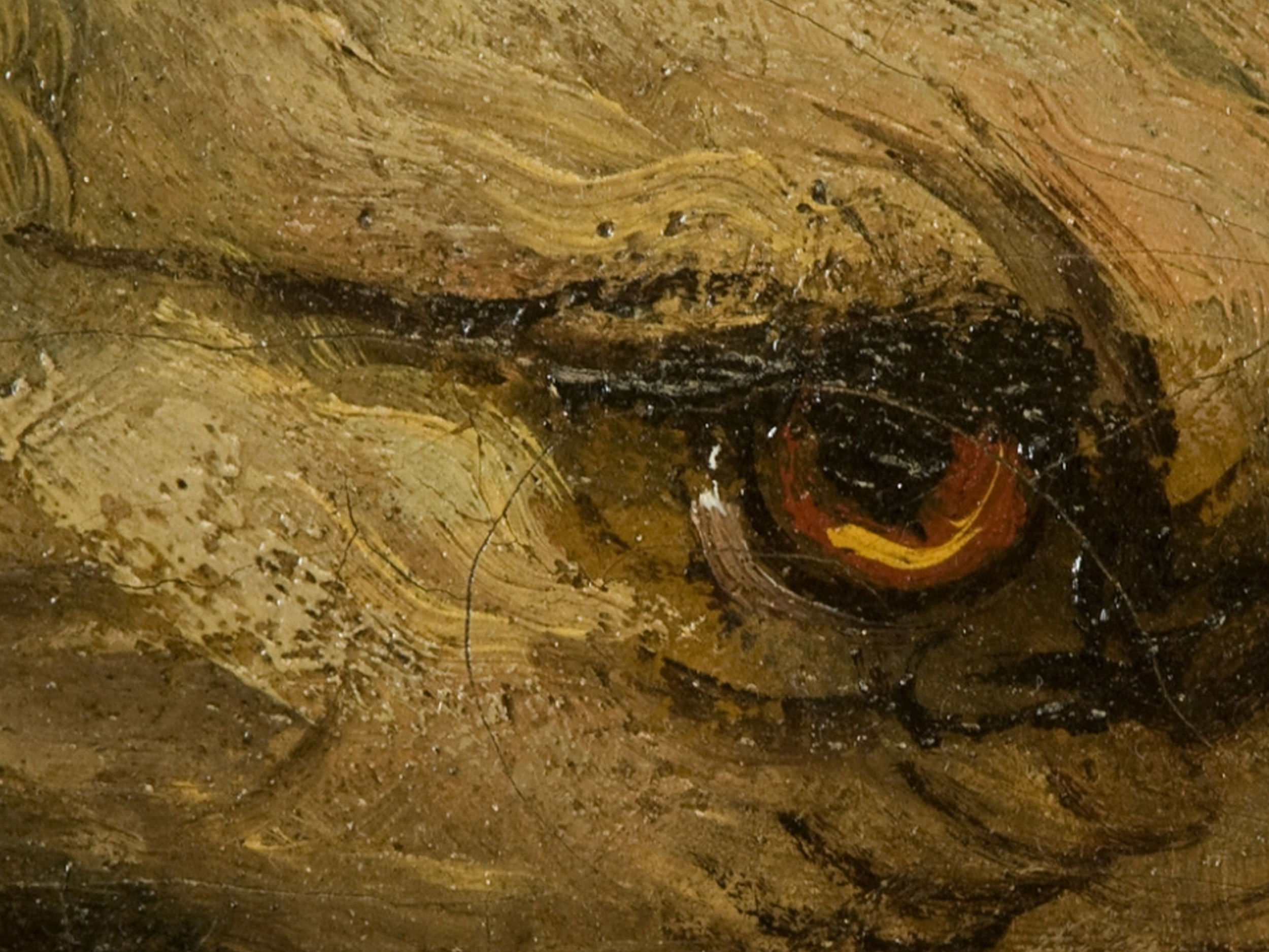
The Immaculate Conception, detail: Dragon's Eye by Giovanni Battista Tiepolo
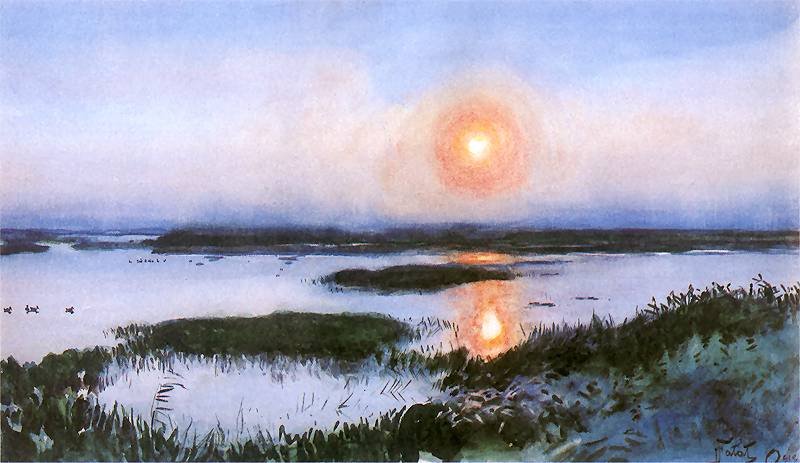
In a vile trench of near-death urgency, I climb out, and into the sun of borderlands. Having escaped the eruptive core of my country’s open, bleeding veins of disintegration, I wade in scintillating wetlands. Vibrant green pasture, lily pads and low-lying bogs hydrate my contemplative sight.

Sunset over wetlands by Julian Falat
I can almost see beyond the untimely closure of history. Birds and insects sleep with day, at peace, like me, in restful respite.
_________
"Escalations nerve-wracking, lonely murmurs murmuring

Crescent peaks dangling under bums grateful with uprooted membranous petrified and calcified flesh

Journey to roust the kneeling mind, with the desiring missed find, to be missed by nations feigning the patient behind swollen gum-brain awry, with skull-ache

“kinj moduls vrent speen og”

Desiring missiles
Desired missing
Failing nations

Patient fang"

excerpt from "Cajoled Spine-Tap"


Wednesday, 21 November 2012

Music and War: A Dream of Youth

"I've been living in the war zone my whole life. It has always been my dream to make it to Kampala, because the National Music Competition is the biggest competition in all of Uganda. I want to win and I want our name to be known throughout Uganda as winners." Dominic, 14 year old Acholi xylophonist in War Dance

When I conducted research with refugees in Cairo, Egypt, I engaged the community in a youth music project. One night, I sat listening to the diverse musical traditions of Sudan, exhibited before me with unrivalled emotion. The room filled with traditional incense as we drank hilo-mor, a Sudanese herbal drink special during Ramadan. The lasting words of the night will forever echo in my head, when my co-researcher, a man from Darfur, asked his friend from Kordofan, a young singer, "Why do you sing your traditional music?" He responded, "Because when we sing, we remember where we're from, our place."
________
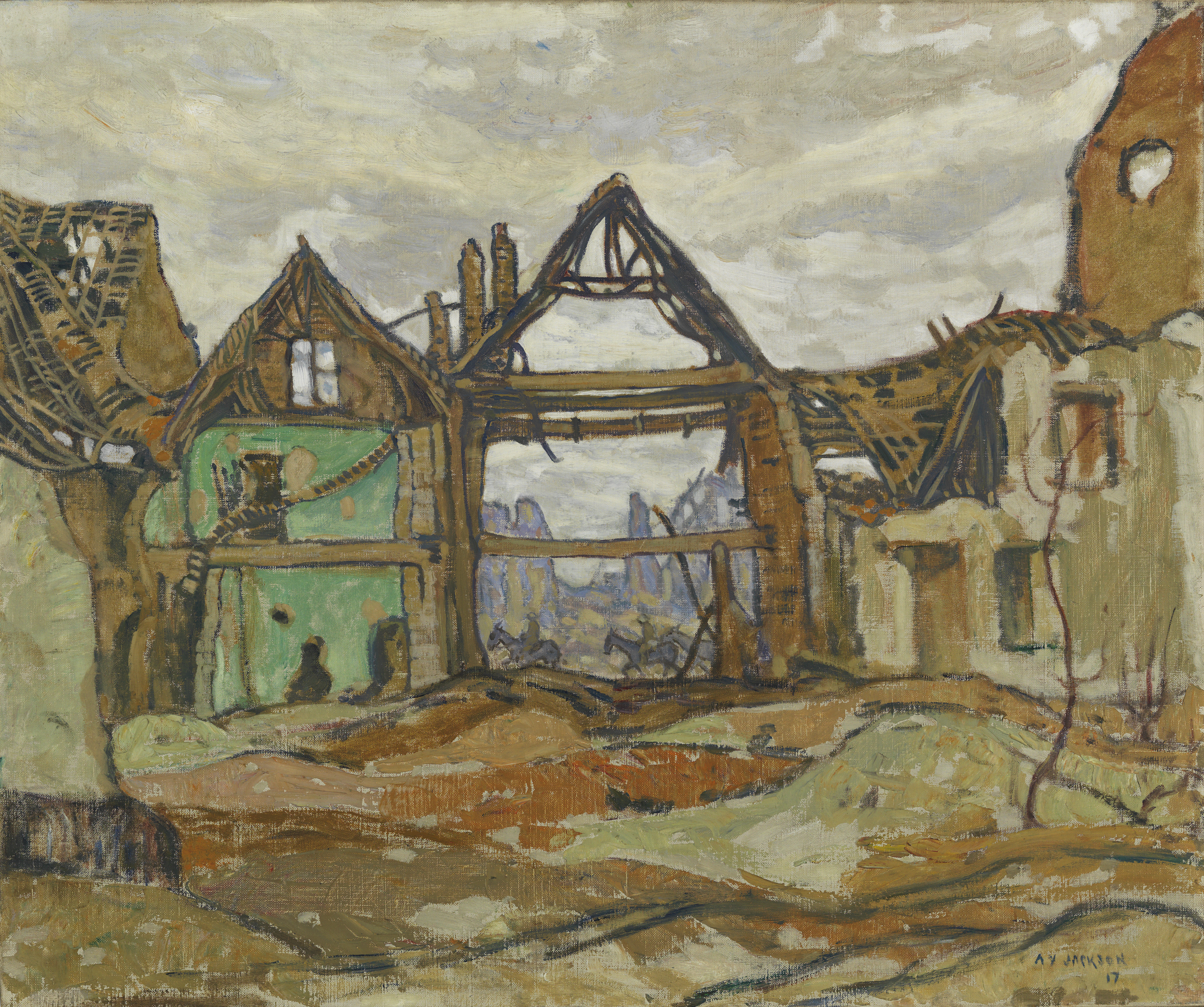
as the enlightening face of my old Israeli cousin, young of age, though old in memory blinks fearlessly in lieu of horizon’s edge, her eyes brighten in front of mine, a parallel daze, as she sends through her pupils an image of the bomb pattern of military flight

House of Ypres by A.Y. Jackson
and I see a Dutch friend, an emergent activist on the path to knowing her similarly, her pale face scans the leaping vigor of machine angst over the virtual land, upright in a jet, we scan the earth with the dotted map, bounding over villages destroyed at our mechanical feet as we leap through the air and finally touch down over a secretive hill, where green earth changes to beige desert 

F-16 over Pentagon 9-11-01 by U.S. Air Force
and part of a caravan, we gather direction with locals, Bedouin men allies, as they guide us towards the perimeter of our land, and espionage fills our lungs with the hot breath of wartime lies 
_________
“Where in whose pleasing leisure does our stock grow and go bolder in fields of blank duress from childless talent, filling space and accentuating silent harmony in the ever-widening round?”

To believe in light, and the possibility to endure the ground’s own failing trials
With Her round nature, orbiting in the mess of experience
Without prior knowledge, except when I believe in Her as my own

...dreaming up beauty in the complimentary fold / with airy locks peeled over the dead / sick earth swells with an overwhelming decay of restraint from life / into a confident foray with spirit’s unidentified heights or doorways into the New World / cornered, lightless

excerpt from "A Songster's Realisy"


Friday, 12 October 2012

The Imperial Ethereality of the Christian Cross

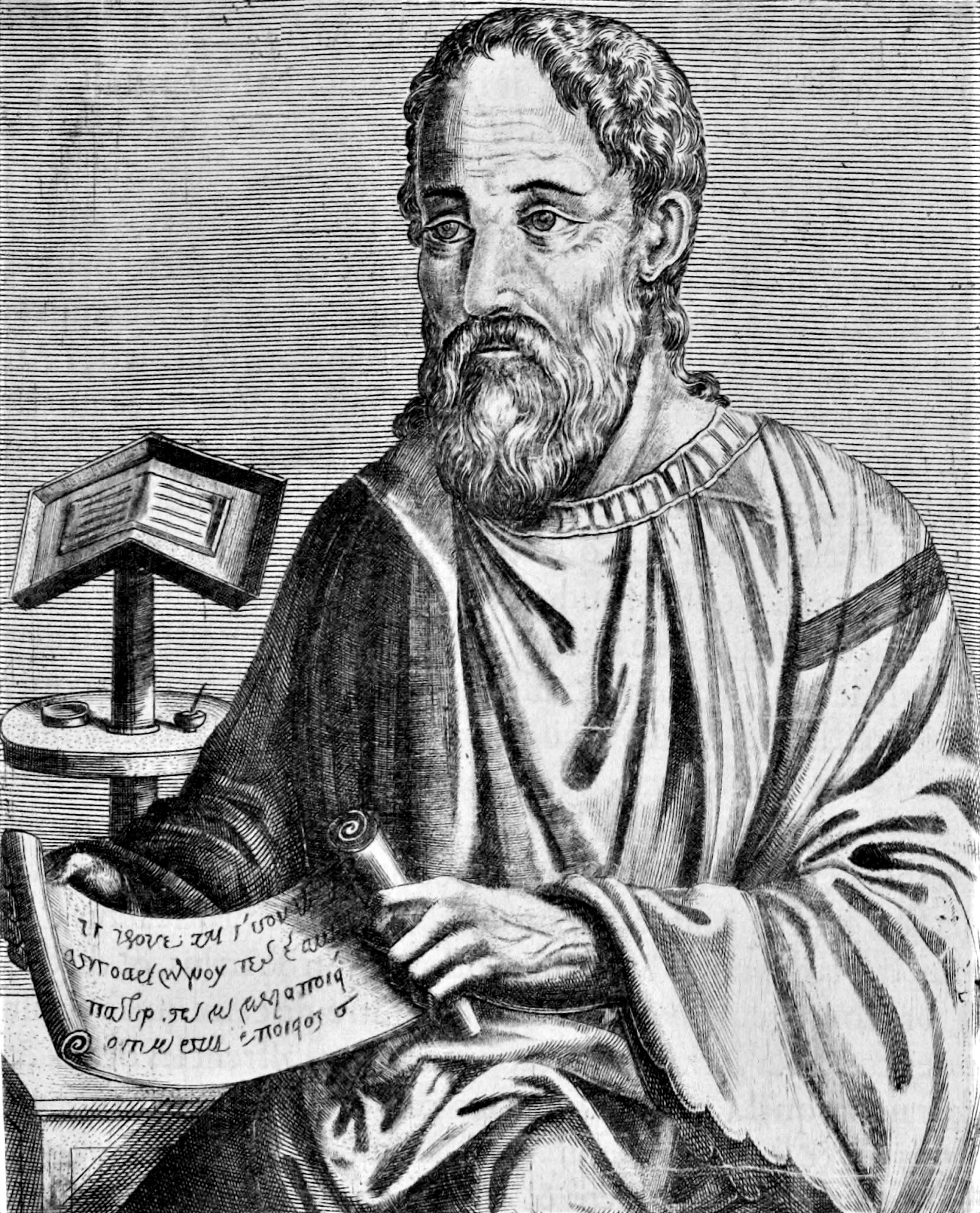
Eusebius of Caesarea 
"...when the day was already beginning to decline, he saw with his own eyes the trophy of a cross of light in the heavens, above the sun, and bearing the inscription, CONQUER BY THIS."

EUSEBIUS PAMPHILUS OF CAESAREA: THE LIFE OF THE BLESSED EMPEROR CONSTANTINE. CHAPTER XXVIII. The Bagster translation, revised by Ernest Cushing Richardson, Ph.D.

For a magnificent compendium on Medieval and also Ancient and Modern Literature, visit Internet History Sourcebooks
________
A medieval townscape; similarly forged in the imaginative filmmaking of Kurosawa, yet in the guise of European history. I see lowered clay-roofed structures, and dirt roads amassing with each step into the muddy ground. There is an instinctual defensive glare from the executioner’s hat and the stymying bureaucrat’s shallow presence as I enter the gates of the stead. 

Meeting at the Golden Gate by Jean Hey (Master of Moulins)
At my first meeting, I am greeted by a youth, an apprentice to a knight, with radiant innocence so bright I am shocked to the core. And in that moment I lash out. In a single slash of my sword, an instantaneous move, I split the defenseless youth in half. 

Bors and Lionel
Blood sprays from his center and the gore filters through my footprints in stone and mud. I am taken aback by my own actions, yet as the clouds roll on, the silence is ever penetrating, unfulfilled by redolent justice, coursing on as voiceless blood, loyal only to the alive.
________
Witnessing the continuance of an apocalyptic crusade on these modern shores

Breaking open the earth-less ocean unto the final turning of Europe’s last romantic page,

Closure to the novel convulsions of a people well-practiced in ethnic cleansing and rife with general ethno-cultural frights

- excerpt from "Feel Old, Death?"


Monday, 24 September 2012

Persian Mysteries and the Immortality Rites of Zoroaster

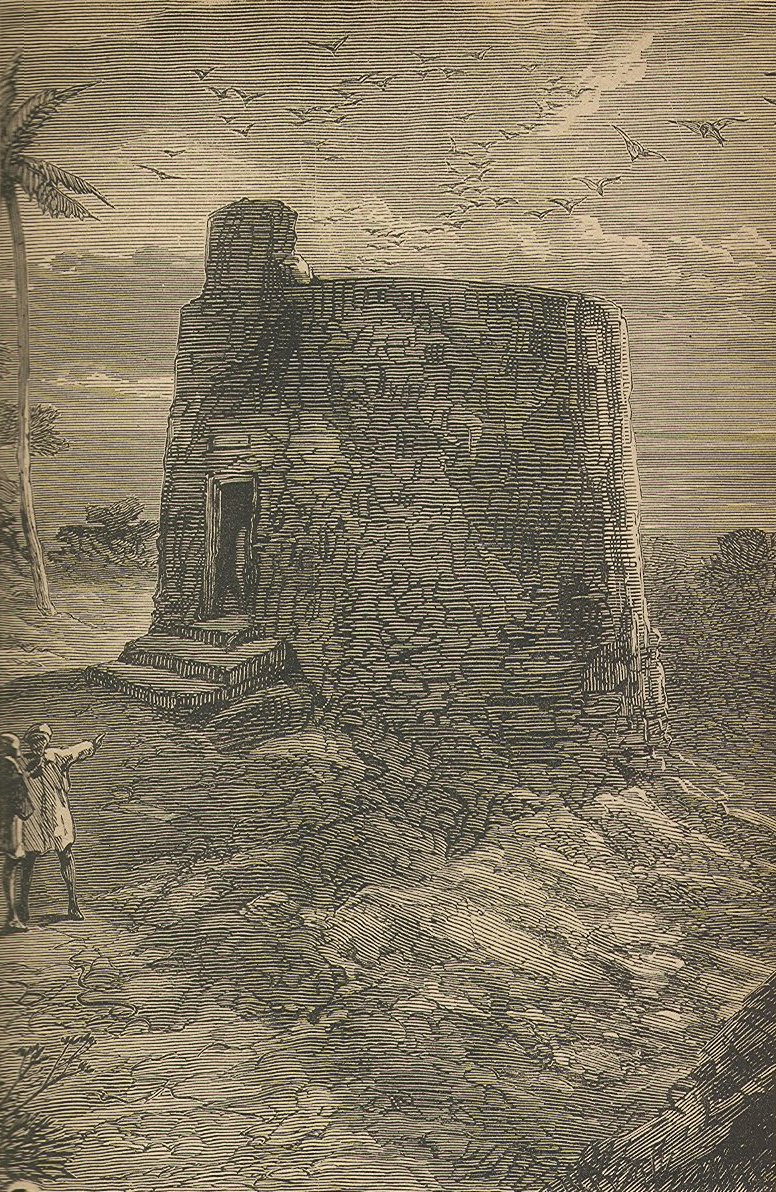
Tower of Silence (Dakhma), Mumbai by Cornelius Brown
“…never age and never die, never decay and never rot, ever living and increasing, being master of its own wish: when the dead will rise, life and immortality come, and the world be restored to its wish.” 

Yasht 19.2.11. James Darmesteter, The Zend-Avesta, Part II, The Sirozahs,Yashts and Nyayis; Sacred Books of the East, Vol. XXIII (Oxford, 1883), p.290
__________

It is 12th century Persia, the continental-temporal mirror image of 21st century Canada. After a lesson on the estate, I a youth of educable age, begin to row across a placid lake with my father. The day is warm, with cool breezes flushing our skin in a mixed haze of natural praise and remorse for the end days of summering. My father, a muscular, bearded intimidation of manhood, speaks with the grazing lurch of intense commanding. As we row, in separate crafts, the waters turn rapid. In that moment, he begins testing me on my learned material. 


The oral literature of the day is mind-bending and terse in its memorable strings of morality, geography and spirituality. I’m able to recall various characters and events, and as I extrapolate, the waters toss and turn unexpectedly. At my wavering voice, my father’s eyes brim with the frosted fire of dark Persian mirth. Yet, as soon as I veer into future’s allusions, spouting the literary names and waves of later centuries unheard, a fire burns in his eyes of serious intent to quiet my youth’s wandering. As he reaches out to grab me into his craft and row back ashore to the consistent presence of historic symmetry, we are both swallowed by the apparition of a waterfall along the other shore, pouring us downward with the turbulent waters in a vein of undone chronology and placeless imagination. 

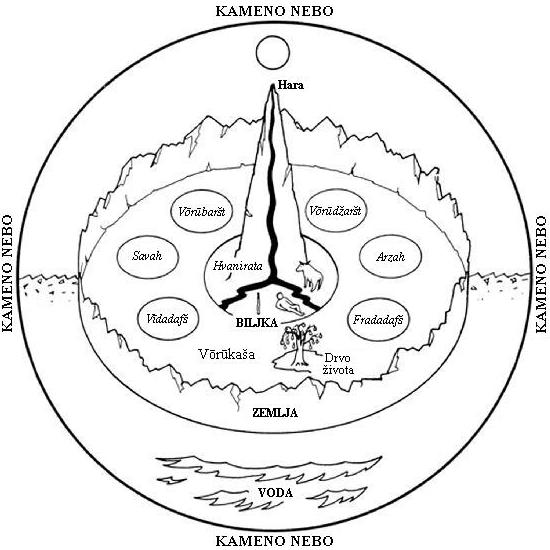
World According to Avesta by Orijentolog
I call out the names of literary history upwards along the upended future. Until the 21st century’s own dawning, my mind, feckless among the archaic forms of Iranianization, is unceasing in its deliberations on the foreshadowed youth of humanity. I turn and writhe with ancestral might into the sheer unknowable mists. My father has since disappeared, and in that silence I begin to know my name.  
_________
Driving out demons with Masonic symbology
         Over the infinite sands of civilization,
         breathed and created out of time
In the sun’s ravishing corner of a universe,
         un-tempted and forever at a loss
                Between the child’s two eyes
                closing
On death and the holocaust of our forsaken government
         Laughing at the trees’ roots


When stretched to the bottom of India’s or Africa’s wells
         Ousting up the belief in life as a drunken tragedy
                              Yet, be not humourless
                              nor without comic sophistry


In the dance and song
         Come alive by the sexual majesty
                              In theatre’s delicate ways,


To present the creative being
as one with truth’s bold and upheld music
         Reflecting back in the caged mirror
                              A creator anew

- excerpt from "From Behaved Freedom to Absolute Nonsense"