Primarily a writing exercise, this dream journal-inspired blog is a quiet introspective sojourn into the process that we traverse in going from private dream to public art. I see our dreaming as an internalized mythmaking. As I philosophize and expressively exhibit dreams, both private and public, I encourage and delight in creative language as a way to practice experiential metaphors through a “public dreaming." Writing Theory: Creative Dream Fiction
Showing posts with label Egypt. Show all posts

Tuesday, 22 October 2013

The Spring of the South is the Fall of the North: Writing on Liberation

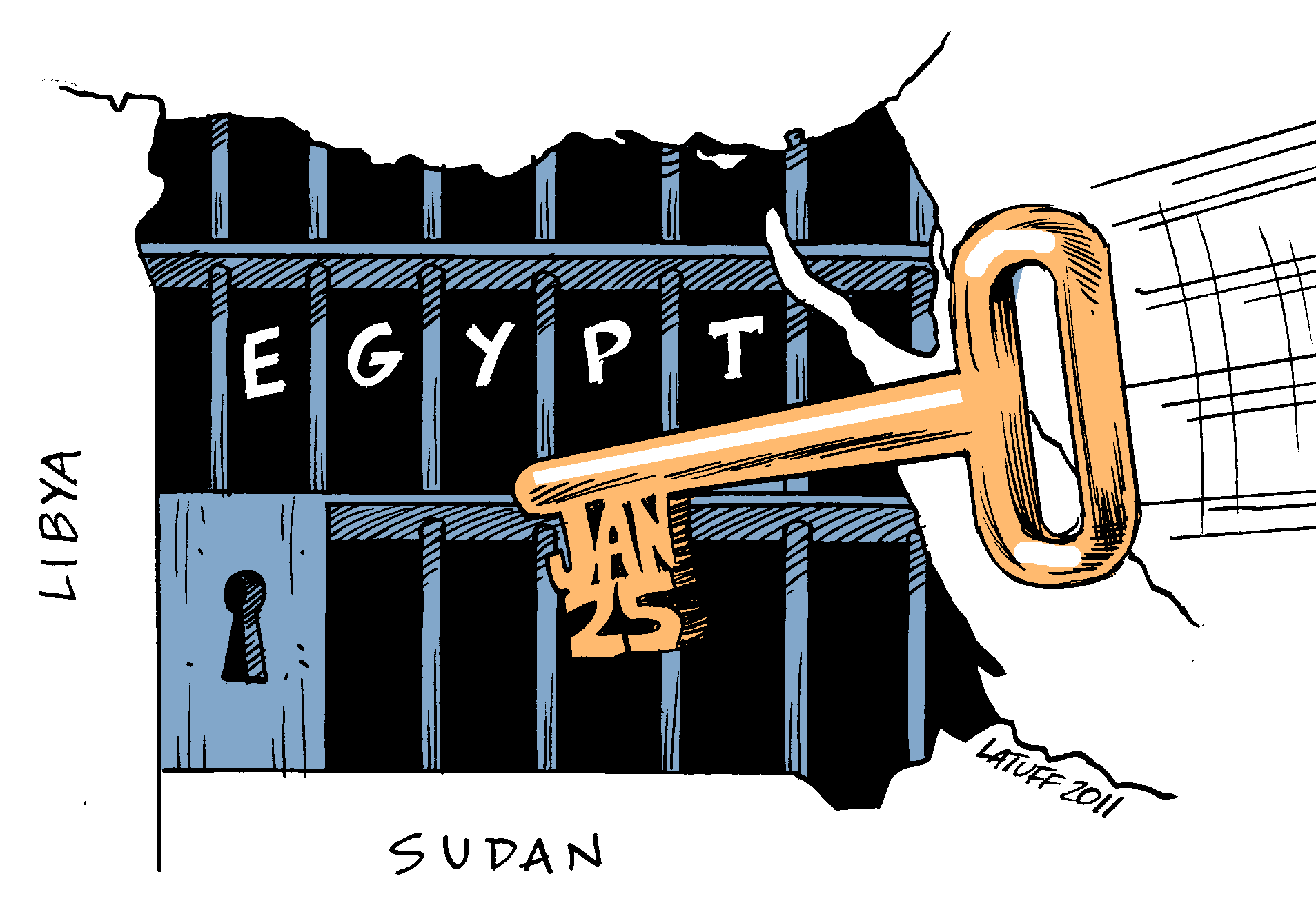
A 25th of January key freeing Egypt by Carlos Latuff
“People who shut their eyes to reality simply invite their own destruction, and anyone who insists on remaining in a state on innocence long after that innocence is dead turns himself into a monster.”

“The poet or the revolutionary is there to articulate the necessity, but until the people themselves apprehend it, nothing can happen ... Perhaps it can't be done without the poet, but it certainly can't be done without the people. The poet and the people get on generally very badly, and yet they need each other. The poet knows it sooner than the people do. The people usually know it after the poet is dead; but that's all right. The point is to get your work done, and your work is to change the world.” 


Regarding the current situation in Egypt, the armed forces and the police backed with thugs are massively shooting and killing suspected pro-the deposed President Mohammed Morsi in streets, at mosques, and in alleys close to demonstration areas. The shooting is happening in all major cities of Egypt. Many religiously motivated violence and shooting incidents have taken place in Christian populated cities located in Southern Egypt.

In Cairo, the violence is escalating and the death toll of Muslim Brotherhood is soaring as the grand son of Hassan El-Banna, the first founder of Muslim Brotherhood organization in Egypt was shot dead on Friday clashes (Source: Al –Jazeera News TV). Another son of prominent Muslim Brotherhood leader was shot dead on Friday evening during clashes with the police force and the army. Egypt’s temporary government has declared a State of Emergency, and all citizens, as well as foreigners, were warned by the police and the army to keep away from street demonstrations and public governmental buildings, and to avoid entering Tahrir Square.

As you may know, most Egyptians have aggressive sensitivity to being photographed by foreigners, whether in normal daily situations or during public demonstrations. That is why we saw many Western journalists attacked at Tahrir Square, and one female journalist raped consecutively by a group of thugs in Tahrir square. It seems to me that the current military regime in Egypt has fully determined to uproot the Muslim brotherhood organization, not only in Egypt, but also in the whole region, and that might lead to the unwanted birth of another Syria in the area.

Most pro-democracy supporters insist to protest. The Muslim Brotherhood protesters are still surrounded inside the Al-Fateh Mosque in Ramses’ Square. They want to come out from the mosque but they afraid that the thugs outside the mosque might attack them. The police force outside the mosque is striking the protesters inside the mosque with tear gas after a gunman shot at police forces from the minaret of the mosque (Source: Al-Jazeera News TV. 6:00 pm. Cairo. GMT.)

Mr. Abdel Rahman Siddiq Hashim, Correspondent in Cairo, Egypt (August 17)

            Thirty minutes by car from downtown Cairo, the predawn sky of Abu-Seer village revealed the most ancient, complete stonework in the world. Alone, I climbed the eroding rooftop of my host’s concrete dwelling. Sleepless, I gazed into the unworldly pyramid landscape with sand-blooded eyes. The quiet rustling of goats and chickens from an adjacent rooftop finally subsided under the mounting sun. The cool desert night slowly began to burn in the morning haze. It was as common a start as any to another harsh day in a small village of Egypt.

On the village margins, Saqqara Pyramid decayed in the encircling sands, humbled by the glowing Sahara Desert horizon. A middle-aged Egyptian man, donning a dark grey jellabiya, cautiously rode his mule across the rubble-strewn sands. Then, an airplane flew overhead.

Three divergent ages of human existence on Earth emerged as one, sharing a moment, side-by-side. The eldest of the three appeared motionless. The Egyptian man meditatively attended to morning duties as his forebears had done for over a millennium. The airplane, a symbol of Egypt’s national independence and economic prosperity, vanished in an instant.

Tahrir Square, meaning Liberation Square, invited all with pleasant cafes hailing from Egypt’s belle époque period. Patrons intermingled with families at the KFC, and all coveted the dollar menu. In the square, historic speakers in the Headquarters of the Arab League heard the call of muezzin belting out the call to prayer. Five times a day, the prayer, known as the adhan, ascended above the city of a thousand minarets: El Qahira.

For a twenty-year old student attending the American University in Cairo (AUC), overlooking Tahrir from the east, there was liberation. The first day of my young life in Cairo opened with one fiery orange dawn in the fall of 2007. Sipping a hot ginger tea, I waited for my cab in Tahrir Square. Mohammad, age thirty-three, chauffeured me to what would become my home for the next ten months. Zamalek, an island on the Nile, stood besieged on all sides by a city of 18 million.

In the past three years, the AUC’s Zamalek student residence went through two evacuation processes during the 2011 Revolution, and again this summer. Due to the unsafe proximity to Tahrir Square, ground zero for the infamous belligerence of military and riot police, international students were sent home. The residence became a safe haven for the AUC community; domestic students and staff were offered free accommodation and complementary meals.

Emotionally overwhelming, everyone present will never forget the bloodied streets paved with the burnt skin of nonviolent protestors. “They all have witnessed history unfold and a lot of them went to Tahrir Square. They all left in tears having to abide to the evacuation request,” Fatma Abou Youssef, Associate Dean for Residential Life at AUC wrote via email from Zamalek, Cairo on August 19.

In 2007, through a yearlong study in the humanities, Egypt held a potent charm. For a child of American suburbia, life in downtown Cairo was a true and magnificent freedom; where a dollar bought cab fare through thirty minutes of scorching highway from the Great Pyramids to the fortress of Salah ad-Din. At ground level, the city was not only safe; it was ever so welcoming. In comparison to crime in the average American city, Cairo was exceptionally low-key.

After many captivating hours learning intensive Arabic from a local Egyptian professor or studying Islamic philosophy with a visiting lecturer from England, the streets beckoned with an extraordinary spirit of discovery. Only after minutes of walking southeast from Tahrir Square, I wandered to the shrine of Saint Patron Sayyida Zeinab during the pilgrimage festival, or ‘Moled’, in celebration of the birth of this special granddaughter of Prophet Mohammad.

Irrespective of prohibitive warnings from AUC’s student orientation the day of the Moled, I decided to traverse the uninhibited grounds where Sufis and rural Egyptians (known as Sa’idis) pilgrimaged. I espied characters from a bygone era. Many had never before seen the pale face of such foreign skin. An elderly man without legs moved with the aid of wooden blocks, another with a gnarled cane and goatskin satchel appeared at the end of an impressive journey. One younger man, about my age, carried a paralyzed companion on his back. With equal wonder, they smiled at both having reached the shrine as staring into blue irises.

For the next months, practically every time I set foot in public in the city of Cairo, as throughout Egypt, children ran to greet me, jellabiyad-graced elders responded generously to my regular salaam alaikums. Peers offered a traditional glass of Egyptian whisky – the joke name for black tea served with a generous helping of sugar. Ordering a freshly pressed sugar cane drink (qasab) from street-side juicers became a delectably regular pastime under the all-pervasive sun. In fact, the original word for sugar (sukkar) is derived from Arabic. Similarly, the tamarind drink (tamr-hindi) was served by charming fez-wearing men (hearkening to Ottoman times) on street corners amid the harrowing traffic in Tahrir Square.

First impressions of Cairo were smoothed over with genuine smiles and hearty laughter. The people of Cairo soon became my teachers, more than any university professor. First having sought to learn Arabic from the locals, I then learned of dignity, humility and simplicity through their open hospitality and street-wise intuition. Uniquely, Ramadan became my favorite time, when a piece of unbroken baladi flatbread always accompanied the savored mulukhiya soup; welcoming any blessed stranger, even if arriving from the next unassuming alleyway.  

Rapidly, the most frequented haunts, such as Cairo Club and El-Bustan, saw mounting anxiety. Sugar, oil and other daily commodities soared in price, both in the formal, as in the informal economy. Conversations became more grave, jokes more cynical and youth were feeling the brunt of a serious economic downturn.

One year before the 2011 Egyptian Revolution, the air was full of gunpowder. Every whisper seemed that moment, when the spark would light and the very social fabric would begin to incinerate. The deep traumas of colonialism, corruption and fear were immanent, and felt by the overwhelming majority everyday. More importantly, an unruly intensity was felt every night, when the mass of people returned to sleep on the bedrock concrete of Cairo’s sprawling suburban slums. In such an environment, the status quo ceases to quell the rage. The traditional café became peripheral to the cyber café, where social media and youth activism quickened into the perfect storm of 2011.

Three years prior, an incipient sandstorm clouded the streets on a day of mass action in the wake of an inexcusable rise in bread prices, while former Egyptian President Hosni Mubarak celebrated his 80th birthday. On that night, we crowded into El Horreya Café & Bar (literally meaning Freedom) on May 4, 2008, as on any other downtown metropolitan night in what was once the Amsterdam of the Middle East. Downing local Stella Beer and chain-smoking Cleopatra cigarettes could not snuff out the bitter cynicism looming like a rickety ceiling fan about to fall and leave the place roasting.

The very earth around Egypt is often as imperious as the social hierarchy itself. The desert becomes part of the inimitable struggle for life in Cairo as trade has nefariously altered the course of most people’s lives around the world, so dramatically in the modern era. One week before the Egyptian Revolution of 2011 commenced on January 25, my uncle, visiting on business, listened with ungraspable curiosity to his Egyptian host talk about the gaining local obsession with Facebook. The word was on its way out, and never to return.

Remembering Cairo before the Egyptian Revolution of 2011, and in light of the escalating crisis, life will obviously never be the same. There is irrevocable damage, and if the people, who lived and worked in the downtown area, survive, they may never return, and if they do it will be to a different place. Tahrir Square has become home to a near impregnable military, a scavenger’s paradise of the most lowly and vicious of thugs, a place of smoke and blood, where tear gas blinds and the storied hangouts of a bygone era are stained with the outrage of a military coup in broad daylight. In its wake rests a throng of massacred civilians.

Will the bartender at El Horreya Café & Bar return, he, who snickered and grimaced with local spite, subtly disproving yet overtly encouraging Egyptians’ mixing with European, American and African socialites over incalculable packs of Cleopatra cigarettes and football? Will the papyrus painter return, who gypped me out of a small fortune, cleverly convincing me into becoming a rare arts collector? Will his son return, learning his trade not only for the trade, but also for the tricks; he who walked with me past the now besieged Ramses’ station mosque to deliver my papyrus paintings home to America? Will the mythic female taxi driver return; she, who dazzled our imaginations by crossing the gender line into such a masculine space as the world-infamous streets and thoroughfares of Cairo’s largely unregulated (or, self-regulated) traffic?

As social critic Tariq Ali wrote this July for counterpunch, an independent investigative journalism source, after all is said and done, “Who will take the Army away?” In the intermediate period between the first Egyptian Revolution of 2011 and this year’s ongoing protests, which began with the presidential coup of Mohamed Morsi on July 3, the Iranian Green Movement receded, while Bahrani and Syrian social unrest continues to derail. After the ecstatic hype following the Egyptian Revolution of 2011, weary voices from the Middle Eastern diaspora warned of immanent crisis. Westerners scratched their heads when the Muslim Brotherhood ascended to power.

As a foreigner in Egypt, one learns that a human connection to anyone on Earth, to anywhere on Earth, from anyone and anywhere can be learned simply by walking in public, in the street, and more importantly, the square, with an open heart, engaging in dialogue and being present. When we listen, we observe how everyone has a backstory, which does not merely explain one’s present situation, but supports and rounds it out with a complex spectrum of life experience.

Today, this truth is more than possible; it is inevitable as more and more people are forced out of their homes, out of the comfort of their lives in their countries and cultures of origin, whether by war, civil unrest or the urge to change things, to meet face-to-face with another, and see the clearest reflection of one’s own life. The deaths of Egyptian protestors are not isolated incidents. They are part of the larger narrative of one unified history of all people. In another two years, will they have fallen in vain, or will everyone empowered with the knowledge of the uprising ensure that they have not?

On returning to the U.S. after three months in Cairo during the summer of 2010, the adage from the American Revolution curiously repeated in my head: No Taxation Without Representation. The city streets should see my sign, I thought, held up on display; the Revolutionary slogan of 1776, concluding with the statement: Stop Funding the Militarization of the Middle East. That sign was never raised.

After over a year of living on the ground in Cairo intermittently from 2007-2010, I had about enough of armed forces on every street corner. As an American, I felt complicit with the military presence. An iconic moment from the Egyptian Revolution of 2011 revealed the ugly face of global militarism when a demonstrator exhibited the “Made in the U.S.A.” stamp on canisters of tear gas.

As in the ancient materiality of Saqqara, the medieval trot of the mule and modern flight were spawned out of an instant on the archetypal sands of time. An airplane summons the precarious future in all its speed, might and, finally, in the local historic context, its fleeting insignificance. The pyramid, now stationary and unascending, contrasted with the way of the mule and the plane moving in the same direction.

Yet, as with today in Egypt, the very power and speed of the plane overhead not only outmatches the mule’s strength, arriving at their common destination first, it leaves nothing behind for those arriving at a deliberate pace, as allegorically, by mule.

The people of Egypt seek development through truly democratic means, as opposed to Western democratic means, i.e. foreign aid, sanctions and war. For Egypt, as with most of the world, true independence is a long-awaited, and as yet unfulfilled promise. When allowed to proceed at their own pace, in step with tradition, and an engaged contemporary society (as demonstrated in the revolutionary context), the people become aware that the plane overhead is exactly as distant and unconcerned as it appears. Contrasted to the pyramid, or the mule, the plane (and the elitism it represents) consumes the country’s (human and natural) resources with it, and all in a passing instant.

During the daily commute through Tahrir Square, one of the largest public insignias near to the square’s Omar Makram Mosque stood out: “Everything Should Be XX” (meaning: everything should be 20th century). Before the revolutionary fervor, quotidian time in Egypt screamed with the anxiety of delay. The rushes of traffic, the strength of the black tea, and the overconsumption of sugar were offset by fitful exhausts, religious rituals, and the sun; and now, an army, sponsored by the most militarized, energy-rich and power-hungry nation in the entire world. Nevertheless, as countless Egyptians stage sit-ins, many say the people of the unmoving Saqqara still live and walk in the streets of Cairo.


NOTE: This article, titled, Fall of the Arab Spring, was published with The Media Co-op on October 16, was produced in partnership with AlternativeMediaYYC.com and the Arusha Centre with the Calgary Working Group initiative to establish a new local of The Media Co-op in Calgary

Read our other recent pieces produced by the project: 

"Vancouver is debating a resolution to divest from fossil fuels"
The 3rd of October
Egypt's War on Terrorism and Extremism
Hayseed Magazine
Corporations in our Heads
Working North
___________
It was our last night. The sirens of Death displaced the air with an eerie silence. The dissonant projection moved us with a most unsettling scream as from the constellations above. In an incomprehensible language, the alien voice bore down on our skulls as through our entire skeletons with the most devastating form of spiritual dread.
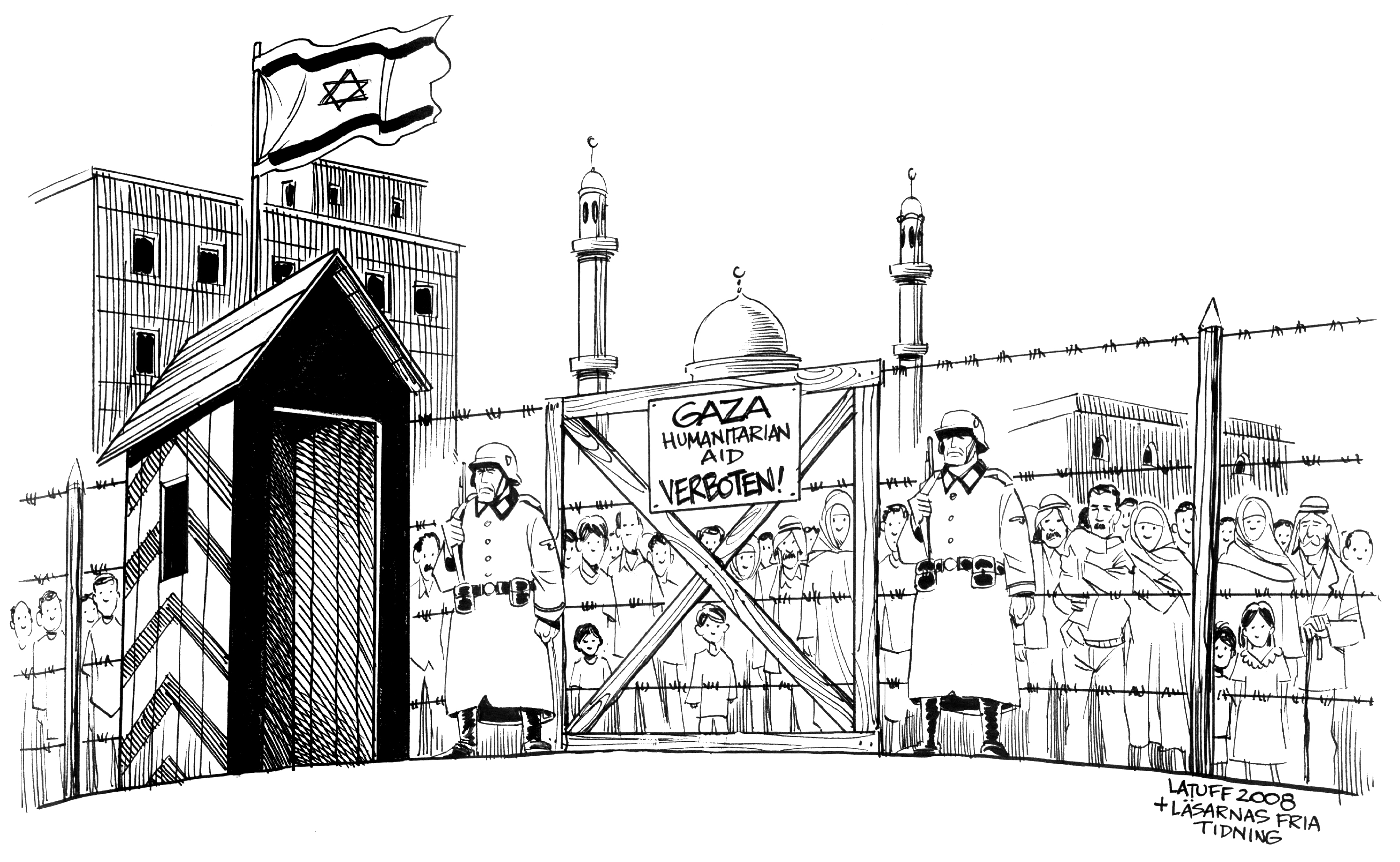
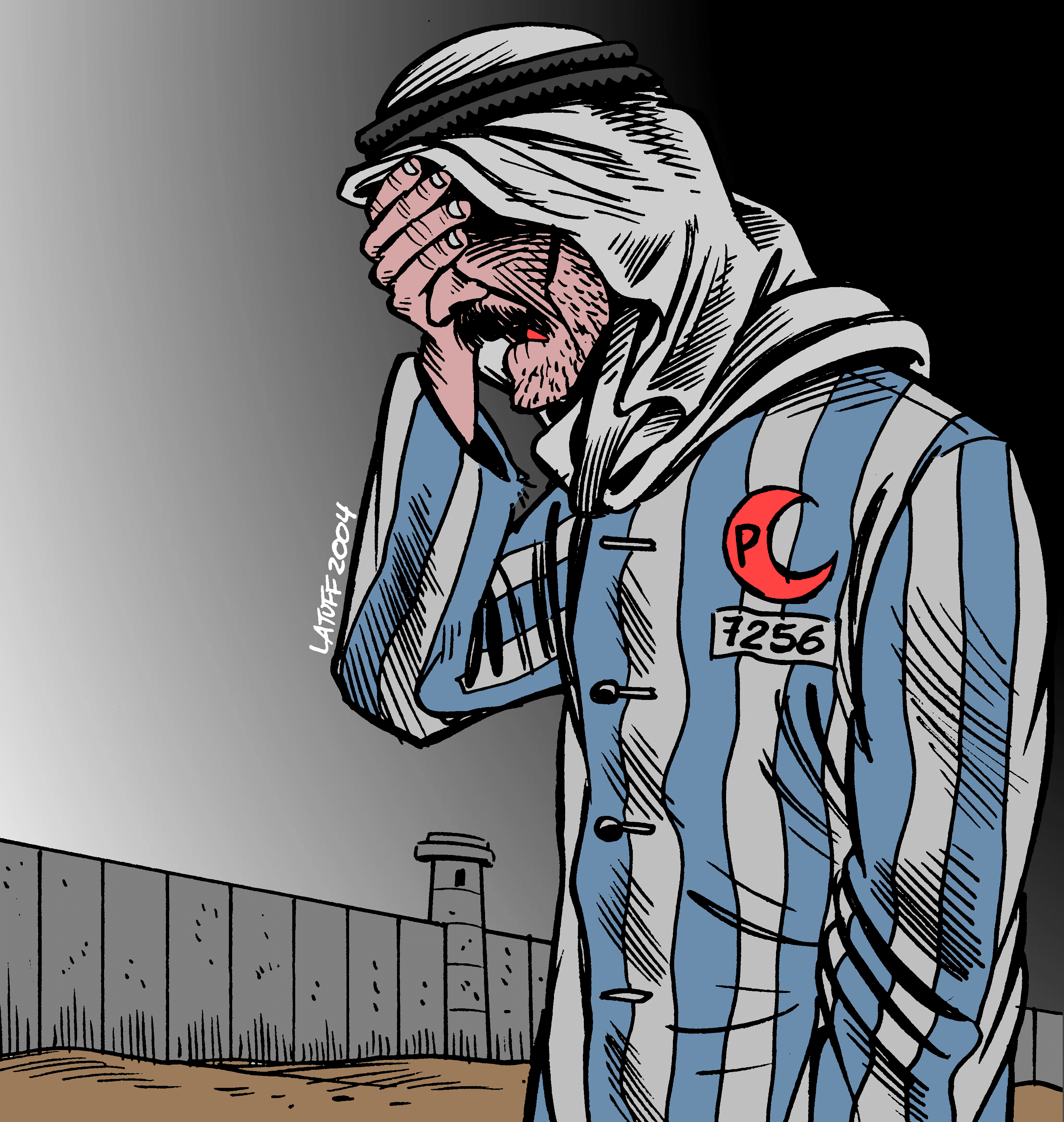
IsraHell's concentration camp by Carlos Latuff
Neo-Nazi ghosts awakened to round up non-Aryan cattle from their millennial imprisonment under the northern cross. Before the first ounce of blood was spilled, I eyed the forest beyond the edge of the encampment, where concentration then turned to liberation. For a reason unknown to me at the time, I saw my way out. Others noticed as I ran through the fencing, bewildered by the transcendent feeling of freedom beyond the barbed hatred that confined my elders, my children and brethren of closest kin.
The Gaza Ghetto by Carlos Latuff
Out into the wayward plain, I fled, alone, veiled under a new moon. The sky enlightened my distance with steps unheard inside the emptying prison. Yet, I could hear wails. As I moved into the dizzying silence, my heart muffled by the fear of no-return, I wept. I felt my skull crack at bearing the guilt, the shade and the humility of survival among my most honoured family and friends, of my blood and spirit, they left behind to suffer excruciating gasp of liquidation.
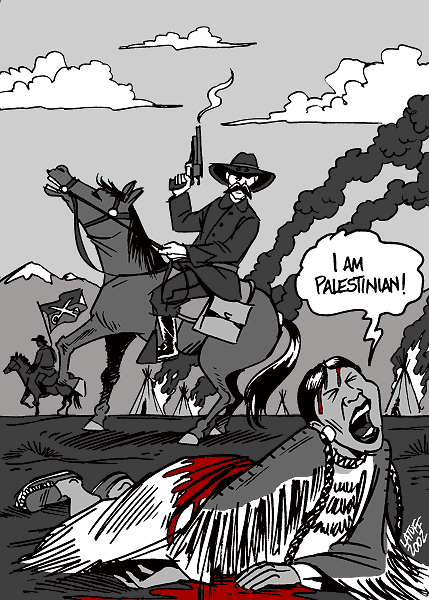
We are all palestinian - Native Americans by Carlos Latuff 
The sky filled with light, and as the fog of my vision cleared, a field of people opened before me, as with the harmonious revelation of a smile. Youth prayed and rejoiced under the morning sun, strong with music, to greet the day with endless festivity. The glow of the Earth radiated as a face after being kissed by a warm lover. The air moved softly, and my skin pulsed with gratitude. I enjoyed the music, spontaneous and ambient, as if I had heard music for the first time. Then, a face stared into mine.

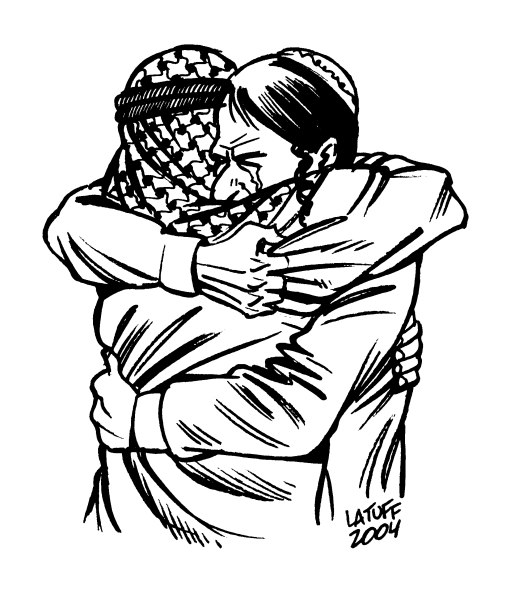
Forgiveness by Carlos Latuff
They recognized me, where I had come from, my origins and imprisonment. I wondered if they had escaped as I had. My first reaction was to run, yet, as the moment passed, I felt their empathy. The young woman, working as an attendant to the open-air music festival, expressed her concern, and showed me the way to a bus station near to the edge of the forest. From there, I could travel on and farther away from the destitute evil of my past.

Che Guevara wearing a keffiyeh by Carlos Latuff
As I approached the station, others noticed me, with fearing eyes, saddened with the truths of human compassion, they earnestly helped me along. I couldn't decide where to go. The schedule was complicated by the tightness of the knot in my heart. Where would I go? What would I do? Should I return and face the death that had me in its embrace, and that had since now consummated its passion with everyone I had ever known? I remain, immobilized. 
___________

Listen to live recordings taken from the Trio's debut performance on October 18th, 2013 in Self Connection Books (Canada). More on Jasmin's brilliant skills, gifts and about her amazing Crystal singing bowls please visit her today at Singing Bowl Music. This live album was produced by Vi An. Funds from this album goes towards artists involved and especially to fund future endeavours together as a collective, to rent venues, promotional material, transportation, meals, accommodation, etc. Thank you for your amazing continued support of these fine artists.

Monday, 29 July 2013

Student Action to Global Citizenry: The Voluntary Heart of Community

Optionless from Nora Younis on Vimeo.

"I recall the brutal massacre of Sudanese refugees in Mostafa Mahmoud square in 2005 when security forces violently interfered to dismantle their protests in front of UN Refugees Agency Office resulting in killing dozens of protesters including women, children, and elderly people." Ahmed Awadalla, Cairo-based Global Voices blogger (also published on Daily News Egypt)

Introduction

The focus of my volunteerism is with those who currently experience oppressive marginalization in the inhospitable host country of Egypt, who in 1951 made reservations to refugee rights chartered by the UNHCR Refugee Convention, also known as the Geneva Convention.

El-Wafaa Refugee Culture Centre was founded in 2006 in Ain Shams, a neighborhood in the outskirts of Cairo known for its African migrant population, by a group of committed Darfurian community leaders in order to address challenges within the refugee population in Cairo, with a focus on refugees from Darfur. The mission statement of the El-Wafaa Centre is to alleviate suffering of vulnerable refugee communities in urban areas.

Background

Egypt’s reservations to the UN’s Refugee Convention withhold national responsibility with regard to refugees within their country accessing public relief and humanitarian assistance. There are no refugee camps in Egypt. African peoples seeking asylum in Egypt continue to be unjustly marginalized based on race, ethnicity, religion, etc.

Initiated in July 2006 by local community within the African forced migrant population of Cairo, El-Wafaa Centre was physically founded in September 2006, with the assistance of Student Action for Refugees (STAR), a student-run organization at the American University of Cairo. Then president of STAR, Jennifer Renquist, now a foreign officer with USAID, organized the orientation of new students at El-Wafaa Centre, as well as the donation of books and stationeries to the center’s library, remaining a principal need.

I was introduced to this world in 2007 as a young student of literature and language at the American University of Cairo, after volunteering for STAR as an outreach English teacher. I soon met the director of the Refugee Culture Centre, named “El-Wafaa” (The Fulfillment in English) after teaching an intermediate level English course to an incredibly diverse class of migrants, asylum seekers and refugees from all over Africa.

The director of El-Wafaa, Abdel Rahman Siddiq Hashim, is from Darfur, Sudan, educated at a Sudanese university in English. He is a respected and humble community leader, known by many Cairo-based African refugees as “Teacher”. Abdel Rahman’s activism was far-reaching and all-inclusive, welcoming students into the education center, also serving as a cultural and community resource center, without discriminating ethnicity, religion or politics.

During my initial ten-month stay in Cairo, I became deeply involved in the refugee community beyond the interests of Student Action for Refugees (who soon abandoned and undermined local leadership), including organizing independent classes through the El-Wafaa community, running a food bank and managing library resources. Since then, I have poured over the role of the international community as a last vestige of light for the urban refugees of Cairo. In 2010, I returned to Cairo through a fully funded research endeavor with support from a Peace Studies consortium at the University of Calgary, where from I graduated the same year with a B.A. in the Social Sciences.

Highlights from the 2010 research period in Egypt include directly funding the El-Wafaa Executive Director’s return trip to Sudan to register El-Wafaa in Sudan, as well as with a Darfuri NGO network, to assess the situation of refugees returning home to respective countries of origin after living in Egypt as a refugee. Other successes included a film screening and discussion evening on related issues at the inner city Sudanese-led NGO Tadamon, offering charitable funding to vulnerable women-in-need, engaging Sudanese youth students in a music and culture recording project, and personally meeting and attending a course with Barbara Harrell-Bond, founder of the Refugee Studies Centre at Oxford University, the world’s first institution for the study of refugees.

Through my studies, research, and experiences in activism and fundraising since 2007 to the present, I have concluded that it is truly up to international civil society activists to help community leaders foster educational and cultural activities in their communities. UNHCR and local NGOs in the region have proven insufficient, whether as seen in the outcry of the Mustafa Mahmoud demonstration in 2005, or the current state of life for refugees during the unstable political turmoil in Cairo, today.

Their is a great need to support those who appreciate and enable the sustainable establishment of human rights organizations in Egypt providing proper services to any and all people, with a focus on African refugees.

Demographic


The target demographic of El-Wafaa Refugee Culture Center is any and all residents and migrants of Egypt seeking a safe and inclusive community resource center that specializes in language education services. The target communities are refugees and asylum seekers from African countries who seek to transition from Egypt to resettle in a more hospitable country, or move back home after losing many years of their lives to impoverishment, lack of education and opportunity for employment. Such social challenges are due to many causes, including misinformation and a serious deficiency of awareness regarding the nature of life in potential resettlement countries, as well as in returning to often conflict-ridden countries of origin.

Conclusion

Currently, the El-Wafaa Refugee Culture Center and its concomitant community initiatives are in dire need to generate sustainable activism (both local as well as international) to support the immensely wide gaps unfulfilled by the UNHCR, NGO, and academic, as well as faith-based service providers in Cairo.

On behalf of an international network to support the community vision El-Wafaa, led by the volunteerism of PhD student and Fulbright scholar based in New York City, Thomas Leddy-Cecere and myself, a freelance journalist and human rights advocate currently based in the city of Calgary in western Canada, we petition support.

Currently, the 2013-2014 budget for El-Wafaa Refugee Culture Centre to thrive in Cairo requires 1,280 USD (center rent, office supplies, external programs). Membership fees from refugee communities in Cairo seeking services are not adequate. International networks with preexisting solidarity groups in the U.S. and Canada are integral to the sustainability and overall maintenance of the El-Wafaa Refugee Culture Centre.

Related issues raised by the refugee community in Cairo include accessing micro-credit loans, contacting UNHCR, overcoming crises in housing and basic needs, among other areas of recurrent concern.

Anyone can learn more. If interested, please correspond with mind to the pressing need for immediate action. I would very much like to start a meaningful dialogue on this issue on behalf of an extended engagement with the urban refugee communities of Cairo.


References:

This blog was originally published at VolunteerCenter.com on July 29, 2013
  • Please contact me @ mhanson1717@yahoo.com for a free informational brochure if interested in learning more about my initiative with refugees in Cairo, Egypt
_____________
With the Executive Director of El-Wafaa Refugee Culture Center,  Mr. Abdel Rahman Siddiq of Darfur, Sudan 
Walking Away into the Bright Lights of Cairo
Partnership with the Bangladeshi Community
Global Youth in Cairo Apartment
With Student and Singer from Kordofan 
Twilight of Peace
With Student at St. Andrews Church in Cairo
A Creative Student at Arba Wa Nos Centre
Night Cafe with the Bere People of Sudan
American University in Cairo, Old Campus
Abdel Rahman Siddiq, the Teacher
In Honour of Community
El-Wafaa Refugee Culture Center Logo
With favourite tea-seller, Julia
With student from Central African Republic at Tadamon Centre
Sudanese Teacher Registers Students at the El-Wafaa Refugee Center
Cultural Heritage of Sudan
The Quintessential Meeting Ground, the Sudanese Restaurant
 ____________
From Behaved Freedom to Absolute Nonsense

I go from a behaved freedom to absolute nonsense
            Without friends yet steeped in family love,
I publicly play and proclaim the monetary divide
            In my rich eyes which disguise the poverty
            line’s frozen glare
In Canadian expatriate stench, painstaking
            To be fugitive without mind
            to the loosed volley
Cracking against the one shield fortress of Mattapoisett
            One place of rest made into settlement with guns
            and stolen disaster
Ripped from the bosom of Europe’s scheming
                      English name
            Now massacring the playful
            artistry of our own inborn life

On this impossible continent
            Freely taken from a gamble and faith
In blond-headed angels
            Whose divinity was parted
            by the bald imprisoned hallucinations
Driving out demons with Masonic symbology
            Over the infinite sands of civilization,
            breathed and created out of time
In the sun’s ravishing corner of a universe,
            un-tempted and forever at a loss
                     Between the child’s two eyes
                     closing
On death and the holocaust of our forsaken government
            Laughing at the trees’ roots

When stretched to the bottom of India’s or Africa’s wells
            Ousting up the belief in life as a drunken tragedy
                                    Yet, be not humorless
                                    nor without comic sophistry

In the dance and song
            Come alive by the sexual majesty
                                    In theatre’s delicate ways,

To present the creative being
as one with truth’s bold and upheld music
            Reflecting back in the caged mirror
                                    A creator anew

This poem was featured in my most recent self-published chapbook, Act or Confront


Introducing ContinuuMusic

Musical explorations within continuous evolutionary creativity. Discovering new world fusion - instrumental, improvised music.

"For global community awareness" Vi An said at the TedxYYC event this summer to a packed house of 1500+ audience members, plus a streaming webcast to the entire world, before beginning a ten-minute set with co-creators Bijan Maysamie on Persian Santur, and Matt Hanson on xaphoon and percussion.

The debut concert of the ContinuuMusic trio is intended as a gift to the community. Often performing for charities and private events, ContinuuMusic has raised thousands of dollars for Ten Thousand Villages, Children's Health and Education in Iran, among other meaningful initiatives.

Inspired by their invitation to perform for TedxYYC at the grandest concert hall in Western Canada, ContinuuMusic is looking to sustain their creative efforts well into the future. Vi An is a professional artist of over 18+ years, an award-winning (Betty Mitchell) theatre composer with the Green Fools Theatre and recording artist with over 15 albums and hundreds of collaborative tracks worldwide. Bijan Maysamie is steeped in the classical tradition of Persian music. Originally from Tehran, Bijan is now venturing into fusion music for the first time, and is enthused as ever, at the helm of organzing this debut concert. Matt Hanson is a multi-instrumentalist, whose artistry draws deeply from a musical family with roots in Mediterranean and American intercultural tradition.


Saturday, 11 August 2012

Deathly Assumption of the Premodern Morpheus

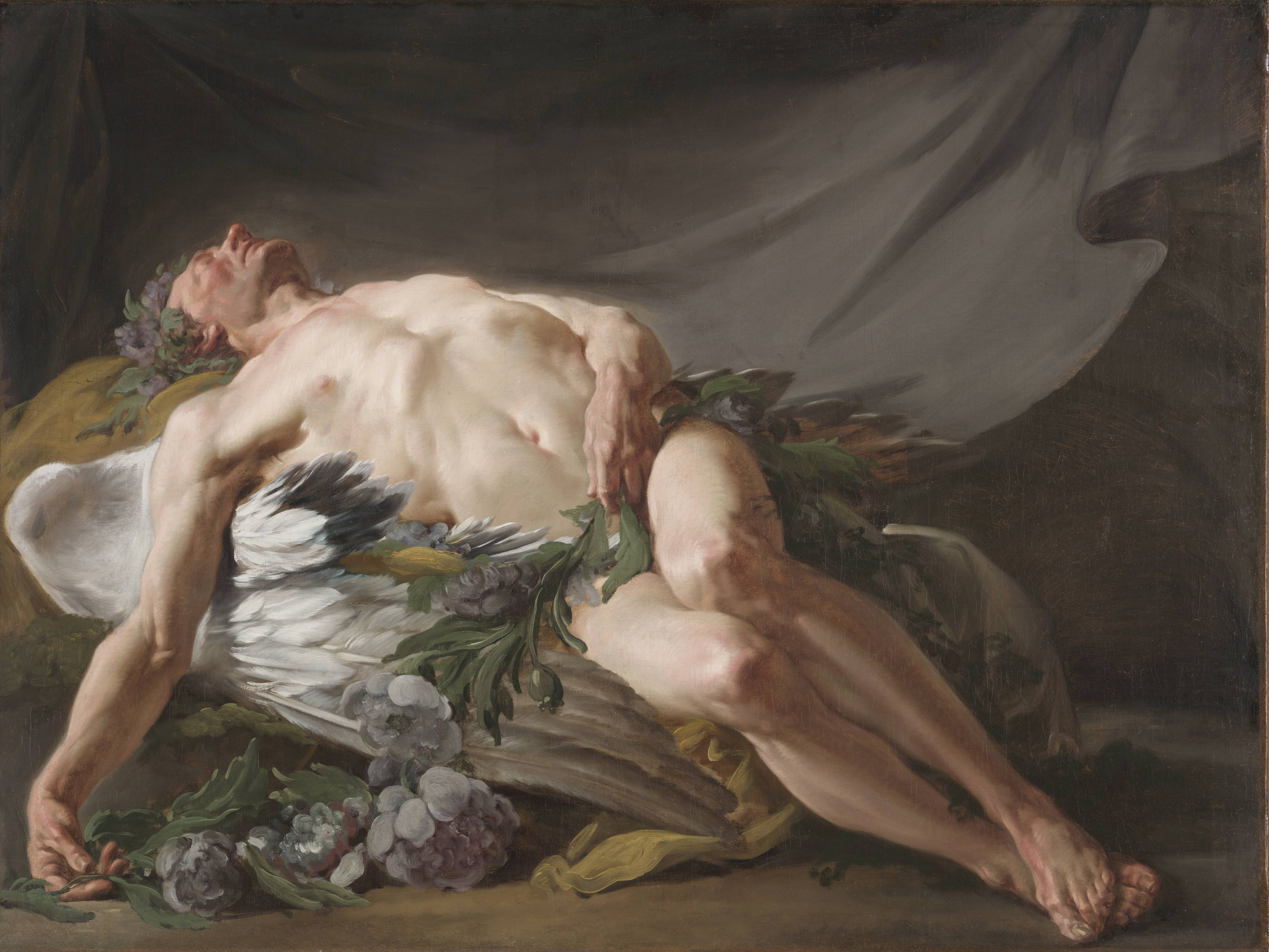
Morpheus by Jean-Bernard Restout
The God, uneasy 'till he slept again,
Resolv'd at once to rid himself of pain;
And, tho' against his custom, call'd aloud,
Exciting Morpheus from the sleepy crowd:
Morpheus, of all his numerous train, express'd
The shape of man, and imitated best;
The walk, the words, the gesture could supply,
The habit mimick, and the mein bely;
Plays well, but all his action is confin'd,
Extending not beyond our human kind.

From Ovid's Metamorphoses, Book XI (Source

Death and sleep, the fading plea of waking form, dissipating under the thin sheets of human comfort, forlorn, the pain of reality is a realization, that death's blood stains the dying hand. 
________
The creaking wood of the log cabin breeds an authentic woodsy order. Inklings and whisperings from the unheard Northern ecology brew spindly mycelium waves into the tragic human desolation, a stolid break from the bitter taste of city life. 

An original inhabitant, with less design for the transitory fading of desire, hides in groves and pains with the aftermath of winter in this warming escape. Unintentional, with drab face, his emotive instances are bare with unknowable sorrow. The rain burns over the frayed wick of lightless trunks under the whistling canopy. 

He has the air of a murderer, more a serial killer. Thin and over-confident, he swaggers into a common room, his flesh woven in knots, gnarled eyes penetrate the pointed vulnerability of my female companion. The tense noose of our isolation bespeaks unforeseen warning. One night, he feeds.

Gathering my things, a fright of blearing raw insanity, my computers, my bags, the endless compartments within compartments filled with this or that, yet my Love is slaughtered in the white heat of this wooden homicidal mystery. I hear his steps and free myself from the burden of automobile and everything I own, possessing only the random trappings of a turning mind. 

I fall, retching in a golden mud, into a hole of wonder, the driven names sputter and churn in this earthen stomach, heaving and ingesting my whereabouts in a timetable of eternity. Blinking water, dripping in the metallic soil, spurns an awakening as I peer into the soft light of the tunnelling ahead, beckoning me to further escape. The wishy-washy sounds pander in my mind with noxious will. 

A funnel of heat presses its ugly scent into my eyes, as I sink ever deeper through a new hole, fainting with near-death experience, dropped beside a bus. Eagerly, a host of newcomers, young as myself, board the bus with all their things. Stupefied, lost faces daydream an unsayable nightmare, their hollow eyes mirror my own mourning. We’re off to Egypt, to face the sun of the age. 
_______
Murder
"To see murder committed in your dreams, foretells much sorrow arising from the misdeeds of others. Affair will assume dullness. Violent deaths will come under your notice...If you are the eyewitness to a murder this is also a warning, but, one that is alerting you to possible changes in your life that you will not like unless you practice self control and not expect others to order the situation for you." (iDream)
_______
roaming to sacrifice

memories
and the aftermath of a wordless crisis,
vagaries of mind bound by geographic boom
into the obscured continental pole,
driven
estranged to unknown homes,
sacrificed to roaming

Friday, 20 July 2012

Songs of Ascent for the Exile's Shabbat

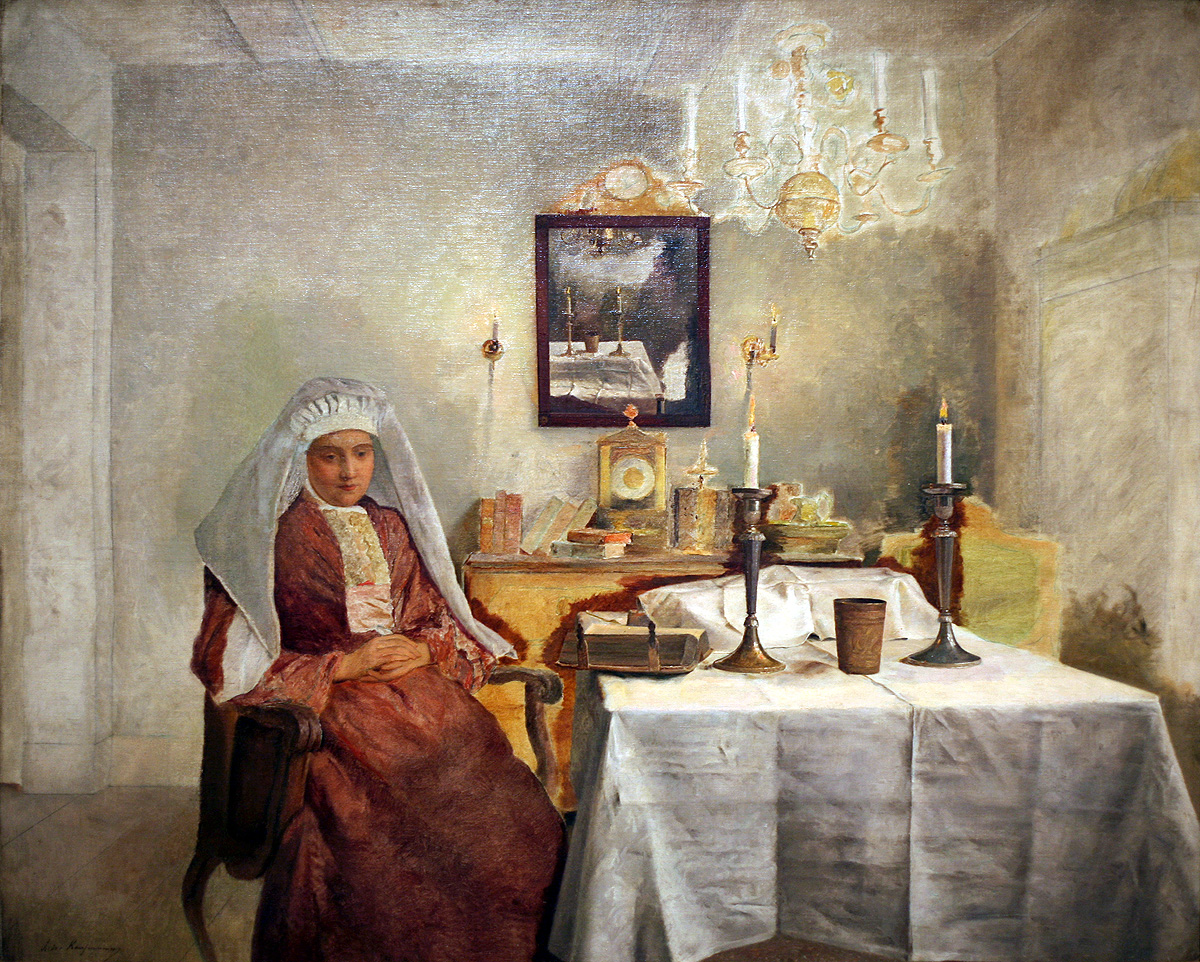
Friday Evening, c. 1920 by Isidor Kaufmann
1. When YAHWEH turned again the captivity of Zion, we were like them that dream

א:  שִׁיר, הַמַּעֲלוֹת
בְּשׁוּב יְהוָה, אֶת-שִׁיבַת צִיּוֹן-- הָיִינוּ, כְּחֹלְמִים.

2. Then was our mouth filled with laughter, and our tongue with singing

ב:  אָז יִמָּלֵא שְׂחוֹק, פִּינוּ-- וּלְשׁוֹנֵנוּ רִנָּה
אָז, יֹאמְרוּ בַגּוֹיִם-- הִגְדִּיל יְהוָה, לַעֲשׂוֹת עִם-אֵלֶּה. 

________
I remember that hill over Muqattam. The overbearing expanse of city, modernity’s rush cascading over the fold of an unclean mind, burning with hot anger in the deep mud of trivial remorse. “They had a plan?” I ask myself, eyeing the inglorious ruins of the once-worshipped architecture still clinging to the life of popular assembly. 

The race of motorcycles and small vans gargle the steaming froth of smog. All spat murderous into the disappearing rain forming high above the human realm. The deserted outskirts, nude with the pang of an outstretched kin, and I am lost, reaching for high ground in the sand-whipped light. Moonless, my fatigued mind craves for recognition in the atmosphere at hand. I am a lone walker on the side of the road. A bus skids past, slows to a halt and I enter into smiling Arab tongues.

The rage and personified haste, the stone labyrinths, the winding path is lifeless with the cold sweat of his following. A professional runner turns and writhes in the pain of want, instilling in me an incisive turning. The wandering hate fills me with unrivalled curiosity and shame. I know no warmth, but for the hunted muscular knife-rent swallowing of friendship cursed along the highway pathways, intermixed with the foul bitterness and acrid taste of inner city air. 

We fall into a hollow stone, and as two locked in the crude horror of warring greed for a brother’s flesh, the wicked stress of rivalry bleeds into our distraught, nascent sanity and heaves it straight over the edge of common reason, to blood and night.

And in the turn of the People’s Spring, a vision unites my fiery cry for wisdom in the heart of our common ancestral history; humanity astir in the colored, feathered breast. A flight into the Eastern European pasture of stars, grazing in the weathered light of a great-grandmother, still kissing the martyred asp of tradition; a Jewish sprite. The elder ways fire in my unskilled mind an art, performative in the midnight trust with an earlier truth. The performance is tonight.

Wading in the molasses mind of patience for the spiritual will of ideation from the ghosts of the numinous beyond, I struggle with answerless freedom in the sordid now. I ready the ingredients. The wasteful strolls and meandering highs screw our minds into wakeful reason, to, with meticulous care, craft an act of such daring import as to quicken the mind and speak the heart. I make a paste, of turmeric base, with white, weakened broth. I will be a death camp victim, with lightless skin and gaunt hue.

Wasting away in the turmoil of ambient talk, I prepare my body, though with fault besieging me with lost and needed objects fading and reappearing sporadically, as to the rhythm of my anxious pulse as I meditate on the gas chamber. I’ve devised the shower faucets to emit a turmeric spray, the walls an exact replica of the infamous Aushwitz, Lodz, and countless others.

As I watch the clock spell a cruel lateness, as speeding on into the infinite daze of eternal death, I’m unable to hasten and prepare myself before my half-hour performance slot is up. About five minutes before my time’s ended, the door inside the dressing room bursts open to the step of Brazilian carnival dancers and Latin fiesta cooks with big rumps and loud mouths, shouting in a haze of upended happiness, a gorge of playful sight ignites my depth of ancestral reminiscence. The act is over before it’s begun.
________
Late
"To dream that you are late for something represents your fear of change and your anxiety about seizing an opportunity. You may feel unready or unworthy in your current circumstances. You may also be conflicted over decisions about your future." (iDream)
________

the dimly lit cougar
a swan and her minions

playing over the blonde heat
some unknown bass record

feet stung blind,
tough grotesque splurge over the glued racket
...
into a silent dysfunctional glare

breathing alone
holed-in

Thursday, 28 June 2012

No Country Mother West, Birth of Father Sun East

"...it was like we was both back in the older times, and I was a horseback going through the mountains in the night, going through this pass in the mountains, it was cold and there was snow on the ground, he rode past me and kept on going, never said nothing going by just rode on past, he had his blanket wrapped around him with his head down, when he rode past I seen he was carrying fire in a horn the way people used to do, and I could see the horn from the light inside of it about the color of the moon. In the dream I knew that he was going on ahead and he was fixin to make a fire somewhere out there in all that dark, in all that cold, and I knew that whenever I got there he’d be there..." from No Country for Old Men by The Coen Brothers

_______
The road from the American Southwest opens in a lightning flash northward. A literal streak of beaming spectral intensity whitens the sand-whipped pavement unto the Canadian border beyond. This is my road, from Mother’s home of her dreams, to the creative migrant’s expatriate sway. A great triangle figures over the backdrop of North American flight. A sweet host of ethereal musing enlightens our unforeseen paths with adamantine wisdom. More southerly, the Peruvian fleet screams in my head with a need to lie beneath a doctor’s analyses, feet pointed horizontally, outstretched and fixed on the meridian point of loosened stress. Though, I am always late.

Waking up, exhausted and bedraggled, I find a representative from Amazon Watch at a doctor’s office, telling me I’ll be seen on the morrow. He’s an astute Englishman, proud and busy. I head back to Mom’s. A car pulls up in our driveway as we serve dinner. A human rights organization representative accompanies my old friend from Sudan.

My heart flies to cerulean heights under the darkening late feast of sky. His African build glows through a rejuvenated skin. His head, bald as usual, is unblemished and perfectly globular, fitting for such an astounding brilliant balanced mind. He greets us and I immediately have my mother fix him a decadent plate of meat. After dinner, he and his organizational representatives stay for conversation. My parents have retired upstairs.

“You have been a father and a friend,” my eyes tear with conviction at understanding our separate paths, crossed by pure benediction in our shape-shifting inglorious world. “Thank you for visiting me in person.” I am ever relieved to see him healthy, glowing and taking on his dream of working for his people, forced migrants of Egypt, in the comfort of a socially and technologically developed country as we enjoy in the West. His road is unlighted. With pronounced intent, their vehicle sets off into the unforgiving American night.
_______

West
To dream of going west represents fulfillment, opportunities, and growth. Alternatively, west symbolizes death, old age or an ending of something. (Source)

_______
western civility estranged
captivity in genital awareness
a rough and tumble, hide
and seek gathering
pushing into skin
draped exotic
law, broken by
caress and
gentle magic,
winning over
the ravaged tragedy
of attraction:
a sounding
for the war
on sex

- excerpt from "monosexuality"


Wednesday, 20 June 2012

Dreamless Impasse of Democratic Dictatorship


"One of the things we are realizing now is that it is easy to beat a dictator, but it's not so much easy to get rid of a dictatorship. The networks, the intricacies, the institutions, and everything the dictatorship has established remains, even after the elections."

From Democracy Now!

Mohammad Nasheed, recently ousted from freely democratically elected appointment as President of the Maldives by the previous dictatorship. The US has supported the previous dictatorship's return to power. See Egypt for more. 
_______
In a ground level stone-concrete apartment with Vi, a storm-brought flash flood rolls in with increasingly formidable waves, crashing into our home. She hands me our son, as a final wave breaks over our heads, I'm unable to carry the infant above the water and lose its precious body in the storm-tossed water. After the flood subsides, under bristling gray skies, we search for our toddler in the wreck of our home. Found electrocuted in a ceiling appliance, Vi is beside herself. We leave our place unable to visit our neighbors from the shame, heartache and miserable wreck. We find our way into a department store, seeing newly homeless, bruised and battered, bloodied and torn bodies and minds. A friend with a newborn boy consoles my wife for her loss.
_______
Flood
"Dreaming about being in a flood is an indication that the dreamer is currently experiencing powerful emotions that may be overwhelming. The flood in your dream could represent a very powerful, or even violent, emotional cleansing experience...just like in an actual flood, waters reside and so do emotions." (iDream)
_______
into the aftermath of Egyptian shari'a
god who numbs the pride of his tombstone children
with numbers to awe mediums dress over worldwide rage
as local prophet magicians in the New South pray for rain
to drop into a new continent,
for the last time

- excerpt from "boiling over with truth"

Thursday, 8 March 2012

The Lucid Bansuri: Remembering Dreams from Cairo to Khartoum


- Create Space & Reflect -

Listen to Bansuri Music 
This is a Key 
To Remember Dream

- Reflect & Create Space -


“Our ability to transcend grief and trauma that affects our every waking moment, our relationships, our ability to connect with anyone and everyone, becomes a symbol of how this can be done culturally and globally. Down under the blanket of denial runs a river of grief so despairing that our pain is but a thread…”


______

Embedded deep in my subconscious, a dream was invoked which actively combined elements of my imagination mixed with reality, as it were wholly over-arched with the peculiar logic of dream. 

I traveled to Sudan with the Sudanese friend & mentor I met while in Cairo. Together we left for Khartoum from Egypt. When we arrived, I found myself called to visit an ecological park. The city infrastructure and the park itself is strongly reminiscent of Puebla, Mexico where I recently visited. Also, the park reminds me of a painting I used in The New West of Dreams, however with features of Calgary's eastern outskirts in midsummer, with straw grass, lit beige along the side of railroad tracks unto an open field horizon. This is important, as entering through this imagery leads me into a labyrinth network of my psyche set in a past residence. In this case my Zamalek dormitories are transformed to receive me, with special emphasis on their washrooms, out of which I meet an unusually forward acquaintance who begins to accompany me and assist me throughout the city. This friend is someone who I studied with in Canada and met again in Cairo, asking him to volunteer as a part of a research project. In this dream, he takes another name as we've since fallen out of contact.

The substance of the dream lies in me going into the city of Khartoum. As I've never been there in a waking state, I create the city out of sketches of video I have from a research project I collaborated with there in June 2010. I often return to the ecological park, however my friend from Sudan resides in the city. He is the principal character in this narrative. Over tea, he emphasizes to me the fundamental error of my research, which if on the subject of refugees should not be "why are there refugees?" but instead "how do we get these people out?" One should not undermine or exploit an act of exile, as exile is often the most decisively conscious choice of all.

Now, the trick to remembering the content and substance, i.e. narrative structure and significance of the dream, as practiced in this example is that after forgetting the dream, after its sleep cycle had ended, I dreamed lucidly, where I told the story of what I went through in Sudan to close friends and family in intimate settings, and it brought me right back into the substance of the previous dream. Upon waking, the only discrepancy between dream memory and waking memory is the fact that I never traveled to Sudan, though the content of the dream itself was wholly based in waking memory.


When one is able to manipulate their psyche with regard to memory and consciousness, one finds that upon waking, the substance of reality becomes more and more resonant with principles of dreaming.


_______

and what do our ramshackle hearts smell?
close to a savage waste
as overwhelming and without choice
as drowning in the rice stew magic
of a motherless animal
eaten raw, over a lover’s fattened tummy
now screwed into all intoxication
and psychic bewilderment,
until the stare blows rhythms of ancient minds

- excerpt from "Cave Home"

Tuesday, 28 February 2012

As a Child of Light, Embraced by Thoth in Dreamland


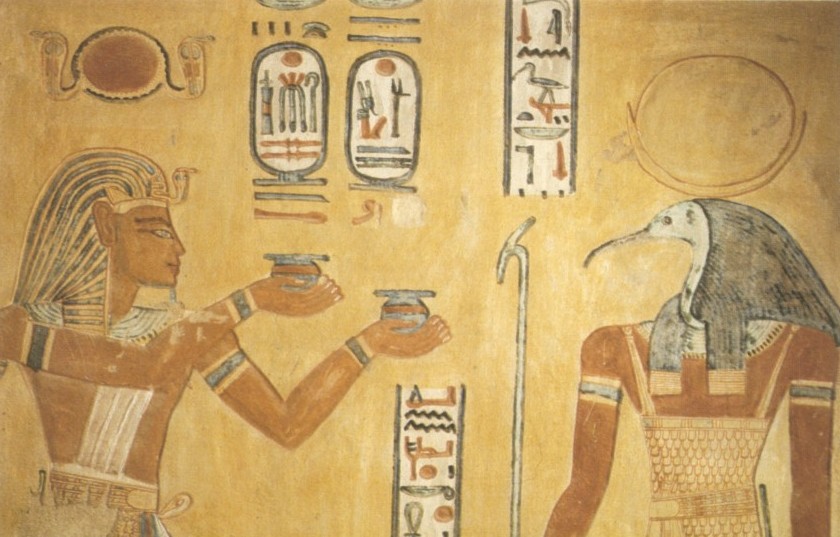
Ramses III. in front of god Thoth in tomb of Khaemwaset, 12th Century BC. by Ancient Egyptian Painter


"Thoth, the Atlantean, at the 26,000 year ago beginning of the Cosmic Cycle now ending, aided in the building of the Great Pyramid and secreted within it records and instruments of the Motherland Mu and Atlantis explaining how the 'Children of Light' dwelt amongst the Ancients and are not as sons of men, except when they are in physical bodies. Thoth incarnated again in the Third Dynasty of Imhotep as architect under King Zoser, was Socrates and Simon Peter among seven incarnations. He knew that all men were essentially Spiritual Beings, for he said, 'Man is a 'star' bound to a body! Man is space born, a Child of the Stars(a Starchild!). Man is a flame bound to a mountain!'"

Source

For More Mysteries: Where the Lines that Divide Science and Myth Intersect 


"Dreamland" refers to the areas in and around Nevada and New Mexico where extraterrestrial mysteries intersect with government security, arcane science and high technology. This is the setting of my dream.
_______


After this series of dreams passed through my consciousness, upon waking, I had intended to discard the activity of recording this night of dream substance, as the sketches of dream memory seemed to be far-fetched, or too far removed from my daily, waking reality. Then, upon waking, I was forwarded the above message from an old friend. I thought this was a sign that I should indeed record this dream.

I seemed to be returning from the West Coast, driving across the United States, when I passed through the Southwest. I feel as though I’ve ended a part of my life where I was deeply embroiled in study. As I traverse beyond the coastal horizon into the desert landscape, I am somehow drawn into one final “course” if you will. I stop in an area of absolute desolation somewhere deep in the deserts of the American Southwest. The only nearby city is way far off beyond the horizon. We are in pure desert. I see a familiar face in a crowd of indiscernible human shapes and activity. Suddenly, though curiously expected, there is a presence above, a directing mysterious light, leading us to raise our arms in recognition. I feel we are being taught something, as my entire body begins radiating with harmless visible electricity. There is a pulse coursing through my limbs with a vibrant white glow.

Suddenly, I find myself, in the state of a child. I perceive myself as a small, minute entity, like a small child version of myself, however, somehow smaller, as my surroundings are proportionately more massive than I’ve ever experienced. I feel as if dropped into the middle of the desert, with only a couple companions, equally disoriented. We begin stumbling through the desert brush in an unknown direction, thoughtless and with a daze of incredulity and stubborn introspection strong enough to leave us careless and at once convinced as to the security of an optimistic fate. As we continue our walk, we soon happen upon an open cliff, leading into a canyon of vegetation and water. This source of life is our destination, we can feel it. As two children, however, we fall headlong down the cliff, without heed to caution or ability to properly maneuver the descent, and find ourselves plunging into the cool stream below. This is refreshing, however disconcerting, as we feel we have lost things of importance. There are beings upon a hillock above us, so we slowly collect ourselves and find our way to the top. We are welcomed by a towering figure, an alien body, whose shape and features remind us of an insect, although this being commands great respect. There is an exasperatingly strong resemblance to the living Thoth, Egyptian God of Knowledge and Writing! We are comforted in the presence of Thoth, and he sees to it that we are taken care of, while being independent as ever to splash about for our things in the water and climb the forested canyon hills.

Now that I reflect, I believe more and more this was the figure of Thoth as we know from Egyptian mythology in the flesh. In the dream, Thoth was of certain humility and held an unassuming air, embracing me and simply allowing my inner Child to explore (with personal neuroses intact) under the beautifully humane security of his nearby presence. 


__________


Watch about another incarnation of THOTH in New York City!
_________

"there's an old saying,

that goes something like;

‘a person that knows their place is a demi-god,

and the place of a person,

is a god,

and the One who has no personality

and is everywhere,

is the God’

a really old saying,

no one knows where from"

- excerpt from "An Old Saying"


Wednesday, 22 February 2012

Overcoming Fear through a Koan of Dream


Stairwell Lighting at Night by Adolf von Menzel
Buddhist Hermit

"if you see through this world and let go of it...this is wisdom
if you see through this world and but don't let it go...that's just "talking Zen"

here, for you:

[the hermit hands a handwritten koan to the filmmaker]

'ten thousand things
all in this breath
grasping hold of emptiness
there's really nothing to say'

'ten thousand things, all in this breath...' why are people so busy?
just for one breath
they say, 'busy busy, mine mine...
busy a whole lifetime for 'Me'

when this breath is cut off...you let go of the whole universe...why not let go from the start?
'grasping hold of emptiness...' you want to talk about 'real'... show me one thing that is real...there's nothing real from the start

every day morning to night, gathering things...big and small, valuables...money, name and recognition...gathering it up into your lap...like you're holding the golden key...busy your whole life for nothing...acting like a thief...why not put this energy to liberation?

put this mind to the Path"

from the film "Among White Clouds"
__________

I’m in the middle of a desert wilderness outside of a concrete shack which seems to be fortified with wood in various parts. I am with my Dad’s family, specifically I can see my step-sister and my father. They seem very concerned with the time. My father asks us all to be aware of the time, yet he seems very confused and distracted. I ask why would we pay attention to the time, when we are here! I look over my shoulder, and the sun immediately dips down like a perfectly circular satchel of black tea into the boiling water of an endless Sahara horizon. Our surroundings turn to darkness, and suddenly I realize where I am. I can see the Sphynx, with its eyes aglow. Beside the Sphynx are other ruins, unseen in the light of day or at all in the modern ruins around the Great Pyramid. There are faces, of Pharaonic royalty and monuments indescribable. I don’t know how we got here, but I begin to become nervous as I see a local Egyptian, appearing to be a Bedouin trot down a nearby path on a camel. I asked them if they understood where we are and how this place seethes with forbidden territory. They don’t listen and wish to stay permanently, enamored and convinced this is the place they should be.

Together with my wife, we set off. On the road, we find ourselves boarding a mine cart and fleeing swiftly through a desert mountain landscape. As we near insurmountable cliffs, our cart somehow hovers blankly over the cliffs as if their steep inclines were lined with tracks. Upon a deserted hill, we come upon what appears as a Zen dojo or Buddhist shrine of some kind. I enter, leaving my wife behind to wait for me.

Inside the dojo shrine is a hermitage group in the presence of Allen Ginsberg. He is leading a hermitage in exercises of dreaming and fear; that is, how to overcome your fears through dreams. On the walls are psychedelic video art installations. There is an unspoken air of poetic thinking in the room, however subdued by a collective attitude of spiritual practice. When it is finally my chance to endeavor to see out the exercise before me, I am keen to try and overcome my fear through this dream. I am led, to enter myself in the other quarters of the dojo shrine. Its paper walls open at my approach, as I survey the empty quarters. A lightly carpeted staircase leads up to a dark upstairs room. I feel this will be my test. Inside the room, there is a table, upon which my fear resides. Adrenaline rushes. My scalp tingles uncontrollably. I look up, to see an alien figure, hairless and gray-skinned, shriveled and wrinkled, with inflated head. This figure seems relatively docile, however he holds a rope in his hand. Above his left shoulder, a smaller version of the same alien species lies hanged upon a noose. I look into this alien torture victim’s eyes and I see a piercing evil reverberating into every corner of my being with pure driving intensity from the only light in the room, emanating like diamonds from the pupils of the emaciated skull drooping with a deathly gaze, directly at me. I am overcome with fear and immediately exit, having failed at the exercise. I return to the room, the air is a polite majesty of compassion. I leave for my wife outside, who waits patiently.

What was Ginsberg trying to show me or trying to lead me towards; something old, withered with age or neglect, something so inhumane and non-human, yet so eerily resembling our human form, or something hidden deep within me, a part of myself that is all of those things and more, a thing I'm afraid only to confront?
________

Leaving nowhere

loopy adolescent
limping
and boasting

a raucous
and numb
pride
for nowhere
leaving

Tuesday, February 16 2010
3.18pm
Waiting for plane in ugly dim light of celebrity photograph restaurant in Calgary airport. 
Beer and soup.

Sunday, 12 February 2012

Skeletal Percussion under an Insurmountable Cliff in a Cairo-Western

Moses Striking Water from the Rock by Francesco Bacchiacca


I fail in my attempts to scale a sheer cliff face. The convex shaft of rock rises with crumbling shale and patches of vegetation. About 12 stories high, there a small plateau can be seen, whereupon a sparse array of pines and a wild horse appear at the glinting corner of my eye against the vertical immensity.

With extreme patience, I wait so long at the bottom, contemplating my journey up to the top of this rocky upshot plateau that my surroundings turn to nightfall. I am somewhere, it seems on a street corner of an old Western town mixed with a particular street corner in Zamalek, Cairo, Egypt where an old-fashioned, abandoned colonial bar still exists as the sole edifice of its kind across from the Iraqi embassy. It is nightfall and the dirt road is damp. Eyeing a nearby cat atop small, ramshackle homes and halfheartedly constructed projects, I shoe away stray dogs. I am playing an odd percussion instrument. With vertebrae, it seems of dog, horse and cat, in different sizes strung up, and hanging down off a piece of wood, I knock against them with the skull of a dog. The bone-knocking sound is then accompanied with a metallic cymbal-like object that I also strike against the differently-sized vertebrae hanging down in various lengths, to produce specific tones upon striking them. The sounds are enlightening, yet as the dog nearly kills a cat, attempting to chase it into certain death around my roofless quarters, I still yearn to rise with break of day and scale the rocky outcrop. 

Thursday, 2 February 2012

Dreams from the Arab World: Deadly Play and the Chaos of Freedom

Kalila and Dimna, jackal tale scene: the crow king and his counselors by Arab painters around 1210


for those who lost their lives...

Dream of Youngest Female Nobel Prize Winner Tawakkul Abdel-Salam Karman

From her acceptance speech:

"We were able to efficiently and effectively maintain a peaceful revolution in spite of the fact that this great nation has more than 70 million firearms of various types. Here lies the philosophy of the revolution, which persuaded millions of people to leave their weapons at home and join the peaceful march against the state’s machine of murder and violence just with flowers and bare breasts, and filled with dreams, love and peace."

____________

Semi-circle monkey bars, rusty, old, they rise to a very high altitude at center.

I’m videotaping an expert at crossing the most dangerous part of this abandoned playground. I cross multiple times, as I go on and on, it becomes foggy and humid. At the center, there is an opening, where my mind goes blank because I feel it’s impossible to cross, but I cross

At the last crossing, when I reach the bottom, it feels as if I am in an abandoned, mechanical children’s playground in Egypt, and I remember an Egyptian girl who seems like my girlfriend…yet she is missing. I flash to a scene that looks like her parents, and local police. They are speaking in Arabic, searching for her. I flashback to being directly on top of the semi-circle monkey bars, my friend who I am videotaping reminds me that he’s gotten rid of my poetry books because they give evidence of the missing girl…I flash in my mind these poetry books, immaculately printed with full color photos of the girl and professionally written poetry…I go to a field, and a mass of people are reciting this poetry, it seems I am at a funeral.

Sunday, January 29