Primarily a writing exercise, this dream journal-inspired blog is a quiet introspective sojourn into the process that we traverse in going from private dream to public art. I see our dreaming as an internalized mythmaking. As I philosophize and expressively exhibit dreams, both private and public, I encourage and delight in creative language as a way to practice experiential metaphors through a “public dreaming." Writing Theory: Creative Dream Fiction
Showing posts with label Xaphoon. Show all posts

Monday, 9 September 2013

The Woman Behind The Dream: Chopin and the Timeless Tuning


“Because perhaps to my misery, I already have my perfect one whom I have without saying a word, served faithfully for a year now. Of whom I dream and in whose memory the adagio of my concerto has been written.” Chopin, The Women Behind the Music

In the memory of such early genius as Chopin, our cultural continuity glorifies bygone eras with a creative resurgence only known to Western opulence. And looking out from the window of one's own, the sparks of desire light. At first, softly, the Earth burns. Then, the air plumes in a haze of smoke. The bonfire of magic absolves the moon of its light, and the stars become mere smoky display. Inside, and from underneath, the imagination fires the kindling of co-unity with the mind.
___________
And in such as a bout of unspent night, where slumber is deep and each morning fresh, I woke into dream. The longing test of emotive fire, the blinding seed of passion instilled. To work, and to find solace in worldly accomplishment deceived! The wakeful night spun an inglorious frost, a loosened hold on the sunless firmament. 


The Night with the Genii of Study and Love by Pedro Américo
A summit revealed the greatest of depths as the wounded sky bled rain and ice, brewing over the darkening clouds. We traversed impossible concave stone, sharp as a split mirror, the ice moved our flesh towards the brink. In a vivid flash, I saw memory itself, bear unto the apex of Earth. The stars crowned the lonely top as we gazed into our battered arms with hands of ice and stone. 


Storm in the Mountains by Albert Bierstadt
From the greatest of heights, the shadow of a man fell to die. Scattered in the colourless flush of snow, the piercing rock dashed all hope. Still, with chests full of heart, we climbed on and to the frozen prison. Alone, I emptied my eyes and climbed the last step. The day sped past in a hearse, as a vision of unity stung my heart with its sole truth: alone with the Alone. 
____________
To close the album, "Evocations: district.Columbia" the track, "Untrained Timeless Tuning" consists of improvisations on piano (keyboard) and xaphoon (bamboo sax). The age-old American sound of piano and woodwind hearkens to the unique sonic fusion that is completely unique and characteristic of the country. Especially in the use of a certain type of improvisation, the classic sounds evince an internal discovery of not only the human soul, but the soul of the land known to Americans as home.

In such a time as today, when war after war knocks at our doorstep, we can be reminded of the cultural heritage that more prominently identifies us as a unified people: music, the one common language of humanity. So, the sound is masked with electronic innovation into the 21st century, where the piano sound is a controller, and the woodwind is a recent invention. The first xaphoon was made only forty years ago on the island of Hawaii.

Further, the title, "Untrained Timeless Tuning" speaks to that harmony that is basic to all regardless of class, education, ethnicity or religious identification. There is a way to shared harmony, and it emerges through a music untrained by the classism and privilege of modern higher education. Whether speech, or instrumentation, the music that is untrained, while in tune with the essence of human life as pain, raw and blunt, is the very timelessness that high art seeks to capture. That timelessness is bred in every interaction and exchange whether within or between us always.

When we speak of Re-Writing our STORY, as in the chapbook wherein this piece is written, this very realization is the voice that carries our experience to such wonderful stretches of the imagination; present and transformational. So, the traditional keyboard and woodwind sound is transformed into an electronic movement of triumph in contemporary sound creativity.  


The following six-poem chapbook, Re-Writing our STORY, is the final series of works from the district.Columbia collection. The pieces reflect the penultimate phase of true revolution as a spiritual transformation of one's narrative. That is, one re-imagines their perspective through a revolutionary act of storytelling. This kind of storytelling reflects personal truths, daily experiences and common points of view with regard to the larger narratives and mythologies that consume unknowing minds through belief, propaganda and pride. The feature piece, Untrained Timeless Tuning, was published with Poydras Review in August of 2012.

Monday, 22 April 2013

Noocide and the Community Within: Legendary Voices on Ego-Dissolution


“I had a dream once that I was at an international conference, debating economics…” by Gilberto Gil, in support of Xingu+23


Dreaming, conscious & active, increases our potential for empathy and curbs egotism. The lucid consciousness of the dream sees from all perspectives through one perspective. The actions and emotions of every dream character are essentially rooted in the dreamer. This is our natural engine of empathy, and our natural organ of humility before the great diversity of human life, and the infinite spectrum of mental expression.

"You want to reclaim your mind," said Terrence McKenna, "and get it out of the hands of the cultural engineers who want to turn you into a half-baked moron consuming all this trash that's being manufactured out of the bones of a dying world." In this talk, McKenna also goes on to convey how we have lost touch with Chaos, and how older forms of ego-dissolution, such as ecological meditation and entheogenic use, are essentially about the meaning of sacrifice, which is the only thing that will solve our current problems. Ego is adamantly focused away from sacrifice, the role of contemporary humanity is to realign ourselves to a renewed sense of the diminished ego, and a healthy sacrificial attitude towards the greater reality, which is our immediate now of earthly presence. 

Chaos is within us, known through the act of dreaming, where the mystery-engine of narrative is spurred on through the natural inborn creative imagination, our promised birth-rite. The inner worlds of nature mirror this internal intelligence, which constantly breathes as an inhale and exhale of sacrificial flow, a reciprocity with the spiritual presence of subtle energy, generated through the noosphere. At once, as there is a crisis bearing towards ecocide and ethnocide (see my earlier post: Genocide and Extinction), there is also a crisis of what I will call "noocide", or the extinction of our natural capacity to think for ourselves, and look past the egotism of individuated consumer consciousness.  

Attention for the contents of dream narrative allow the mind to reorient within, to the source of dreaming that so inevitably follow outwards with the chaotic madness of global consumerism, expensive vacations, and a whole slew of energy misuse in the wake of ego-manufactured externalized dreaming. The inertia of internal dream substance, awakens the mind to the archetypal community that all share. As Jung said, "Who looks outside, dreams; who looks inside, awakes." We can also look for community within. 

Read my recent article on Media Co-op: Resistance to Canadian Oil Extraction in the Amazon Continues
____________
Can you hear life? by RK
Read the signs by RK
Flightless Cubism by RK
National Isolation by RK

Inner Light Cityscape by RK
_______________
The forthcoming album, "Evocations: Exotic Settlers" is an evocative musing on the sound language nestled deep within the poetic substance of orated selections from a collection of works under the same title. In continuity with the theme of "exotic settlers", the album is an experimental narrative-sound art exploration into the imagination of a journey of settlement, both archaic and modern. Here, voice soundings are mixed with one instrument at a time, to convey a sense of the traveler, whose light pack is ideal for the road ahead, and whose voice traverses the simple grandeur of sonic revelry from a single instrumental accompaniment. Themes of travel are juxtaposed with settlement, both in the settlement of tradition and ecology, and the inner and outer journey to that destination. To settle on one instrument at a time is a metaphor for the inward/outward experience of settlement for the migrant, who eventually becomes an "exotic settler".

The choice to accompany the voice with a single-reeded bamboo saxophone or xaphoon instrument is based on my affinity for the African sound of the reeded instrument, as in African-American jazz roots. I put an old vinyl effect on the first improvisation to hearken to these early recordings. Also, the xaphoon is originally from Maui Hawaii, and so, the great waters of the Pacific Ocean that separate the North American continent from Hawaii, with its deep Aboriginal heritage, mirror the poetic river offering through the sound of the instrument as a metaphoric nostalgic passage across the western ocean.


Beginning with a reminiscence of life in Africa, poetic reflections written on hillsides in rural central Mexico, overlooking a wide lake in a small village, I remembered Africa. The words allude to Africa as the Mother of all Humanity, as Mother Africa, where all people can know their origins as one human family. If wondering, "What has Africa given to the world?" The answers are many, including the soul of contemporary music, but also our very biological evolution, as humankind. Africa has given us ourselves, our poetry, our music, our spirituality, our creative eye, as well as other aspects of ourselves not so likened to evolution such as our politics. Yet in the words I have chosen in "I remember Africa", I ruminate on the spiritual origins, beneath the flesh, "our skeletal humanity" where we are all one, where we are one with Mother Mater.

The second haiku-like oration, "Selflessness is the father of human survival" was written down after an impromptu spoken word over a city bridge, overlooking the grandiose ice sheets concatenate and break into the singular northern landscape. In Aboriginal folklore, passage across a river is a time of deep meditation in gratitude and honour for the life-giving waters. Traditionally, a sacrificial offering of tobacco, or a ceremonial smoke, is offered to the sacred life source of all creation. Yet, here, I offer the clear smoke of my worded breath, enunciating an egoless passage of impromptu heart resonance.

The other pieces featured in this chapbook draw from the barebones intensity of visceral experience re-felt through memory and the act of writing. In that process, the emphasis becomes one of awareness that drives one to act. To reflect, ruminate and contemplate the living significance of Africa in our own lives is to be moved onward in the struggle for life and for our humanity.


Monday, 4 March 2013

Electro-Acoustic Improvisations II: A Sonic Narrative from the Far West

Electro-Acoustic Improvisations I (Album Art Remake) 
Electro-Acoustic Improvisations II (Album Art)
"The first question I ask myself when something doesn't seem to be beautiful is why do I think it's not beautiful. And very shortly you discover that there is no reason." John Cage

Essentially one album, Electro-Acoustic Improvisations I & II are to be listened to in continuity, as a single expression of seeking through sound as voice and agency for the soul of the word. Electro-Acoustic Improvisations II is conceptually the final track of I, divided into 4 parts for listening.

Experiment with your ear, and look to the bottom of this post for an aural transport to the Far West.


Electro-Acoustic Improvisations II

On the margins of the vast, interlocking web of technology and nature, with broken instruments (both acoustic and electronic), we are beginners on the road to merging technology with all of life in this the human experience of Earth and the inner world as an evolutionary being of conscious development. 

Imagine sitting at the edge of a fire in the raw, teeming wilderness. The forest is thick. The air is heavy with an unbroken gamut of vegetable breathing. Warming your hands by the fire, under cover of starlight and the faint haunts of a new moon, the mind seeps and seethes with memories, dreams and reflections on the world “out there”. Civilization and its discontented fires of electric madness pour into your brain like an acid flashback. The Earth is still, yet your hands shake. So, before you is the music of the muses, the bare wonderment takes its own course into the heavens and hells of your own nature. Through music, the seeker of solitude purges the concrescence of electro-social distension. Discordant dissonance marries with harmonic essence as the jeering subtle flesh of mad electricity merges in the mind, hand and heart of one in touch with the strings, blood and fire of creative sound.  

Part I - The seeker discovers music as a beginner. The instrument is slightly out of tune, and the playing is imperfect. The melodies are introduced with electronic music, featuring static electric synthetic effects throughout. The seeker gains mental balance by overcoming the first break beyond the shores of civilization into the open expanse of nature beyond, where other, even more trying challenges are to be had in confrontation with the self, exposed and untended.  

Part II – With emboldened consciousness, the instrument and its sound are clearer. A fire has been set and night opens to the gorgeous possibilities of the sonic imagination. Electric distension is transformed into unseen beauty. The grandeur of melodic instrumentation opens up with a new strength of diversity. As the clouds above part to reveal pure sky, memory and reflection are enlightened through joining with traditions of seeking, as with the sonic movement into Middle-Eastern influenced lute music, translated to guitar in creative solitude with the empty awe of all-potent Nature. 

Yet, the seeker soon realizes this is only the beginning of the journey, and there have ever been electric distension scattered throughout the night’s hearth. By the end, the celebratory feel becomes more solemn as the seeker attains the first seed of self-knowledge, and understands the need to set one’s own pace and prepare certain deliberation before embarking on the pathless sojourn ahead. The music ends with the realization that it is dawn, and the horizon welcomes ahead.    

Part III – Reprieve from the journey, alongside a mountain ascent, beneath a cliff. Cool air from a spring entices the cold march of winter’s coming winds to turn and wade in the lush mountain air. Without a fire, music is the warmth. Creative passion warms from the inside with the brightest of flames. At first, blowing hard into the hands and fingers for the warm breath to spread throughout and allow for the wealth of instrumental music to unfold, the seeker stops playing as soon as it begins to rain. As in Taoist tradition, when the rain makes rhythmic motion, and the melodies of the thunderclouds fly with the magical presence of wind, one is to listen, and be humbled by the music of the spheres.  

Part IV – Beginning with a light touch of electronic moments, the music glides atop sounds of weather, especially as the seeker gets closer to the ocean. Following rivers, streams and tributaries, faring flash floods and rain-swept gullies, the seeker emerges from the wilderness with a great boon of discovery. A new instrument to behold! Notice, the music approaches harmonies with the natural way of impermanence and unity, as opposed to listening, where creative interaction with nature breeds a kind of musical kinship among humans and all life on Earth. As the seeker sights the ocean, the new instrument is played, ending the music and the journey. 

The new instrument is the xaphoon. Invented in the 1970’s in Hawaii, the xaphoon, also known as the bamboo sax, is a contemporary single-reed woodwind. The track ends with a homage to Jack Kerouac describing San Francisco, the very edge of the west, to crystallize the final xaphoon improvisation solo; a traversal of the “far west” in sound. 

Influences: Bill Frisell, Hamza El-Din, Vi An Diep, Steve Roach, Brian Eno, stones/minerals, earth, water/ice, winter, landscapes of the North American west, Jack Kerouac, fire, trees, reflection, solitude

See my previous post: Music of the Dream Author: Electro-Acoustic Improvisations I Release 
___________
On a clean, medical train through Sudan, my Nilotic companion eyes me with a piercing grin as we pass south of Juba into the New South. We have arrived at his hard-won home, South Sudan. His smile is buried deep within the pain of intergenerational loss, the hellfire of war still sting his reddening eyes as he tears up, the pictures of his innocent family smolders into the soil. The land speaks with his voice.

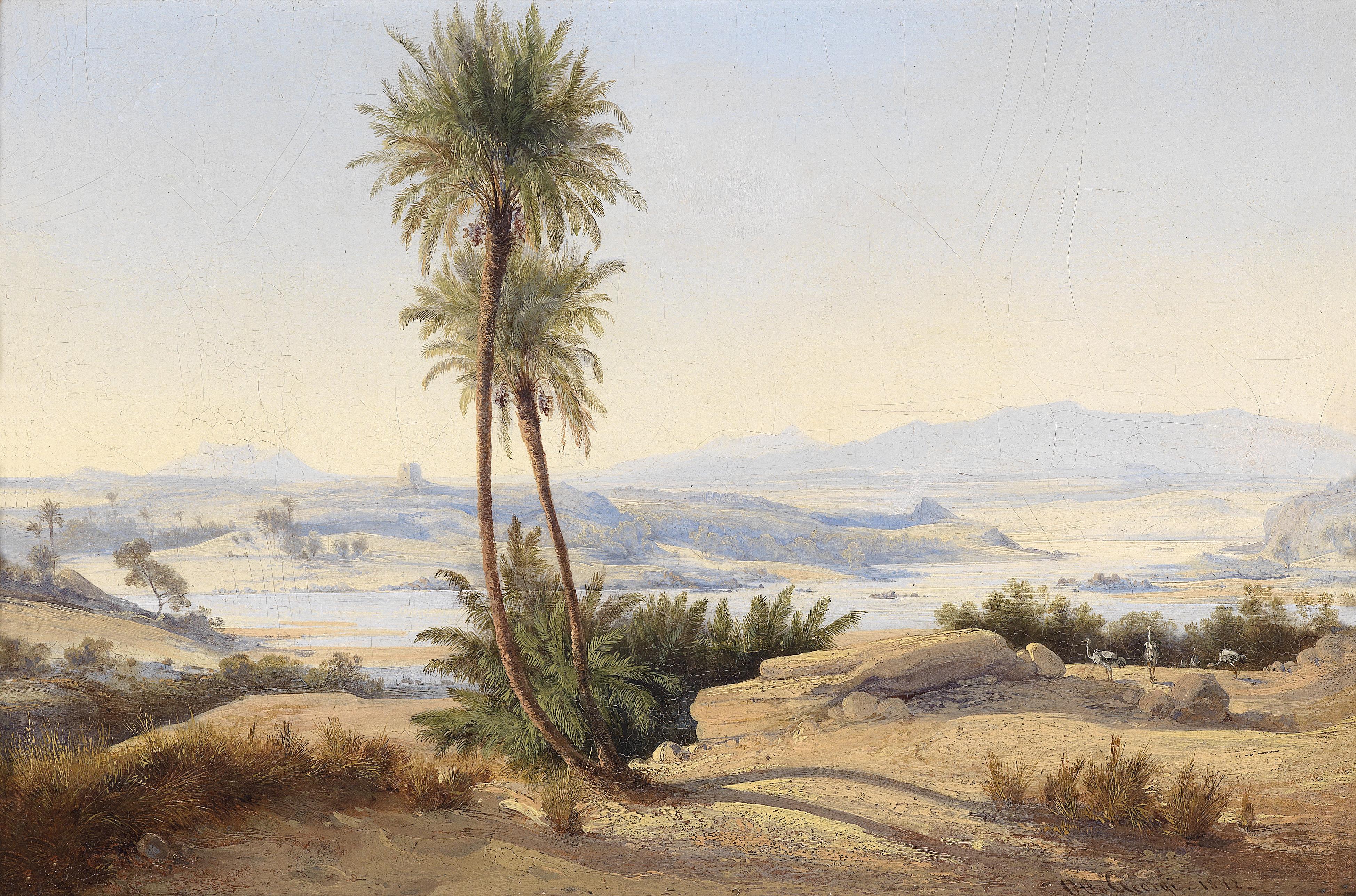
Southern Nubia by Friedrich Otto Georgi
A number of tourists from Europe and America depart from the train stop, as we all exit to proudly march through the gates of the newly formed customs center. Before I ready myself to stand up and follow in the foreigner’s line, I see the winking horror of rats, spiders and snakes twice the size of my face, gnawing at my brains in the middle of the first night. I’ve read such stories. This is open country for sub-Saharan life-threatening insects and arachnids galore. If only they sold us preventive supplies before stepping foot on the blood-torched burial grounds of a still cold reconciliation between tribes and kin. The first thing I see is a smile, wide and innocent as the all-embracing horizon. Before I entered Sudan, an asylum seeking Sudanese refugee in Egypt told me, “Sudan is the easiest place to kill someone.”

Tornai Man from Sudan by Gyula Tornai
I heave a sigh of relief as the other westerners depart into the folds of pyramidal shopping and freewheeling nature photography. I journey on, to the heart of the people. My friend is ever stoic, silent, basking in the wonders of a new nation in its infancy, victorious after so many losses, after so many needless ends, there is at least one fresh start to be had, and one that all can have a part in. Concrete residential towers spring up almost before my eyes, fresh paint lingers and drips throughout the dry stinging horizon of African sun.

African Riddle by John Mainga
Men work diligently, with the force of triumph, erecting monumental stone structures, for future generations to thrive, for the plentiful, abundant optimism of the future. The complexes are almost identical to the substandard suburban housing of greater Cairo, where many must have returned from as once-neglected refugees, now with a determined hand and proud say in social affairs. They don sun-deflecting head coverings, and traditional footwear made with scarlet fabric and coins. Women are nowhere to be seen.

Battle of Tamai by Geoffrey Douglas Giles
We drive on, deeper into the south. The more south we go, the fresher the earth, the more bare the optimism, the more innocent the smiles. The more south we go, welcomes are heard with more sincerity. The air is full of potential. The energy is warm, and the harshness that once thrived now sees a chance of dwindling beneath the pulsing chests of hard work. My friend dissipates into the sunlight now flooding our vehicle; as the inimitable human spirit washes us clean of fear.  
____________


The completion of this instrumental music project, "Electro-Acoustic Improvisations I & II " sets the ground for the next stage of my creative development, where I feature my experimental writing as spoken word together with my world music instrumentation. More art, music and writing next week! 

Tuesday, 26 February 2013

Music of the Dream Author: Electro-Acoustic Improvisations I Release

Electro-Acoustic Improvisations I Album Art

Electro-Acoustic Improvisations I

Winded Keys Duet for Piano & Shakuhachi 

"Winded Keys" alludes to a number of esoteric meanings, the most significant conveys a personification of keys. A key is used to open a doorway, highly relevant for an opening track. The track also relays that in a sense, we are all potentially keys. Through deeply listening to people, they can become as a key, opening the most significant doors. The person speaking at the beginning of this track is a passerby, stranger, and seeming vagrant in a riverine Canadian city. He is a key to Love, yet he is winded by the turmoil of life, and as so, opens the doorway to a key, strung by piano strings, and spinning in the Shakuhachi wind. That key is you while you listen to "Winded Keys".

Northern Shelter 2 Movements for Xaphoon & Percussion

"Northern Shelter" opens with an optimistic frame drum and xaphoon, as a young traveler eyeing the horizon, knowing his loved ones are near, and his bed is made. He traverses the grandiose open that he knows as well as the back of his hand, and with music on his tongue, he enters home. In the north, long stretches of life throughout the year are homebound due to the chronic lack of sunlight, rapid change in weather, and intermittent blistering cold. While under cover of shelter, in the deep, dark of night, an opening of the subtle sky of dream invites human eyes into worlds beyond our greatest imaginative stirrings.

Desert Plains Waves for Darbuka & Xaphoon

"Desert Plains" dramatizes the imaginative soundscapes of any day in the life of a dweller in the "desert plains". The inspiration for this track lives in the landscape. I have spent the last six years travelling between and living in Alberta and Egypt. I have noticed that the desert dry climate is common to both ecologies. The high plains whereon the great civilizations of the Blackfoot Confederation once hunted buffalo and the Sahara desert, wherefrom the ancient glyphs that are the foundation of most living language scripts on earth (except Chinese-derived), are home to an incredible vivacity, enveloped in the mysterious paucity of life. The horizon is grandiose and welcoming, yet equally embracing. "Desert Plains" is essentially in two segments, where at first there is a rhythmic yearning to see beyond the open, and escape the blinding immensity of the seemingly lifeless horizon, then after a time, there is a soulful maturation into the melody of a whole person, rooted in the landscape they call home. In that transition, the harmonic register of the xaphoon alludes to "Caravan" by Duke Ellington, as the traveler sees the mirage of a caravan ahead in the distant horizon of the desert plains, and at once entering the fold, the apparition dissipates. "Desert Plains" is a solemn homage in defence of rootedness, in this our age of heightened mobility.

Inward Flight Sketches for Shakuhachi & Darbuka

At this point in the saga that is "Electro-Acoustic Improvisations I" the desert-plains dweller seeks the gift of a shaman; an end-blown flute. In a clearing, under the starlight of a new moon, the once traveler, now dweller, becomes seeker. At this point, the journey moves from outward-driven to inward-seeking. The journey within is a journey into the infinite. The Self is the immovable point, around which all subjects waver, orbit and grasp in eternal flux. Yet, this is the play of the universe. For the Ancient Hindus, the universe was play, or as they called it, Lila. "Inward Flight" illustrates how the inward journey is playful.

Cold-Blooded River Epic for Frame Drums & Wind

In his inward search, the seeker becomes seer. All that exists on Earth, all that humans have created, the vast plenitudes of universal form in life and art become as ephemeral as an unrecorded improvisation, played aloud to the spirits and muses of a seer rapt in a vision of death. Here, the "Cold-Blooded River" comes into focus, where a visualization not unlike the Ancient Greek River Styx is seen in a vision. As in a buddhist ice hell, the river mists with the deathly cold of a swift and unforgiving seduction. Will the seeker cross the river of death? "Cold-Blooded River" asks the listener that question.

Four Directions Moments for Darbuka, Frame Drum, Shakuhachi & Xaphoon

After making it across the "Cold-Blooded River", that is the river of death and extinction, our spiritual humanity sees the realization that a sense of direction goes beyond the cardinal points of seasonal, ecological and temporal occasion in life's experience. "Four Directions" unites the dream vision, or literal physical manifestation in the mind's eye with a more spiritual vision, which is more like a revelation of insight. In this sense, the "Four Directions" unites four primary instruments; darbuka, frame drum, shakuhachi and xaphoon, where each represents a unique way of seeing, yet no instrument of perception is more clear or true than another. The four directions, or the heart compass is set deep within every mode of will. South, symbolized in the darbuka, is of growth and warmth. The darbuka is the prime origin point of my current growth in music and the creative life. The darbuka is closest to my ancestral heart, as it speaks to Greek and Jewish music, where my blood rests deepest. North, symbolized in the frame drum, is of wisdom and endurance, because it is a humbling instrument, and used in many sacred traditions, for example the Persian Daf frame drum in Sufi ceremonies. West, symbolized in the xaphoon, is of introspection. The xaphoon, also known as the bamboo sax, is a new instrument, invented in Hawaii in the 1970s, yet it follows in the great tradition of reeded instruments. East, symbolized in the Shakuhachi, is of illumination and enlightenment. It is with the Shakuhachi, the renowned end-blown Japanese flute, that I often meet twilight. Breathing through the river-fleshed air, I keep a bit of that sunlight with me as the moonrise enlightens the depths of winter.

_____________

Original concepts formed after hearing the wax cylinder recording of Walt Whitman's voice reciting his poem, "America". An impromptu recording of street voices led to creating an atmosphere of the mood, feeling and soul that goes into voice, and the unintended harmonies of using our speaking voice. Instruments are extensions of the subtle body of the spiritual human form. When recognized as such, our voice speaks through them, as through us.

Electro-Acoustic Improvisations I is the celebration of voice through sound. After my first year as an incipient writer in visual form, my creativity bubbled and erupted with mysterious energy into a realm of creative visual stimuli, of spatial literature, of manuscript art, of asemic writing. Now, as I begin to record the sound of my voice, I first amuse in the imaginative spectrum of voice through instrumentation.

Electro-Acoustic Improvisations I is the first part of a seven track series, mirroring my process in seeing through a cycle of sevens in the creation of manuscript art and experimental writing. Electro-Acoustic Improvisations II will feature a single LP-length track in four parts. A collage from four of my currently finished manuscript artworks have been used as cover art.

Influences: John Cage, Brian Eno, Duke Ellington, Pharoah Sanders, Miles Davis, John Coltrane, Sun Ra, Jan Garbarek, Godspeed You Emperor, Hossam Ramzy, Vi An Diep, Ai Hagiwara, Walt Whitman, Jack Kerouac, street conversation, birds, wind, clouds, river, silence 

_____________

See other instances of my musical creativity on earlier recordings: 

Dream Music and the Creative Breath


Monday, 10 September 2012

Dream Music and the Creative Breath


Hear my beginnings on Xaphoon, a modern woodwind instrument.

Also, listen to Vi An's ambient, new single, "Souls of Flightless Birds" to hear my initial touches on Shakuhachi

To hear my more percussive beginnings see my earlier posts Busker's Gamble 1 & 2
________
My elementary school music teacher begins the session with an arcane eye, emitting positively unintelligible sentiment into the classroom. The entirety of the students’ awareness is razed in a moment of ineluctable meditation at the front of the room. The teacher is absorbed in trance, unable to begin the lesson. Then, she takes up an oboe, and begins a hypnotic hum, playing without her fingers. She bends her lips to the visionary yonder, bespeaking a ghostly insight into the sonic membrane of harmonious mystery. 

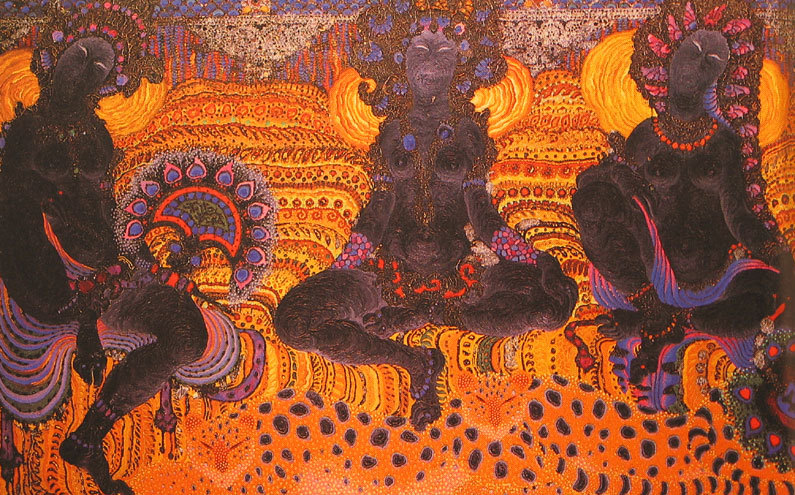
Three Black Women (1912) by Nicholas Kalamakoff 
As the hum begins to rise, a crack in the doorway spells fear in the eyes of my fellow students, watching as a three nude black women gracefully dance their way to the front of the room. Their light steps are unmatched in delicate beauty. The warmth of their presence is charming as the teacher begins to lather up and down immense, powerful scales. The dance heats with inner vivacity. Without fully recognizing, I have been completely entranced, alone in another room, seduced by the mad eyes of the superhuman subtleties emerging of the dance of sprites. The unity of music and dance is embodied in the untouchable, ebony enigmas. 

________
Sculpting our Music

to empathize with space,
emptied learning
devoid of causality,

to exist in nonsense happily,
with or without means to find the light to continue
and realize that meaning prevails in the ability to emancipate need into desire
and transform desire into being,

to see you,
in the flap of a wave thickening
in a sky filled with stars aglow
in the insect's wing,
eaten then,
raw in the toothless humanity
forming on the tip and base of the tongue
with each word-stopped breath of compassion

stating,
"subsist without things,
yet do not merge one with sheer being,
there is no escape from right,
take time to see,
play aloud to the soft distance
in each touch
on the eternal book
resting coolly
on the back of every pulse
moving through fingertips pressed over reality."

simply unlearn doing
by giving into the peace already;
know your surroundings,
truth does not move,
yet there is mystery in sound's effortless becoming
around and within the hand that pulls time into the heart
and plays breath
in tune to the sun's round birth canal of thoughtless entry
into an orbital law,

a return to archaic wisdom
in ancient instruments
and the rare music of inward listening
that shares all in the act of creative wondering

to explore the mind without friction
against the beat of our one heart,
drained now by love's unknown pleasures
offered to the inescapable friend,
who appears as death at the beginning of night,
freezing time
for a moment's celebration of temporal freedoms
grinning out of sight

Tuesday, 29 May 2012

Weathering Tornados from The Lover's Music


Vi An Music

"If we go somewhere on foot, we know the way perfectly, whereas if we go by car or airplane, we are hardly there at all. It becomes merely a dream." 

Excerpt from "Meditation in Action" by Chogyam Trungpa
_______
On my way to see my Love! She’s giving a presentation in a high tower, what a glorious teacher she is, a teacher in secret, with hidden wisdom and enlightening prophecy leaking clean out of a package of such humble eloquence.

The road is dry in the warm, new summer air. I see a woodwind shop to my left. A Xaphoon, hanging in the wall! Why, I do have one at home, but that one looks so beautiful today! I have been enjoying this instrument so very much, but I think I’ll have to buy another for the special occasion that is this day. In the shop, a saleswoman is short with me. No extra conversation ensues despite my attempts after I’ve decided on their only functioning Xaphoon. For the $30 I walk away with my new instrument, smiling quaintly in sweet visions for the day, gaily in love.

I arrive to the towering silver building. Strangely, I decide on the stairs. Massive windows bedeck the entirety of the walls, the low plains stretch as a mercilessly singular mural throughout. I find the room of my love’s presentation. There she is; a ghost of decadence, beauty, a word in her honor, is unready for its true name. In her presence I am light with the fresh gold of summer dreams. Her hair is bunched and flowing, the gargantuan black mass swells and streams down her side as a mythical waterfall of visceral lust, untouched and unrivaled by any substance beside. As I move in closer to her, weary as not to interrupt her occasion, a mirror image of her hair in the sky appears!

A black, icy fleece of cloud boils upside-down into the gleaming pasture, a wild tornado approaches! “This is a building of glass!” I scream weakly and run alone back into the stairwell to find sanctuary. The tornado crashes violently. A 9/11 of natural law brews gravely in the high destruction. The crude aftermath burns with electric ash as the ruins fume, awaiting the ever-darkening sky for yet another whiplash. Too afraid to return above, I journey onward outside of the city core, with instrument in hand, I dreamily invoke the unmoved trust of community in the survivalist reign of mounting fear from the shape-shifting sky above. Human vibrancy responds coolly in the aftermath of lost pain.


_________
Tornado
"If you dream that you are in a tornado, you will be filled with disappointment and perplexity over the miscarriage of studied plans for swift attainment of fortune...Tornadoes in dreams suggest you are very angry about a current situation and are afraid to express your feelings - which you need to do - for fear of hurting others."
________
Echoes from the polar wisdom of our earthly rotation
unraveling the truth in the thousand-worded letter
and pictographs of ethereal meaning
climbing through the bowels of a holy mountain
to the void of spiritual absence
in the land of prophets
unheard since ancient words lifted
to the ceiling of the temple built before time

On the sands of the strong & fuming,
leaving no one to posit an older order of belief

In sky temples & borders that signal friendship
enmity awaits in the selfish vine
a mark where the western mind strayed too far
to become its own enemy
in the reflexive mold of war
for basic rights.

- excerpt from "Royalty of the Weird