Primarily a writing exercise, this dream journal-inspired blog is a quiet introspective sojourn into the process that we traverse in going from private dream to public art. I see our dreaming as an internalized mythmaking. As I philosophize and expressively exhibit dreams, both private and public, I encourage and delight in creative language as a way to practice experiential metaphors through a “public dreaming." Writing Theory: Creative Dream Fiction
Showing posts with label experience. Show all posts

Monday, 18 November 2013

Novel Liberation: The Humble Postcolonial Wisdom of E.M. Forster


"If I have had any influence, I would be very glad if it induced people to enjoy this wonderful world into which we're born, and of course to help others to enjoy it too."

“We must be willing to let go of the life we have planned, so as to have the life that is waiting for us.”

“They too entered the world of dreams- that world in which a third of each man's life is spent, and which is thought by some pessimists to be a premonition of eternity.”

E.M. Forster (the last quote is from A Passage to India)

The British Raj and the Indian Independence movement of the 1920s provide the setting for a poignant story between two principal characters in E.M. Forster’s 1924 novel, A Passage to India. The lives of Aziz, a Muslim doctor and Mrs. Moore, an older Englishwoman, represent themes of social constraint, in contrast with personal relationship. Constrained by title and culture, these characters manage to relate under unique circumstances. Aziz learns to respect Mrs. Moore unlike any Englishwoman he has ever known, while Mrs. Moore is, at first, captivated with the pride of knowing an endearing local closely.

Mrs. Moore, as with Miss Quested, is captivated by Aziz because he represents something of the “real India”, to use the words of Miss Quested. “Try seeing Indians” was the reply of the schoolmaster at the Government College, when Miss Quested asked how one might see their colony in its native authenticity. There is always room for remiss under the social umbrella of Indian-English relations; whether in the surprising first encounter between Mrs. Moore and Dr. Aziz in the mosque, or the arranged party at the tennis lawns, the tea gathering at Fielding’s or the excursion to the Marabar Caves, which, finally, proved more disastrous than any one had expected.

“May I know your name?” Aziz asks to Mrs. Moore, cautiously, in the mosque. His demeanor is one of near-desperation, as someone both protecting his native sphere, as well as struggling to see British humanity. “She was now in the shadow of the gateway, so that he could not see her face, but she saw his, and she said with a change of voice, ‘Mrs. Moore.’” This very revealing sentence emphasizes the obscurity of English presence from local, Indian eyes. In that moment, Mrs. Moore felt safe enough to share her name, the most important object of her title and superiority. Aziz remembers her generosity, as her fitful capacity to speak the truth becomes the apex of her story, truly a minor character in A Passage to India.

When after Dr. Aziz stands on trial for the assault of Miss Quested in the Marabar Caves, Mrs. Moore is decidedly frank in her stance on Aziz’s innocence. “Of course he is innocent,” says Mrs. Moore as Miss Quested begins to question her disillusioned experience on the excursion, all the while Mrs. Moore is quite fed up with India entirely. “She was by no means the dear old lady outsiders supposed, and India had brought her into the open…” writes Forster, who depicts her as a typical elder, uninhibited by the dramas of youth, and quick to speak the truth, even if it is unwanted. At this point, Mrs. Moore is on her way out of India, and the novel, where she soon dies in transit.

Regardless, Mrs. Moore is immortalized by the groundswell of Indian support for Aziz, who soon finds reprieve, as legends of “Esmiss Esmoor” soon manifest in the appearance of folk shrines in dedication to Mrs. Moore’s role in saving Aziz’s life. It is important to add that throughout the entire novel, Aziz is addressed by his first name only, while Mrs. Moore solely by her surname. Mrs. Moore’s name transforms when said by Indian voices. “It was revolting to hear his mother travestied into Esmiss Esmoor, a Hindu goddess,” thought Ronny, Mrs. Moore’s son, whose experience of India remained superficial, or, more accurately, guarded, throughout

Aziz and Mrs. Moore fail to truly connect in person, because English colonial formalities (and informalities) were too firmly laid beneath the foundations of imperial culture. During a scene of characteristic tension between the colonial masters and their subjects, Forster writes, “Aziz flamboyant, was patronizing Mrs. Moore.” The direct interactions between Aziz and Mrs. Moore are brief and sparse, as they are interceded by English formalities, typically mediation by a male authority – Mr. Fielding in this example. The scene, where Aziz and Mrs. Moore meet in more conventional circumstances, for a tea gathering at Mr. Fielding’s, reveals Aziz’s character (and Forster’s impeccable prose) as someone unable to speak on behalf of India. The scene also reveals the seemingly adventurous minds of Miss Quested and Mrs. Moore, on their search for the “real India” as a mere surface-level novelty.

Mrs. Moore, although agreeing to accompany Miss Quested on her excursion into the “real India” is soon overcome with the fundamental truth of her presence in the faraway land. As the excursion comes to a bitter close, it is said of Mrs. Moore, “…since her faintness in the cave she was sunk in apathy and cynicism. The wonderful India of her opening weeks, with its cool nights and acceptable hints of infinity, had vanished." While, from Aziz’s perspective, “…he agreed that all Englishwomen are haughty and venal.” Mrs. Moore is the stereotypical colonial British woman, whose curiosities for the rare and exotic life of India prove ineffectual to satisfy her experience of authentic India.

Their relationship reveals the meaning of liberation in colonial India, where Aziz’s fate becomes Mrs. Moore’s very undoing from India. For Aziz, he would come to know “…that an Englishwoman's word would always outweigh his own.” Generally, both characters speak well of each other, even if their personal, physical interactions are constrained. Conclusively, such is the larger relationship between the colonial British with India; ideal and positive on paper and second-hand experience, yet up close, absolutely ruinous.

This essay, entitled, "The Relative Liberation of India", was written for an acquaintance as part of his school curriculum. Consequently, I was reintroduced into the magnificent literary treasure troves of E.M. Forster's richly imaginative prose. 
_________
An expanse over the marshland floodplain. The drifting current sways gently through sap-lined pine trunks and decomposed maple leaves. Ahead, the riverbanks motion with unspeakable gratitude, bittersweet, enjoined to the drunk swell of an upraised wetlands. 
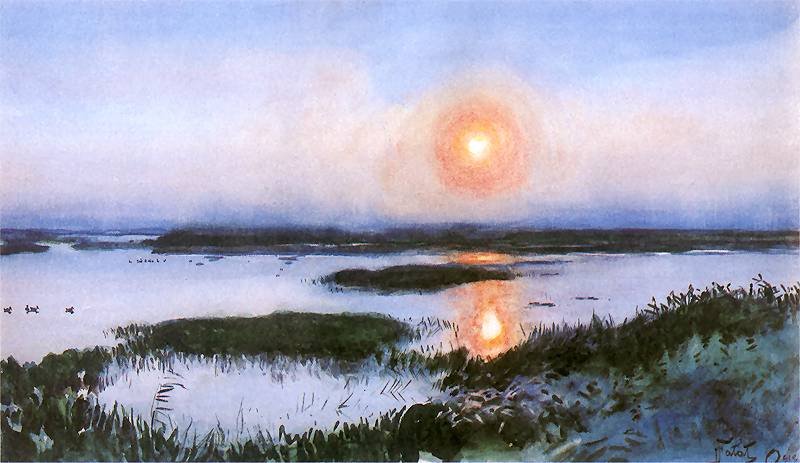
Sunset over wetlands by Julian Falat
He speaks, a guide of the ancient St. Lawrence river basin, to reinvigorate the ground with the renewing tides of Mother Earth. She beckons the swallowing of a forgotten landscape. The land is to be reclaimed. Indigenous nationhood reinstated over the American-Canadian divide. 
_________
Featuring a lyrical evocation from the collection, Sketches of Style and chapbook, Muse for the Wounded, Guise of the Beloved expresses thematic tides of visceral belonging amid landscapes both supernatural and inhuman in an age when the human body is more and more experienced only in its violent rending apart.

Yet, musical undertones, both electronic as acoustic, ring clear throughout, simultaneously presenting the source of human life, as our fate. In the commotion of bewildering psychic momentum, there the muse stands patient and waiting to receive the wounded, who with eyes of intoxication and skin of vulnerability, senses a way beyond and through the immense and spectacular Fear of Being.


The six poem chapbook, Muse for the Wounded, is comprised of selections from the larger collection, Sketches of Style. Here, the archetype of the wounded healer is redefined, wherein the muse becomes the healer in the mind of the poet-seer. The one poem, Guise of the Beloved is also featured as a sounding the artful designs of a musical elaboration on the Sketches of Style album

Monday, 25 March 2013

Experimental Cave Art: Philosophies in Word, Vision and Sound

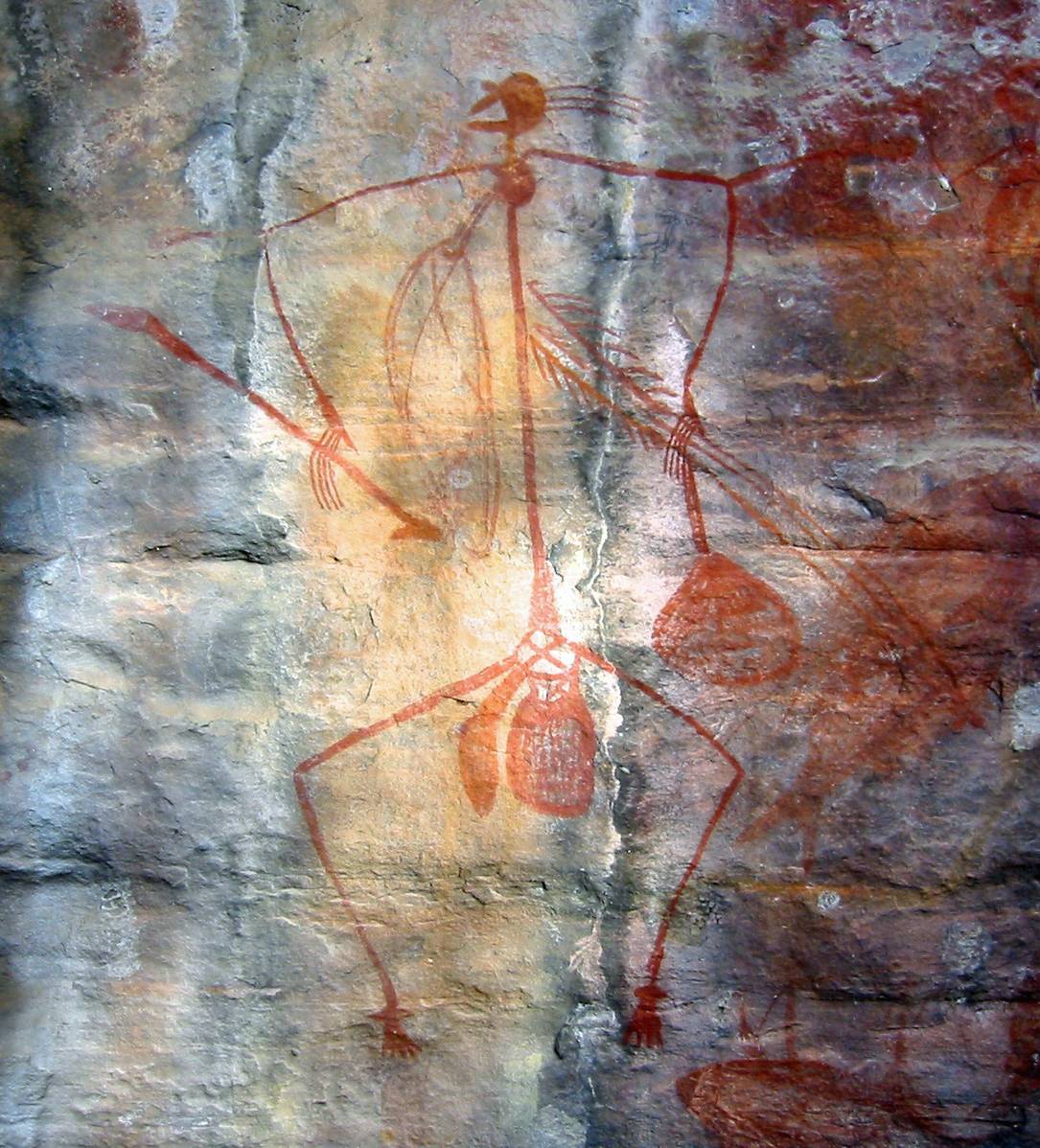
Aboriginal Rock Art, Ubirr Art Site, Kakadu National Park, Australia
Photo: Thomas Schoch
When your night becomes day, then that which is dreamed is on earth. Do not be too high-spirited, but go, and go alertly.” Aborigine Saying

In continuity with the theoretical writings on the natural sleep cycle as expansive beyond the twenty-four hour day, and especially beyond the programmatic workaday cycle, it is not only the activity of waking activity that might define the energy experienced by the mind-body based on sleep cycles but the content of dream itself.

For example, we go through cycles of remembrance and forgetting, this is a fundamental attitude of the cosmos, as we see in the natural tendency to the peek-a-boo gameplay in all children. Similarly, as this is reflected in our conscious and unconscious experience of life, so this is true with the content of our dreaming. We will go through periods where dreams are not remembered, and then after a time, will begin to remember again. These periods of remembering the content of dreams ultimately point to an unresolved momentum of energy building up in the psyche as a consequence of either personal or collective unconscious activity that one becomes susceptible to in their daily life.

Until this mode of consciousness is directly confronted and transformed through creative insight and practical application in thought, reflection and in some basis of continuity in consciousness, e.g. imaginative outpourings based on the theme and nature of dreaming, where all suppressed and repressed energies are focused and shifted into full view, the involuntary sleep or unconscious REM will continue to emerge and take shape in the psyche through imagination, emotion, intellect and every exhaustible mode of subtle activity.

Every time a dream is remembered, the remembered content, whether imagery or emotion or otherwise, is part of a string of remembrance leading back to a source of reflection deep within the whole being of both the individual dreamer and the society throughout the entire spectrum of its history, propaganda, knowledge, media, relationships, etc.

Oftentimes, the strength or immediacy of memory, the lucidity of the dream state as it interweaves through the waking mind, forecasts the urgency of attention to the subconscious. For example, I have experienced lately that the instant I am ready to sleep, as fast as I close my eyes, I see the content of my dreaming, the imaginations is teeming with life and energy, needing to be witnessed, calling out over the margins of consciousness.

The only way to resolve the inception of remembered dreaming is to confront the subtle impulse to emote or inspire a certain inborn expression, metaphorically illustrated in the dream itself. When dream and life are subsumed into wholeness, undivided by the normative values of structured time and analytical thought, the subconscious and the conscious merge into a healthful surrender of the cosmic unconscious faculty of Being, as the great mystery of self-awareness. As reads the motto in Athanasius Kircher chiseled over the alchemist's doorway, originally in Latin, it says, "While Sleeping, Watch'. See previous post: Alchemical Poetry of Terence McKenna
_________
Breathtaking hot night. The empty dark dream of memory. Narrow canals, irrigation trenches in the backyard under a pitch-black sky, a starless new moon. The seizure of domesticity; fencing blinds besiege all passage to horizon’s beginning, and a house cat skits through the mud with a silent flit of dusty soil. A chase begins, until I grab the fickle creature by its muzzle, and in the raw and ruddy brown earth, I tangle its fibrous backbone, cracking the living spine with the brute edge of my wrist. The sky clears like a strong exhale, and the ground takes formless cover of the starless sky above. I drift away from a mind to a life as inert as the swift welcome of death.

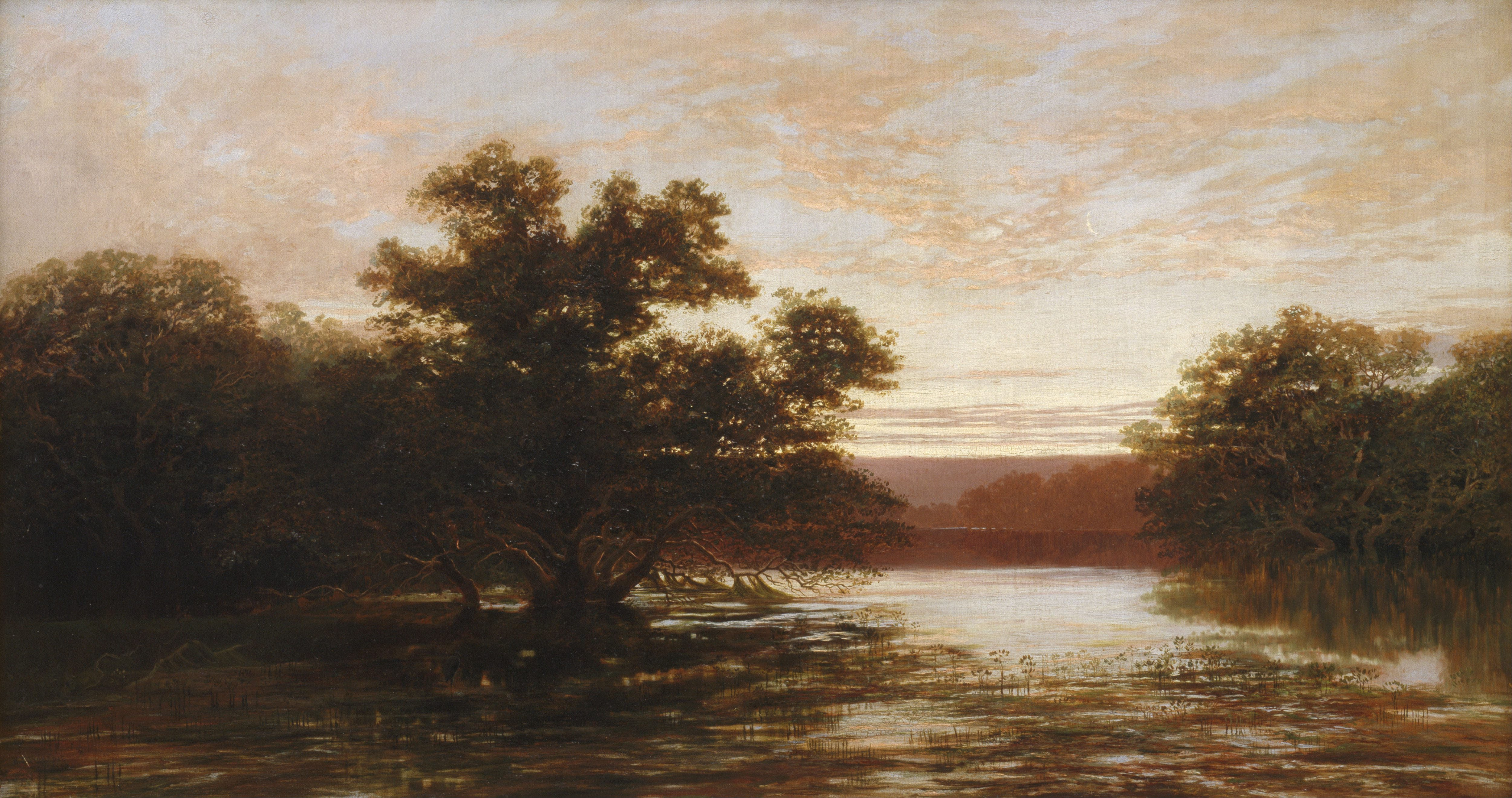
An Australian mangrove, ebb tide by WC Piguenit 
Worshipful room of sweat and lust, the emotive spring of music keeps us swinging to a joyful noise, the urban sound of pain alleviated before closed eyes, staring inward to hear the sight of the muses, invoked by the musician hosts sweltering mad before a small though dedicated crowd of movement. And the headline group enunciates first note with strength unseen; the crowd has since escaped into the bleak, old night. A few straggling local friends stand by the stage, amused and apologetic. One song passes in the silent hollow, a space deemed fit for thousands reduced to pin drop nothingness.

Musical entertainment at the spinet by Johann Heinrich Schönfeld
The emptiness is as palpable as the heartless mind, rounding off pales shots into the murderous pangs of repeated history, the bitter angst of adolescence returning in a white noise of a flushed and ruthless voice, the weird ground rumbles and quakes with burning trust; that a future still opens ahead – full and potent with renewing vigor, to wake again, and live the day from the start, even if our rise coincides with dusk. A silent vision unearths our eternal belonging with grace, and the human community within, where the heart is still in its constant beating, in its rhythmic patience with a more sacred trust.
__________
An elegiac satire on split vein of domesticity, as it unravels and spurns the knowledge-creation of a more unstructured style. The home is the centrepiece of domestic life. Yet, for many thousands of years, there is evidence that we were in fact cave-dwellers. "Caveless" muses on nostalgia for those cavernous days through a reading of "Cave! Home", about a time when petroglyphs and charcoal painting were more important than off-white, beige and any number of dull, and sterile wall aesthetics, and the great-image language of visionary rites were outweighed the significance of antique literature. How can we resurrect the idea of the cave in the context of the modern home, with its womb-like contours and living light that curls throughout our waking minds like breath, and infiltrates our dreams like a warm lover enduring a midnight meditation at our feet?

"Placeless Human Society" is also read here to recognize the dramatic shift from our ancestral pre-history as cave-dwellers of imagination and earth, where suburbia (and its non-subordinate counterpart: the city, for that matter) has essentially uprooted us from this inborn life as a dweller from the earth. On a mass scale, we now dwell on earth abstractly, our imaginations have breathed on, yet the umbilical cord to the womb-cave-home from whence we emerged has long been cut.


"Cave! Home" was published in 3:AM Magazine on September 17, 2012 and is also featured in the most recent chapbook, "Creating in the City" which was released with "When No Stars Appear".

"Placeless Human Society" was published in Outward Link on November 7, 2012. The "Caveless" track release marks the release of the chapbook, "Suburbia to Suburbia: America-Egypt".


Monday, 28 January 2013

The Madman Within: Valery and the Personal Energy Crisis


Paul Valery par Jullien

"The best way to make your dreams come true is to wake up."
 
"Breath, dreams, silence, invincible calm, you triumph." 

"To enter into your own mind you need to be armed to the teeth." 

"At the end of the mind, the body. But at the end of the body, the mind." 

"A man who is of 'sound mind' is one who keeps his inner madman under lock and key." 


Here, I continue on the themes of an essay regarding a theory of sleep cycles, and the natural course of the human experience of time as espoused in my previous post, Metaphors in the Art of Goya: A Theory of Unconscious Development. Beyond the bounds of the twenty-four hour time bomb, the seer lives to posit the cyclical nature of time in the natural course of creativity as it rises and falls based on the "internal clock" or "the internal orbit" as I will more aptly describe it. Leading through to an experience of time in the twenty-four hour day as much like the seasons, at different stages of life, or the year, we will be naturally disposed to certain times of the day. 

To keep a fixed schedule of waking and sleep throughout one’s life is unnatural and unhealthy, leading to an incomplete understanding of one’s self in relation to the ecological rhythms of the earth, and one’s own nature. Put more concisely, the mad genius intellect of Paul Valery writes, "A man who is of 'sound mind' is one who keeps his inner madman under lock and key." So, continuing on this theme, I would say that, a great foreshadowing to the resolution in thought from the prose essay writings on SoJourn(al) can culminate in formulating a creative practice so that any person can discover the certain time of day that best suits their activity and temperament. 

When allowed to our own devices, we naturally settle into a certain time of day based on the kind of activity with which we are engaged as our primary focus in life. For example, if one is studying texts, the predawn hours may be optimal in terms of the energetic rhythms and ecological harmony involved in the practice and the setting in which one lives. This could potentially lead to invaluable developments as a repertoire of useful information for employers seeking to offer work-life balance and optimal efficiency and motivation based on the kind of work in which they are engaged. 

All of this, in both theory and practice, is based on variables of ecological distinction (the character of a place), individual temperament (how one relates to a certain time of day), and the focused activity (one’s primary work or occupation). Regardless of the person or type of work, with the application of guiding principles, one can find a harmonious relationship with time and productivity through attention to details of place (ecological awareness), energy (sleep cycles), and activity (work medium). 
__________
He is silent and still as stone. His face a petrified grey, staring blankly into an off-white wall. His mind has long gone, and yet his body remains. 

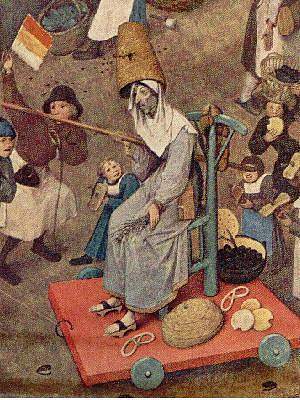
The Battle between Carnival and Lent (detail) by Peter Bruegel the Elder
A rodent gnaws into its raw skin. Dirt falls from its brittle hair. The animal dies before my eyes. I was happy and excited to see what once meant my life, and now...
________
As the tired groaning of racist America brews a proud glory of personal despair,
more,
An interpersonal contemplation on the theme of color:
Hair,
Eyes,
Fingers,
Pubis,
Nose,
And Shape,
Body of form,
And the formless desire

White against the all-escaping cloud of solar obscurity,
Who rushed civilization into the neighborhood of the absent & poor

Breaking the long arduous fast
with an unwelcoming community,
founded not on Love,
only on a hope to pray
before the Cyclops’ rise
over the crossed horizon
...

Stretching beyond the bounds of individual reaction,
To choice.

excerpts from "The socialist epoch"


Thursday, 24 January 2013

A Triunity of Conscious Remembrance: Writings on Noetic Symbolism

“We can dream about anything, no matter how preposterous, topsy-turvy or unnatural it may be.” Cicero

The three-tiered modes of consciousness, being unconscious, subconscious and conscious are reflected in the synchronous relationship between dream and memory. This is a daily experience from which we may understand the depths of mind on an elementary level. Fundamentally, it is a known fact that all people, and even many animals, are inevitably sent into the subtle realms of dream; it is part of our natural physiology. The three modes are as follows:

1)

Unremembered dreams are phenomena of the unconscious. The subtle emotions that the body and mind feel as a reaction to such dreams are only known by the most acutely aware. 

2)

Dreams that are had, and are known, where the dreamer on waking knows they were dreaming, however cannot remember any specific details apart from references to waking experience, are manifestations of the subconscious. At this point, waking and dreaming states of consciousness meld into a noetic dialogue, an inter-meeting, wherein the fluid exchange of reason and sense are exchanged with imagination and emotion. 

3)

Dreams that are remembered vividly, and dreamt lucidly, are part of the conscious realm. Most people are not fully conscious in their waking life, meaning they are not fully aware and actively engaged in their own lives, as in the source of their own lives, spiritually, mentally, emotionally and physically. A conscious dream is more than a physiological memory of the natural, instinctual imagination, it is a gift from the transcendent inner world, a gate into our inmost being, where we contact that which seems at once incredibly strange and entirely familiar, our fully exposed, and whole selves. 
__________
The sting of marshland rushes bruise and cut the soles while tangling the toes in knots of wet, risen moisture. The earth perspires with enduring anxiety under these blank skies. Emitting the hot sweat of gaseous vents through the decaying roots and bacterial soil, I trudge. 

The Pontine Marshes at Sunset by August Kopisch
On the horizon, a large city is burnt to ash. They say it all begin with the conflagration of a movie theatre, and a plane crash that split the small city in two with massive fires extending outwards. Not a soul survived. The earth feels cleansed by the death of a throaty death rattle. The decay of human bodies seems to rise as from the strength of the grasses rooted in the damp, dank shifting ground. 

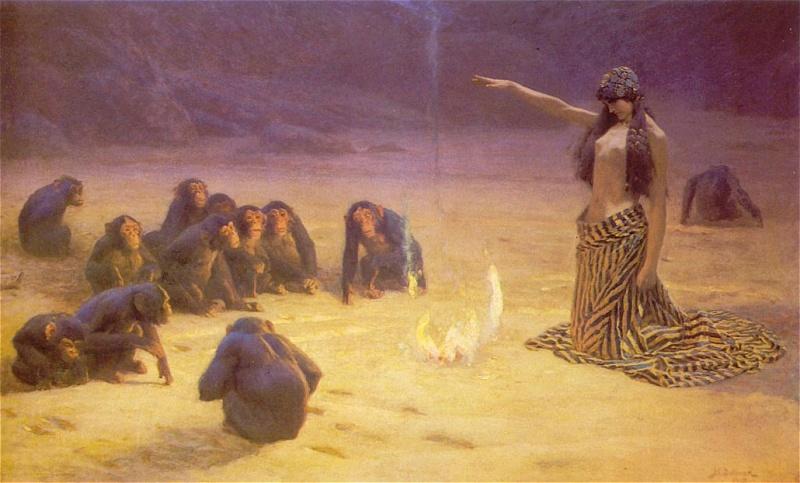
The Unknown by John Charles Dollman
Above our heads, a plane spews hot trails of ash. A man behind me loads a rocket and stings the plane through its side. I watch as the behemoth machine incinerates in mid-air, crumbling with a hauntingly delicate rush through the death-consuming land. I am surrounded by a feel of homicidal, at once in the horizon, while within the breast of the alive. The air is heavy with fate. 
__________
The rains bear down hard and long
On these deceased pangs, longing to embrace ghosts
Long shied-away, deep within memory’s misbegotten despair
...
The diminished poor bear arms while the rains fall
Calling them home no more to breath
In the air of pure and raw savagery
Beckoning our rice-fought union to work
In undivided shame across river’s breadth
That brings wealth and a name to the American prince

With breast inflamed
Prepared to reason with his shame
And engrave in the desert an unplanned way
Towards brotherhood
...
Freeing spontaneous whispers
To a last pleasurable remorse
Upraised and sacrificed
As great offering to the Klezmer bonfire
Whitewashing the New York tide with Greek verse,
In one soundless escapade towards relaxed state of being
...
Cyclically bridging the human body with the global fate
In one silent orbital wave that resounds instantly in every curve of lost strength
Between arms where the beat follows to our brethren and kin,
A growing and invisible host to our name, thinking up a sound
And so, calling forth the blessed invocation of being

excerpts from "The rains bear down"

Thursday, 15 November 2012

The Wordless Dream Language of Myth

Chinese Goddess Nuwa by Unknown
"Until we get to dreams, there is a tendency to think of stories as 'words.' In dreams we experience stories as structures and patterns that evoke images and experiences, often without words...In dealing with dreams, such noted authorities as James Hillman have instructed us to "hold the image."By 'Holding the image,' the conscious mind can begin to discern patterns and structures that can eventually reveal rich psychic content...Some have said that, 'Myths are cultural dreams.'" Ontogenic Mythotypes by G. Charles Andersen

What is the relationship between language and dream? Dream is a language in and of itself. Language is mutable to Dream Language, when traditional dream interpretation is foregone, and creative writing is utilized as a means to "hold the image" in the mind of James Hillman. Such psychological import brings to mind the psychoactive artistry of Laurence Caruana and others who have respected the imagination as a prehuman remnant of archaic information. "The world is made of language" says Terence McKenna. And so, in using that language, we may hear our mythic vocation, a calling towards that which we had never dreamed, unearthed as from the unsaid and unconscious mysteries of our own psychic invention. 
__________
What a breath of fresh air! To drink, and see. I could feel my brother’s weeping, his heart caving in his shaking flesh as he triumphed again over a nervous breakdown, carrying him by air through the over-privileged dome of Western skies. And into the darkened haunt of old coast bumhood, and the numbing agents of a musical life amid the New England smile of selfish mockery and divulging swine. The ruthless remark, a self intensified in the bitter alcoholic night, the cobblestone streets, swept of hurricane feet and tires of his once-sickened flight returning.

Lombard Landscape by Fulvia Bisi
At home, lost to the time of his forgetting, he returns, an old man in his distant youth. The tingling respite of belonging in the gutters of Eastern fame, the ruinous gold of a mind enslaved to eternal seeking, he clambered down tumbling steps of creaking wood and linoleum brains, as I stared immobilized into the dark porch silhouette. A large man sat there, with dreadlocks lower than his back, and as he lifted an ember of smoke to his lips, his dark skin shone with the muscular life of a physical laborer on break, alone, a nameless body of the historic present.

Man with a Hoe by Jean-Francois Millet
I could only see him clearly under the bar lighting. The dizzying indoor lunacy of the drinker’s habit, a hovel of bored and roughened life spoke through his bristling mouth. After the rare silence of a few pints, he ended the night with means to see each other again. And like that, he disappeared in the great fog of blackness, opaque as the light-polluted air of a once booming industrial city, now smoking upward with the final ashen gasp of smoky incineration. 
__________
“What grievous horror betook these dumb streets?”

Touched with the unkindness of a meek following
From the near elderly, an old town deemed to inquietude
...
Taking off the English hat of a long gone America
Seeing no one in the mist fired laugh from this war

Breathing ocean
Suffocated by the calm before the storm
...
Clucking behind the chicken wire of suburban fate
...
Gripping for death at the edge of the western, manifest

As nature’s law thrives in disbelief

excerpts from "Calm before the Storm"

Tuesday, 30 October 2012

To Dream in Red is to Uncover the Veil of Consciousness


Judge

"Yesterday, I had a dream – I had a dream about you. You were 40 or 50 years old…and you were happy."

Student

"Do your dreams come true?"

Judge

"It’s been years since I’ve had a really pleasant dream." 

Dialogue between the two principal characters in the classic filmmaking masterpiece "Three Colors: Red" by Krzysztof Kieslowski

Along these lines of artistic development towards a pseudo-scientific theory of colour, the iconic German poet, Goethe, produced a volume entitled, "Theory of Colours". While not being received as proper theoretical discourse by the scientific community, this was Goethe's prideful involution into the realm of human experience beyond the sublimities of intellectual life. 

Should your glance on mornings lovely
Lift to drink the heaven's blue
Or when sun, veiled by sirocco,
Royal red sinks out of view –
Give to Nature praise and honor.
Blithe of heart and sound of eye,
Knowing for the world of colour
Where its broad foundations lie.

— Goethe

(Quoted from Wikipedia article, "Theory of Colours")

Also, see my previous post: Reflection on Zbigniew Preisner's "Silence, Night and Dreams"
_________
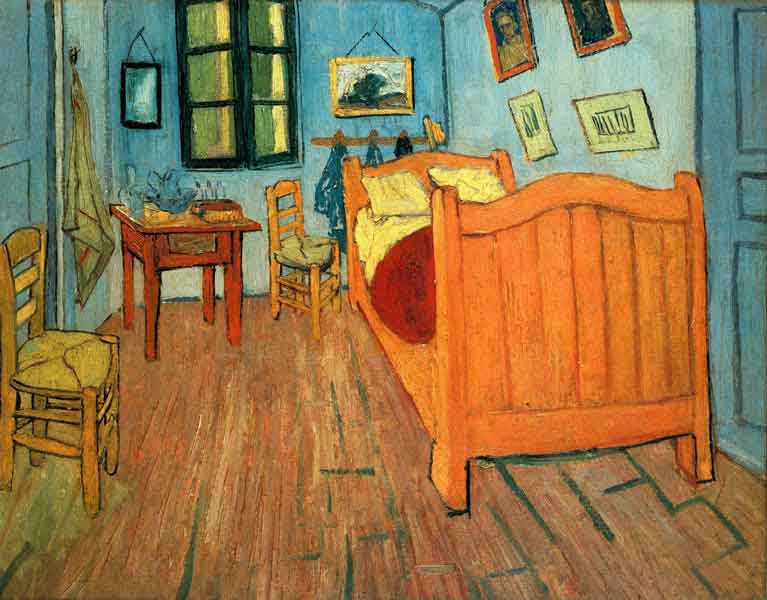
I wake with eyes closed. I won’t open. I can’t look. The bed feels dishearteningly unlike where I know myself to be in my present life, yet strangely familiar to the one bedroom I never wanted to wake in again. It’s my father’s, and stepmother’s.

Bedroom in Arles by Van Gogh
Cat litter sheets and the nauseous sky pelt the window by my ear, as I smell the cheap havoc about in tepid condensation of humidity, a feeling of being too close to home, where abuse reigns on every familial plane, as a tree bespattered with the lifeless trembling of a deadly morning earthquake.

The woman at the window by Jozef Israels
I sink deeper, and the outdoors opens as an unsheathed bronze, polished and brandished for timely wielding about the nascent plain of equal hue, enlightened by the western sun. As a beckoning from Manifest Destiny herself, I trudge through the yonder horizon with a mind for exploratory happiness, in pursuit of the ear and chaff of corn and grain, the dizzying panorama of emptied wilderness, where the Vanishing Indian now only lives as a politically corrected name.

Westward Ho! by Emanuel Leutze
I tip my hat squarely to the north with scythe in hand. I wander through the flooding dusk lit pasture, a son of the mindless hate staring me in the back, now buried in the lightless flat of night’s self-awakening. 

This and two other dream narratives (21st Century Space Race of Sustainable Housing & Mindscapes Interpenetrate Dream with Reality) feature subconscious experience surfacing amid the sensual spheres of daily waking.
_________
The western pathway to slavery lies feebly
over the chasm
         As a vile whore reminds us
         to put grace before prayer

In motionless wonder,
personifying the lush diligence of an ancient society
         Dismembered at the plan of a cursed monotony
               To stare into the black façade
               and feel dreams slip through sleep,
                         In and out

excerpt from "Blind Daemon"


Thursday, 26 July 2012

Desert Wanderings: Reflection on "The Sheltering Sky" by Paul Bowles


On reading, The Sheltering Sky, Paul Bowles' most well-renowned literary work, I was easily spellbound by the way he writes of the desert. This man knows how to write about the desert. He challenges the very depths of language as a mirage over the ever constant reality of the desert wanderer, struggling to see through the inescapable immensity of emptiness. 

The book began with an allusion to dream in the very beginning. Where the main characters, three wayward American travellers, briefly converse on the topic of their dream before the subject is snuffed out by quick boredom and the shallow heart of extroversion at the dawn of spiritual tourism. The travellers seek to surpass the edge of knowability. Unbeknownst to them, to travel without is to travel within, likewise, to travel within is to travel without. Or, as Joseph Campbell wrote, "where we had thought to travel outward, we shall come to the center of our own existence. And where we had thought to be alone, we shall be with all the world." (Source)

I read this book to ruminate on the presence of my grandfather, stationed in Oran, Algeria in 1943 during WWII. Further, I was moved by the shifting sands of memory, as I reminisced on the fleeting clarity of earthly form, surveying the mysteries of the open Sahara on foot, on horseback, on camel, in SUVs, encamped, stoned, under a moonless sheath of stars, and under a fully electrifying lunar beam, reflecting on the moonscape shapeshifting quality of Saharan life. Now, I read with empathetic interest with the mutuality of a fellow American expatriate, while in colder lands.

The book was written by an author, who was first, a music composer (see my post Dreams That Money Can Buy for reference to a past collaborative work he did with John Cage and Marcel Duchamp), and then, with age, crafted a literary masterpiece. As Tennessee Williams wrote in an introduction to an edition of The Sheltering Sky, in reminding the aspiring literati that Bowles had given his words enough time to "cook" with the experiential maturity of a life lived with his respect to his writing.
_________
On the metro, I open a local paper. Full color imagery comes alive, mostly scandalous female body parts, all the rage staring at you through half-covered nipples. Open the next page and shockwave. The image draws me in, a direct witnessing. I am there in the scene.

The African countryside, in the midst of civil war, green-uniformed soldiers are torn from life and limb in a bloody matter of seconds. I can smell the blood, and unwavering with petrified overwhelming adrenaline heat, I seethe with unearthly stress. Massive antiquated tanks and rebels are on their way to massacre the rest of life in the general vicinity. I flee, sure to grab a sight-affixed rifle.

In the night, stranded in the vile hot foreign country, I sense a wolf is near. Hunting for food, I follow the wild canine, cautious as to not be the followed. As I point my sight in the direction of the unaware, sickly beast, I see a green sniper light through the misty forested pathways. Fearful, I continue on with my hunt, starving. The closer I get to my prey, the more I realize it is a docile, harmless dog. I can’t kill it. With innovative strength and penetrating sight, I turn the tables on my would-be sniper. The mercenary is female. I can’t shoot.

Trashing my weapon, I head down a gated outdoor corridor. An overgrown trench of weeds now marginalizes colonial architecture, rising gothic overhead. The sky is dark grey, almost of sable commitment to the opaque grandeur beyond atmospheric heights, mirrored in the abysmal abandonment of the colonial fringe.

As I pass through the empty corridor, an unmistakable presence begs me to look over my shoulder. Behind me, a full-grown, healthy cheetah of princely step, subtly notices me through the fog haze. A bitter second ensues, I sprint, uneasy into the mangled course of vines and metal.

The cheetah bolts in an instant, as the steam of boiled broth rises from a fired pot. Miraculously, I manage to break out beyond the corridor before the cheetah advances on my unwilling flesh. A fortified military complex is my merciless welcome. Stealthily, I glide through unseen and out onto the open plain. A train station stands, lonely against the outlandish veil of unbridled wilderness air.
________
Hunting
"If you dream of hunting, you will struggle for the unattainable. If you dream that you hunt game and find it, you will overcome obstacles and gain your desires." (iDream)
________
wanderer
navigating through bursts of fire
while swans pull in whispers from far off,
sinking whistles, incantations, coded and brief,
releasing and subsuming the night,
to walk alongside other creatures
whose origins have no life in this world,
ranging across times and spaces
in the vast maze, within perceived eyes,
following a vigor,
sensing hues and grays
figuring, vanishing,
erased across slick thought trains,
to appease the spirit of the land and renew Place

raised from pure desire into a high peacedom
prevailing and spanning beyond Earth
yet encircling the buried heights,
now wasted underneath urban pathways
leading to vanquished lore,
spun with vines
growing and curling
swift with a fluidity of inhuman passion,
to embrace and devour flowering tombs

gathering in the Name,
speaking in raw emotion,
devotees to spontaneity alive with independent, rousing energy,
gaining followers behind faint lines written in dust
saved in the memories and the trust of trickster cults

after every midnight round
to oust the villainous government
from outside neoclassical churches and new age rooms
cast in a shrouded light
that spawns frustrated, annoyed intellect
to gulp down dreams and swallow potion

Sunday, 29 April 2012

Mindscapes Interpenetrate Dream with Reality


Has a instantaneous image from dreaming or creating or imagining ever floated amiably by through your waking lens?
___________
One afternoon, I woke to find a red balloon floating in my windowless bedroom. The door was shut. As to an atmosphere from the imaginal realm, the scarlet balloon lifted, fading from the perception of my open eyes, slowly flooded with the light of the earthly sun. The light of dream had penetrated my waking consciousness. The red dream balloon had crossed into my waking mind.
___________
Balloon
"Blighted hopes and adversity come with this dream. Business of every character will sustain an apparent falling off." (iDream)
___________
“zany paradigms of falsehood croon
beaming
lost in a dream.”

high, driven alive
awry by and by
lively inside my mind,
finding a screen to need
in freed
[ ]

wakefulness, asleep
calling beyond
to meet the naked beauty
afraid, open

- excerpt from "Zany Paradigms of Falsehood"

Wednesday, 18 January 2012

Shared Dreaming


" - They say we only use a fraction of our brain's true potential. Now, that's when we are awake. When we're asleep, our mind can do almost anything.

- Such as?

- Well, imagine you are designing a building, you consciously create each aspect. Sometimes it feels like it's almost creating itself if you know what I mean.

- Like I'm discovering it.

- Genuine inspiration...Now in a dream our mind continuously does this. We create and perceive our world simultaneously, and our mind does this so well that we don't even know it's happening."  

from the film, "Inception" by Christopher Nolan

_________________________________________________________
 
Experience...
our One, Shared
Dream

Uniting All Dreamers
through
Myriad Human Forms

to the Point.

Saturday, 8 October 2011

Snowstorm Homesick Landing


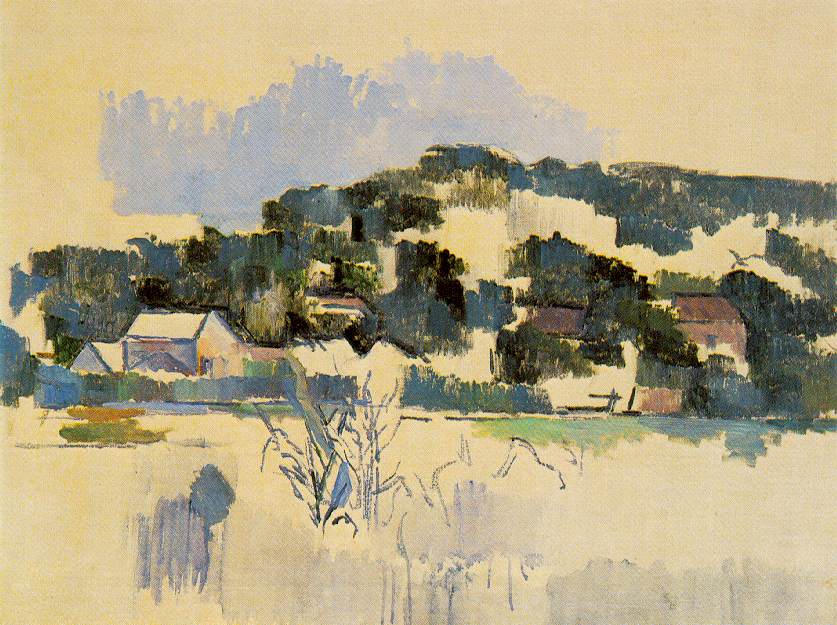
Houses on the Hill (River Bank) by Paul Cezanne


Taking off, looking into front view of plane, seeing a man not so experienced in flying take off into a snowstorm, feel of the engine burning as we land in two different cities, and I appear in my driveway of coastal suburbia, Massachusetts, USA and find in a large cab car, friends from high school who I greet, and we drive off into the night

Fri, May 13, 2011