Primarily a writing exercise, this dream journal-inspired blog is a quiet introspective sojourn into the process that we traverse in going from private dream to public art. I see our dreaming as an internalized mythmaking. As I philosophize and expressively exhibit dreams, both private and public, I encourage and delight in creative language as a way to practice experiential metaphors through a “public dreaming." Writing Theory: Creative Dream Fiction
Showing posts with label Australia. Show all posts

Monday, 25 March 2013

Experimental Cave Art: Philosophies in Word, Vision and Sound

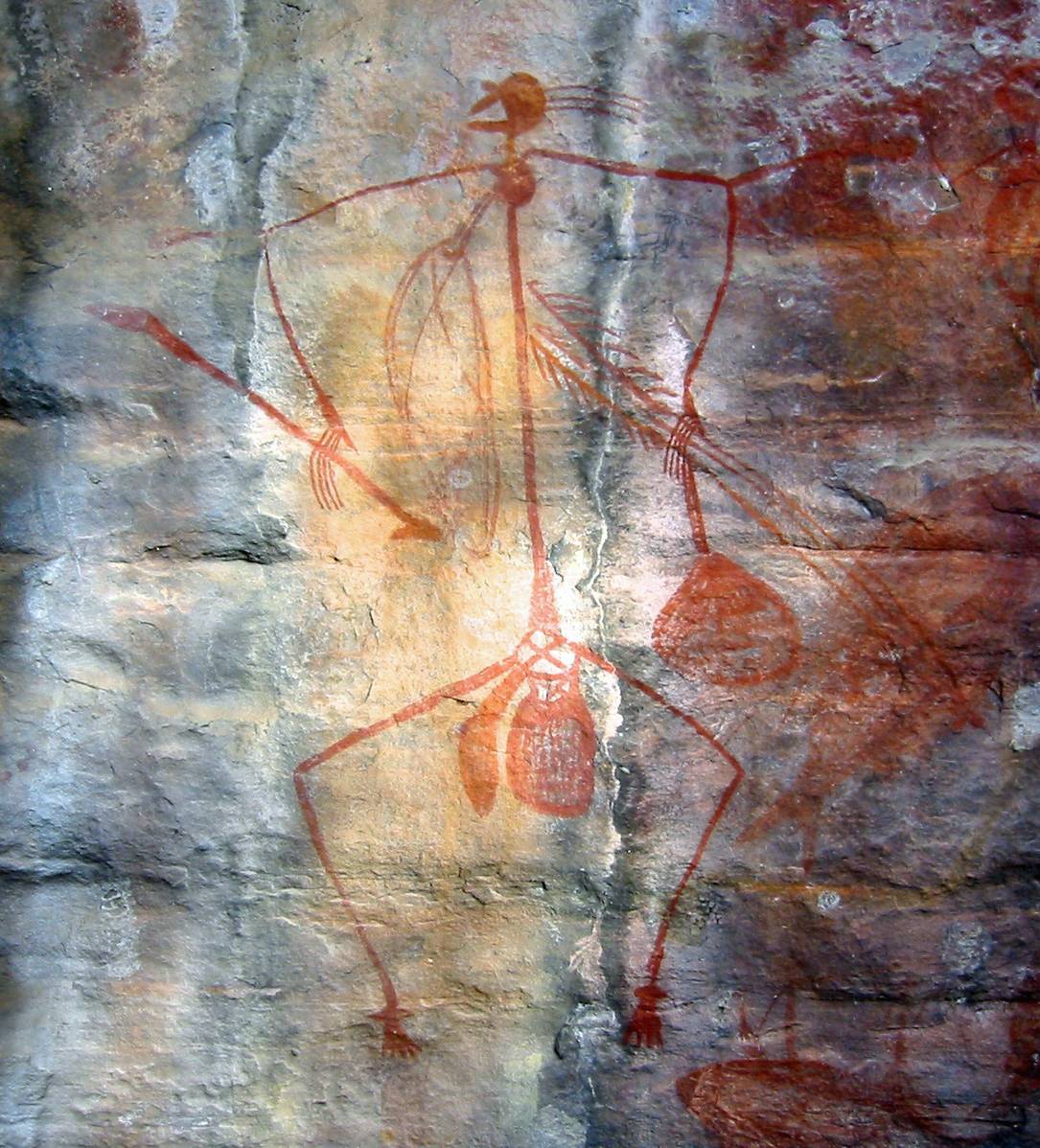
Aboriginal Rock Art, Ubirr Art Site, Kakadu National Park, Australia
Photo: Thomas Schoch
When your night becomes day, then that which is dreamed is on earth. Do not be too high-spirited, but go, and go alertly.” Aborigine Saying

In continuity with the theoretical writings on the natural sleep cycle as expansive beyond the twenty-four hour day, and especially beyond the programmatic workaday cycle, it is not only the activity of waking activity that might define the energy experienced by the mind-body based on sleep cycles but the content of dream itself.

For example, we go through cycles of remembrance and forgetting, this is a fundamental attitude of the cosmos, as we see in the natural tendency to the peek-a-boo gameplay in all children. Similarly, as this is reflected in our conscious and unconscious experience of life, so this is true with the content of our dreaming. We will go through periods where dreams are not remembered, and then after a time, will begin to remember again. These periods of remembering the content of dreams ultimately point to an unresolved momentum of energy building up in the psyche as a consequence of either personal or collective unconscious activity that one becomes susceptible to in their daily life.

Until this mode of consciousness is directly confronted and transformed through creative insight and practical application in thought, reflection and in some basis of continuity in consciousness, e.g. imaginative outpourings based on the theme and nature of dreaming, where all suppressed and repressed energies are focused and shifted into full view, the involuntary sleep or unconscious REM will continue to emerge and take shape in the psyche through imagination, emotion, intellect and every exhaustible mode of subtle activity.

Every time a dream is remembered, the remembered content, whether imagery or emotion or otherwise, is part of a string of remembrance leading back to a source of reflection deep within the whole being of both the individual dreamer and the society throughout the entire spectrum of its history, propaganda, knowledge, media, relationships, etc.

Oftentimes, the strength or immediacy of memory, the lucidity of the dream state as it interweaves through the waking mind, forecasts the urgency of attention to the subconscious. For example, I have experienced lately that the instant I am ready to sleep, as fast as I close my eyes, I see the content of my dreaming, the imaginations is teeming with life and energy, needing to be witnessed, calling out over the margins of consciousness.

The only way to resolve the inception of remembered dreaming is to confront the subtle impulse to emote or inspire a certain inborn expression, metaphorically illustrated in the dream itself. When dream and life are subsumed into wholeness, undivided by the normative values of structured time and analytical thought, the subconscious and the conscious merge into a healthful surrender of the cosmic unconscious faculty of Being, as the great mystery of self-awareness. As reads the motto in Athanasius Kircher chiseled over the alchemist's doorway, originally in Latin, it says, "While Sleeping, Watch'. See previous post: Alchemical Poetry of Terence McKenna
_________
Breathtaking hot night. The empty dark dream of memory. Narrow canals, irrigation trenches in the backyard under a pitch-black sky, a starless new moon. The seizure of domesticity; fencing blinds besiege all passage to horizon’s beginning, and a house cat skits through the mud with a silent flit of dusty soil. A chase begins, until I grab the fickle creature by its muzzle, and in the raw and ruddy brown earth, I tangle its fibrous backbone, cracking the living spine with the brute edge of my wrist. The sky clears like a strong exhale, and the ground takes formless cover of the starless sky above. I drift away from a mind to a life as inert as the swift welcome of death.
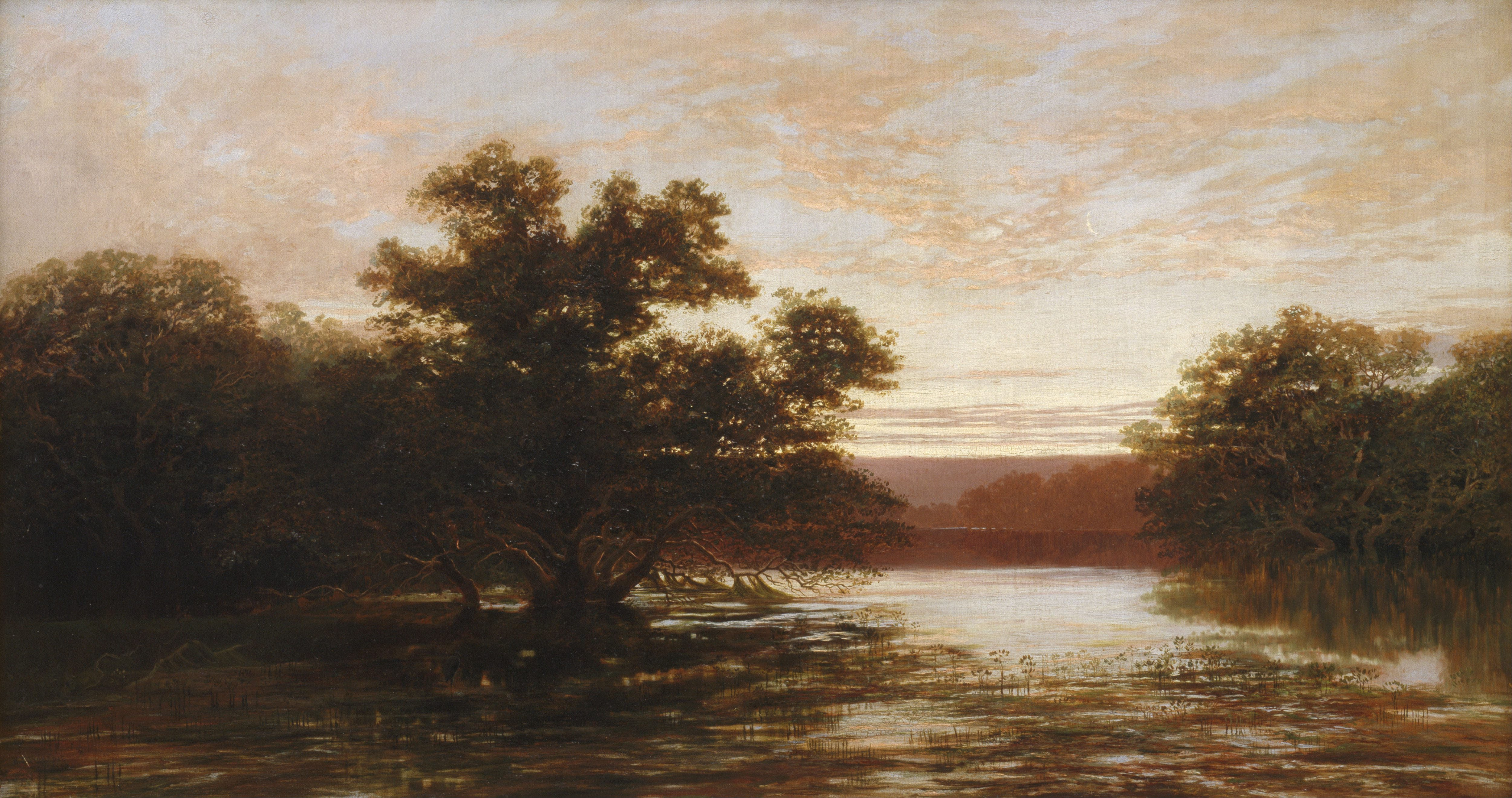
An Australian mangrove, ebb tide by WC Piguenit 
Worshipful room of sweat and lust, the emotive spring of music keeps us swinging to a joyful noise, the urban sound of pain alleviated before closed eyes, staring inward to hear the sight of the muses, invoked by the musician hosts sweltering mad before a small though dedicated crowd of movement. And the headline group enunciates first note with strength unseen; the crowd has since escaped into the bleak, old night. A few straggling local friends stand by the stage, amused and apologetic. One song passes in the silent hollow, a space deemed fit for thousands reduced to pin drop nothingness.

Musical entertainment at the spinet by Johann Heinrich Schönfeld
The emptiness is as palpable as the heartless mind, rounding off pales shots into the murderous pangs of repeated history, the bitter angst of adolescence returning in a white noise of a flushed and ruthless voice, the weird ground rumbles and quakes with burning trust; that a future still opens ahead – full and potent with renewing vigor, to wake again, and live the day from the start, even if our rise coincides with dusk. A silent vision unearths our eternal belonging with grace, and the human community within, where the heart is still in its constant beating, in its rhythmic patience with a more sacred trust.
__________
An elegiac satire on split vein of domesticity, as it unravels and spurns the knowledge-creation of a more unstructured style. The home is the centrepiece of domestic life. Yet, for many thousands of years, there is evidence that we were in fact cave-dwellers. "Caveless" muses on nostalgia for those cavernous days through a reading of "Cave! Home", about a time when petroglyphs and charcoal painting were more important than off-white, beige and any number of dull, and sterile wall aesthetics, and the great-image language of visionary rites were outweighed the significance of antique literature. How can we resurrect the idea of the cave in the context of the modern home, with its womb-like contours and living light that curls throughout our waking minds like breath, and infiltrates our dreams like a warm lover enduring a midnight meditation at our feet?

"Placeless Human Society" is also read here to recognize the dramatic shift from our ancestral pre-history as cave-dwellers of imagination and earth, where suburbia (and its non-subordinate counterpart: the city, for that matter) has essentially uprooted us from this inborn life as a dweller from the earth. On a mass scale, we now dwell on earth abstractly, our imaginations have breathed on, yet the umbilical cord to the womb-cave-home from whence we emerged has long been cut.


"Cave! Home" was published in 3:AM Magazine on September 17, 2012 and is also featured in the most recent chapbook, "Creating in the City" which was released with "When No Stars Appear".

"Placeless Human Society" was published in Outward Link on November 7, 2012. The "Caveless" track release marks the release of the chapbook, "Suburbia to Suburbia: America-Egypt".


Wednesday, 26 September 2012

Dreamtime and the Repatriation of Sacred Letters

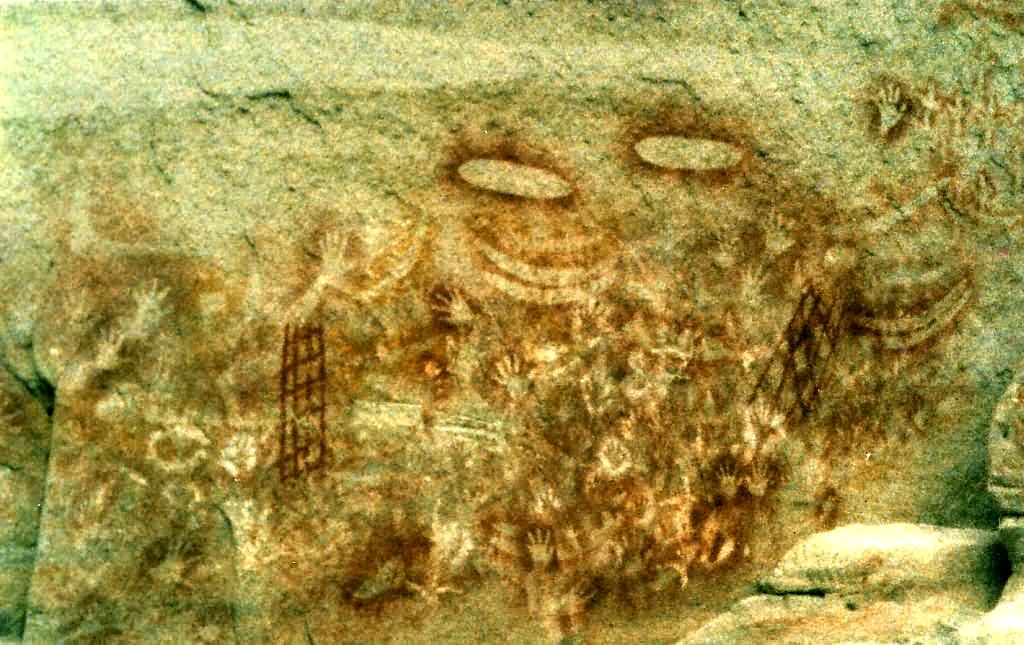
Stencil art showing unique clan markers and dreamtime stories symbolising attempts to catch the deceased's spirit
"The source of the word alcheringa is Arunta, an aboriginal language of Australia. Sometimes translated as “the dreamtime,” it refers to a mythic world that existed at the beginning of time and continues to exist in our own time as a parallel world, revealing itself whenever we dream and whenever someone speaks or sings a myth." Dennis Tedlock, An Introduction to the Alcheringa Archive (From Jacket2, also on Jerome Rothenberg's Poems & Poetics

In the first edition of "Alcheringa" a quote reads, "He who loses his dreaming is lost", attributed to "Australian Aborigine". In opening of the Autumn 1970 journal, the final "Statement of Intention" reads, "to combat cultural genocide in all its manifestations". That being said, it is curious to read such studies as that printed in the Australian Journal of Media & Culture (vol. 2, no. 1 1987), where an article by Vijay Mishra entitled, "Aboriginal representations in Australian texts" reads, 

Forgotten I lost dreaming
Country I left forgotten lost 
which is epigrammatieally reduced, by the translator T.G .H. Strehlow, to "He who loses his dreaming is lost," is directly related to a failure to perceive the radical difference between oral poetics (the fluid verse translation) and the wrillen text (the epigrammatic reduction). Obviously no one can maintain a total separation of the oral from the written.

Meanwhile, if one searches in the active publications of Australia's Central Land Council, an Indigenous repertoire of activism and scholarship dedicated to principles of sovereignty, there is a very interesting article on the Strehlow, the subject of lost attribution in Alcheringa's English translation from "Australian Aborigine"entitled, "The Strehlow collection of sacred objects" regarding further issues of repatriation, while focusing on the repatriation of sacred object collected by the modern anthropologist, as opposed, in the case of Alcheringa, the repatriation of sacred letters, collected by post-modern anthropologists of world literature.

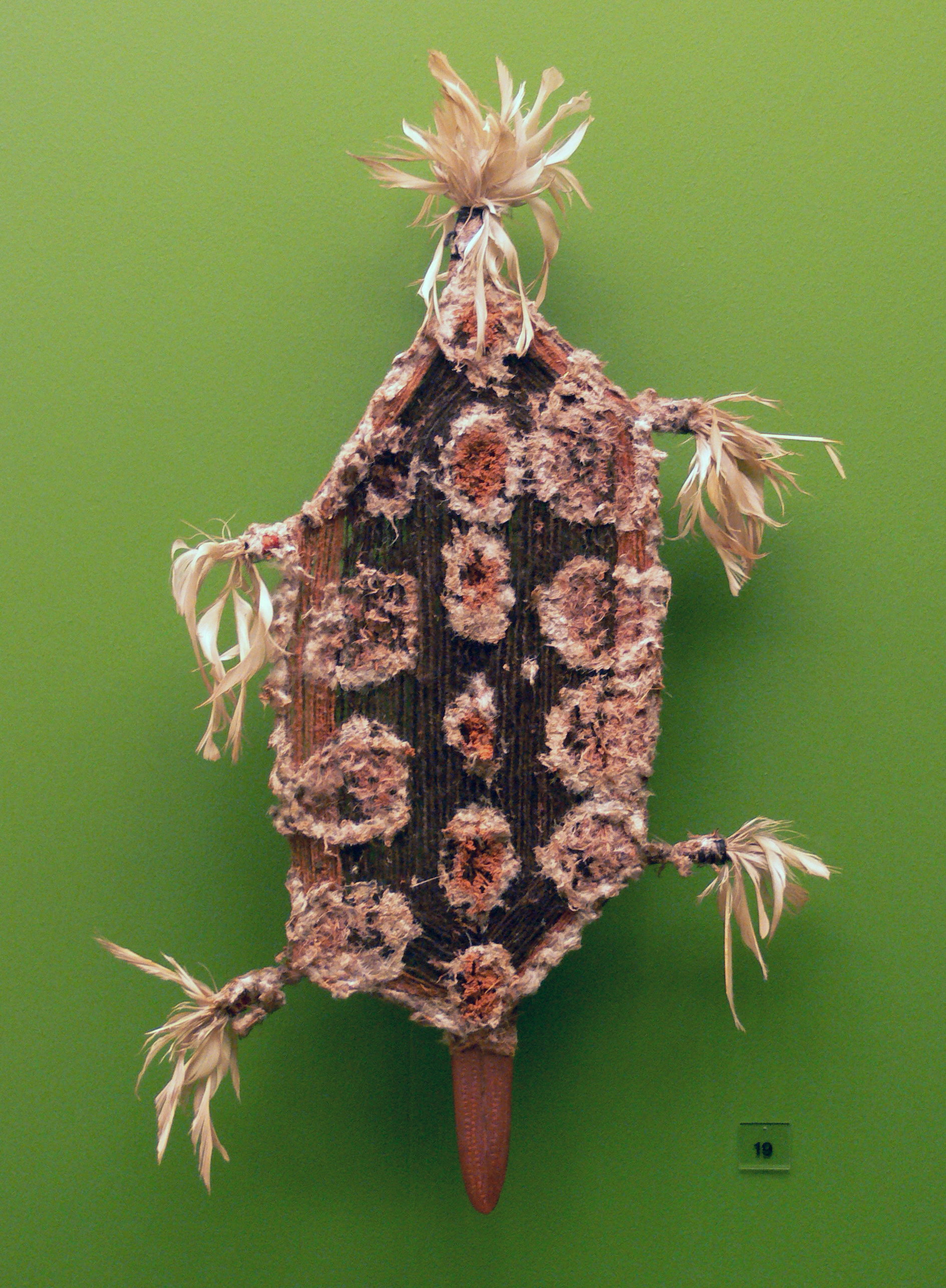
Headgear worn during dancing (wood, human hair, kangaroo hair, feathers); Arrernte people, Australia
________
My mother visits her perception of my reality. North of here, it gets even colder, earlier, and winter is almost perpetual. I ask her exactly what her interests are. She is unresponsive. There are two streets that accommodate visitor appeal, with cafes and the like. We walk on the frozen sidewalk ground. A haze of white ice sheathes the panorama, compressing the moment into one look of sheer petrification. Walking down the main street, it seems as though no one lives here, the outside aesthetics are drab and unused, mere coverings for the inside hospitality, driven by weathered necessity. As we walk into a café, I realize I have enemies here. In the back hall, awaiting our hot teas, a youth of my age wrestles my muscles and joints in a twisted bout of unwanted pain. Unable to satisfy his need for violence, I ask that we exit the café, and so we return into the cold, sunless ache of our thirsting feet. 

Shoes (made from feathers and human hair); Arrernte people, Australia
Midway through the year, I go south to visit my father, to witness birth. With video camera in hand, I capture my contracting stepmother on the front lawn overlooking the St. Lawrence River. In great joyful upheaval, she cries, “it’s a boy!” as the body emerges. 

Ku-ring-gai_Chase - petroglyph, via Waratah Track (Rock is triassic Hawkesbury Sandstone, 220 million years of age)
That night, sitting lone by the coal-burning fire, I am visited by a presence. A naked Indian, greeting me with the power of a thousand friendships, unites in my melodrama with healing insight. He teaches me the power of the directions, North and South. The cold childless North of human danger and the impenetrable forces of nature, and the warm South of youthful diversion in the over-ritualized haunt of abundant fires. He reaches out to me, to plead with him for the stars to answer in earthly illumination. While with eyes closed, he recounts the bitter tales of repatriation, colonization and the staggering visions of post-genocide rehabilitation, for the entire world. And I wake, alone. The sun, directly overhead in a cloudless sky, is in full eclipse.
________
A presence belied in the soft air aglow with diligent drizzle
         From this, our American lighthouse heaven,
                 Alit with dream
                 in stories told by great-grandmother’s
                          Life lived outside the pages of the “true”
                                      And into the truly earth-quaking
                                      of dream
...
Men whose throats burn with the soil of their unloved mother
        Croaking up agro-fossil drains
                Reaching from modern skylines to prehistory,
                issuing from our Christ-death
...
In the housed mystery of our yet undiscovered world
        Beneath each colonial home
                Shot out of the ugly worldview
                        Misplaced over the moral genealogy

In an ecological philosophy
        To dry the eyes of our spectral hosts
               Who watch and wonder
                        With still unborn eyes

- excerpt from "With Still Unborn Eyes"


Wednesday, 11 January 2012

Dream Memory Sketches

Finale by Albin Egger-Lienz


These past few nights, coincidental with the emotional upswing of my transitioning back home, I dream vividly.

Remembered involuntarily, these sketches remain in mind with strong complexities, imprinted with such lucidity as to verify my waking experience of intense questioning.

1

Amid the desert, as drab and steaming with insidious fire as the genocidal, pioneer days of the Australian outback. There is a clamping furor in the air, a dream that dreams in images not only frozen in mind, but in heart, a climbing pull up the mountain of the soul in a delirium of ruthless passion. I wander haphazardly throughout an endless desert at high noon it seems, at high season, unprotected from the ferocious heat. The sun is a deathless predator. I hallucinate the presence of serpents into swords, and I am tunneled into an crime-ridden espionage heatwave in the middle of the Maghrebian deserts of Morocco. In the waving perception, a spackled host of armed thieves rush through my body in and out as if I was one with this burning, naked desert. A snake slithers and at once I am gashed, run through and impaled simultaneously at the sound of a hiss with thin swords resembling how I would imagine heroes of the Arabia to duel. A mental fog is lifted, and I am embedded in a cinematic Casablanca-effect, North African environment. I clamber with hopeless futility in sand-erected surroundings dense with trouble and quick death.

2

A bespectacled retired astronaut, mathematician at NASA and managerial sort of government space programs, clarifies into my vision, a full, bald head with rimless, perfectly circular lenses, covers one eye still with another ocular instrument held by his right hand. He tells me I am to travel to Olympus.

The next moment, I am shot at an immeasurable speed through the atmosphere and far into space through the solar system. I arrive at the destination without hesitation. Time is of no matter.

Arriving on Olympus, which seems to be a lunar satellite of some kind, I enter what appears to be my Grandmother's house in Upstate New York. This is troubling and fascinationg, as I look out of her windows and see the great void of space, smattered with stars over a horizon without an atmosphere.

3

I am walking my bike along a highway in my current city where I currently call home. There behind me, stepping on my shoes, is a homeless man bent on being an obnoxious follower. No matter how hard I try to get onto the bike and continue on my way, I am nearly trampled over by his mysterious presence.

At night, down a dark sidestreet, I suddenly lose my bike, find myself in a scuffle in some suburban bushes and begin to run. There is a great steed, mounted by a medieval knight following my with lance pressed into the windless eve in my direction. Running as fast as I can, I devise a plan while I turn a bend and end up in a backyard which resembles a fortified castle's outer court. Sophisticated narratives of children's stories and escape plots churn wildly inside my mind in the twilight hours of the morning.