Primarily a writing exercise, this dream journal-inspired blog is a quiet introspective sojourn into the process that we traverse in going from private dream to public art. I see our dreaming as an internalized mythmaking. As I philosophize and expressively exhibit dreams, both private and public, I encourage and delight in creative language as a way to practice experiential metaphors through a “public dreaming." Writing Theory: Creative Dream Fiction
Showing posts with label identity. Show all posts

Tuesday, 17 December 2013

Create You: Fearless Artistry and Creative Identity


"I began to dream heavily, violently, every night, and then I learned how to wake up…" 

"Consciously or unconsciously, all writers employ the dream, even when they’re not surrealists. The waking mind, you see, is the least serviceable in the arts. In the process of writing one is struggling to bring out what is unknown to himself. To put down merely what one is conscious of means nothing, really, gets one nowhere." 


Creation is life. More, the incipience of creation is the life of the creator. The life of the artist is bound to their creation, in the same way that a mammal survives on each breath of fresh air. As long as the air is fresh, the artist will continue to create, and as long as the authentic substance of heart issues from the core of the artist's own vision, the arist-seer will align and harmonize with all of creation. 

To forego a path without heart is acceptable. The great mystical physicist of our age, Fritjof Capra, began his famed text, The Tao of Physics, with that realization. Yet, on the path of heart, a different narrative runs its course. To remain true to oneself is to hold fast to the consciousness of one's life source as not merely the beginning precepts of one's physical subsistence, but of the visionary path onto which one is led through to the heights of meaning and becoming. 

The proud artists will realize their vision in the instant of a moment, at simply being the processional experience of creation, the ever-beating heart of co-unity with individuality and universality on Earth. To not over-think is the key to strengthen the creative momentum, reminds Henry Miller, the American author with a self-professed Chinese ascetic's nature. 

So, in holding fast, the artist and author of self-creation, is near-shattered, sensitized by the flood of the fleeting that files down the materialism and consumerism of an all-pervasive cultural fear, to belittle the uncultivated mind to ignorant non-being and blind negativity. In this way, the inner sanctum from where the creativity of an artist is strengthened by the water-like ability to be vulnerable, naked, raw and emotive in a full and unbridled formless truth. 

To all artists, and to the Self, I call on you to be strong, and to claim the ideas and visions and dreams in your mind and heart and being as you would claim your rightful place on Earth. For that creativity, and the perfect imagination of its fruition in your life, is your truth, your heart, your mind, your being, your soul, your foundation, your meaning, and all your own, it is you, your nature, your life, all yours, be it and be proud. 

Everyone, as with one mind and one heart, is capable of becoming sensitive to the expression of your truth as an unheard knowledge that only you possess and that is invaluable, necessary in its tragedy, absolute in its humour, refined in its judgment, authoritative in its experience, wild in its reason, cautious in its aspiring, and pure in its love. Create you. 
___________
Around this circle danced the flame of eternity. In the green spark licked the tongue of heaven. Spring in the Jungle bloomed with effervescent majesty among the ruined foundations of another remote, human wasteland paradise. The veils of fame and belonging passed like a soothing tide, recoiling in the abyss of oceanic depth. We smoked the herb of forgetfulness, harmony and love. 

Ernst Haeckel's 1905 Wanderbilder (Travel Pictures)
The smoke coiled around our lazing necks, floundering amid the slow-moving river, her brown body motioned like a heavy emotion. One among us, an artist of metal and flowers spoke up as paper and marijuana stung our eyes, blinded by the greedy moment, a fleeting light. "Native community leaders announced their wish to use our space. They will hold facilitations, meetings and workshops on the militarization of the Indian people; their War." 

Coolies on the Road near Kalicut, Malabar by Edward Lear
A shade lifted and a heaviness shrank as our hearts wept and our minds faltered along the brink. She, the speaker, high as the azure, fled to the banks, to swim and cleanse in thoughtful reflection. She swung on a low-hanging vine, falling into the naked river, dressed still in paltry coverings, now a resident of the Amazon for well over a decade. Her eyes spoke of what her tongue could not shake. 
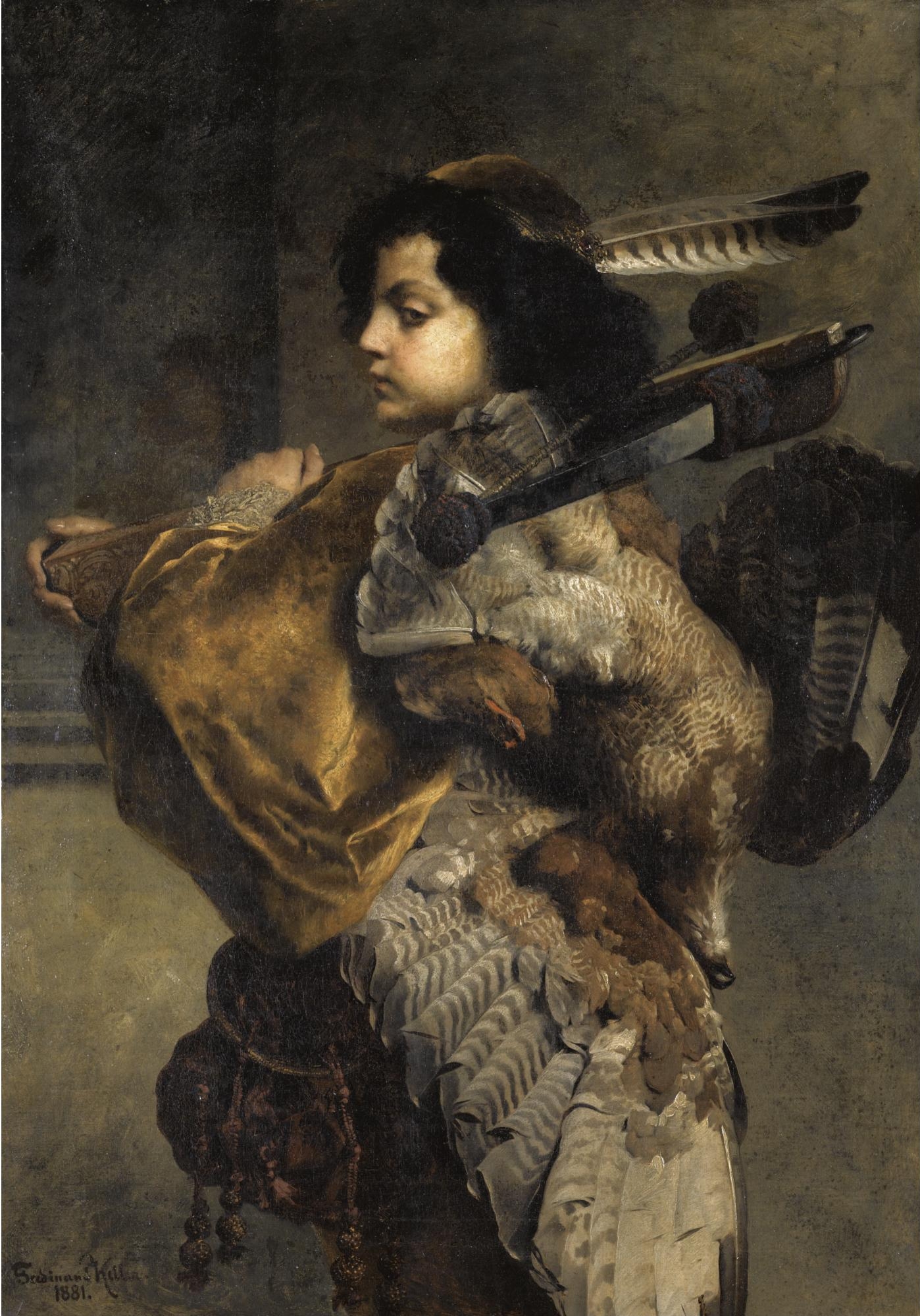
Young hunter by Ferdinand Keller
They arrived, and we vacated the area, as a show of respect. And one day, on the top floor, whereon we store our arts, with wood canvases lain and strewn, I saw her. She was not Native. She was a woman of the Old Country. Her heart was cold as a perennial shadow. Her moonlit face eyed me with an inhuman glare, and her blood then boiled, raising her hair, intoning a voice as harsh and ghastly as the screaming bite of a bullet ant. 
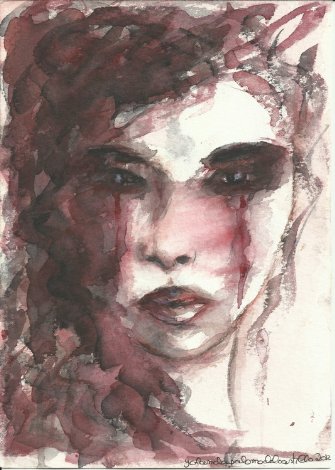
14 abril by Yolanda Palomo del Castillo
I ran. And then falling with desperation in the rushing river, we were swept along. In the instant of our near-death, she lunged towards my angular body, stretched out above the surface, in full display of my superior experience on these riverine lands. I watched as the infamous cult leader, impostor of the Cocama ethnic struggle was buried in the open jaw of the current, as her bones cracked in the turbulent stream. Awash, I lay at the edge of reason. 

Giant tree in Brazil's tropical forest by Johann Moritz Rugendas
Then, I saw the body. The tattooed flesh, gouged and lacerated. Two arrows pierced the man's underside, widening a deep, mortal wound. With bowels distended, his blood having since let almost completely of his sunken frame, I cried, lowered to the wet jungle floor, bleary-eyed. Not only had his own turned on him, but the man also suffered bullets. Scarred and mutilated, his body is the story of his people, dead to the world, brutalized and beaten down by the perpetrators of human trust, by invaders and blood alike. 
_________

Monday, 27 May 2013

Persian Jewry and the Art of Peace: A Sound Vision of Coexistence


Why think thus O men of piety
I have returned to sobriety
I am neither a Moslem nor a Hindu
I am not Christian, Zoroastrian, nor Jew

I am neither of the West nor the East
Not of the ocean, nor an earthly beast
I am neither a natural wonder
Nor from the stars yonder
...
My place is the no-place
My image is without face
Neither of body nor the soul
I am of the Divine Whole.

I eliminated duality with joyous laughter
Saw the unity of here and the hereafter
Unity is what I sing, unity is what I speak
Unity is what I know, unity is what I seek
...
Beloved Master, Shams-e Tabrizi
In this world with Love I’m so drunk
The path of Love isn’t easy
I am shipwrecked and must be sunk.

Rumi, translated by Shahriar Shahriari

Judeo-Persian Literature: HERE and HERE and HERE
__________
CALGARY - This year, the Persian New Year (Nowruz) on March 20, marked another day of global significance: the ten-year anniversary since the American invasion of Iraq. The hotbed issue, still on the map, is WMD (Weapons of Mass Destruction), the bane of nuclear energy. The decade of remembrance also reflects European Union sanctions imposed on the Iranian economy. While Iran is a signatory of the Non-Proliferation Treaty (NPT), which implies non-proliferation, disarmament and the right to peacefully use nuclear technology, the potential use of nuclear weapons by the Iranian government is crux of the diplomatic standstill.

In a visiting lecture to the University of Calgary, Dr. Alan Dowty, Professor Emeritus and expert on Israeli politics from the University of Notre Dame, pointed out that Iran-Israel nuclear aggression in the Middle East has the potential to end the Non-Proliferation Treaty. “Canada has foregone the right to use nuclear weapons, so they have an interest in non-proliferation. Israel would join [the NPT] if the Arab-Israel conflict were resolved.” Dr. Dowty told The Media Co-op. “There is actually no way to conduct polls in Iran, so there is no recent social science research and no way to know what percentage of support base the Iranian government has.” In today’s world of globalized democracy and worldwide communications, public support, or lack thereof, is among the most consequential paths toward conflict resolution, and therefore, the greatest threat to government hegemony.

In 2006, 67% of Israelis believed in an attack from Iran was certain. In 2009, the poll fluctuated dramatically, where 79% did not think Iran would attack Israel. A poll published in the leading Israeli newspaper Haaretz confirmed that now only 27% of Jewish Israelis support an attack on Iranian nuclear facilities. “In 2009 the poll shifted dramatically but the polls themselves are hardly reliable for consistency. A different wording in the question could change answers by 20%. At the time, in the top positions of military defense represented in the Israeli government, the opinion was that an attack on Iran is implausible,” Dr. Dowty said in an interview with The Media Co-op after his recent March 18 lecture at UofC.

Diplomatic negotiations taper out as talks enter into a “full fuel cycle” right to enrich uranium. The line between nuclear facilities for energy purposes and military purposes is based on a thin margin of uranium enrichment. The Iranian government has converted 40% of the uranium enriched to the 20% level (the most threatening part of the existing stockpile) to an oxide for medical use, limiting their weapon capacity. “They blinked, they are aware they're being watched closely,” Dr. Dowty closed his lecture. “Are they serious? We'll know in the next few weeks. We'll see though, I said this last year.”

Originally published by Al-Monitor, Jerusalem Post seconds the investigation on Iran’s diverted nuclear energy resources. The article closes remarking, “With inflation and unemployment soaring and the value of the Iranian currency halved since a year ago, the vast majority of Iranians have tightened their belts to celebrate Iran's new year - or Nowruz, the nation's most important holiday.”

The Jewish Holocaust underlies much of the political negotiations on the topic of nuclear war between Israel and Iran. The Holocaust is part of Israeli policy. Netanyahu once compared the Allied failure to bomb the train lines to Auschwitz in WWII to the current standstill with Iran. Israeli politicians often compare Ahmedinjad to Hitler, an infamous Holocaust-denier. “The truth is that a nuclear-armed Iran is an existential threat of the State of Israel,” Israeli Prime Minister Netanyahu said during his 2012 Holocaust Remembrance Day speech on April 18.

Last month, Canadian Minister of Foreign Affairs John Baird made his way through an unprecedented tour into the countries to speak with political allies regarding “extremists” and “radicals” in the Middle East, specifically Jordan, which is receiving nearly half a million refugees from Syria, Iran’s ally in the Middle East. “I’m fascinated by the Arab world,” Baird is quoted in The Globe and Mail, before boarding a plane to become the first Canadian foreign minister to visit Iraq in 37 years. Yet, in Canada, the Iranian community continues to pursue a pluralistic vision of the Middle East and its emigrants both in the public and private sphere.

Recent Canadian immigrant and former history professor and senior researcher at the University of Tehran, Calgary resident Manijeh Rabieie shared with The Media Co-opabout her work. “Beginning from 2000-2003, I began to conduct research in Jewish communities, looking into their civil centers, their synagogues, their schools. I have prepared 70 articles and a book on the Jews in Iran. The government in Iran denied publication of all my work related to Jews.” The story of the Jews in Iran reflects a widely misinterpreted theme in Middle East affairs regarding religious identity, ethnicity and political rhetoric. “Jews and Christians are traditionally protected in Islamic law. Though the Jewish community has to lay low,” Dr. Alan Dowty confirmed with The Media Co-op. Dr. Dowty had once tried to attain a visa to Iran to conduct social science research as a visiting scholar. He was barred due to his extended residence in Israel.

“The Jewish community in Iran has lived in Iran for over 2500 years. Judaism is at the root of ancient culture and religion in Iranian history. Every culture in Iranian history was influenced by Jewish history. In a sense, we are all Jews,” Manijeh Rabieie told The Media Co-op. “Their schools and hospitals are segregated. Under the current Muslim government they are subject to many forms of abuse. Although there is currently a Jewish MP in Iran, the Jewish community can not take part in politics.” The presence of Jews in Iran precedes Muslim and Arab culture. Political rhetoric naming the Israel-Iran crisis as a religious conflict undermines the underlying social fabric of the Middle East.

Manijeh Rabieie plans to publish a paper to educate the public regarding the historic relationship between Persians and Jews as one people, and how this is related to peace. Rabieie said to The Media Co-op, “The conflict in Iran between the Jewish community and the government is not based on foreign policy with Israel, it's an internal problem within the society based on living under the oppressive government. The government sees all Jews as Zionists. This is not true. Iranian Jews are as Iranian as anyone else in the country, it is their culture, it's there home, that's why they remain.”

A deeper understanding of the Iranian society as a whole reveals more about the current Western paradigm and how the West views Iranians and Muslims of the Middle East, than it does about Iran itself. Recent winner of the Shaughnessy Cohen Prize for Political Writing, Calgary-based author and journalist Marcello Di Cintio spoke withThe Media Co-op on Iran, Nowruz and how the West continues to demonize Muslim culture. “Rhetoric on Iran has gone way up around the world. The nuclear program and Israel's fear promotes scary talk not backed up by facts,” Marcello Di Cintio said. “I think when we shut down embassies in Iran, it's more to do with standing in solidarity with Israel position. My biggest problem is this a symbolic action. ‘Now you can't get a visa to visit your family?’ That's ridiculous. Closing the embassy, is that our way of bringing down the regime? It's a symbolic action that has consequences on people that have done nothing wrong, that's what bothers me. I don't think people understand Iranians in Iran.”

Last month, Marcello Di Cintio wrote a short post on his website, Elsewhere, regarding his reflection with a local book club after revisiting his 2006 book, Poets and Pahelvans: A Journey into the Heart of Iran for Nowruz. Much of the content echoed what Marcello Di Cintio remarked for The Media Co-op. “There's a vast canyon between government policy and actual life. When we make decisions what does that actually mean for people who do not live in suits?” said Di Cintio. “Sanctions are not going to change things. To me, those are symbolic. You think the West hates Ahmedinijad? Iranians hate him more. It's the job of the journalists to report on government policy, and to report what the politicians are saying. They don't have time on the ground. I'm attempting to fill the void.” The Persian New Year, Nowruz, the biggest holiday in Iran, is still a non-Islamic celebration. Nowruz predates Islam.

"It’s a public holiday in parts of the Middle East, Central Asia and Europe. Thanks to global migration it’s now celebrated worldwide…It’s a non-denominational holiday…It predates modern politics, modern states and the squabbling that comes with them. This is a secular holiday…You might hear a lot about Iran in the next twelve months, its leaders, its politics, its policies, its threats, how the world reacts to them. Hey you may watch a popular film like Argo and decide that all Persians are barbaric and archaic and evil enemies of the West. Well, if you really want to get to know the culture of Iran, Persian culture that is, the literature, the family values, the poetry, the positivity, the progressive sides, and the romance, then get to know Nowruz…Here’s hoping for a peaceful and positive period for all.” Jian Ghomeshi broadcasted on CBC on March 20.
As Persian New Year also celebrates the vernal equinox, coincidentally the Jewish spring holiday of Purim commemorates the story of Esther, a Jewish woman who married King Ahasuerus of Persia. Canadian politics, throughout most of the 20th century, reveals a history as anomalous from the present as a Jewish marriage to the Persian head of state is to the world of today.

In 2003, more people took to the streets in Calgary to protest the American invasion of Iraq than any public demonstration since World War Two. A fully community-funded organization at the University of Calgary known as the Consortium for Peace Studies was founded based on popular opposition to the war in Iraq. “If the Iranian people want to change the Iranian government or their situation, that's their prerogative, but if they want to change it simply because foreign powers are making their life miserable, then I don't think that's legitimate. That's just war by another means,” said George Melnyk, director of the Consortium for Peace Studies to The Media Co-op. “I would like to see Canada develop a balance where we have more neutrality, where we're not always looking at military solutions, not always taking a strong stand to support the Untied States or Britain in whatever kind of military actions they want to take. I'd like us to have another aspect to our lives which has been completely lost.”

Professor Melnyk recently published a paper entitled, Canada and Afghanistan - Peacemaking as Counterinsurgency Warfare, a Conflict in Terms. In this paper, Professor Melnyk outlines the paradoxical rhetoric of militarism together with propaganda related to national self-image in Canada. "Because Canada refused to participate in that war [in Iraq], it has been argued that it felt compelled to offer its services in Afghanistan," writes Melnyk. As Canada adopts new policies that effectively change the image of the country, the political leadership in the West (of both the world and of Canada) overrides traditional democracy. “The Canadian government, by being involved militarily in Afghanistan, of which I am critical, see Iran as the enemy. That's what happens in war, you define an enemy,” Melnyk told The Media Co-op.

Canadians are faced with new decisions and choices as government becomes increasingly self-serving and exclusive in both its military partisanship abroad and political representation domestically. “What we have is a Federal Government based in Calgary, and very powerful in Alberta. And it is pro-military, and anti-environmental. These guys are now reflecting more of the West, between Saskatchewan, B.C. and Alberta are totally energy related,” said Melnyk to The Media Co-op. “The more anti-environmental it is, the more pro-military it becomes, they are part of the same package.”

The Consortium for Peace Studies awarded the 2013 Dr. Arthur Clark Research Fellowship in Global Citizenship to sustainable housing expert Jorg Ostrowski, for a project that focuses on development in Iran called A New Silk Road of Peace. “We have a completely different approach than the Harper government. Our approach is not to get involved in this debate, this political debate between Israel and Iran. Our position is to support those people who are building people-to-people relationships,” Professor Melnyk told The Media Co-op.

Recognition for the great wealth of intercultural heritage is an increasingly important area for growth and discussion as civil society moves forward in organizational solidarity. “It is so critical to counter western threats of war with Iran. Together, as a human family with a team of visionary professionals, we can build unity and demonstrate collaboration, explore other lands and respect their traditions, seek education and understand other perspectives, work for common security and build a lasting peace, for all species and our common environment and world heritage,” Ostrowski shared with The Media Co-op via email.

Still, with all of the activism in Canada to facilitate social stability in Iran, for democratic diplomacy in the Middle East, and lasting peace, there are countless who continue to suffer unjustly in Iran. As residents of Canada, active in working towards greater democracy and justice, the focus remains ever on the plight of innocent civilians. While the Canadian government works towards the proposed resolution of the greater evil, i.e. nuclear conflict, the gap between civil society and government widens due to the growing pertinence of foreign policy. It is becoming more and more clear to Canadian residents that with every government measure to protect Canada and other Western nations, including Israel, from a nuclear conflict, the costs of war by another means begin to show its ugly face.


"Persian Jews and the Iran-Israel Crisis: Canadian Civil Society Works Toward A New Year of Peace and Understanding" previously appeared on The Media Co-op
___________
ruins of ruins by RK
the entrance is the exit by RK
dan tien sky by RK
old world taste by RK
belly of the ultra modern beast by RK
_____________
"turning over the ashes of the Unnamed" is a piece commemorating the Indigenous struggles of Latin America. Initially, the writing process is based on experiences in Yucatec Maya communities. Recently,  the sounding was recorded while following the tragic cycle of intermittent, and ultimately, futile justice in Guatemala to reconcile its genocidal history. The track is featured on the Sound-Art EP "Evocations: Exotic Settlers"

In nearly every traveller's experience, the settlements of (un)civilization often provide an impermanent, temporal space even for the most autonomous of vagabonds. Especially in my experience, the piano has been a portal through which my sojourning meets the firm legs of tradition. In this union, both the ephemeral and everlasting are bonded under a greater mystery of the always passing, transient truth, elevating us to a higher sense of travel as mutually relative to the foundational ground of human tradition. Memory and history seed the pangs of movement with the brilliant emanations of creative ingenuity and inspired reflection.

So, in this track, imagine the traveller, or "exotic settler" chancing upon a piano under the weary heel of an empty horizon ahead, and the spiralling beauty of tradition below. "turning over the ashes of the Unnamed" is featured in the new self-published chapbook, "The Deceived Plane"


"The Deceived Plane" is a six poem chapbook on themes of social failure, the unsustainable psyche of Western Man, devolving at an insuperable pace through the mire of good intentions.

Beginning with personal irreconcilable defeatism in the breakdown of the Western family, towards a psyche of madness and the unwilling expansion of selfish ego into greater realities of the imagination, spirit and creativity.

Yet, each of the six poems reveals and awakes the deleterious mind of foul vanity with a brushstroke of unitive spirituality. The wake of greed pulls back in a tidal rush of release, and so these poems offer the ingredients of a raft on which to traverse the open oceanic beyond.


Thursday, 31 January 2013

Life Phases of the Dreamer: Poe and Developmental Psychology

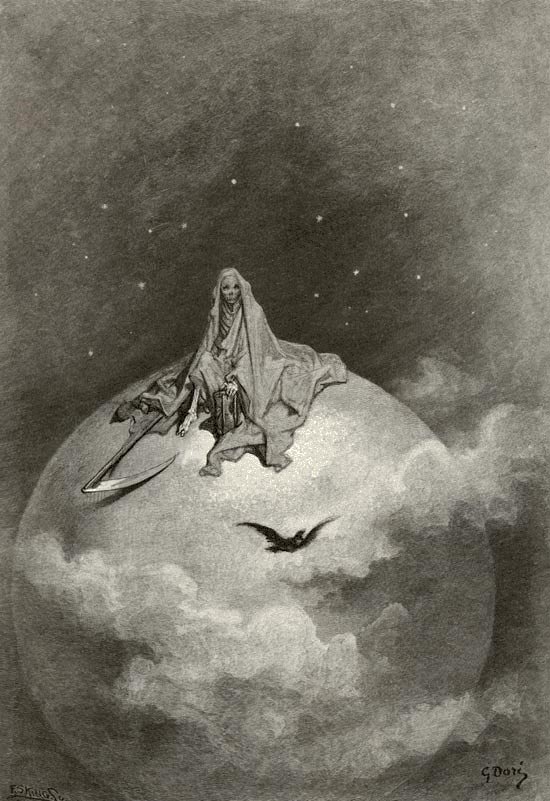
Edgar Allen Poe's Raven by Gustave Dore
"Is all that I see or seem/But a dream within a dream?" E.A. Poe

The practice of remembering dreams is one way to practice deep, inner self-awareness. The subtle energies of dream arise from the Source of Emotion. Both destructive and creative emotions are based on momentums of conscious action. Thought begets thought, and action begets action. As the Poe quote reads, so the psychological, subtle phases of our lives seem as dreams within a dreams.

Emotions are also based in psychological development through various phases of life. As a child, emotions are indistinguishable between self and other. The emotional vulnerability of a child rests in the experience of lacking discernment between “what is I” and “what is not I”. When a child experiences trauma, they are unable to separate the trauma in their environment from their own thoughts and feelings, which are not yet recognized as theirs. By adolescence, the human being is naturally predisposed to reflection on the content of one’s inner life, forming and recognizing their unique thoughts and emotions. This phase is often marked by the difficulties in attaining psychological independence from the collective emotions shared by family and community. If the person passes from this stage, they are able to maintain a strong sense of self, and so go out into the world, learning but not assimilating, acting but not capitulating. These three stages can be summarized as sight, thought and action.

At the fourth stage, there is a marked shift in consciousness. All the previous three stages become indelibly present in life, yet they all become partial to completion through a conscious manifestation of love. In the process of developing a love relationship, the emotions go through the three phases before they are actualized and fully recognized as the enduring experience of love. In the beginning, the emotional phase of the child returns, where individual emotions become indistinguishable within the love relationship. From that stage, thoughts are dominated by thoughts of love, and all action is cautioned by the fact that everywhere one walks now, they are not alone, but with their love.

As with the mystical hierarchy of seven energy centers in the body, known in such traditions as the Hindu Chakras or the Kabbalistic Tree of Life, these four phases represent the involuntary (feeling), creative (thought), power (action), and compassion (love). In the fifth stage, the love emotion resonates outward to engage a greater sense of love for a community, nation or people. In the sixth stage, the focus is clear, and the way aligns with a specific practice of devotion to service in light of the accumulated energetic septet of emotional phases of psychological development. In the final phase, sight, thought, action, love, community and devotion unites every phase of emotional development. The completion of self-awareness is actualized from the inmost depths to the outmost limits of human potential.


____________
She rushes ahead. Into a rigid cube of wooden frames and metal housing. Rusting chains fall over the marginal impasse of domestic space. The outdoor heavens collapse over the head of my lover. 

The Face in the Pool (frontispiece) by James Allen St. John 
Brilliant orange tigers growl and laugh with the insatiable greed of bestial hunger. She is engulfed under massive wingspan of the jungle predators. She submits to death, agog with passionate surrender.

__________
Filmic mind, braving theatric kingdoms
            Weighed heavily by the German cross
Over western shores, blonde
            With sightless camaraderie
In the sociopathic gaze of mindless pain,
            Order & god for trade
                        At the bedside, nude
                                    Binging before a final restitution,
Breathing in dream-talk laughter nightly,
            Not for escape,
                        Only to tread the unfulfilled urge
                                    To let go of body into an act of base movement

excerpt from "think IN drink"

Saturday, 26 January 2013

Talmud and Dream Interpretation: Thoughts of a Secular-Cultural Jew

Talmud Readers by Adolf Behrman
“Dreams which are not interpreted are like letters which have not been opened.” Talmud

I am a cultural Jew, a secular Jew, an ethnic Jew. As singer Arianne Zuckerman once said, I am "Jew-ish". Yet, I revere the tradition of the Talmud. As far as I know, it is the source of a great wealth of pride in the intellectual strength and heartened closeness to tradition that Jewish people have maintained throughout generations. We have kept our traditions intact because we are flexible. The Talmud is a massive compendium of volumes steeped in argumentation, discussion, rhetoric and criticism on the sacred text of the Torah. The Old Testament is not Old, it is vivified by thousands of years of continuous self-criticical analyses and contemplative thought. The Talmud is the tradition of intellectual meditation on the sacred word. No wonder why dream interpretation is honoured, as the Talmud is one of the oldest forms of imaginative interpretation known in book form. For more in-depth understanding of this quote, see Erich Fromm's work "Forgotten Language."
__________
An old woman sits languorous outside the concert hall entranceway. Her excessive body weight slumps over a barstool with the heaping fatigue of an overworked heart. Yet, in her eye, there is a glint of sound reason, a harmonious vocation towards authentic humanity. I stop for a moment to share a few words with the curious and unseemly woman.

Woman playing a kithara by Anoniem
(Wall painting from Room H of the Villa of P. Fannius Synistor at Boscoreale)
I become so filled with sympathy for her life story. I run out onto the street, looking for a candy that I recently became aware that she enjoys. All I can find is a broken piece of chocolate on a dirty sidewalk. In my nervous frustration, I dust off the candy and walk back into the hallway. As I step cautiously through the alleyway to the concert hall, a man a few years my elder feels he must give a word of advice.

Two women at the street by Ernst Ludwig Kirchner
"There is no sense in your sympathy," he affixes his language to my throat like the strangling inexorability of truth. "I've heard too many racial slurs from the mouths of your likening. You'd like to give back, and yet you cry on a pedestal," he musters an incendiary rage, of darkening complexion under the flickering streetlamp. "How many times have I heard your story, I'm Jewish, so I can empathize," he continues unalloyed. "And when you speak of G-d, I am utterly disgusted."
____________
The Italian connection, un-swayed by the prudent fire of tango nights
       stirring wilderness roosts
                in the back hall of some sterling porch façade
                in the mundane sky of an after-party dimming
                       beside alcoholic whiteout praise
                       and the ruined name.

excerpt from "The ruined name"

Thursday, 27 December 2012

Bridge to Kafka's Language of Dream-Identity

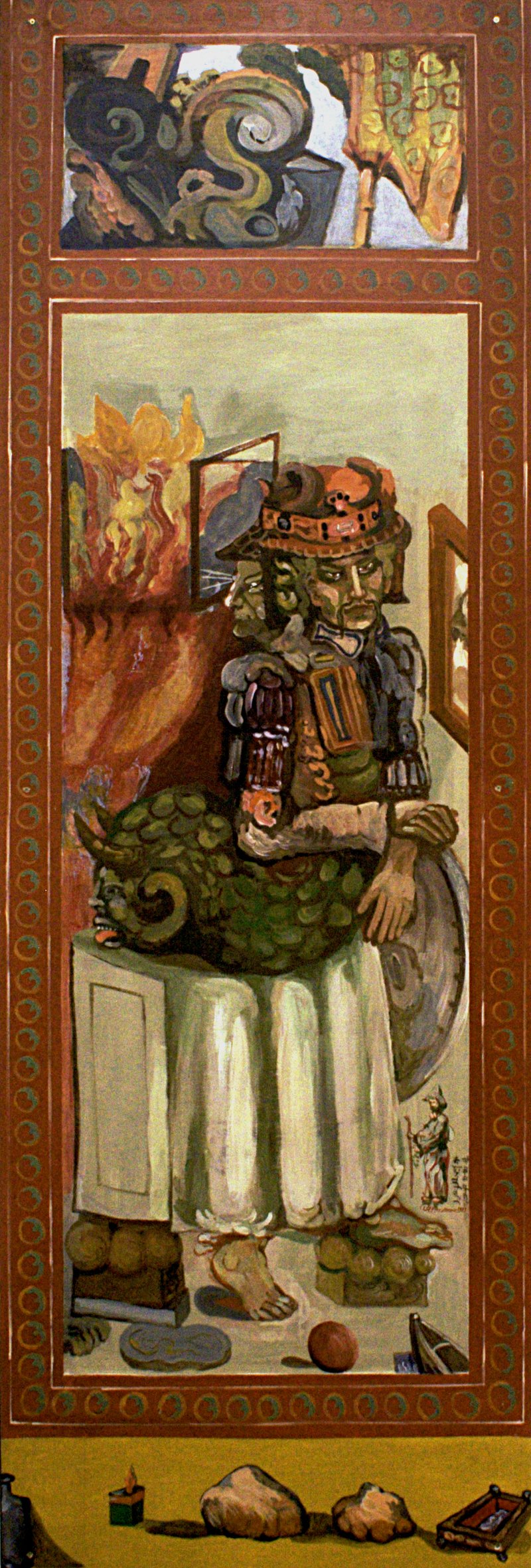
Kafka, Separated from the Fire by a Mirror by Paul Mersmann der Jungere
"Please, consider me a dream." Kafka

How may we interpret this mysterious quote, passed down through interminable echoes? What, if any, interpretation needs be? Read one interpretation. They say it sums up his life. Can a life be summed up? In the spontaneous trigger of language into the folds of space and listening, when do we hear the contemplative grab of a lifetime thrown into a phrase? 

The peculiar relevance of the painting above by German artist Paul Mersmann der Jungere speaks eloquently to the theme of self-reflection and passion. Self-consciousness, or conscious identity may sometimes block our passage into the spiritual heart of self-annihilation, providing us only with a thin display at which to gawk, and finally, withdraw oneself from participation in life altogether. It may be more useful to identify with the less formal, and more marginal states of mind. Or, as Kafka said in another dream reference, "Last night I dreamed about you. What happened in detail I can hardly remember, all I know is that we kept merging into one another. I was you, you were me." [source

If language is a bridge, we do not always cross it, but sometimes slip beneath, and after speaking in one direction, go our own way. 
__________
Memory fails to awaken dream into day. Here is bridge photography from the conscious state:

Entering the Blue Void by R.K. 
Electric Ice Reflection by R.K.
City Riverbank in Winter by R.K.
Ice Flow of Light by R.K. 
No One Lives Under The Bridge by R.K.
 ____________
Into infinity
            And the terminal plague of survival

Marching by
            Currents stepping like waves over the stone-headed martyrs

Staved off
            From one life inside
...

Painted fame twisting and writhing
            In the soundless urban deep
         
A rustic, inflamed few,
            Whose solemn grasp partakes in the early break
         
From an inevitable aftermath
            Draining the rage from our animal brain


excerpts from "Guise of the Beloved"


Saturday, 15 December 2012

Atheist Tomb of a Truth-Seeking American: A Plea for Disarmament

Tomb of D.M. Bennett in Brooklyn by Cory Doctorow
"I have learned to modify my prejudices. I am ready to believe Hamlet was right when he assured his friend Horatio that there was in Heaven and Earth many things not dreamed of in his philosophy." D.M. Bennett, as orated in The Truth Seeker 
It is at times like these that we Americans look to our history. Who are we? Where do we come from? How did we get here? What could have led to this? What is happening? 

Those among us strong enough to ask such questions are motivated to seek truth. As the president weeps for the children of the nation, so we must all begin to weep with minds full of emotion, burning with an intelligent self-awareness towards post-political change. We don't need rhetoric. We need new laws on guns. We need free thought to embellish the minds of such substance as founded free press in America. Disarmament is the new abolition, and as long as guns are indiscriminately accessible to immature minds and wounded hearts, we are all slaves to this mortal era.  
__________
The last thing I remembered was the initial feeling of impalement. Careening off a flight of concrete steps, I flew from my bike onto a metal pole. My back cracked in shards. When I came to, the city was dark. A Rastafarian man burned down a hand-rolled cigarette in the shadows. I knew from his countenance, to walk outside would be a bad move. I did anyways.

The Customs Cabin by Ferdinand du Puigaudeau
The street lamps glowed over empty streets. The absence was chilling, yet I could feel a human presence both alarming and alluring. As I made my way down to the riverbanks, the icy shoreline stared at me with two riveting eyes. The male stance was formidable and intimidating. Fear struck. The air breathed of danger. I needed to know why.

Night on the Southern Shore by Nikolay Dubovsky
As I hurried further on down the shoreline, a group of men whispered in the dark. I quickly smelled the entrenched anger, the mortal struggle at hand. I fled. On my way back, I met a friend from before the accident. He recounted his story, how he had broken his back in an accident that mirrored my own. I didn't question the curious coincidence as he went on to explain the unthinkable, we were now living in a world so hostile to mankind that people were literally killing each other for the last crusts of bread, the last drops of water, the last feet to walk, the last fresh air to breathe, the last day to live.
__________
"towed current
            pulled slow,
            drifted away

hand,
            fingers following new lines
...

virgin thorn brush
            frame lilting strong above the careless face
of artistic madness
in the jokester’s foam and rust
...

the pulse breaking off the tops of widow’s peak waves,
            blushing high over the coastal horizon,

a piercing thought
that boiled in the mind’s own brain,
an intuitive question
            with an answer as certain as death in the next step"

excerpts from "empty Blown mind"


Monday, 24 September 2012

Persian Mysteries and the Immortality Rites of Zoroaster

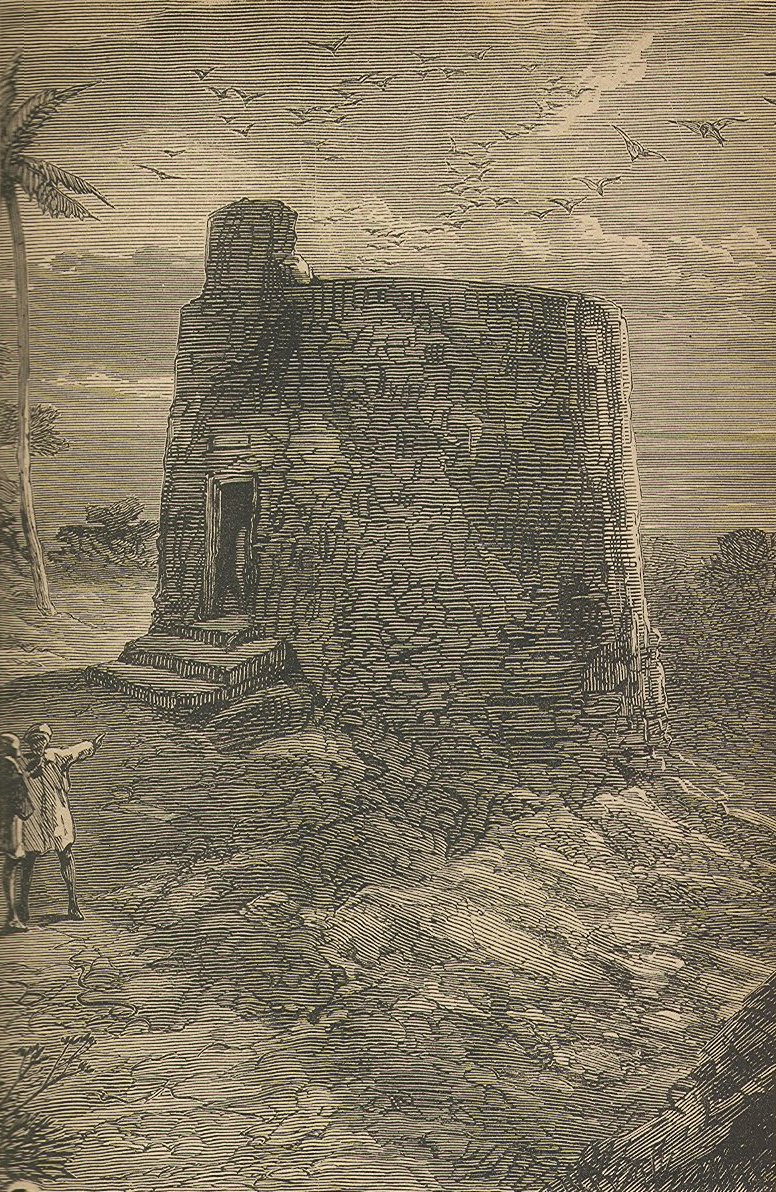
Tower of Silence (Dakhma), Mumbai by Cornelius Brown
“…never age and never die, never decay and never rot, ever living and increasing, being master of its own wish: when the dead will rise, life and immortality come, and the world be restored to its wish.” 

Yasht 19.2.11. James Darmesteter, The Zend-Avesta, Part II, The Sirozahs,Yashts and Nyayis; Sacred Books of the East, Vol. XXIII (Oxford, 1883), p.290
__________

It is 12th century Persia, the continental-temporal mirror image of 21st century Canada. After a lesson on the estate, I a youth of educable age, begin to row across a placid lake with my father. The day is warm, with cool breezes flushing our skin in a mixed haze of natural praise and remorse for the end days of summering. My father, a muscular, bearded intimidation of manhood, speaks with the grazing lurch of intense commanding. As we row, in separate crafts, the waters turn rapid. In that moment, he begins testing me on my learned material. 


The oral literature of the day is mind-bending and terse in its memorable strings of morality, geography and spirituality. I’m able to recall various characters and events, and as I extrapolate, the waters toss and turn unexpectedly. At my wavering voice, my father’s eyes brim with the frosted fire of dark Persian mirth. Yet, as soon as I veer into future’s allusions, spouting the literary names and waves of later centuries unheard, a fire burns in his eyes of serious intent to quiet my youth’s wandering. As he reaches out to grab me into his craft and row back ashore to the consistent presence of historic symmetry, we are both swallowed by the apparition of a waterfall along the other shore, pouring us downward with the turbulent waters in a vein of undone chronology and placeless imagination. 

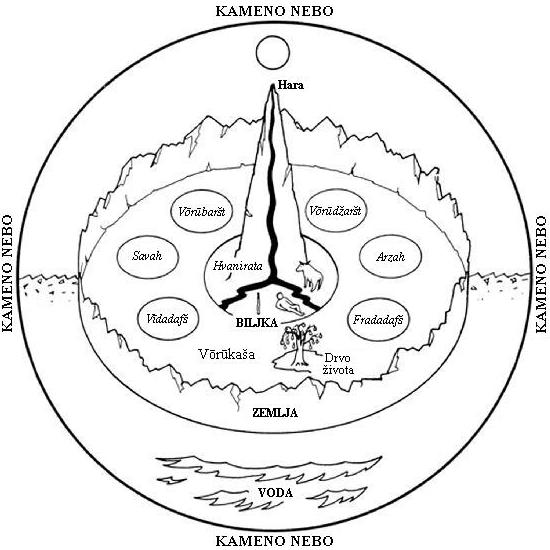
World According to Avesta by Orijentolog
I call out the names of literary history upwards along the upended future. Until the 21st century’s own dawning, my mind, feckless among the archaic forms of Iranianization, is unceasing in its deliberations on the foreshadowed youth of humanity. I turn and writhe with ancestral might into the sheer unknowable mists. My father has since disappeared, and in that silence I begin to know my name.  
_________
Driving out demons with Masonic symbology
         Over the infinite sands of civilization,
         breathed and created out of time
In the sun’s ravishing corner of a universe,
         un-tempted and forever at a loss
                Between the child’s two eyes
                closing
On death and the holocaust of our forsaken government
         Laughing at the trees’ roots


When stretched to the bottom of India’s or Africa’s wells
         Ousting up the belief in life as a drunken tragedy
                              Yet, be not humourless
                              nor without comic sophistry


In the dance and song
         Come alive by the sexual majesty
                              In theatre’s delicate ways,


To present the creative being
as one with truth’s bold and upheld music
         Reflecting back in the caged mirror
                              A creator anew

- excerpt from "From Behaved Freedom to Absolute Nonsense"