Primarily a writing exercise, this dream journal-inspired blog is a quiet introspective sojourn into the process that we traverse in going from private dream to public art. I see our dreaming as an internalized mythmaking. As I philosophize and expressively exhibit dreams, both private and public, I encourage and delight in creative language as a way to practice experiential metaphors through a “public dreaming." Writing Theory: Creative Dream Fiction
Showing posts with label independence. Show all posts

Monday, 9 December 2013

Rebuilding the Unconscious: National Reconciliation and Personal Poverty


"What was in the unconscious, by talking about it, was brought into the conscious mind, and since the conscious mind, Dr. King's already won, the behaviour changes. Wait a minute, what's that mean? Wait a minute, what's that mean? That means that we may be closer to Dr. King's dream than we fear, but we got to keep talking. We've got to keep talking, even when it's uncomfortable." 

"Today, the American Dream is under threat. Our veterans are coming home to few jobs and little hope on the home front. Our young people are graduating off a cliff, burdened by heavy debt, into the worst job market in half a century. The big banks that American taxpayers bailed out won’t cut homeowners a break. Our firefighters, nurses, cops, and teachers – America’s everyday heroes – are being thrown out onto the street." From the Rebuild the Dream Contract 

Van Jones

Usually, this space features original writing, mostly essays, articles, and creative pieces published across the globe, a repository of works featured online. Such original writing usually comes after referencing relevant quotes from the luminaries of the age, those who spoke and clarified humanist dream-thinking beyond conceptual idealism to the pragmatism of imaginative vision and achievable action. Yet, in light of the exceptional words of Van Jones, noted public intellectual on green economics and social justice, a project on the American Dream, and the War on Poverty, a non-fiction work entitled, The American Nightmare: Deconstructing the War on Poverty that I had been working on for on average 6-10 hours daily over a span of three weeks has been suspended due to negligent correspondence. 

The suspension of the work has led me to seriously question my place in the Struggle. I have reflected earnestly and steadfastly into the bitter and stubborn recesses of my young mind, to uncover and explore the history that has led me to my current state, profession, and living circumstances. Not only has the suspension irked me personally, it has led to a seemingly irreparable disintegration of my professional development, as I have been led to question the very foundation of my primary income-earning as a freelance writer. Simply, I accepted a job to write a major work on poverty, which truthfully, paid so little, and asked so much of my time, that it may as well have led me into poverty. 

Added to the initial fact, while I did the work out of curiosity and an impetus to serve a greater work ethic in the name of fulfilling a position asked of me, the suspended correspondence between myself and the publishing agency has caused unmentionable anxiety. The topic on poverty in the United States, and government programming intended to reduce and eradicate poverty had led me to very interesting conclusions on the nature of governance and civil progress in the American context. The freelance job that I had taken to produce 215 pages of carefully written and closely studied work on the subject was truly an exhilarating and inspiring process. 

However, the process as a whole, and the empty-handed result thus far, has left me with an enduring impression with regard to the nature of work, one that, honestly, compels me to complete exasperation. Was it vain pride at the chance of writing a book, and being paid for such work? Or, the overall scheme of my life that has led to this point of personal and professional denigration in the name of accomplishment, work and independence? 

The work of SoJourn(al), this space, is essentially one where the process of a young life, and its manifestation of dreams, come to fruit through perennial dedication to the passions of independence (i.e. self-employment) and creativity (i.e. resourcefulness). After completing the original sound-art works relative to the Sketches of Style collection, I intend to break from uploading more original content here, to recollect and compile all of the works that support the overall intent, create a master publication (i.e. in the form of self-published collected original materials, such as dream fiction and essays on the narrative subconscious), and begin a new page on a new project.     

For now, more music reviews from BeatRoute are forthcoming… 
__________
There was a sheen of golden sand on the top of the butte, where I sat, immersed in the Valley of the Gods. And as I opened my eyes, the sand sparked, as an invisible flame rose to greet the monumental sun. Tears cracked the thirsting rock as I held in my arms the newborn drum. Taut calf-skinned and maple-encircled instrument of spirit, it moved, as inside me, with a petrified grace. 

Mount Desert Island, Maine, by Jervis McEntee
Not alone, yet from the clouds above, heavy with a sad rain, pregnant with the forecast of solitude, I remained silent, a silhouette of the drunk Earth, whose lines disappear and merge with the clear and lucid landscape horizon. Then, there were others behind me. With hands held at their sides, solemn. We awaited the grace of the Royal Native footstep, a rush of patient anxiety, the air true and sound of our hearts' own unhindered regularity.

"Prayer in the Desert" by Jean-Léon Gérôme
Then, as with the march of an oncoming storm, they strode in dancing. Their flat footwear dusting the tops of the sky, elegant with strength. Their movements sure and ancient, greeting the naked stone with the trust of an artist's hand, as the land's own song cried and intoned the sacred. And all then overcame the one great Fear of Death, displaced by the Beauty of Truth. Their songs spoke of Love, Peace and Unity. Then a rain flattened our wild hair, and we cried in unison for the end of a loud and gross age.

"Early in Day in Desert Quiet" by Mary Agnes Yerkes
I began to beat my skin, summoning the gravel and the hail, I floated on a subtle ecstasy, my own song, for them, for here, for us. The drum cracked and moaned, and my heart opened with a newfound longing. The rhythms of the Earth called forth the Witness. Of sight and mind, I broke fast on the holy mount, within the inner sanctum of my own restrained and haunted psyche. Liberated, I stood, bowed with respect to the territorial spirits in whose name I intoned the first breath of song. 
Lions in the Desert by Henry Ossawa Tanner
We left the butte alone, as it had been for aeons. The Valley of the Gods lay silent and waiting behind our upraised eyes, sharing in the unsayable fate of humankind. 
 _____________
Thelonious Monk, the great American composer...


Monday, 26 August 2013

Becoming Yours: Creative Origins in the Music of a Silent Love


"I really just want to help people understand you can go and get those things you want. I mean I was a bodybuilder for a while, I was a personal trainer, I did boxing, I worked as a bouncer, I, you know, started writing, did the creative writing, got an MFA, started my own literary magazine. Now, I'm doing the vagabonding thing, started my own blog, now Facebook page. It's like you really can go and like do all these different things, you just have to be wiling to make some sacrifices and just realize you can do things you've dreamed about doing. And I think all my life, this is the life I wanted. This is the life I wanted, where it's like I'm constantly learning." Jonathan Starke, vagabond writer and founding editor of Palooka Magazine

A Modern Odyssey of Vocation by Rusty Kjarvik 

Essay for “Book that Changed my Life” segment on The Drunken Odyssey with John King, written for the book of Nikos Kazantzakis, The Odyssey: A Modern Sequel

I was 18 years old, returning to my mother’s south shore home in Massachusetts after my first few months away at university. It began one evening, at the end of a series of meditations, where, motionless, I re-conceived the magic psalms of Ginsberg’s elemental void, the enlightened palms of Snyder’s versified mudras and the delicate alms of Kerouac’s prosaic spontaneity. In the pitch darkness, I wrote, “Tat Tvam Asi” on the wall with my trusty writing pencil. “You are it!” translated Alan Watts, whose English clarity rung through my mind with echoing resonance, reverberating interminably to the next day, when I had read every word on my bookshelf and sought more. 

I set out, to the library of my Greek-Jewish Romaniote grandfather; whose literary meditations on the healing properties of the written word had sent him unscathed from World War II to the centenarian desk. There he sat, with a penknife shakily opening letters as his Polack Jewess wife screamed from the downstairs banister. “Take whatever you want!” He spoke over the long-winded cacophony of domestic affairs. In the name Kazantzakis, I saw another Greek, an ancestral voice unperturbed by the walled house.

In a moment of intuition, scanning through the compendium of classics, I chose The Odyssey: A Modern Sequel. Crouched inside my off-white walls, completely bare if not for the Sanskrit scribble and a prized first draft poem hanging deliriously like a whitewashed door of perception. I began reading everything – the copyright date, the ISBN code, and every insignificant character in between. 

Smashed skulls, bespattered bowels and upended spines weaned my consciousness from a walled indoor adolescence. My mind voyaged onward into the travails of a maturing intellect. Spawned with a Greek flair for disinhibiting fleshly experience, I read with a burning momentum. I needed to feel each word pulsate its rhythms of modern wisdom into every minutiae of my being. I began reciting, with the quickening taste of the classical orator, moved by the enigmatic grandeur of such literary quality. Soon, it was dusk, and the tired footsteps of my stepfather climbed the stairs to rest his weary skull on a pillow of televised static.

Reading, reciting, orating, on and on and into my pores sunk the blood of the fallen men and raped women, and from my nostrils leaked the icy salt of the Mediterranean seas. I wept with unspoken clarity for the emotional barbarism of modern spiritual greed! 

At a break in the violent awe, I spoke sweet lines of sexual camaraderie. Women’s voices formed on my dry tongue as the fecund prosperity of mortal despair. In those tempestuous rhythms, my drunken brother stumbled longingly upstairs to lust in the barfly haven of suburban coitus.   

Undeceived, unwilling to desist, I read on, with soft muttering in the depths of red twilight as Morpheus, the Greek god of sleep, laid the house to rest. In my empty hollow, I swam to the subterranean netherworlds of the creative subconscious. Emerging, still as ever, with the light of morning, my mother’s knock could not startle my ever-strengthening concentration. 

I savored each of the 33,333 17-syllable verses as a ripe, freshly picked Kalamata olive, cleansing my palate, as with my cognitive sensibility. The unique versification of Kazantzakis’ voice led me onward into the depths of creative literacy, as I relished on his startlingly characteristic use of nouns, at once subjectively descriptive, while aesthetically presented with the definitive tone of proverbial lists. His “Cretan glance” remains unmatched in modern literature, evoking the spirit of the Mediterranean as an invocation to the deified ancestral hearth of earthly humanity: the book. 

On reading the final character, I threw the book into the air and sprang from my narrowing walls before the book crashed onto an unlit lamp. Visiting relatives, weakly frightened, noticed my sorry state, and their misguided sympathies amplified under the crushing noise of broken glass. 

After being handed a Greek salad, to end my bookish fast, I greeted my grandfather, whose smile shone with mutual respect and ancestral fraternity, as two men of pure literacy. Outside, a childhood friend stood to greet me. We had not seen each other since pre-pubescence. Her eyes, crooked, observed my own downward slant into the abnormal body of creative tradition. I was not mad, I was not sane, and yet, from that moment, her eyes told me what she could not. I was rapt, eternally in the powerful vocation of the word of silence and thought.    

This essay was featured in Episode 12 of The Drunken Odyssey with John King (1:22:50)
________________
Follower
Taken during the Calgary flood, this piece affirms communal living as a way to stay afloat. The onlooker, under the umbrella at the side of the picture stands proportioned as a much larger, enigmatic figure, showing how the individualistic and non-participatory way of life is much larger in our view. Yet, the smaller geese portrayed survive through such calamities that would forestall all of human life. This piece is dedicated to all the volunteers who helped out during the flood. 

Into
This piece revives a sense of mystery and adventure in the antique remnants of our city’s past as they continue into the present. So, in a sense, the very door itself offers an entry point, regardless of using it to enter the building. This piece is a practice in seeing that photographic art so meaningfully attempts to project for the seeing public. The city’s architectural heritage is reimagined through digital photography to capture the colorful beauty of the past, and to encourage everyone to see it in their daily lives at ground level. 
Lightly
An unaltered piece on perspective and contrast, this shot portrays the inner city perspective as immersed in a constant play of dwarfed and magnified artificial environments. Every great photographer must become a master of light, and yet, even the everyday bystander is subject to the subtle nuances and grand complexity of light and how the human eye perceives it. In order to further enhance the living experience of our city, we must pay attention to the power and effect of light and seeing. With the right contrast of shadow and light, we can see the way forward. 

Passage
 Shot on the Bleriot Ferry on the Red Deer River, the clarity of the flags over the oblong shapes and angular wirings on the ferry starkly contrast with the badlands horizon in the background. The contrast is not only in shape, but also in colour and texture, further emphasizing the newness of modern industrial technology to the land. The reflection of the badlands in the water is housed under the wiring for the lifeboat. The red of the ferryman’s jacket meld with the ocher stone and national flag, yet the provincial flag of Alberta stands taller and larger in the unworldly sky.   

Plaza
Taken at Olympic Plaza on Canada Day, the public was out in full form. The scene depicts Mayor Nenshi collecting impromptu charitable donations as the public crowds around him with money in hand to exemplify our compassionate, community spirit. On the horizon, the Calgary Municipal Building completes a semi-circular shape in continuity with the crowd below. The vibrant blue of the building matches the sky as if to emphasize the overarching presence of the municipal leadership, especially on that day, and especially with Nenshi’s leadership. The blue of the Alberta flag shows with a singular display, connecting the overall red color of the Canadian people to the local experience in Alberta, with special solidarity in light of the flood disasters.

Simplicity
A piece to reflect the feeling of cycling, this shot was taken on the riverfront bike path on bright and clear sunny day. The retouched colouring of the photo encourages the idea of each person experiencing and seeing the world through his or her own eyes. The ovular shape of the photo is meant to display the image as if directly seen through the eye of the seer. Light touches of white glow against the tips of the tree as sparse clouds drift.  


Solitude
Also taken during the Calgary flood, the image intends to capture the vibrant and intense presence of water, and the Bow River more specifically, entering our daily lives. What was once an anthropocentric, urban reality has become a very real connection to the presence and power of nature in her greatest manifestation. We cannot now go about our daily lives, nor even cross the street as this picture conveys, without being at least somewhat submerged in the omnipresence of the natural environment.  

Ancients
Set during Canada Day Pow-Wow at Olympic Plaza, my wife modeled under the spiraling flue of a magnificent, traditional tipi. The photograph emphasizes the Four Colours (yellow, white, black and red). Human life, within the womb of domesticity is constantly immersed in the sacred hoop of the Medicine Wheel, representing the Four Directions, Colours and Humours, among other symbolisms. The human figure is silhouetted in black, in connection to the black outline of at the very apex of the tipi. In this way, humanity represents the closest connection that we would have to the greater life in the original circle above, represented by the greenish-blue of the sky beginning the circular form of the tipi’s shape around the standing human form. 

Civilization
 Taken on a rooftop above Stephen Avenue. The image invigorates metaphors of the great urban passage through civilization in the shapes of modernity and industry in the 21st century. This piece highlights Calgary’s inner city architecture as from within, looking out through a small rectangular break in the multicolored, almost prismatic shapes of the contemporary building, as it were, virtually closing in. Yet, the sensational digital display is alluring and captivates with a fantastic beauty. Below, subterranean shapes represent the surfacing below, a whole image of the city as a living being. 


Danger
During a music video shoot not far outside of the city of Calgary, this still captures the remains of a true-life crash landing. Further dramatized by the winter prairie landscape in the background, the grounded plane conveys a sense of isolation. The remote and forgotten remains of a crash-landed plane convey a sense of warning to a society needing to avert its course, even if it may feel it is flying, and instead embrace greater diversity in transportation, such as cycling. 

Direction
Like much of my photography, there is often a central focus made blatantly apparent. Similarly, this shot invites viewers to remain true to a course that goes in peace with the natural environment. Even though there is an arrow pointing (with as strong a sign as any) in one direction, we need not always follow it. Instead, like the goose in the picture, we might simply sit on it, and reflect over the calm, natural flow of things as they are. 


Emerge
This piece speaks to the introverted, indoor culture of Calgary created by our housing, and, equally, by a harsh climate. Yet, this photo affirms the emergence of the public figure, to brave the weather and to go beyond the domestic sphere and simply get out. The photo embraces the creation of an extroverted, outdoor culture that is ready to move from isolation to community as the developing maturity of a young city. 
_________________


"Journeys end in lovers' meeting" wrote Shakespeare in the comedy, Twelfth Night. All the more so when the journeying are lovers of music! And so, the saying, "I'll see you on the other side" is expressed in the pure creativity of Earth and Sky, of rhythm and wind, of bone and breath, wherein musicians enter and emerge from the collective realm of collaborative unity through the essence of sound as beat, melody and harmony.

And in the above recording, a serendipitous connection forms between two lovers of music across the expanse of the Atlantic sea. From Barcelona to Boston to Calgary to Vietnam, windswept and travelling to the Chinatown home of two artist-seers of sound and light, we anchored our minds in the vast breadth of the true love that rests in our hearts. Improvising on the rhythmic influences of African blues, intermingled with Cuban folk music and original hymns of Catalonia through the instrumentations of guitar and voice (El Toubab), zheng (Vi An), together with my xaphoon and percussion.

The recording above represents one of the larger productions and mixings that I have engineered through collaboration, as opposed to my solo project, Mister E. Menachem. At first, I was inspired to reach back through the catalogue of recorded memory through field recordings of concerts, jams, cafe moods and late-night stirrings. Listen below for a collection of such recordings. Their wealth of emergent intonation in the voice of a flowering mind speaks tales and tomes of innocence and experience, of the extrovert amateur and introspective auteur, of the public artist and private dreamer.

After reflecting on the raw grit of creativity in the burgeoning flesh of a new community, a new movement, an incipient birth of open life, we see the whole society unvarnished. As the economy becomes more and more a blasphemous term of bitter and cold forewarning, the heart deepens and the mind sharpens. Look around. In every corner of the world there are shadows. Gold and oil are self-destructing through a mutual phase-out, blurred by irrelevance.

Each and every one has, and are part of, only one life. As I wrote in the essay, A Modern Odyssey of Vocation, "I was not mad, I was not sane, and yet, from that moment, her eyes told me what she could not. I was rapt, eternally in the powerful vocation of the word of silence and thought." SoJourn(al) is an offering of time to explore the inner space (the dream space) where the natural watercourse way of existence merges with the choice to be in unity with all of creation; the way of the wise fool, the blind seer, and the musician...of silence.    


Monday, 1 April 2013

Mythologies of Freedom and Dreaming: Interpretations and Reminiscences


“Human soul, should it dream of me, Let my memory wakened be.
/ Moon, moon, oh do not wane, do not wane, /
Moon, oh moon, do not wane....” lyrics from Dvorak’s Song to the Moon

“There is no freedom, because we die,” said Winston Churchill in a fated passage through the subtle imagination of nighttime visions – speaking as the personification of death itself. He emerged from the grave of innumerable veteran crosses and stars over unmarked graves lining an immaculately manicured grassy hillside in neat rows. The cemetery is reminiscent of the dead bodies once ordered with haunting linearity in the aftermath of the many battlefields fought over in world war.

The realization of human mortality is the psychological maturation of recognizing freedom as a myth. Even in dream there is limitation; the mortal scars of suffering – destructive emotions and negative repressions – continue into the deepest corners of the subtle mind. As in thinking, the natural mode of an animate and intelligent psyche is to comb through the vast interweaving analytic and creative spawns of experience and memory, as they unfold with newfound insights and revelations. Yet, in that process, the evolutionary cycle naturally spurns most content with the greatest psychological defense mechanism of mortality: forgetting. To release, let go or forget the contents of the mind as they build and diminish is part of the natural breathability of discernment that allows every person to function as a rational agent in both human society and in wild nature. Yet, there is intermittently a thought that recurs, as in dream, that reminds us that thought and the more subtle activities of the mind and of human experience are intricately linked to the repetitive urges of necessity in the libido or the gut, for example. When a thought is forgotten, it was meant to pass, and thus facilitate further emptiness, to clean the slate, or empty the glass, so to speak, so that it may become full with the nourishment of more enduring concerns. Yet, when a thought clings, as with the subconscious content of a recurring dream, it is calling out to be transformed through consciousness. There are many modes of transformation through consciousness, i.e. creativity, reflection, speaking, and action.

Similarly, as the facility of the mind to think filters through generative content towards enduring insights through word, sound, emotion, intuition, and image, the content of dream has like potential as an agent of subconscious “thought”. Yet, where thought is often sound-oriented, as the whisper of words, dream, and specifically dream-writing, entices the mind to reflect on what images endure, and why, through their free-associative interpretation. Those images that endure from dream into the memory of consciousness and daily activity are as thoughts that recur and beg further recognition. Both involuntary, subconscious – dream and thought – are inceptions of creativity that arise from instinctual mechanisms that the body has to self-reconciliation. Recognizing and listening to the inner voice that speaks in the image-language of dream and the sonic subtleties of thought through an internalized intellect form a holistic psychological healing likened to the regenerative quality of the physical body to heal itself.

Former child soldier and international rap sensation Emmanuel Jal uses storytelling and music for social-emotional learning. He says that peace is “equality, justice and freedom for all”. His triad of concepts that can lead to peace – equality, justice and freedom – will be the basis for understanding how dream becomes thought, and thought becomes action.

While there is no earthly, or worldly, freedom after a full recognition and confrontation with the mythology of human dreaming, both consciously and subconsciously, there is equality. In Sufi mysticism, it is said that all of creation essentially began from an image. In Hindu cosmology, the Self, or Atman, sat alone, and pondering a sense of cosmic loneliness, split into two. Thus, seeing a reflection of the Self gave birth to the world. In other traditions the first creation was sound, particularly in dominant Western religious tradition, “In the beginning was the word.” In more acute interpretations based on studying original texts and incipient cultural contexts, sound is understood to mean vibration. From this understanding, great wisdom energy emerges from the fabric of all creation, vibrating with the cosmic equality of being essentially of one substance, from one origin, and to one destination. Also, when people become competitive and separatist in worldly affairs, this sense of cosmic equality is lost. For ultimately, an individual is not born of their accord, nor is their lot in life prescribed by them, but they are subject to the cosmic interdependence of the I-Consciousness of All-Unity. Deep equality is seeing that there is beauty and tragedy, form and emptiness, sophistication and simplicity in every instant and every aspect, in every individual and independent form of being.

On a deep level, freedom and equality are absolutes. There is no true freedom, yet ultimately all are equal. Justice is relative. Time and the fabric of relations temper Justice as it is broken and mended by the conscious action of peoples, animals and all forms and modes of being: ocean and acidification, mountain and mine, consumer and resource, victim and perpetrator, predator and prey. Freedom is a dream that never becomes real. Equality is a reality that does not extinguish by dreaming, and also a dream that does not extinguish in reality. Justice is a dream that may, or may not become a reality, unless dreams are made real through conscious action, and then waking realities can potentially become our greatest dream.  
___________
Barroom fade-out, the groveling aspiration of a few young guts feeding on the fermented sting of a foreigner’s every desire. The walls steam and sweat to the touch of human skin, crowds meander and mingle in a scintillating core of the ruthless dance. The beat of bare feet on the wet soil engraves the trammeled heart of the night onto the soles at every step.

Le bar des Martégales, Marseille by Marcel Leprin
Escaped into the washroom, the narrow claustrophobia is deafening, with a seed of empty remorse, I trudge backwards, to scale the heights of misdirection, and a friendly face peers through the swinging doorway, a member of the female race, she glides back dispassionately. I wade through swinging bodies back to a table, where my friends eye my every movement with a gentle regard for the creative word, emanating like sunlight from my chest like a cross-legged aesthetic seeing visions of outer space. I am warmed, basking in tongues of like entanglement. A live hip-hop act floods the ceiling with the reverberations of bass and rhyme.

Fuge in Rot by Paul Klee
Next morning, the cemetery air is thick with warning. Veteran markers stretch 3,000 deep down a coursing hill, steep with shadow and disbelief. The anger mounts like an unchallenged breeze on the face of the beloved. And I starve for words of remembrance and the final end to the deep finishing hate that swarms and seethes in our bones like the lost blood of too many young men and women. We are guided along by the preeminent Allied emissaries of WWII; Roosevelt, Patton, Eisenhower all emerge from the ground of the lain, and lastly Churchill.

The Cemetery, Etaples, 1919 by Sir John Lavery
Rising from a grave bed, the sparse, delicate grass wakes with air at his emergence. Churchill guides a small tour through the narrow passage between the blinding dizzy-spell of white crosses. After reading the bare bones epitaph of one fallen, slain by the brutal, forsaken. We can almost hear the utter ignorance of speed, metal and waste. Scanning over a generic war axiom, he says with spitting disdain, “There is no freedom on this earth, because we die, because we are mortal, freedom is a dream within a dream.”

The Hat of Freedom by Herman van der Mijn
Freedom is a tear in the cry of eternity.
___________

The mangrove is a peculiar tree, featured most recently in Ang Lee's Life of Pi, the man-eating vegetable is an interesting folkloric attribution to the reciprocity found in nature. "Sour Mangrove" is a piece that uses two types of percussion, doumbek and frame drums together with digitized xaphoon with an atmospheric ethereum of shakuhachi.

This instrumentation breathes with the three minute narrative, an experimental movement that gives voice and embodiment to the numbness of apathy and dogma that drives humanity to unprecedented elevations of ignorance with regard to the environment. With the reduction in the rhythmic pace at the very middle of the track, there is a slight turnaround, where natural objects are at least recognized, yet by the end, there is mere allusion to voice as performance, reduced to mere agency in the creation of an all-consuming, and ultimately cheap contrivance: the public.

The mangrove, a gorgeous and exemplary form of environmental wonder in its sheer aesthetic beauty, and its symbiosis with the ocean (and especial trait that modern humanity lacks) is simplistically reduced to an act of consumption as a disagreeable taste, sour.


This chapbook is comprised of thirteen selections from Cyclical Wordplay under the subtitle, "Sleep Cycle" as they were all written during meta-conscious states of creative emergence. This chapbook release celebrates the music release of the feature piece, "Sour Mangrove" on my bandcamp site, where I upload experimental sound art and different forms of narrative readings. "Jailed Desire" and "Sour Mangrove" were published in "ditch, poetry that matters" on April 24, 2012.

Thursday, 13 December 2012

Goethe and the Existential Life of Modernity

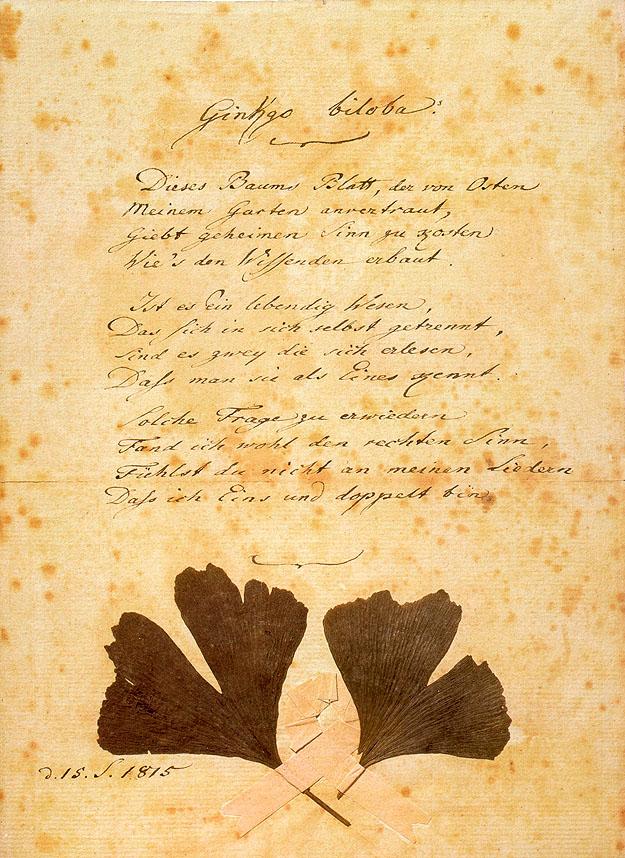
Ginko Biloba, a poem by Goethe
Who are ye that thus rudely banish slumber from my eyes? What mean these vague and insolent glances? Why this fearful procession? With what dream of horror come ye to delude my half awakened soul? Goethe's Egmont, Opening lines of Act V. Scene IV. 
A play about liberty under the thumb of oppression, my preliminary inkling about the Egmont drama is that it forecasts the oppressive momentum that lives within, and supports, heroic independence. I have been contemplating the uniquely liberating present that I experience with my love. American and Vietnamese, we are from two countries whose people, not long ago, brutally killed each other. I wonder sometimes about our extended family relations. How is it possible that the same blood now joined today by love, once was spilt by hatred. As Goethe writes in the poem illustrated above, "Is it but one being single / Which as same itself divides? / Are there two which choose to mingle / So that one each other hides?"

Read my Letter to the Editor "Embracing Diversity" on BlackCoffeePoet 

& See a Collaborative InterviewEssay "Busking and Creative Ecology" by Vi An and myself on In Stereo Press

Previous Post on Goethe: To Dream in Red is to Uncover the Veil of Consciousness
________
I sat under the opaque cloudy open. A dark rain hovered in the misty atmosphere. The pressures of a battered mind fill my eyes with a salivating remorse. I've since exiled myself from a gathering in my city's core. Restless, I fill my mind with blank unease, ass wedged against the wintry pavement of a curb. This area is one of neglect and rage.

Street in Venice by John Singer Sargent
Checking my phone, I have a text. I'm to be on CBC Radio. A talk show host tells me my words are acid and wry. I'm paid. We've settled. The night lingers. I wade in thoughts of a lonely walk. I kill time, staring into the light of my phone. What's it come to? What's the noise? Why do I do this? After raising the question, I feel light enough to carry on. I stand up, and walk. I am a question.
_________
"Falling as a failed lilting feather from a broken wing
Clinging to the unforgiving cold mechanical dawn
Still dreaming an entire civilization

And how illusory, how ultimately disillusioned I am by my youth
Drained of all wicked savagery and raw earth
Into a vegetable gladness

Thawing next to a lone rock
Cracked by a lightning strike from the changeless ice age broth of sky
Almost infinitely long ago, and now rinsed, overly purified by the fresh rains
...
Fathers and mothers in my cultural upbringing
The writers, artists and musicians
Spouting intelligent insanity

From within forms called the book, record, image
All a lie before the transcendent spontaneity of creation from newfound inspiration
To be and do what feels harmonious and complete
...

Finger-pointing to stars and storm clouds
Washing away mud with a healing presence,
A profound humbling that presents power and at once feigns innocence

In departing from all with humility
Yet a fearless flesh-traded mastery over the air,
Stares eyeless into the stoned intuitive rendering"

excerpts from "Contemplation's Itch"

Thursday, 29 November 2012

A Joycean Saga of Psyche, Muse of Endless Night

Mary Ellen Bute's only feature, "Passages from James Joyce's 'Finnegan's Wake'" begins:

One great part of every human existence is passed in a state which cannot be rendered sensible by the use of wide-awake language, cut-and-dry grammar and go-ahead plot. (James Joyce)


“History...is a nightmare from which I am trying to awake” James Joyce, from Ulysses

As my sleep cycle changes, I wake later in the day. It is winter. I rise at sundown, fall at sunrise. The sun and I keep a syncopated rhythm of broken and drunken days. My consciousness rains down on my dreams with the lucid bearing of a child at home in the nonsense play of indecision and fear. I listen only to night. I am not a human. I am not adapted to earth. I am not a person. I am not adapted to houses. I am not. I am adapted to mind. I think, therefore I am not. 
_________
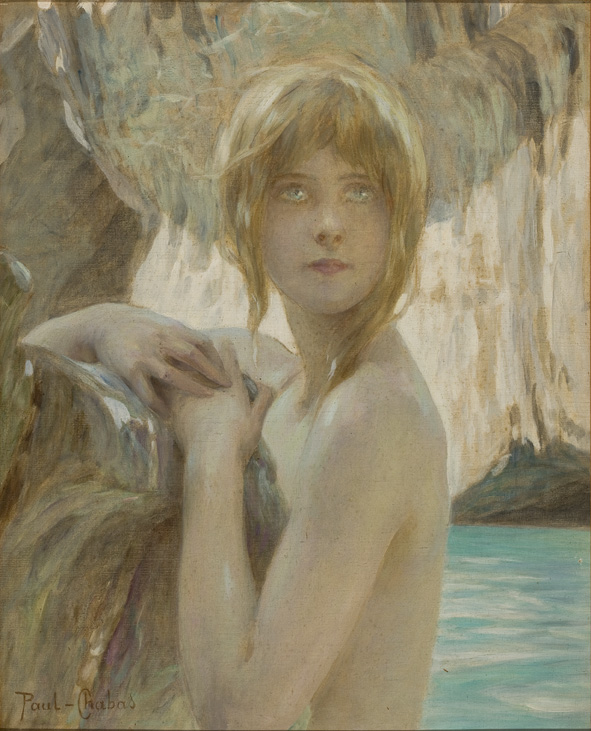
a blonde, a young woman, of especial high class, buries herself in the busy sheets of a paid for hotel room as she awaits her dowry, and her parents exit, content with the happening, for she is to be their high dollar ticket, and they are proud 

Blonde Nymph by Paul Emile Chabas
and in the fading night, she switches rooms to bed in a flophouse, the creaking wooden floors spell prostitution and drug rings, alcohol seethes from speakeasy days, and she cowers belligerently in her room, a knock at the door bleeds into her chest with suicidal unction 

Metropolitan angle (angle whore) by Hans Baluschek
as she opens candidly, two brothers of separate age walk in gently, greeting her with an offering of simple company, yet as the night creaks on with their failed step over the late seeds of a youthful calling, their clothes are shed 

Youth in a Blue Coat by Sasha Schneider
and then she is open arms as they both slide neatly under the covers of anonymous life, and as hours pass, they become good friends, while the older brother hangs his head by the window, all are naked and congenial, the two younger playfully brush paint over a great canvas blocking the doorway and most of the wall

Beatrice Addressing Dante by William Blake
she says, “you’re a fucking brilliant painter!” the Blakean shapes form over the imagistic head of the younger brother at play with the feminine creation as he eyes his brother to gain inspiration into the form and build that supports the color and stroke of their altered midnight state of sudden friendship 

Psyche Opening the Door into Cupid's Garden by John William Waterhouse
a hollowing filled with laughter and unending play, and in other rooms, an inkling leaks through the creaking floorboards and drip-coffee ceiling, filters of sound are pierced through with eager ears, willing to join, and finding true human pleasure of heart in the abuses of Psyche’s night 
_________
An irony to amuse
This, my, and our patchwork of brains,
To walk, or march,
Perfectly balanced in dress
With the polluted eye of an urban observer
Taking in the sidewalk trash as the stuff of inspiration
...

In one outlandish, unruly day,
Simultaneously, all vibrations still,
To skeletal ghosts, ravaging the blank canvas of history
With painted cries

In the evil fornication on a wine-lush express
Down each and every late Saturday street
Dead with incestuous chores

In popularized & Westernized dreaming
Gone, gently in the summer prairie heat,
Dealing prostitution’s cape
...

Breeding a kindred sisterhood
In the tall, and greatly embodied community of passionate grace
In today’s great human victory against the undead tyranny
...

Cyclical pain follows in succession
To unchain confederates, bothered,
From American poverty
Filling the sobbing eyes of migrants, sacrificed
To a brutalized ending, motherless & lost

excerpts from "1st Independence"

Saturday, 19 May 2012

Liberation in the Unconscious Embodiment of the Archetype


“The last dream of that series, I can not tell you all the dreams, was that I was out in nature, I stood in a field of wheat. An enormous field of wheat, that was ripe for harvest. I was a child and I held her in my arm like a baby. The wind was blowing over that field of wheat, now you know when the wind is blowing over a wheat field those waves over the wheat field, and with these waves I swayed like that, putting her as if were to sleep. She felt as being in the arms of a god, of the Godhead. I thought, now, the harvest is ripe. I must tell her. I told her, you see, what you want and what you project into me because you are not conscious of it, you have the idea of a deity you don’t possess, therefore you see it in me. That clicked…It was a hedonist god, it was a god of nature, of vegetation, he was the wheat himself, the spirit of the wheat, the spirit of the wind. She was in the arms of that numen. That is the living experience of an archetype…instantly it clicked…it is as the dream says, she is in the arms of that archetypal idea. Now that is a numinous experience and that is the thing that people are looking for, an archetypal experience that gives them an incorruptible value. They depend on other conditions, their desires, their ambitions, they depend on other people because they have no value in themselves, they are only rational, they are not in possession of a treasure that would make them independent…that is a sort of liberation.”   

- C.G. Jung, from "Matter of Heart" 
________
"What primitive African stirring is this? What crowd of blundering hippos gawking and feeling for life in this mildew maw parade!" 

"No, this is a wisdom gathering, a hapless ruse, to stun the oceans in a violent gaze of electric natural law. This is a spectral breeding ground for the insane and loose, those wilderness souls born of less indication about human truth than one would suspect from a life lived in the rut. Theirs is a tribal howl, a martyr’s plea, scintillating rasps into the smoked down calling of witchcraft and group camaraderie through spirit, through visceral tongues." 

I am drowned in a haze of strident intensity, pulsating with every leap from the vibrating mud. The trickster’s love emanates with personified blood from the livid sky teething for human thought and supernal desire in this mundane autochthona of self-engendered lust, detoxified in a laughing rite with the living dream of mystery, hatching from this circle of African might. Their clothes, wooly, with animal fear still stretched in the discolored hair. Their homes, perfect and ingenious with seamless appropriation from this their exploited grounds, invoked to newborn life again in their visible joy, communal through and through.

I escape along the brush torn paths, bitten with stings of lightning and the swatting touch of snakeskin and the feline tail, scattering an infinitesimal infinitude of insects grouping. The countryside folds past over the close horizon, a dense lush grows as by sight. A beast moves, unknown. Feathers, white and tall scatter in the noiseless round. I can sense auspicial animation as the forest glows and rumbles ever slightly. The bird is infamous for its glaring foresight, its strength and unearthly demeanor is its hallmark to fruition in surviving this drunken dreaming landscape of danger without forewarning. I follow the animal beyond the gates of our natural boundary, or has it followed me? Can we both be following? There is no end. 
______
Africa
"To dream that you are in Africa surrounded by Cannibals, foretells that you will be oppressed by enemies and quarrelsome persons." (iDream)
______
Branded with the seal of history.
Final and rushed.

“Oh, this is dramaturgy for the sentimental boorish audience of the mob,
who critique and pander with total, serious divorce from the actuality of the place
an energy, which creates law from reason and implements cost
with soul in the spiritual night of the living ghosts.

Do we haunt you?”

“You are my foreboding reminder
behind the veil that shivers with end of day
returning only for the antipodal colour
resembling rust,
yet focused in bottom-up vines that reach to an endogenous planet.

It is leaving earth. We are going with it.”