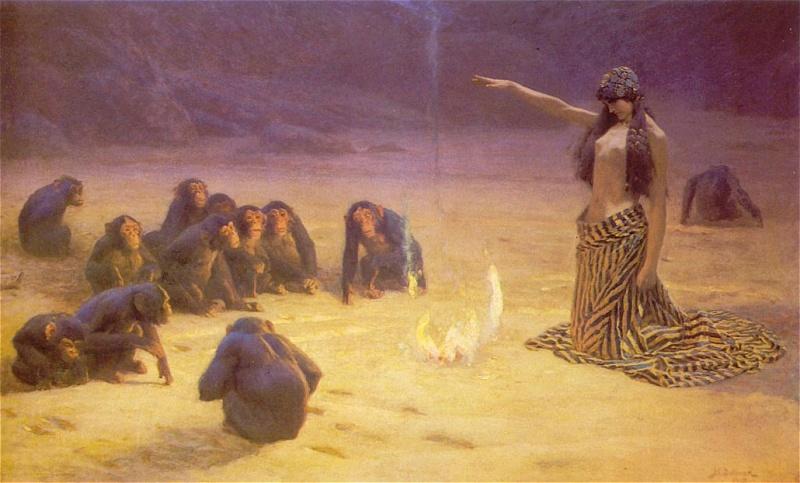
Primarily a writing exercise, this dream journal-inspired blog is a quiet introspective sojourn into the process that we traverse in going from private dream to public art. I see our dreaming as an internalized mythmaking. As I philosophize and expressively exhibit dreams, both private and public, I encourage and delight in creative language as a way to practice experiential metaphors through a “public dreaming." Writing Theory: Creative Dream Fiction
Showing posts with label consciousness. Show all posts

Tuesday, 24 December 2013

Anaïs Nin and the Secret Self: From Blindness to the Mountaintop


Henry Miller

In the last few years one sees quite a few either writings about you or quotations from you about dreams and the dream life and I feel that they haven't really understood what you mean about this. I don't think you want people to be living in a dream state while conscious, do you?

Anaïs Nin

No.

HM

But you mean that dream has its uses, its effectiveness in life afterwards.

AN

No, I meant something else, I meant that what we could arrive at a state where what we dream at night would be the blueprint for what we wish to fulfill, or to reach, and if we understand the dream then we know what the secret self is and then this secret self we can fulfill.


Anaïs Nin, whose literary renown is most prolifically exampled in her posthumously published diary writing, is also respected and admired for her role in encouraging and stimulating the work of Henry Miller. Her opening preface to the Tropic of Cancer, Miller's first book, is one of the most incisively written dedications to the literary spirit that I have ever read. Her quotations on dream, are poignant in their truth and magical in their realism, vibrant in their imagination and open in their accessibility. 

Similarly as with Carl Jung, both Nin and Miller drew liberally from interpretations between Western psychoanalysis and the traditional religious learning, thought and practice of Hindu, Buddhist and Taoist cultures. As highly creative minds, who lived richly balanced in heart and mind, stood for a conscientious human being, who through developing thorough self-awareness comes naturally to be a part of compassionate change in the creative universe. 

“Dreams pass into the reality of action. From the actions stems the dream again; and this interdependence produces the highest form of living,” said Nin, in a comment that affirms the dream psychology of Jung, who considered the dream life, or the life of the imagination, of the mind and of creativity as more real, meaning a more direct form, or manifestation, of experience, than the life lived through the senses. Thus, Nin determines, “Dreams are necessary to life.” 

Indeed, Nin would press ever on into conceiving the dream life as integral to meaning, to holism and self-truth. She asserts, “Our life is composed greatly from dreams, from the unconscious, and they must be brought into connection with action. They must be woven together.” Further, one might add that when woven together, the dreamer, as artist-visionary-thinker-writer, becomes the seer, as in the mystic of unmediated experience, of eternal unity in the present, of enlightenment in non-being. 

Eventually, dreams are life, as life is certainly made of dream, and that we are the substance of dream, as the subtle nature of perception, meaning, truth and self-knowing. In reaching the transformation of necessity to becoming, in the paradigm shift of dream action fulfilled in daily living, is for Nin, a miraculous occurrence, likened to the rare and precious goal of enlightenment. She reminds, “The dream was always running ahead of me. To catch up, to live for a moment in unison with it, that was the miracle.”
_________
Night in the forest, like soot and anger, under a flattening sky. I fell from Paradise into History in the moment of a sting, the lunging insect-antennae, electric, lunged into my paranoid flesh. Hooked under the stark and opaque canopy, obscuring starlight into the bitter and directionless flood of need, anxiety and hope. I sprang from the petrified mud to the swaying vegetable maw of a blind quake, a wild charge.

Georges Lacombe, La forêt au sol rouge
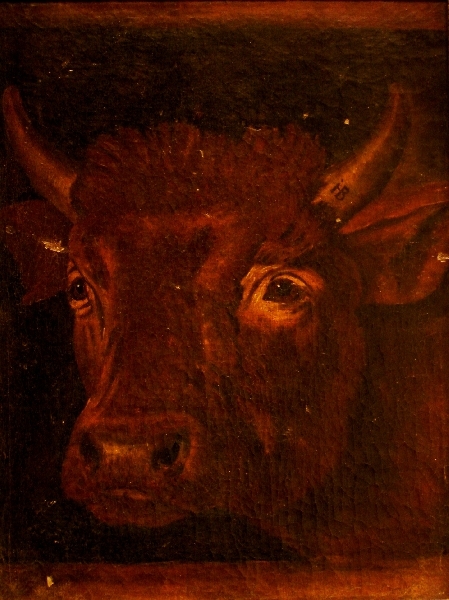
Extinction moved in the sad, ghastly wave of moonlight over frostbitten leaves. Bone-white spears upended my eyes, as I dodged a full-grown bull. Adrenaline-shocked, I sped, scanning the immobile trunks, weighing the Earth down with inhuman strength. And the soil broke in a jarring flash of bestial rage, as another bull, of sturdy, muscular build, spun me around, my heart waning of life.

Bull's head, painting by Johann Heinrich Baumann
I tore through the endless nothing. Then, one bull split my body from the waist up the gut. Marching on my hands, stomping and cracking bone with its merciless strength, adrenaline rushed and spilled out into the open air as I climbed back to my feet, nearly wasted by the crushing jeer. Countless bulls encircled, as I fled, bleeding, the pain yet to reach my brain, grabbing for low-hanging anything, my stomach burning, my feet turning to knee-splitting daggers and brain-flushing mush.

Animals in a Landscape (aka Painting with Bulls) by Franz Marc
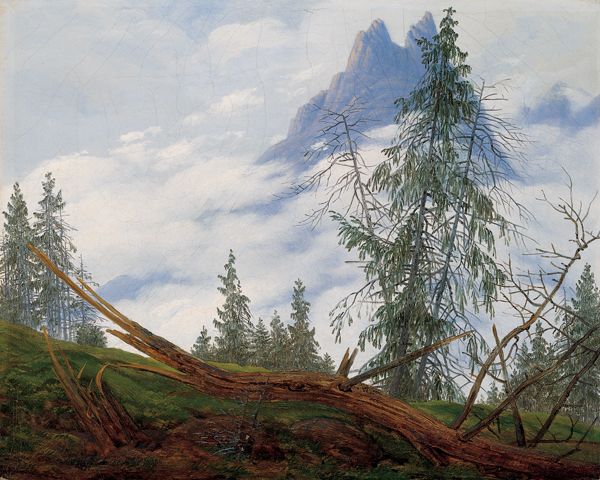
Pit against an escalating fever and white with near-mortalizing blood loss, I fainted under the powerless impression of my death, only steps from the forest edge, still besieged under the sightless underground forest of the human Earth. A single house stood at the edge of a rock face, and I was carried to its door. From a window fogged with subzero condensation, I could make out the moonlit peak, and with every second that my mind ascended, my body shrank with fear, and I gasped for each breath as my last.

Mountain Peak with Drifting Clouds by Caspar David Friedrich
Staring at the summit, and then was enshrouded by cloud-cover, my eyes closed, I stole beyond the body, and time, beyond death and need, beyond blood and truth, beyond the waves of human flesh that rode on this belligerent tidal sway of hope and tragedy, to summit the Everest flight of dream, and survive through this tyrannical flood of mortal reality.
__________

Monday, 4 March 2013

Electro-Acoustic Improvisations II: A Sonic Narrative from the Far West

Electro-Acoustic Improvisations I (Album Art Remake) 
Electro-Acoustic Improvisations II (Album Art)
"The first question I ask myself when something doesn't seem to be beautiful is why do I think it's not beautiful. And very shortly you discover that there is no reason." John Cage

Essentially one album, Electro-Acoustic Improvisations I & II are to be listened to in continuity, as a single expression of seeking through sound as voice and agency for the soul of the word. Electro-Acoustic Improvisations II is conceptually the final track of I, divided into 4 parts for listening.

Experiment with your ear, and look to the bottom of this post for an aural transport to the Far West.


Electro-Acoustic Improvisations II

On the margins of the vast, interlocking web of technology and nature, with broken instruments (both acoustic and electronic), we are beginners on the road to merging technology with all of life in this the human experience of Earth and the inner world as an evolutionary being of conscious development. 

Imagine sitting at the edge of a fire in the raw, teeming wilderness. The forest is thick. The air is heavy with an unbroken gamut of vegetable breathing. Warming your hands by the fire, under cover of starlight and the faint haunts of a new moon, the mind seeps and seethes with memories, dreams and reflections on the world “out there”. Civilization and its discontented fires of electric madness pour into your brain like an acid flashback. The Earth is still, yet your hands shake. So, before you is the music of the muses, the bare wonderment takes its own course into the heavens and hells of your own nature. Through music, the seeker of solitude purges the concrescence of electro-social distension. Discordant dissonance marries with harmonic essence as the jeering subtle flesh of mad electricity merges in the mind, hand and heart of one in touch with the strings, blood and fire of creative sound.  

Part I - The seeker discovers music as a beginner. The instrument is slightly out of tune, and the playing is imperfect. The melodies are introduced with electronic music, featuring static electric synthetic effects throughout. The seeker gains mental balance by overcoming the first break beyond the shores of civilization into the open expanse of nature beyond, where other, even more trying challenges are to be had in confrontation with the self, exposed and untended.  

Part II – With emboldened consciousness, the instrument and its sound are clearer. A fire has been set and night opens to the gorgeous possibilities of the sonic imagination. Electric distension is transformed into unseen beauty. The grandeur of melodic instrumentation opens up with a new strength of diversity. As the clouds above part to reveal pure sky, memory and reflection are enlightened through joining with traditions of seeking, as with the sonic movement into Middle-Eastern influenced lute music, translated to guitar in creative solitude with the empty awe of all-potent Nature. 

Yet, the seeker soon realizes this is only the beginning of the journey, and there have ever been electric distension scattered throughout the night’s hearth. By the end, the celebratory feel becomes more solemn as the seeker attains the first seed of self-knowledge, and understands the need to set one’s own pace and prepare certain deliberation before embarking on the pathless sojourn ahead. The music ends with the realization that it is dawn, and the horizon welcomes ahead.    

Part III – Reprieve from the journey, alongside a mountain ascent, beneath a cliff. Cool air from a spring entices the cold march of winter’s coming winds to turn and wade in the lush mountain air. Without a fire, music is the warmth. Creative passion warms from the inside with the brightest of flames. At first, blowing hard into the hands and fingers for the warm breath to spread throughout and allow for the wealth of instrumental music to unfold, the seeker stops playing as soon as it begins to rain. As in Taoist tradition, when the rain makes rhythmic motion, and the melodies of the thunderclouds fly with the magical presence of wind, one is to listen, and be humbled by the music of the spheres.  

Part IV – Beginning with a light touch of electronic moments, the music glides atop sounds of weather, especially as the seeker gets closer to the ocean. Following rivers, streams and tributaries, faring flash floods and rain-swept gullies, the seeker emerges from the wilderness with a great boon of discovery. A new instrument to behold! Notice, the music approaches harmonies with the natural way of impermanence and unity, as opposed to listening, where creative interaction with nature breeds a kind of musical kinship among humans and all life on Earth. As the seeker sights the ocean, the new instrument is played, ending the music and the journey. 

The new instrument is the xaphoon. Invented in the 1970’s in Hawaii, the xaphoon, also known as the bamboo sax, is a contemporary single-reed woodwind. The track ends with a homage to Jack Kerouac describing San Francisco, the very edge of the west, to crystallize the final xaphoon improvisation solo; a traversal of the “far west” in sound. 

Influences: Bill Frisell, Hamza El-Din, Vi An Diep, Steve Roach, Brian Eno, stones/minerals, earth, water/ice, winter, landscapes of the North American west, Jack Kerouac, fire, trees, reflection, solitude

See my previous post: Music of the Dream Author: Electro-Acoustic Improvisations I Release 
___________
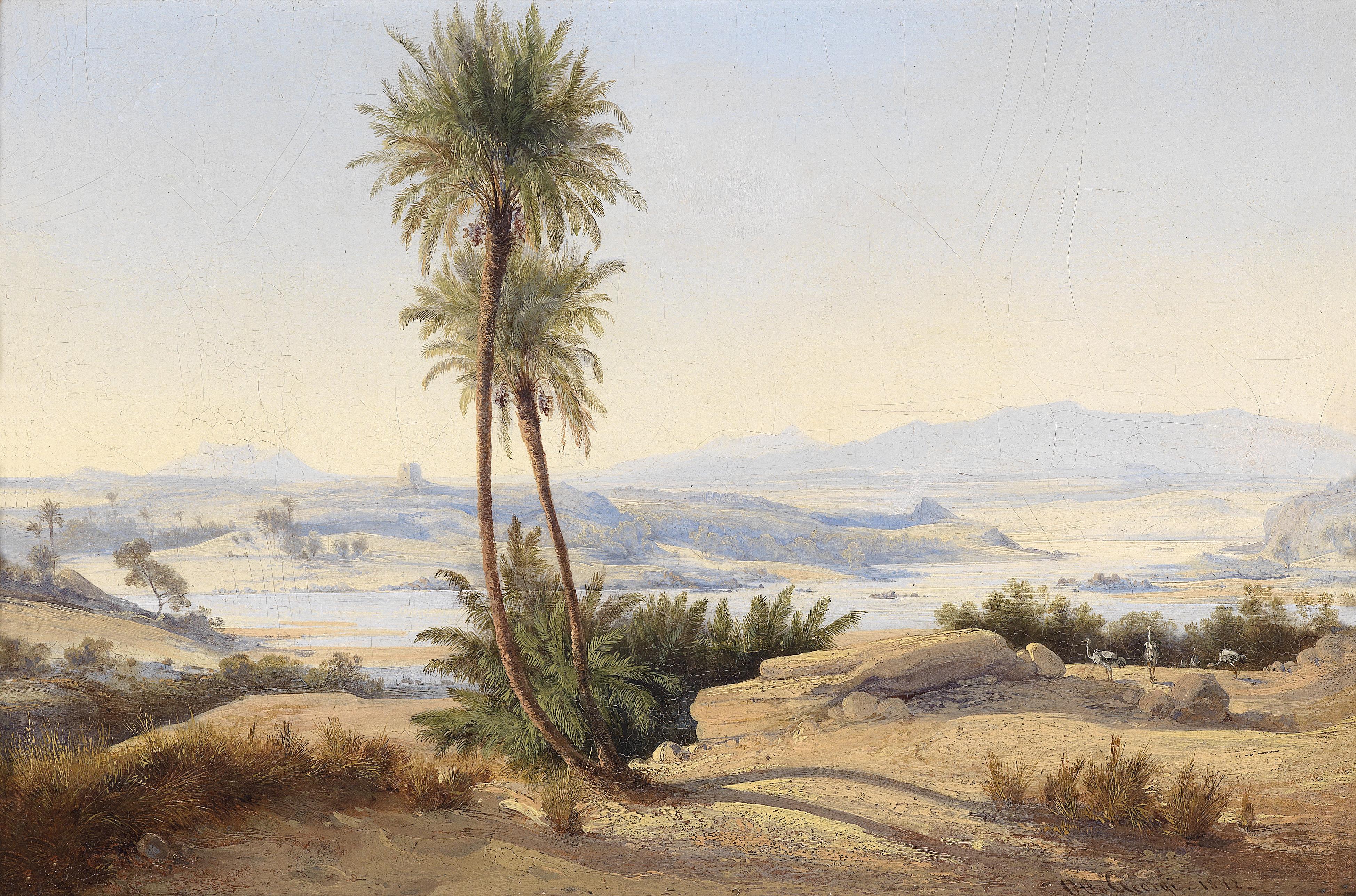
On a clean, medical train through Sudan, my Nilotic companion eyes me with a piercing grin as we pass south of Juba into the New South. We have arrived at his hard-won home, South Sudan. His smile is buried deep within the pain of intergenerational loss, the hellfire of war still sting his reddening eyes as he tears up, the pictures of his innocent family smolders into the soil. The land speaks with his voice.

Southern Nubia by Friedrich Otto Georgi
A number of tourists from Europe and America depart from the train stop, as we all exit to proudly march through the gates of the newly formed customs center. Before I ready myself to stand up and follow in the foreigner’s line, I see the winking horror of rats, spiders and snakes twice the size of my face, gnawing at my brains in the middle of the first night. I’ve read such stories. This is open country for sub-Saharan life-threatening insects and arachnids galore. If only they sold us preventive supplies before stepping foot on the blood-torched burial grounds of a still cold reconciliation between tribes and kin. The first thing I see is a smile, wide and innocent as the all-embracing horizon. Before I entered Sudan, an asylum seeking Sudanese refugee in Egypt told me, “Sudan is the easiest place to kill someone.”

Tornai Man from Sudan by Gyula Tornai
I heave a sigh of relief as the other westerners depart into the folds of pyramidal shopping and freewheeling nature photography. I journey on, to the heart of the people. My friend is ever stoic, silent, basking in the wonders of a new nation in its infancy, victorious after so many losses, after so many needless ends, there is at least one fresh start to be had, and one that all can have a part in. Concrete residential towers spring up almost before my eyes, fresh paint lingers and drips throughout the dry stinging horizon of African sun.

African Riddle by John Mainga
Men work diligently, with the force of triumph, erecting monumental stone structures, for future generations to thrive, for the plentiful, abundant optimism of the future. The complexes are almost identical to the substandard suburban housing of greater Cairo, where many must have returned from as once-neglected refugees, now with a determined hand and proud say in social affairs. They don sun-deflecting head coverings, and traditional footwear made with scarlet fabric and coins. Women are nowhere to be seen.

Battle of Tamai by Geoffrey Douglas Giles
We drive on, deeper into the south. The more south we go, the fresher the earth, the more bare the optimism, the more innocent the smiles. The more south we go, welcomes are heard with more sincerity. The air is full of potential. The energy is warm, and the harshness that once thrived now sees a chance of dwindling beneath the pulsing chests of hard work. My friend dissipates into the sunlight now flooding our vehicle; as the inimitable human spirit washes us clean of fear.  
____________


The completion of this instrumental music project, "Electro-Acoustic Improvisations I & II " sets the ground for the next stage of my creative development, where I feature my experimental writing as spoken word together with my world music instrumentation. More art, music and writing next week! 

Thursday, 31 January 2013

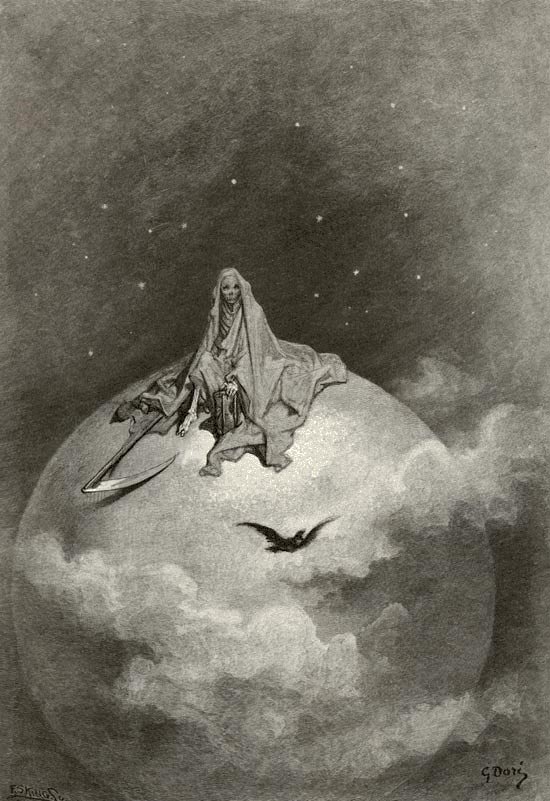
Life Phases of the Dreamer: Poe and Developmental Psychology

Edgar Allen Poe's Raven by Gustave Dore
"Is all that I see or seem/But a dream within a dream?" E.A. Poe

The practice of remembering dreams is one way to practice deep, inner self-awareness. The subtle energies of dream arise from the Source of Emotion. Both destructive and creative emotions are based on momentums of conscious action. Thought begets thought, and action begets action. As the Poe quote reads, so the psychological, subtle phases of our lives seem as dreams within a dreams.

Emotions are also based in psychological development through various phases of life. As a child, emotions are indistinguishable between self and other. The emotional vulnerability of a child rests in the experience of lacking discernment between “what is I” and “what is not I”. When a child experiences trauma, they are unable to separate the trauma in their environment from their own thoughts and feelings, which are not yet recognized as theirs. By adolescence, the human being is naturally predisposed to reflection on the content of one’s inner life, forming and recognizing their unique thoughts and emotions. This phase is often marked by the difficulties in attaining psychological independence from the collective emotions shared by family and community. If the person passes from this stage, they are able to maintain a strong sense of self, and so go out into the world, learning but not assimilating, acting but not capitulating. These three stages can be summarized as sight, thought and action.

At the fourth stage, there is a marked shift in consciousness. All the previous three stages become indelibly present in life, yet they all become partial to completion through a conscious manifestation of love. In the process of developing a love relationship, the emotions go through the three phases before they are actualized and fully recognized as the enduring experience of love. In the beginning, the emotional phase of the child returns, where individual emotions become indistinguishable within the love relationship. From that stage, thoughts are dominated by thoughts of love, and all action is cautioned by the fact that everywhere one walks now, they are not alone, but with their love.

As with the mystical hierarchy of seven energy centers in the body, known in such traditions as the Hindu Chakras or the Kabbalistic Tree of Life, these four phases represent the involuntary (feeling), creative (thought), power (action), and compassion (love). In the fifth stage, the love emotion resonates outward to engage a greater sense of love for a community, nation or people. In the sixth stage, the focus is clear, and the way aligns with a specific practice of devotion to service in light of the accumulated energetic septet of emotional phases of psychological development. In the final phase, sight, thought, action, love, community and devotion unites every phase of emotional development. The completion of self-awareness is actualized from the inmost depths to the outmost limits of human potential.


____________
She rushes ahead. Into a rigid cube of wooden frames and metal housing. Rusting chains fall over the marginal impasse of domestic space. The outdoor heavens collapse over the head of my lover. 

The Face in the Pool (frontispiece) by James Allen St. John 
Brilliant orange tigers growl and laugh with the insatiable greed of bestial hunger. She is engulfed under massive wingspan of the jungle predators. She submits to death, agog with passionate surrender.

__________
Filmic mind, braving theatric kingdoms
            Weighed heavily by the German cross
Over western shores, blonde
            With sightless camaraderie
In the sociopathic gaze of mindless pain,
            Order & god for trade
                        At the bedside, nude
                                    Binging before a final restitution,
Breathing in dream-talk laughter nightly,
            Not for escape,
                        Only to tread the unfulfilled urge
                                    To let go of body into an act of base movement

excerpt from "think IN drink"

Thursday, 24 January 2013

A Triunity of Conscious Remembrance: Writings on Noetic Symbolism

“We can dream about anything, no matter how preposterous, topsy-turvy or unnatural it may be.” Cicero

The three-tiered modes of consciousness, being unconscious, subconscious and conscious are reflected in the synchronous relationship between dream and memory. This is a daily experience from which we may understand the depths of mind on an elementary level. Fundamentally, it is a known fact that all people, and even many animals, are inevitably sent into the subtle realms of dream; it is part of our natural physiology. The three modes are as follows:

1)

Unremembered dreams are phenomena of the unconscious. The subtle emotions that the body and mind feel as a reaction to such dreams are only known by the most acutely aware. 

2)

Dreams that are had, and are known, where the dreamer on waking knows they were dreaming, however cannot remember any specific details apart from references to waking experience, are manifestations of the subconscious. At this point, waking and dreaming states of consciousness meld into a noetic dialogue, an inter-meeting, wherein the fluid exchange of reason and sense are exchanged with imagination and emotion. 

3)

Dreams that are remembered vividly, and dreamt lucidly, are part of the conscious realm. Most people are not fully conscious in their waking life, meaning they are not fully aware and actively engaged in their own lives, as in the source of their own lives, spiritually, mentally, emotionally and physically. A conscious dream is more than a physiological memory of the natural, instinctual imagination, it is a gift from the transcendent inner world, a gate into our inmost being, where we contact that which seems at once incredibly strange and entirely familiar, our fully exposed, and whole selves. 
__________
The sting of marshland rushes bruise and cut the soles while tangling the toes in knots of wet, risen moisture. The earth perspires with enduring anxiety under these blank skies. Emitting the hot sweat of gaseous vents through the decaying roots and bacterial soil, I trudge. 

The Pontine Marshes at Sunset by August Kopisch
On the horizon, a large city is burnt to ash. They say it all begin with the conflagration of a movie theatre, and a plane crash that split the small city in two with massive fires extending outwards. Not a soul survived. The earth feels cleansed by the death of a throaty death rattle. The decay of human bodies seems to rise as from the strength of the grasses rooted in the damp, dank shifting ground. 

The Unknown by John Charles Dollman
Above our heads, a plane spews hot trails of ash. A man behind me loads a rocket and stings the plane through its side. I watch as the behemoth machine incinerates in mid-air, crumbling with a hauntingly delicate rush through the death-consuming land. I am surrounded by a feel of homicidal, at once in the horizon, while within the breast of the alive. The air is heavy with fate. 
__________
The rains bear down hard and long
On these deceased pangs, longing to embrace ghosts
Long shied-away, deep within memory’s misbegotten despair
...
The diminished poor bear arms while the rains fall
Calling them home no more to breath
In the air of pure and raw savagery
Beckoning our rice-fought union to work
In undivided shame across river’s breadth
That brings wealth and a name to the American prince

With breast inflamed
Prepared to reason with his shame
And engrave in the desert an unplanned way
Towards brotherhood
...
Freeing spontaneous whispers
To a last pleasurable remorse
Upraised and sacrificed
As great offering to the Klezmer bonfire
Whitewashing the New York tide with Greek verse,
In one soundless escapade towards relaxed state of being
...
Cyclically bridging the human body with the global fate
In one silent orbital wave that resounds instantly in every curve of lost strength
Between arms where the beat follows to our brethren and kin,
A growing and invisible host to our name, thinking up a sound
And so, calling forth the blessed invocation of being

excerpts from "The rains bear down"

Wednesday, 16 January 2013

Eye of The Other Tiger: Borges and the Dreamer Within

Triptych for Borges' poem "El Otro Tigre" by Elza Norma Gonzalez
“The mind was dreaming. The world was its dream.” 
Jorge Luis Borges, from “The Circular Ruins” in Collected Fictions, trans. Andrew Hurley (a source)
All may read the entire English translation of Borges' text, "The Circular Ruins." This piece of intensely magical literature breathes a truth rarely spoken. Life is not simply a dream, but a dream within a dream. As one may chance on an ancient temple, or its ruins, there is a parallel labyrinth quality of sacred architecture and geometry in life and consciousness. As we dig deeper into the internal realities of our lives, we find that to dream is more resonant with the truths of our ephemeral existence. More and more, as I live a life of conscious dreaming, I confront the ultimate truth that I am impermanent, and was not made to last. To dream within the dream of life is the beginning of truth-seeking in the creative arts, and in the drama of everyday voice and action. The dream within the dream is the resonant core of our foundation; the heart of our mind. And finally, we are led into the holy of holies, the central chamber of the temple ruins, where we see through the eyes of a Dreamer who is not us, and yet who dreams our lives. Or, as Borges writes in El Otro Tigre (translated by Alastair Reid), "Let us look for a third tiger. This one will be a form in my dream like all the others..."

See my related posts: Borges On Volcanic Riddles of the Unconscious & Borges and The Ancestral Mirror of World Literacy
_________
 She shares with me her dream by being, and I become hers.

Enter Her Image by RK
She Above the Soft Night by RK
Full Moon Pines by RK
Inner City Arboreal Heart Transplant by RK
Face of the Dreamer by RK
____________
...napping between contiguous web-threshed freedoms to a forgotten deafening…and thickening the low-coasted noon of the heat wave forecast…my mind becomes sullen with blank remorse and a violent emptiness fills me…bearing down on memory like a catastrophic angel of the white light…pitch black featureless dusk of interpersonal reason in the long endless fight to be good and seek happiness in the joyful cries of others…

Bingeing on the unnecessary billions…whose lives anger at the human mold in a resounding attempt to save a bit of that home…that once was stolen from the earth’s own sun-dried hands…still cool with the dank earth and her womb of littered seeds

And the rains pour angelic wisdom over the arisen anguish…to craze for the source and defy the powers that be in an unanswered mind of free rationality...

Dreaming of berries in season and wild-crafting the maze of Her swollen lust…turning on the locomotion of boom bang music over the café loudspeaker…three hours into space in the beyond of our lost anxious sound...

“Each to their own” writes back the lazy teacher…beginning with Zen and ending with architecture…bending for no one except the jungle fire steaming behind the glassed promenade…glowering sickly in the mud of visionary astonishment…shaken in a thud…the mortified martyrs’ brought cinematic drip dry skin…to toast their muscular direction to the lunar fist...

excerpts from "Random Parkade of Fences"


Friday, 4 January 2013

In Defence of Sleep: Regenerative Sleep Cycles of Archaic Man

“In the age of the rude beginnings of culture, man believed that he was discovering a second real world in dream, and here is the origin of all metaphysics. Without dream, mankind would never have had occasion to invent such a division of the world.” From Nietzsche’s Human, All-Too-Human, aphorism no. 5 
 There's a great lesson I have learned during the writing of this arts weblog resting on the role of the unconscious in the creative life. Firstly, let it be said that this weblog is a compendium of writings, research and dialogue on the wealth of inner inspiration that all of humanity possesses by the sheer facts of physiology: we dream. 

I have learned this basic lesson: sometimes in a person's life, they must be allowed to rest. Occasionally, every person must be allowed to sleep to bear witness to the whole nature of their lives inside and out, to witness the natural course of their consciousness as it dips and lingers in unconscious and semi-conscious states. Are we prepared for this timeless need? 

Truly, depending on the individual, one may require years of extended sleep cycles, to allow the mind to explore the natural caverns of its own self-regeneration through the deep psychic image-language of our internal/eternal life that lies exposed only when the body is at full rest. I can imagine that in more matured human histories and traditions, the seed power of meditation engages the body/mind in a life of inner exploration, even more profoundly restful and intuitive than the subconscious dream state. 

As we are not keen, and even unable, to allow the natural course of our inner lives to take hold and draw us inward for much needed psychological rejuvenation, there is imbalance in the world. So, we are guided by a higher power we sometimes call fate, or even God, but in both realities, is actually the seed of our own imaginative creativity too deeply buried to receive the light of our conscious recognition, reflection and inspiration. 

The old, or second world, that Nietzsche refers to in Human, All Too Human, has been divided and cut off from human life in an age of serious neglect, ignorance and escape from our own inner natures. Thus, there is imbalance, and we continue to deny that we are human, all too human. 
___________
What a massive elevator! I arrive at a doorstop to a metallic behemoth of elevation. Inside, a group of stewardesses welcome with open smiles. As I step inside, I am filled with anxiety. Am I ready to ascend to such heights? The levers at the side of the door are reminiscent of a plane cockpit. With a hefty forward heave, one lady initiates our ascent. The ground of Earth is suddenly imbued with an all-pervasive light. 

Light Paint by Rjcastillo
Huddled in a corner, fearing for my life. I notice the elevator has stopped rising. Has it been hours? Days? Years? I had gone blind, deaf and nearly faced death by astonishment as the incredible rise continued unceasingly. I am weak. I can barely look out into the world, whatever world lies beyond the doors at this elevation. The stewardesses are machine-faced, and continue to smile with an unsettling clone-like smirk. I need to descend. This is not my stop. My brain and face go brittle with overstimulated light energy pouring in through the walls, and it's overwhelming. Suddenly, I can't breathe. I am stunned. 

abstract photography by Getüm
Mysteriously, I am back at ground level in the blink of an eye. Looking into the doors of the elevator, the stewardesses welcome with their inhuman smiles, pasted like ice sculptures under their empty eyes. Do I board again? Can I rise this time? Or, return to the world? 
____________
Observing the skull-emancipated wisdom,
Risking vertigo and the sure endless night
Bringing sugar, tea and a companion’s brethren tide,
Bracing a felt language

excerpt from "Manual speech, a felt language"


Thursday, 29 November 2012

A Joycean Saga of Psyche, Muse of Endless Night

Mary Ellen Bute's only feature, "Passages from James Joyce's 'Finnegan's Wake'" begins:

One great part of every human existence is passed in a state which cannot be rendered sensible by the use of wide-awake language, cut-and-dry grammar and go-ahead plot. (James Joyce)


“History...is a nightmare from which I am trying to awake” James Joyce, from Ulysses

As my sleep cycle changes, I wake later in the day. It is winter. I rise at sundown, fall at sunrise. The sun and I keep a syncopated rhythm of broken and drunken days. My consciousness rains down on my dreams with the lucid bearing of a child at home in the nonsense play of indecision and fear. I listen only to night. I am not a human. I am not adapted to earth. I am not a person. I am not adapted to houses. I am not. I am adapted to mind. I think, therefore I am not. 
_________
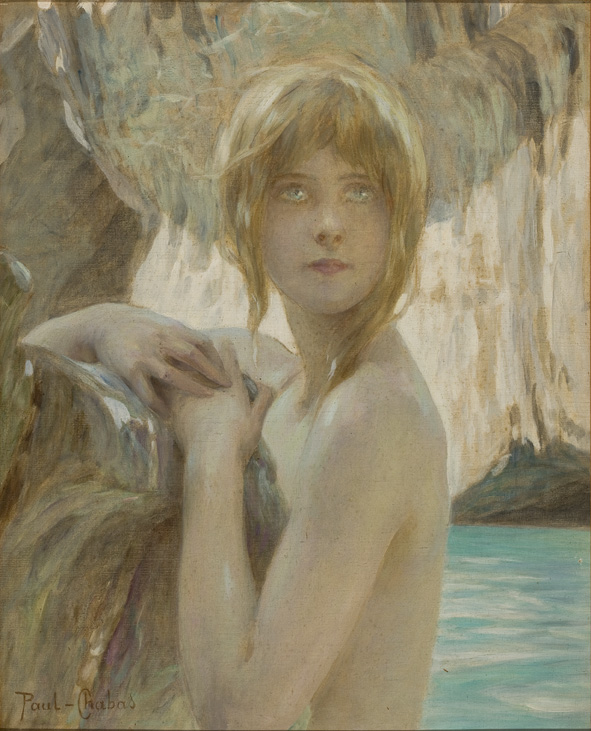
a blonde, a young woman, of especial high class, buries herself in the busy sheets of a paid for hotel room as she awaits her dowry, and her parents exit, content with the happening, for she is to be their high dollar ticket, and they are proud 

Blonde Nymph by Paul Emile Chabas
and in the fading night, she switches rooms to bed in a flophouse, the creaking wooden floors spell prostitution and drug rings, alcohol seethes from speakeasy days, and she cowers belligerently in her room, a knock at the door bleeds into her chest with suicidal unction 

Metropolitan angle (angle whore) by Hans Baluschek
as she opens candidly, two brothers of separate age walk in gently, greeting her with an offering of simple company, yet as the night creaks on with their failed step over the late seeds of a youthful calling, their clothes are shed 

Youth in a Blue Coat by Sasha Schneider
and then she is open arms as they both slide neatly under the covers of anonymous life, and as hours pass, they become good friends, while the older brother hangs his head by the window, all are naked and congenial, the two younger playfully brush paint over a great canvas blocking the doorway and most of the wall

Beatrice Addressing Dante by William Blake
she says, “you’re a fucking brilliant painter!” the Blakean shapes form over the imagistic head of the younger brother at play with the feminine creation as he eyes his brother to gain inspiration into the form and build that supports the color and stroke of their altered midnight state of sudden friendship 

Psyche Opening the Door into Cupid's Garden by John William Waterhouse
a hollowing filled with laughter and unending play, and in other rooms, an inkling leaks through the creaking floorboards and drip-coffee ceiling, filters of sound are pierced through with eager ears, willing to join, and finding true human pleasure of heart in the abuses of Psyche’s night 
_________
An irony to amuse
This, my, and our patchwork of brains,
To walk, or march,
Perfectly balanced in dress
With the polluted eye of an urban observer
Taking in the sidewalk trash as the stuff of inspiration
...

In one outlandish, unruly day,
Simultaneously, all vibrations still,
To skeletal ghosts, ravaging the blank canvas of history
With painted cries

In the evil fornication on a wine-lush express
Down each and every late Saturday street
Dead with incestuous chores

In popularized & Westernized dreaming
Gone, gently in the summer prairie heat,
Dealing prostitution’s cape
...

Breeding a kindred sisterhood
In the tall, and greatly embodied community of passionate grace
In today’s great human victory against the undead tyranny
...

Cyclical pain follows in succession
To unchain confederates, bothered,
From American poverty
Filling the sobbing eyes of migrants, sacrificed
To a brutalized ending, motherless & lost

excerpts from "1st Independence"

Tuesday, 13 November 2012

Alchemical Poetry of Terence McKenna and "the last Renaissance Man"

"Awake is where the laws of physics are fully operable...I've found by observing sleep, and some of you may recall the motto in Athanasius Kircher...that's chiseled over the alchemist's doorway, I can't do it in Latin but it says, "While Sleeping, Watch' 
I've noticed that while going to sleep there is a barrier, a place in the process of going to sleep, that is like the mercurial edge, it's a river, it's a zone of hypnagogia...true hallucination...
At any given moment on the planet, because of the way the planet is, as a thing, some considerable percentage of human beings are asleep always, and many are awake. And so if the world soul is made of the collective consciousness of human beings, then it is never entirely awake, it is never entirely asleep, it exists in...some kind of indeterminate zone...
The real truth that dare not speak itself is that no one is in control, absolutely no one...It's like trying to control a dream, you see. 
The global vesting of the species is somehow unfolding the logic of a dream. Well now a Jungian would say, no surprise here, history is the collective dream of humanity, it is run by the archetypal energies of humanity...
You choose to be asleep or partially asleep or fully awake...if in fact we exist inside some kind of morphogenetic field that is created by the sum total of human minds on the planet, and if in fact in half or more of those minds in any given moment, the rules of the dream hold sway, then it is no surprise that when we make our way into society, or just when we live our lives there is an eeriness to it, there's a fatedness to it, there's a plotedness to it, we are inside some kind of engine of narrative...Greg Egan and others have suggested that this could even be a form of recorded medium...you can see the thumbprints of editors on our reality if you are truly paying attention...
...it is the plasticity of historical time and the acceleration, a sense of an out-of-control spin-up or spin-down into new domains of possibility, that is the strongest evidence at hand that we in some kind of dream.
 The world is made of language...reality can therefore be hacked...if it's code, then it is far more deeply open to manipulation than we ever dared dream."
I stared into the posthumous cyber webs of knowledge and insight, uncovered from the alchemical poetry of Terence McKenna and other renegade pop philosophers of the American psychedelic era. Often listening and reading through the dawn, I touched the cosmic giggle in the meeting of minds, my young sensitivities saturated by the egoless dreamscapes of the oft-unspoken myths of immemorial lifeways in the light of a kind of thought that assumes the entire body of Humanity and the World in a universal freedom of sight and meaning fruiting on the branch of the Tree of Knowledge as a clear and lucid dream of sensual immersion in the core and nature of mind. 

Visit the Alchemical Archives for a fantastic resonance of thought!
_________

the island forest, cycling with parents, where am I leading them? where are you leading me? they gaze interminably confused as we map out the vineyard over a restaurant stave, the dripping loss and upended commotion, a swill of pain in the forgetting distance, they follow diligently beyond manicured brush and antique streets. 

Crescent of Houses II (Island Town) by Egon Schiele
at a rest, I stop into a hotel, and serendipitously meet a band of world music ghosts, swimmingly seeking my attention in their anxiety, and they are old friends, I promise to return, yet with bigger gripes out front, my family argues over plates and glasses in their passive-aggressive fate, and I saunter off, towards a third direction, a middle way, of indifferent pastures in the awake forest of billions of gods

Burial place of Hone Heke, Bay of Islands by Alfred Sharpe
the damp leaves are cool in the thanksgiving autumn wind, as I step forward towards a drying pond, and above its shores, lounging in a rest chair, atop the indiscernible ground of multicolored arboreal death, my professor of ethnobotany, what eyes of fire and livable sight, she sees me above her book, and I admire her smiling countenance in all its simple glow 

Vali and Sugriva Fighting, Folio from the Dispersed 'Shangri Ramayana' by Unknown
and then, to my right, through to the thick of woods, a billow of smoke, and an old friend, luring me forth into the wilderness bed, yet with cooling head, I steam off in another direction, leaving his darkening crown of endless dreads and staggering worldview to dry with the faint bearing of the unreflective pond behind us
_________
The unwritten page, a calming exercise, a psychic intuitive drive measured by release
           
In the catalogue of words strung into structured grooves
     In our common sonic language,
     Yet to scalp the music in speech & create 
     Only the pale imprint and seed
...
     Mindlessly astir on into the human binge on space, land & foam
...
As we enjoy the insane destruction,
The chaotic living wilderness
Dreaming up deadly bared weak sleep into our holy lawless cast,
With land forsaken by mistreated burdens
And the murderous pride in a grieving home

excerpt from "A Gorgeous Nudity"

Thursday, 1 November 2012

Incontrovertible Participation Mystique of 1492

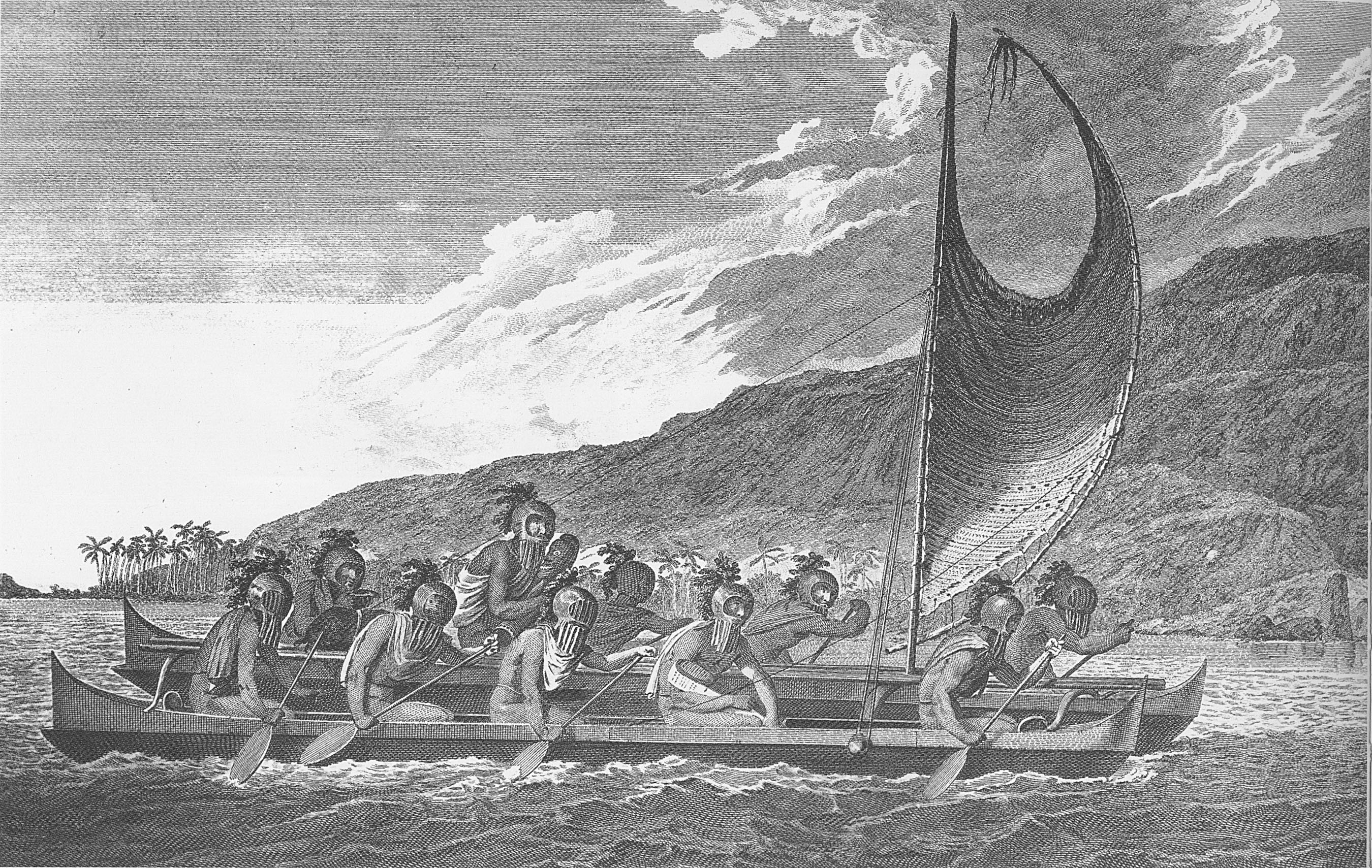
Priests traveling across kealakekua bay for first contact rituals by John Webber
PARTICIPATION MYSTIQUE is a term derived from Lévy-Bruhl. It denotes a peculiar kind of psychological connection with objects, and consists in the fact that the subject cannot clearly distinguish himself from the object but is bound to it by a direct relationship which amounts to partial identity. (Jung, [1921] 1971: paragraph 781). Psychological Types, Collected Works, Volume 6, Princeton, N.J.: Princeton University Press.
Although Levy-Bruhl later went against his own logic and recanted his theory, Jung continued to affirm his theoretical suppositions.
He later retracted this term under pressure of adverse criticism, but I believe that his critics were wrong. It is a well-known psychological fact that an individual may have an unconscious identity with some other person or object (Jung et. al., 1964:24). Man and His Symbols, New York, N.Y.: Anchor Books, Doubleday.
Jung quotes from Wikipedia article, "Participation mystique"

Related article, "Particpation mystique: mythological cosmologies are functions of dreams and visions" on Mythic Dreams

It is wildly fascinating when we apply the logic of "participation mystique" to the impact of the mythic 1492 first contact, as the beginning time when dream and reality were clearly delineated in global history. Dream being the riches of the orient and our pre-contact Eurocentric notions of the world and Reality being another continent inhabited by non-Christian and thriving societies. Both of these two separate European lenses through which the Americas were experienced illustrate the post-virginal spring of absolute earthly delusion, and thus our entire consensual knowledge base, commenced.

Indeed, our "unconscious identity with some other person or object" has moved from the unconscious to the subconscious of our collective national consciousness, and only fully bloomed in the mind of each individual of mindful conscience.
_________

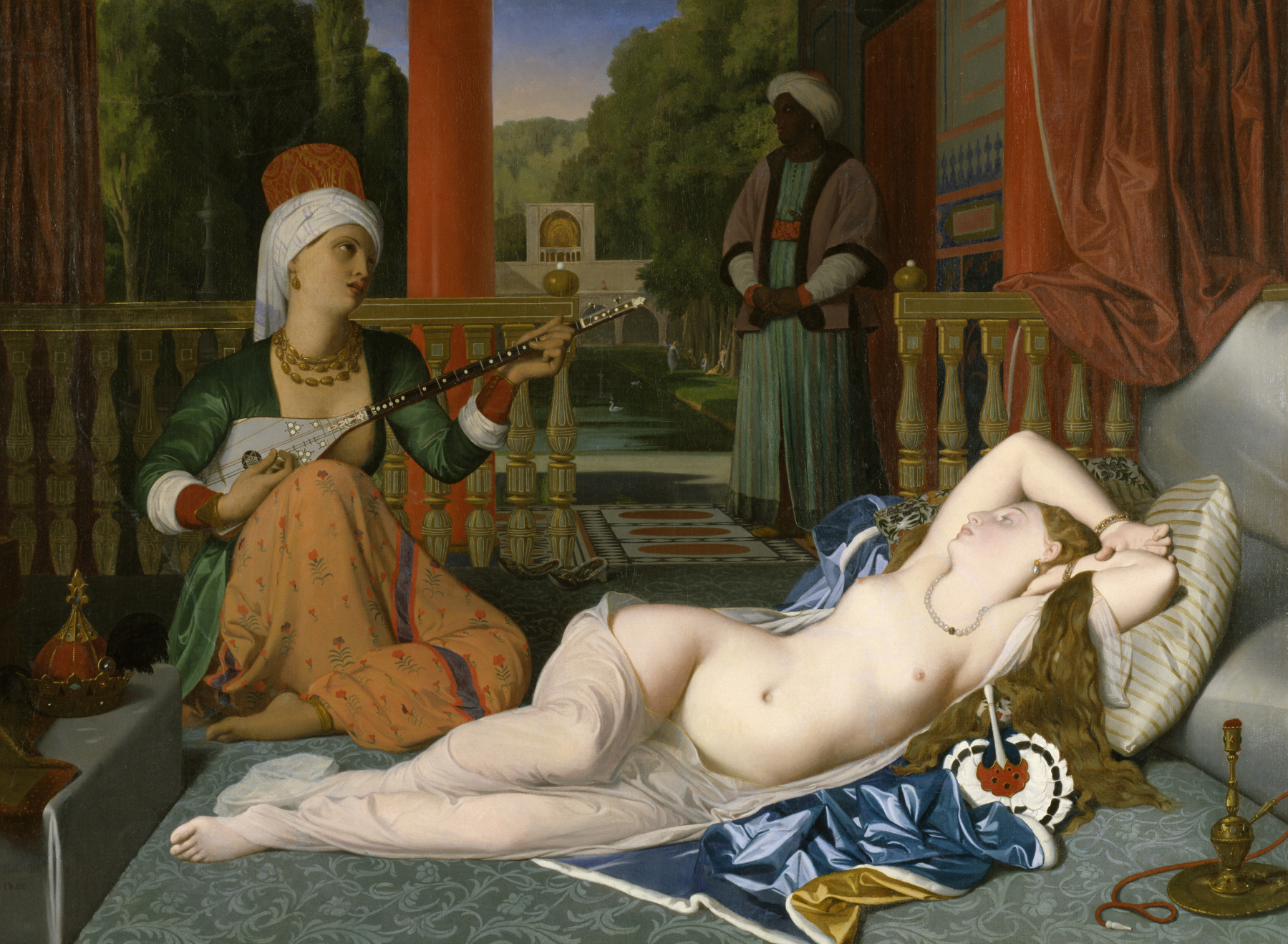
On a concert stage, a fantastically roomy floor for our world fusion quartet, my wife plays on the zheng, and our friend masters the Indian tabla drums, while I gather Middle Eastern style percussion and touches on woodwind. A guest to our homebound trio takes center stage. He is an expert percussionist on the Turkish davul. 

Odalisque with Slave by Jean Auguste Dominique Ingres and Paul Flandrin
When the music begins, he takes the lead rhythm by storm, without mind to our accompaniment. He is so overly animated in his egotistical inertia. I become exceedingly frustrated, so much so that I stop playing altogether, and it seems our other percussionist is contemplating the same. As I talk with my wife about the unseemly course of events, he stops playing as well and begins handing out gifts to the audience, smilingly captivating them with an open charisma that effectively portrays our music with underhanded nonsense. For me that’s the last straw. I grab a glass of milk and throw it at him as I walk out in disgust.

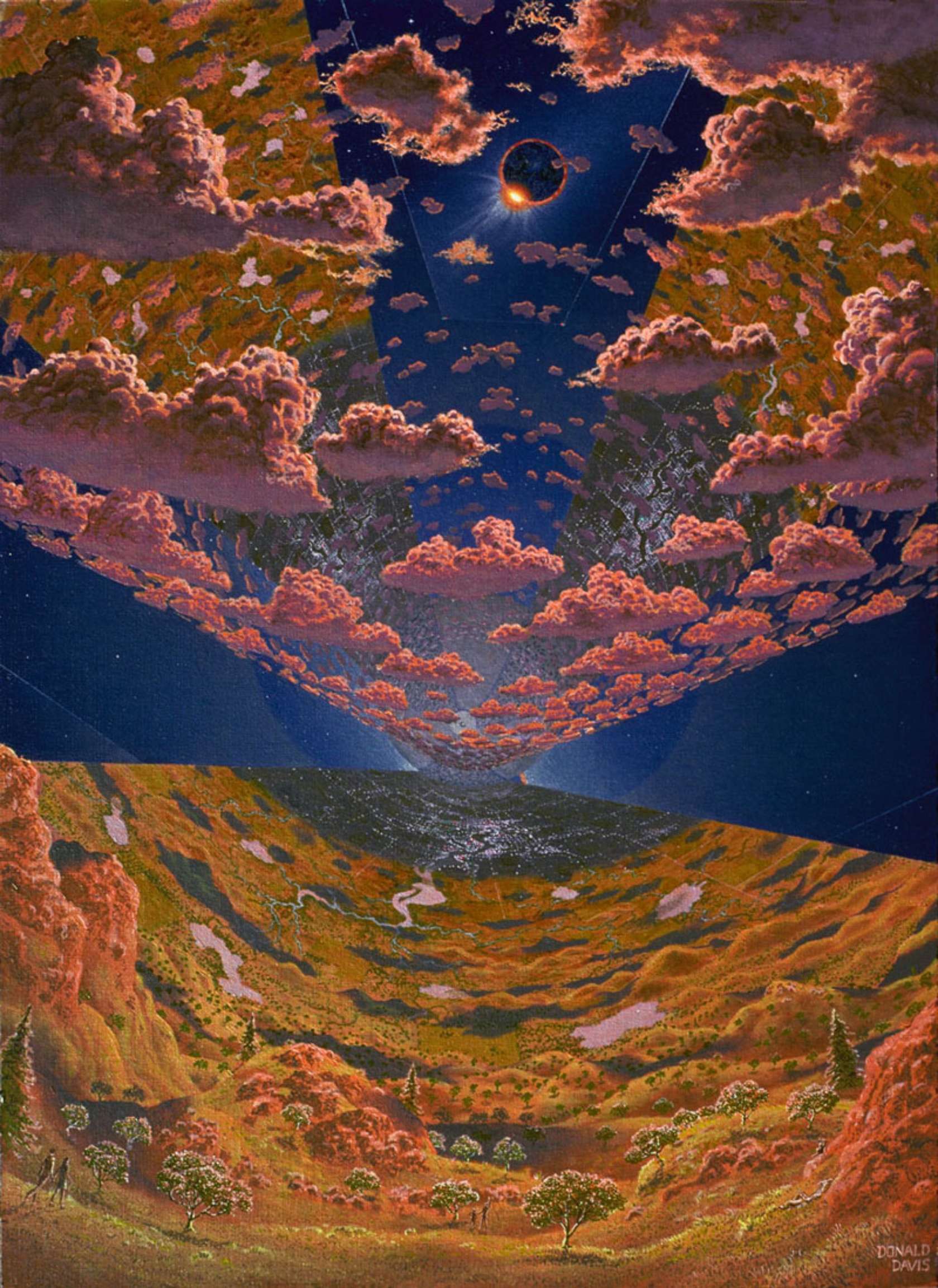
Internal view of the O'Neil cylinder by Donal Davis
On the street outside the concert hall, industrial trucking and convenience store culture intermingle in an altogether drab disarray of poverty and addiction. Over-the-hill men glare at me, wondering about their next fix with vampire teeth and screwy eyes. I silently glide past, entering the dismal folly of a culture affixed to the worthless distractions of fame and light personified in an attractive male with the maturity of an anxious adolescent. I won’t return, and the horizon is still empty. 
_________
Morose, pangs stir my subtle breath, walking up the nerves,
To break down with laughter and see ocean’s rise
From the abysmal core of first being,

The naked home of belief,
Cradling Lover’s net
As a down-pressed skeleton, chained with ire
...
Coldly moving from place to place
Like numbers spit into the viral joke of God
Seeing white rice burn to blackish brown on the needy plate of the human universe

Believed so beautifully
In the back of a working man’s mind,
Stepping to the bold indecision of a wakeful conspiring
...
Across pyramids, tunneled to the foot of known reason
Yet, to be detached from an able body
Now roasting at the offering spit and waiting for mass death

To plummet from our towers, piercing heaven with a sufferer’s torment
Across worlds, times and into the imagined memory of the once-respected
Human insanity behind the art of the worldly races

excerpts from "Art of the Worldly Races"