Primarily a writing exercise, this dream journal-inspired blog is a quiet introspective sojourn into the process that we traverse in going from private dream to public art. I see our dreaming as an internalized mythmaking. As I philosophize and expressively exhibit dreams, both private and public, I encourage and delight in creative language as a way to practice experiential metaphors through a “public dreaming." Writing Theory: Creative Dream Fiction
Showing posts with label listening. Show all posts

Monday, 2 December 2013

Ecological Storytelling: Dream, Hallucination and Vision


"I think it's easier than to formulate high ideals, but a few things are more difficult, and to discover the means whereby those ideals may be implemented one has to dream but one has to dream in a pragmatic way" Aldous Huxley, in Hoffman's Potion

Do I hear a tinge of surf rock here and a splash of psychedelic vocals there? And all wrapped up in a damn fine beat! The new Ketamines 7” So Hot! opens with its killer two-and-a-half minute title track. Resistance vibes ebb and flow as they bray and stomp through lyrics held down by the kind of upbeat clutch that makes this Toronto group well worth a listen, if not a full-fledged tracking down.

Released this October, the band’s three-track album buzzes under the genres of punk, garage and power-pop. Spacey breakdowns mood out these catchy and tight musical explorations with extra-hot reverberating guitar riffs smoothed out over ambient and effectively eerie vocals. “New Skull Tattoo,” the second cut on the album, begins with a daze of light-hearted, fifties-era doo-wop rhythms fused together into punk lyricisms.

The Ketamines provide a riot of trickster stylings, as the lyrics carry us through into a stupendous poetic irony. Final track, “Summer Mothers,” sounds off a dream-pop show with the power of good feelings, impressing the listener with a kind of end-of-concert bittersweet rush that takes no prisoners. It reminds us that when the summer or the year ends and all is lost, we should just hold fast to the driving beat and we’ll all be okay.

All in all, each and every song on this new 7” is good listening. Even multiple listens later the songs groove pulse more and more in the veins. Straight to the head, this one’s a gem.

This piece of interpretive writing was published with BeatRoute magazine on November 3, and conceived under the influence of soundscapes by Canadian psychedelic music band, KETAMINES
___________
The Union Street Y faces the Puerto Rican cafe where I used to sit over a microwaved chocolate chip muffin and hot chocolate, eyeing the clock, readying myself for Hebrew school. The elaborate turnstile reminiscences of the red-bricked Y invited with the flushing scent of chlorinated memory and the erased lunch-hour sweat of youth. There, a mere two jaunt to the fish-gut factory ocean, I spoke to children. Fascinated by the swung heart of musical storytelling, the night awaited patiently, as the fat bosom of American daytime on the human Earth struggled to a peaceful end. 

Lesser Ury: Café Bauer
A story of Massasoit and the unvanquished heads of Massachusetts flesh, spell out the old paradigm loosed from vocal chords, taut with knife-edge reason on a silent beach. Their indiscriminate wisdom emerges from white-skinned pride, to destroy the vainglorious ruse of ego and fate. Mortality ensued in the fading light, as speech lightened the animate Earth with a name, and its meaning. The soil spoke with a tongue of roots, with teeth of stone and and words of food. Saying: where the story is told is equally or more important to the telling. 
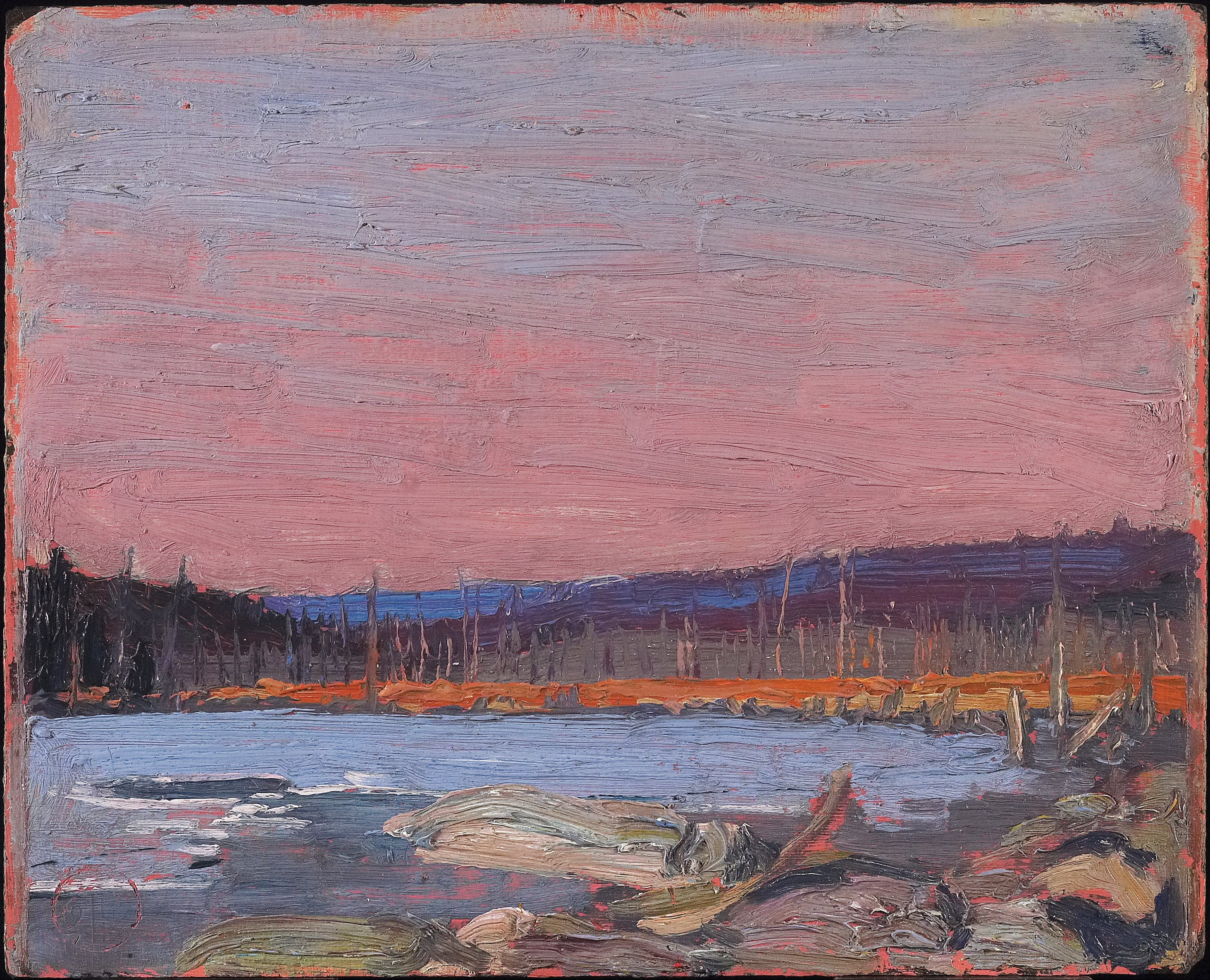
A Northern Lake by Unknown
Flown beyond the wellspring of distant knowledge, exotic in its geography, sacred in its ecology, and born of a feverish need in its cartographic attemptation, a single mountain rose as a breach of faith on the plain horizon. Monumental airs shifted and sprang from the glowering mass of insurmountable ice. Formed as from a frozen volcanic fire, the ice lifted with evaporating death, as the cold grip of lifelessness in nonbeing. The frozen hell still beckoned forward the unanswered mystery of longing, as the natural light waned atop its insuperable caracas, a skull of monastic belonging. 

Mer de Glace, in the Valley of Chamouni, Switzerland by J.M.W. Turner
I stepped forward, onto the slippery fall of the sky's over-hastened drop to Earth, as the violated inherent reason of nature, unearthed. The pool fragranced wisps of spiritual air, the will of the unmoving background to all life on Earth, revealed in the deadening cold. As the stone ascended to its paternal source above, each step closer frustrated the nervous system with defeat, failure, and the fatal swoon of all human belonging. The release of the spirit, awake. 

Harlem Valley, Winter by Ernest Lawson
Captured under the fault of a boot, I risked a greeting at the hand of death's blizzard smoke, the craving and seductive flaw of its embrace. Unable to get back afoot, I peered through the ice to see the reigning female of human law. The Queen shone glinting the fixing light, fleeting, yet absorbed needfully. With a hand mobilized by the insane truths of modern life, I sunk below the ice, to finger the freezing metal, and to possess its deathless strength. Ascendance moved to transcendence. The impossible summit slunk beneath my loins, hidden in hoarding pockets and disguised on lusting hands. 

Queen of Coins (Diamonds) from the Visconti tarot deck by Bonifacio Bembo
The line at the cinema began to move. I paid, and saw the unseen. I paid, and mounted the insurmountable. I paid, and lived the unliveable. I paid, and knew the unknown. I paid, and heard the unheard. I paid, and paid the unpaid. And I paid, and paid to pay for the priceless. I paid to pay for the invaluable. I called home the unreachable. I vanished in the light. I stole out on the intractable ice. I rose my shoulders above the limits of atmospheric pressure. I called out above the thinnest trace of oxygenated air the name of the unnameable: I.  
____________


Monday, 4 November 2013

Emerging Local Creativity: Literature, Music and Art Create Community

Matt Hanson, Calgary Working Group (photo: Drew Anderson)
"I want to work in revelations, not just spin silly tales for money. I want to fish as deep down as possible into my own subconscious in the belief that once that far down, everyone will understand because they are the same that far down."

“All human beings are also dream beings. Dreaming ties all mankind together.”


How did you get involved in trying to start a local media co-op?

I was corresponding with Montreal Media Co-op founder Dru Oja Jay and he expressed a kind of interest in the idea of a local in Calgary. I had been a member of the media co-op for about two years, the national. As I was more active, I was just more interested in what that means to be local. How they operate in Montreal, Halifax, Vancouver and Toronto — how they operate and what that might mean for Calgary. I started to put the word out there and it was very well received by Dru. He basically encouraged me to get together with others and talk about the idea and consider what is independent media in Calgary. Basically what I found is that many people are interested in their own projects, in terms of starting their own papers, but the difference here was that I was interested in connecting that kind of activity with a national co-operative site.

So, what’s set up right now?

Basically right now there is a Calgary Working Group as part of the Media Co-op and that has about 130 members, since 2009. All different kinds of stories have come from that. But in the past two years since I was writing with the Media Co-op, I found not many people contributing to the Calgary Working Group. I was just wondering about where is that understanding in Calgary in terms of this great engine of independent media and this source for people to get involved in media activity. So I went to different people who were involved in co-ops, like co-operative housing, and I talked about the idea and started to get it out there and I posted flyers and things about meeting with people. Initially I got three people that were very actively engaged in promoting and organizing the idea. Those were Melissa Manzone, she’s from Montreal but she lives in Calgary and she has a masters in journalism. Then a journalism student at MRU who has a certificate from SAIT in journalism and he’s still a student, and then another young woman named Chelsea Pratchett, who has done a lot of multimedia work — she has alternativemediayyc.com. Basically the next step was I applied for a small grant through the Arusha Centre, a Take Action Grant, that I received. I just started, DIY, working with Melissa who was editing articles with me, and also doing video interviews with people, and then through Alternative Media YYC I was organizing podcasts as weekly contributions. This small amount of funding is just an encouragement to the people here that might consider the idea of a local media co-op in Calgary.

How so? Would you use that money to pay them?

Yeah. The money has been used to pay contributors. Encouraging people with honorariums. To pay editors. To pay people organizing even. If they’re putting dedication into that, we consider that and we want to value their efforts. It’s a very free grant that I received.

How are decisions made? I come from more traditional media where decisions are made by editors. Who makes decisions in a co-op?

I’m really learning myself because I’m new to the co-operative sphere. But I’ve been really trying to figure out in terms of how the application of the co-operative organization works in relation to this. How we want to organize it is in a way that everybody has a share of the company, the collective. For me, this is really a learning process, in terms of how a co-operative organization works. Part of the funding I received, I’m putting into going to a conference to learn about worker co-operatives in Edmonton. Part of the forward process of this idea is really generating that structure. Right now, we’re at a very initial stage.

Why do it? A response to the media that exists? Do you think the media isn’t doing its job?

I think, to me, there’s that. I don’t want to be too reactive. I think it’s more about having a sense of imagination and taking things into your own hands, and really learning by doing in a way where the kind of media that I want to see is one that doesn’t just tell you about something, but incites you to action. The page is not the end of the matter.

So more of an activist slant.

Yeah, more of a fact that this is part of being more involved. Journalism should be about being involved.


This piece, also published for The Media Co-op, is an excerpt from this week's Your Face Here interview featured in Fast Forward Weekly on October 31
________________
War zone. Huddled under protection of stone, the dusty clamour of steaming trucks file past, carrying explosives, ammunition; the all-potent death of armed men. The sky burns under a 40 degree desert sun, magnifying the light of illusion with the bitter disbelief of guts strewn in the angry heat. The moonlit fox scatters beyond the floodlit path, and I sit, knowing I'm under the eye of a flagrant bomb pattern, patiently scanning the sky for my fate. 

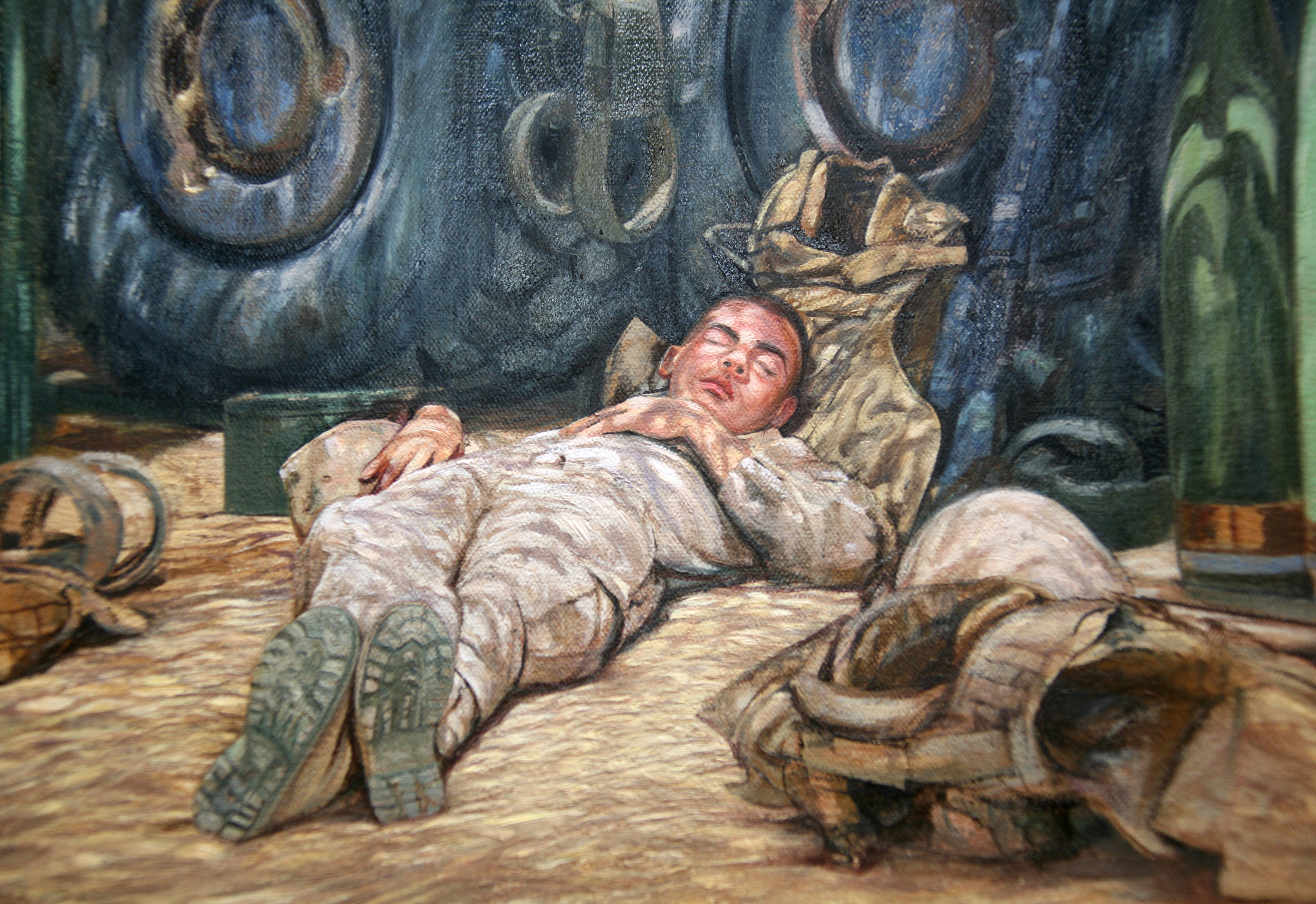
Cpl. Alicia R. Giron
Down the gravelly road, an older man, built strong and lean, walking assuredly through hell's gate. In this valley, the shadow of death casts invisibly, as the omnipotent fear, that cutting vibration that pierces as it electrifies. Every last medieval hell of our wildest imagining is child's play in comparison. The daytime moon fills my mind, obscuring the passion of escape into the dizzying architecture of mythology, roasting in this Middle Eastern world fire.

Collateral Damage by James Miller
The black fly of fire-bomb death squeals past overhead, and I run, sliding my fingers along the desert rock, the stone crumbles into rough sand. My fingers, mysteriously blackened, feel into the stone. A black liquid seethes. Viscous, thick, it's oil. I realize I can't leave. The desert spring overpowers my body in a storm of evil lust. I treasure the root of all fleshly worship in this age of fire as the swarm of madness overcomes, and in a blinding instant, the stone implodes, my hand flits to dust, the Earth gives way to pools of ash, and I sink in the quicksand of eternal war, condemned to modern night. 

On the Impacts of the Iraq War, Read COMMON DREAMS
_____________

For an ecstatic and mesmerizing experience, listen to this album while watching SAMSARA. There are new waves of sound yet to break on the open mind who might stand to listen on these ancient shores.


Delighting Destiny: Selections of our best during a live performance with audience. All proceeds from this album sales will go towards producing future performances and future recordings. Thank you for your continued support.

Monday, 12 August 2013

Nonviolent Dreams of the Mystic Heart: The Sufi Path of Silence


"I have found in every word a certain musical value, a melody in every thought, harmony in every feeling, and I have tried to interpret the same things with clear and simple words to those who used to listen to my music." Hazrat Inayat KhanThe Mysticism of Sound and Music

In the beginning, there was sound, and not only sound - a sound. What was that sound? Was it the sound of one hand clapping? OM? The percussive bang of everything exploding into existence? It was the sound of all sound, the sound from where all originates, the intonation of creation.

In traditional music around the world, percussion precedes music, or more accurately, melody. Percussion is the first sound. From the clacking of bones to the taut skin of the drum, the percussive rhythm announces the beginning of music, and thus art, language and community.

What is the origin of language? Seekers for the origin of language are mystified and further entrenched in mystery by searching through the very device they seek to derive from its source. It is obvious that language originated as sound. It would be only logical to presume that language was derived of music, rhythm and song.

Does music influence language, or more intently, the way we speak and what we say? If music is a prime suspect in the origination of language, then it would not only influence the way we speak and what we say - music will cause us to speak. Yet, speech caused directly by music uses the language of poetry, lament, cries of ecstasy and deep reflection.

Speech caused by music is also self-reflective, sympathetic to the transformative creativity within the subjective life. Imagine, the first sound of the universe - a cry - reverberating throughout time and creation as a lament for the ultimate truth - that beginning ends.

In narrative, beginnings are almost always preceded by an end, giving rise to the potential for beginning anew. Music is a constant affirmation of the cyclic nature of ending and beginning, as sound falls and rises, always with the shadow of silence before, after and throughout. Indeed, great music is often a testament to the musician's play with silence.

Silence teaches of right listening. Music is the result of right listening. Music teaches of right speech. Knowledge is the result of right speech. Knowledge teaches of right action. Enlightenment is the result of right action. Enlightenment teaches of right listening. Silence teaches of right listening. 

In the film, The Way of the Heart, Hazrat Inayat Khan's wisdom is conveyed through his prophecies of music as becoming the future religion of humanity. Inayat Khan taught how all religious and social disputes are founded in the inconsistencies and ambiguities within verbal language. Yet, in music, where profound meaning is clear and immediate, ideas and beliefs are expressed without conflict.  

When speaking is united to the knowledge of music, the silence of listening births a voice of the path. 

Listen to more Dreams of Sufi Music: Mercan Dede
Dream of ShamsDream of PerhanDream of Lover
____________
flightless dragon
memory blast
rash city
silent anger
three ways
urban nature
______________

Created immediately before a Lantern Memorial remembrance for the victims of the bombing of Nagasaki on August 9, the track features a poem published with the University of Texas, El Paso, entitled, "Lugubrious Background Nearing an Electro-Magnetic Haze". The piece, transformed into narrative sound art through the trajectory of experimental music, is essentially about the explosive omnipresence of America juxtaposed with its remoteness. The marginal landscapes of America are the birthplace for one of the the world's greatest questions: atomic energy. The poem, "Lugubrious Background..." begins in the traditional lands of the American Southwest, with its rich history of Original Peoples. That history becomes estranged into small-town marginality by the overwhelming shadow of a towering American presence. Leading finally to the sounds of New York, the sirens of immigration and post-colonial history remove the people further from the true and original history of the land, until, finally, the inside becomes outside, and the electrified modernization of progress displaces connectivity in nature with a sheen of bright lights. The outside has transformed to the inside, and without a way out, people are terminally trapped by misperception and ignorance.

The musical instrumentation on the track, "Lugubrious Background" speaks to another contemporaneous event, namely the 400th year anniversary of the first treaty between Europeans and Native Americans. On the same day as people remembered the bombing of Nagasaki, canoes waded down Hudson River to New York City to meet delegates of the UN to not only celebrate World Indigenous Day, but to remember the beginning of a formal international relationship between Native Americans and European settlers, begun by the Iroquois Confederacy and the Dutch Kingdom. So, the instrumentation on this track, a frame drum (bodhran) and a xaphoon (bamboo sax) speaks to a renewed history of American tradition. The modern frame drumming techniques of North America have spawned an entirely new way of hearing and playing the frame drum. Although using a bodhran, the frame drum is a universal instrument known throughout the Original Traditions of Native Americans across Turtle Island. Similarly, the xaphoon is likened to a refreshed jazz tradition, wherefrom Hawaii a new saxophone was invented only thirty years ago. The sound of the fame drum with a bamboo sax conjures American sentiments from the historical age beyond the contemporary into the imagination of a future where co-existence revives cultural tradition.


The title of the following chapbook, "Truth our Up-Pressing" is a call to evince our oppressive actions, and speak our truth in a humble way. Either through poetry or prose, the human voice is a powerful agent of active creativity in the spirit of life, survival and freedom. "Truth" is here used as a verb, a kind of call to transform our forms of oppression that we often feel entitled to uphold in the name of family honour, and to dismiss that, and in turn, change our language. Therefore, I use "Up-Pressing" instead of "Oppressing" to say go from seeing our oppression as being a burden on others to seeing our oppression as a burden on ourselves. The oppressed oppresses, the oppressive are oppressed. In truth, all are both oppressor and oppressed, and until each and every last human being realizes this, there is no freedom for anyone.


Monday, 18 March 2013

Evocations of the Urban Creator: When No Stars Appear, Voices Are Heard

Evocations: Cyclical Wordplay (album art)

“So, dear state, you are a very nice word from a dream. There are fine sounds in the word, much comfort and much freshness, you grew up in a forest of words…ashtray, match, cigarette butt, an equal among equals, but why state do you feed on people. Why has the fatherland become a cannibal and the motherland his wife…If the states be truly bad then who among us will lift a finger to prolong their dreaming under the blanket forever?” Allen Ginsberg reading the work of Paul Klebnikov’s Manifesto of the Presidents of the Terrestrial Globe

After hearing many songs and stories of the dramatic sights seen by survivors of the great natural disasters of the early 21st century; the tsunamis and earthquakes that buckled cities and civilizations to their knees, I have heard many refer to the reversion to a clear sky.

The clarity of sky is an enduring metaphor for the wildly obscuring potency of modern technological electro-civilization. What has been more subtle, and more dramatic a transition, is how the skies under our human settlements have become opaque and starless over the past century. In my mind, this is more traumatic and in need of reflection.

The stars and constellations are being called into the blinding stretches of the ephemeral; of human memory, abstracted through an archaic imagination. Beginning with the wealth of ecological terror that might strike any human being living in a modern Western city, who looks up to see that not only have they left the stars, but the stars have left them.

We are without higher purpose, the signs directing us to a sense of greater belonging in the universe have since faded into the mindless wash of electro-magnetic consumerism and the ecological disturbance of human egotism; a symptom of our technological worldview.
________
Lost by RK
Shadow of Mother Earth by RK
Gutless City by RK 
Wormhole Cafe by RK
Parting the Starless Night by RK
___________
The voicing, "When No Stars Appear" is an excursion through the faded mind, a search for meaning in the depths of human language, abstracted and diluted by the hotbed movement of inorganic noise, and the harmonious serendipity that emerges with the simple act of listening; the inception of self-knowledge, wherefrom the fog clears to reveal novel human experience, metaphorically illustrated by the final lines in the voicing. At the narrative resolution, a fugitive of modernity emerges from a waterfall consciousness of humility, as a child in a traditional Mayan home, looking up into the vast network of a more universal light. And the sounds of the starlit sky become a nightly renewing gift clarity, humility and strength. "When No Stars Appear" was originally published online by PressBoardPress in September, 2012.


Also featured in this post is the release of the chapbook, "Creating in the City" from the Cyclical Wordplay collection, to commemorate the release of another sound evocation! Enjoy!

Monday, 4 March 2013

Electro-Acoustic Improvisations II: A Sonic Narrative from the Far West

Electro-Acoustic Improvisations I (Album Art Remake) 
Electro-Acoustic Improvisations II (Album Art)
"The first question I ask myself when something doesn't seem to be beautiful is why do I think it's not beautiful. And very shortly you discover that there is no reason." John Cage

Essentially one album, Electro-Acoustic Improvisations I & II are to be listened to in continuity, as a single expression of seeking through sound as voice and agency for the soul of the word. Electro-Acoustic Improvisations II is conceptually the final track of I, divided into 4 parts for listening.

Experiment with your ear, and look to the bottom of this post for an aural transport to the Far West.


Electro-Acoustic Improvisations II

On the margins of the vast, interlocking web of technology and nature, with broken instruments (both acoustic and electronic), we are beginners on the road to merging technology with all of life in this the human experience of Earth and the inner world as an evolutionary being of conscious development. 

Imagine sitting at the edge of a fire in the raw, teeming wilderness. The forest is thick. The air is heavy with an unbroken gamut of vegetable breathing. Warming your hands by the fire, under cover of starlight and the faint haunts of a new moon, the mind seeps and seethes with memories, dreams and reflections on the world “out there”. Civilization and its discontented fires of electric madness pour into your brain like an acid flashback. The Earth is still, yet your hands shake. So, before you is the music of the muses, the bare wonderment takes its own course into the heavens and hells of your own nature. Through music, the seeker of solitude purges the concrescence of electro-social distension. Discordant dissonance marries with harmonic essence as the jeering subtle flesh of mad electricity merges in the mind, hand and heart of one in touch with the strings, blood and fire of creative sound.  

Part I - The seeker discovers music as a beginner. The instrument is slightly out of tune, and the playing is imperfect. The melodies are introduced with electronic music, featuring static electric synthetic effects throughout. The seeker gains mental balance by overcoming the first break beyond the shores of civilization into the open expanse of nature beyond, where other, even more trying challenges are to be had in confrontation with the self, exposed and untended.  

Part II – With emboldened consciousness, the instrument and its sound are clearer. A fire has been set and night opens to the gorgeous possibilities of the sonic imagination. Electric distension is transformed into unseen beauty. The grandeur of melodic instrumentation opens up with a new strength of diversity. As the clouds above part to reveal pure sky, memory and reflection are enlightened through joining with traditions of seeking, as with the sonic movement into Middle-Eastern influenced lute music, translated to guitar in creative solitude with the empty awe of all-potent Nature. 

Yet, the seeker soon realizes this is only the beginning of the journey, and there have ever been electric distension scattered throughout the night’s hearth. By the end, the celebratory feel becomes more solemn as the seeker attains the first seed of self-knowledge, and understands the need to set one’s own pace and prepare certain deliberation before embarking on the pathless sojourn ahead. The music ends with the realization that it is dawn, and the horizon welcomes ahead.    

Part III – Reprieve from the journey, alongside a mountain ascent, beneath a cliff. Cool air from a spring entices the cold march of winter’s coming winds to turn and wade in the lush mountain air. Without a fire, music is the warmth. Creative passion warms from the inside with the brightest of flames. At first, blowing hard into the hands and fingers for the warm breath to spread throughout and allow for the wealth of instrumental music to unfold, the seeker stops playing as soon as it begins to rain. As in Taoist tradition, when the rain makes rhythmic motion, and the melodies of the thunderclouds fly with the magical presence of wind, one is to listen, and be humbled by the music of the spheres.  

Part IV – Beginning with a light touch of electronic moments, the music glides atop sounds of weather, especially as the seeker gets closer to the ocean. Following rivers, streams and tributaries, faring flash floods and rain-swept gullies, the seeker emerges from the wilderness with a great boon of discovery. A new instrument to behold! Notice, the music approaches harmonies with the natural way of impermanence and unity, as opposed to listening, where creative interaction with nature breeds a kind of musical kinship among humans and all life on Earth. As the seeker sights the ocean, the new instrument is played, ending the music and the journey. 

The new instrument is the xaphoon. Invented in the 1970’s in Hawaii, the xaphoon, also known as the bamboo sax, is a contemporary single-reed woodwind. The track ends with a homage to Jack Kerouac describing San Francisco, the very edge of the west, to crystallize the final xaphoon improvisation solo; a traversal of the “far west” in sound. 

Influences: Bill Frisell, Hamza El-Din, Vi An Diep, Steve Roach, Brian Eno, stones/minerals, earth, water/ice, winter, landscapes of the North American west, Jack Kerouac, fire, trees, reflection, solitude

See my previous post: Music of the Dream Author: Electro-Acoustic Improvisations I Release 
___________
On a clean, medical train through Sudan, my Nilotic companion eyes me with a piercing grin as we pass south of Juba into the New South. We have arrived at his hard-won home, South Sudan. His smile is buried deep within the pain of intergenerational loss, the hellfire of war still sting his reddening eyes as he tears up, the pictures of his innocent family smolders into the soil. The land speaks with his voice.

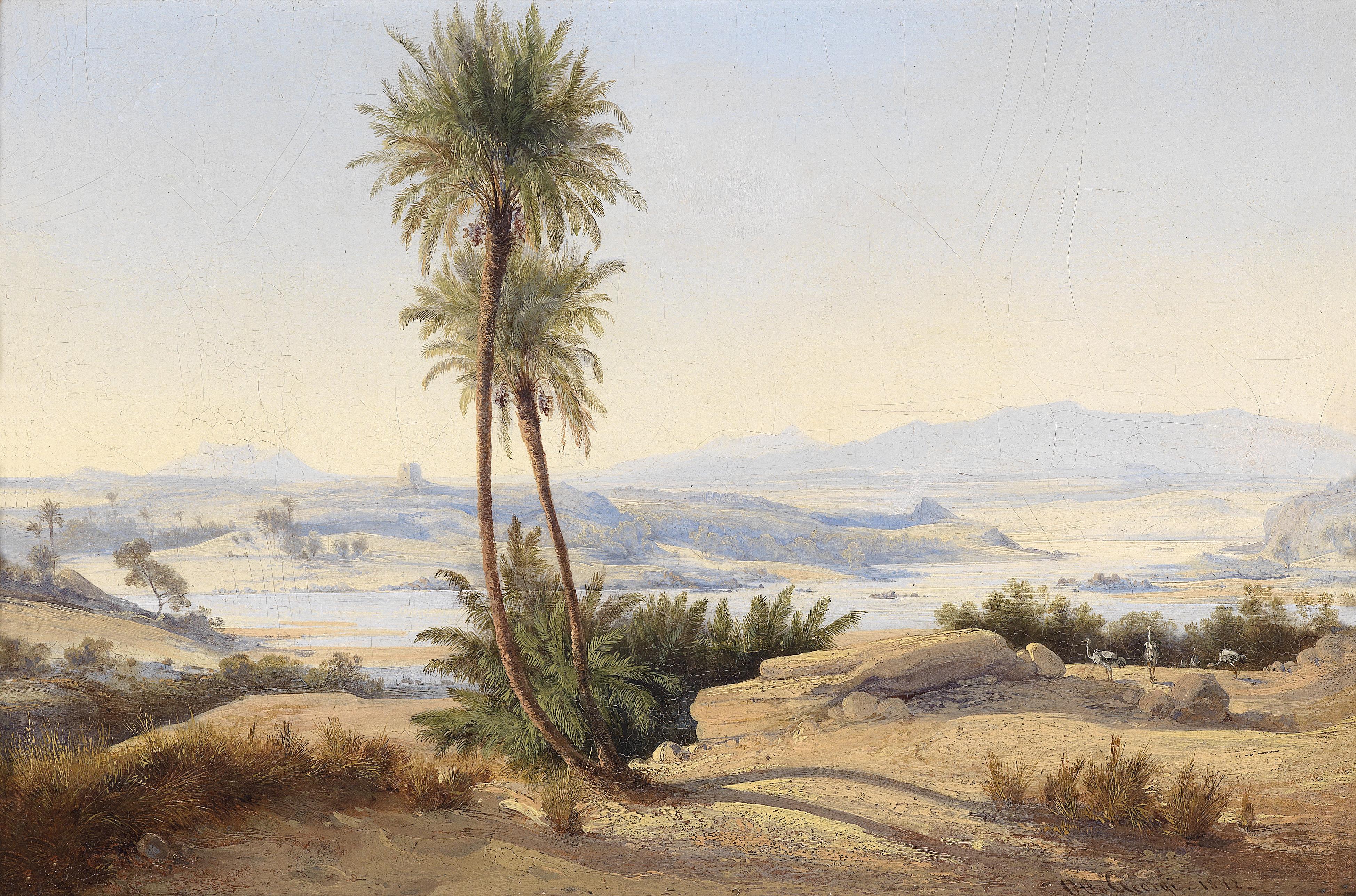
Southern Nubia by Friedrich Otto Georgi
A number of tourists from Europe and America depart from the train stop, as we all exit to proudly march through the gates of the newly formed customs center. Before I ready myself to stand up and follow in the foreigner’s line, I see the winking horror of rats, spiders and snakes twice the size of my face, gnawing at my brains in the middle of the first night. I’ve read such stories. This is open country for sub-Saharan life-threatening insects and arachnids galore. If only they sold us preventive supplies before stepping foot on the blood-torched burial grounds of a still cold reconciliation between tribes and kin. The first thing I see is a smile, wide and innocent as the all-embracing horizon. Before I entered Sudan, an asylum seeking Sudanese refugee in Egypt told me, “Sudan is the easiest place to kill someone.”

Tornai Man from Sudan by Gyula Tornai
I heave a sigh of relief as the other westerners depart into the folds of pyramidal shopping and freewheeling nature photography. I journey on, to the heart of the people. My friend is ever stoic, silent, basking in the wonders of a new nation in its infancy, victorious after so many losses, after so many needless ends, there is at least one fresh start to be had, and one that all can have a part in. Concrete residential towers spring up almost before my eyes, fresh paint lingers and drips throughout the dry stinging horizon of African sun.

African Riddle by John Mainga
Men work diligently, with the force of triumph, erecting monumental stone structures, for future generations to thrive, for the plentiful, abundant optimism of the future. The complexes are almost identical to the substandard suburban housing of greater Cairo, where many must have returned from as once-neglected refugees, now with a determined hand and proud say in social affairs. They don sun-deflecting head coverings, and traditional footwear made with scarlet fabric and coins. Women are nowhere to be seen.

Battle of Tamai by Geoffrey Douglas Giles
We drive on, deeper into the south. The more south we go, the fresher the earth, the more bare the optimism, the more innocent the smiles. The more south we go, welcomes are heard with more sincerity. The air is full of potential. The energy is warm, and the harshness that once thrived now sees a chance of dwindling beneath the pulsing chests of hard work. My friend dissipates into the sunlight now flooding our vehicle; as the inimitable human spirit washes us clean of fear.  
____________


The completion of this instrumental music project, "Electro-Acoustic Improvisations I & II " sets the ground for the next stage of my creative development, where I feature my experimental writing as spoken word together with my world music instrumentation. More art, music and writing next week! 

Saturday, 1 December 2012

Seven Hours of Music: Natural Sounds of Subconscious Entrancement


When tired, listen. 
Music is the breath of life. 
Listen, I am tired. 
Asleep, I hear a visual language, 
A deeper mind. 
Music, now.
__________
She slips in the doorway while I lay in bed, listening. Grandma Nana’s come to pick me up for a day of visiting. Yet, aren’t those the footsteps of my wife? She enters with uncanny similarity.

A painting of the artist Kete Ephraim Marcus by Kete Ephraim Marcus 
A style of musical motion stamps on the floor of my eardrum with the gentle line of breath, issuing as her unspeaking voice through our apartment of dead morning air. She is memory, alive.

Morning, Interior by Maximillien Luce
As I wake to the glorious open space of an apartment, couched in the warm light of a restful morning, and my friend’s visiting. Apologetic and endeared, he respects my unconventional successes, gifting me seasonal greetings with the cheeky light of a sparkling card and pagan decoration.

Paris: In memory of the young deceased friend by Shalva Kikodze
We sit together in the freedom of being up and awake for the sun and its glowing gaze. The room is just so cool to comfort the body in an easy choice of soft, wooly over-garments. He begins to recite the melody of a waltz, for playing on the guitar.

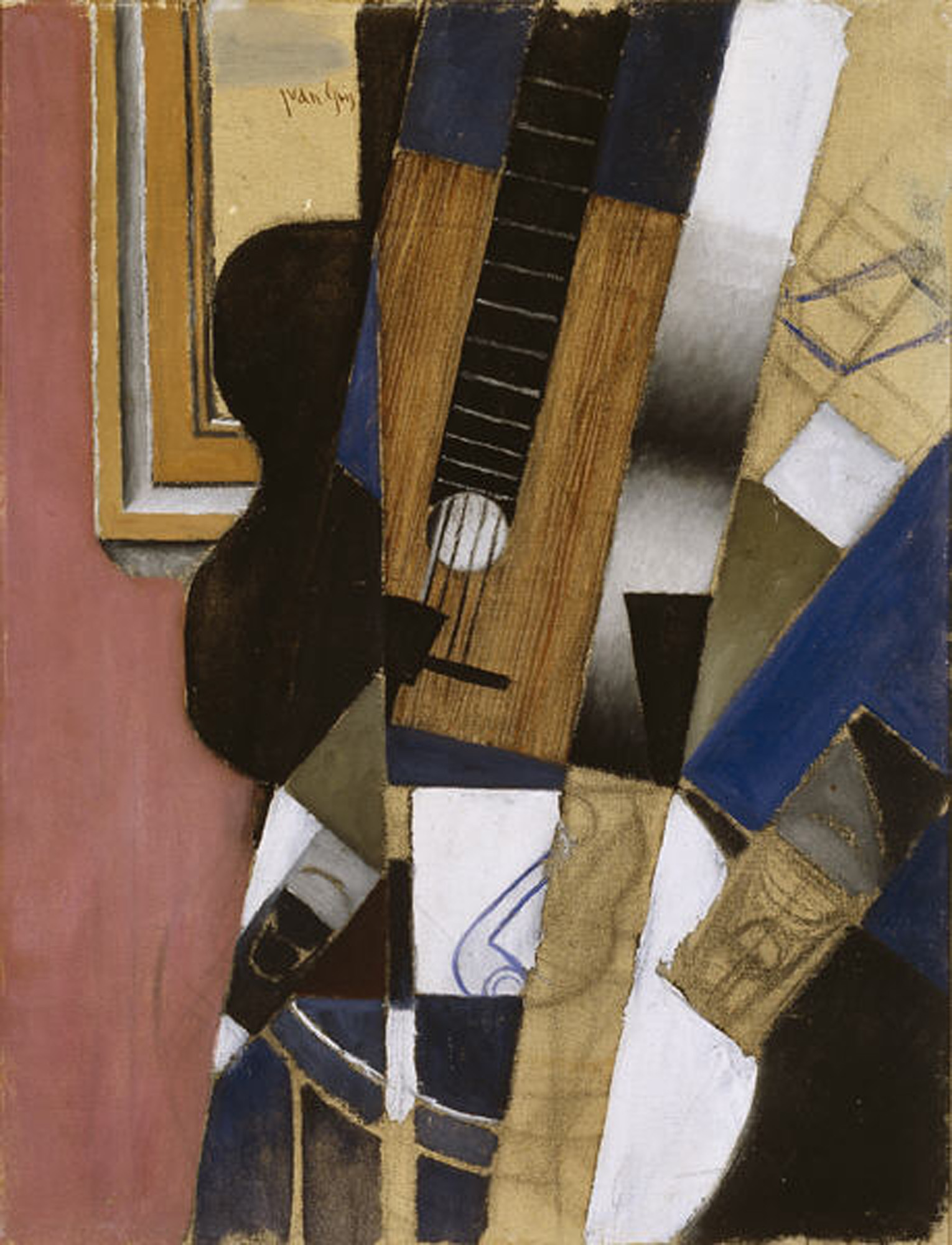
Guitar and Pipe by Juan Gris
With heavenly beckoning, his sweet and delicate face points at the brown stand of Indonesian wood in the corner, my acoustic guitar. I repeat the melody, as it glides effortlessly on the airy surface of my mind.
_________
"The spiritual recluse
On a steep decline

Passing without Failure,
Churning with Thirst,

& Separated


from life"

excerpt from "Age of Fire"