Primarily a writing exercise, this dream journal-inspired blog is a quiet introspective sojourn into the process that we traverse in going from private dream to public art. I see our dreaming as an internalized mythmaking. As I philosophize and expressively exhibit dreams, both private and public, I encourage and delight in creative language as a way to practice experiential metaphors through a “public dreaming." Writing Theory: Creative Dream Fiction
Showing posts with label media. Show all posts

Monday, 4 November 2013

Emerging Local Creativity: Literature, Music and Art Create Community

Matt Hanson, Calgary Working Group (photo: Drew Anderson)
"I want to work in revelations, not just spin silly tales for money. I want to fish as deep down as possible into my own subconscious in the belief that once that far down, everyone will understand because they are the same that far down."

“All human beings are also dream beings. Dreaming ties all mankind together.”


How did you get involved in trying to start a local media co-op?

I was corresponding with Montreal Media Co-op founder Dru Oja Jay and he expressed a kind of interest in the idea of a local in Calgary. I had been a member of the media co-op for about two years, the national. As I was more active, I was just more interested in what that means to be local. How they operate in Montreal, Halifax, Vancouver and Toronto — how they operate and what that might mean for Calgary. I started to put the word out there and it was very well received by Dru. He basically encouraged me to get together with others and talk about the idea and consider what is independent media in Calgary. Basically what I found is that many people are interested in their own projects, in terms of starting their own papers, but the difference here was that I was interested in connecting that kind of activity with a national co-operative site.

So, what’s set up right now?

Basically right now there is a Calgary Working Group as part of the Media Co-op and that has about 130 members, since 2009. All different kinds of stories have come from that. But in the past two years since I was writing with the Media Co-op, I found not many people contributing to the Calgary Working Group. I was just wondering about where is that understanding in Calgary in terms of this great engine of independent media and this source for people to get involved in media activity. So I went to different people who were involved in co-ops, like co-operative housing, and I talked about the idea and started to get it out there and I posted flyers and things about meeting with people. Initially I got three people that were very actively engaged in promoting and organizing the idea. Those were Melissa Manzone, she’s from Montreal but she lives in Calgary and she has a masters in journalism. Then a journalism student at MRU who has a certificate from SAIT in journalism and he’s still a student, and then another young woman named Chelsea Pratchett, who has done a lot of multimedia work — she has alternativemediayyc.com. Basically the next step was I applied for a small grant through the Arusha Centre, a Take Action Grant, that I received. I just started, DIY, working with Melissa who was editing articles with me, and also doing video interviews with people, and then through Alternative Media YYC I was organizing podcasts as weekly contributions. This small amount of funding is just an encouragement to the people here that might consider the idea of a local media co-op in Calgary.

How so? Would you use that money to pay them?

Yeah. The money has been used to pay contributors. Encouraging people with honorariums. To pay editors. To pay people organizing even. If they’re putting dedication into that, we consider that and we want to value their efforts. It’s a very free grant that I received.

How are decisions made? I come from more traditional media where decisions are made by editors. Who makes decisions in a co-op?

I’m really learning myself because I’m new to the co-operative sphere. But I’ve been really trying to figure out in terms of how the application of the co-operative organization works in relation to this. How we want to organize it is in a way that everybody has a share of the company, the collective. For me, this is really a learning process, in terms of how a co-operative organization works. Part of the funding I received, I’m putting into going to a conference to learn about worker co-operatives in Edmonton. Part of the forward process of this idea is really generating that structure. Right now, we’re at a very initial stage.

Why do it? A response to the media that exists? Do you think the media isn’t doing its job?

I think, to me, there’s that. I don’t want to be too reactive. I think it’s more about having a sense of imagination and taking things into your own hands, and really learning by doing in a way where the kind of media that I want to see is one that doesn’t just tell you about something, but incites you to action. The page is not the end of the matter.

So more of an activist slant.

Yeah, more of a fact that this is part of being more involved. Journalism should be about being involved.


This piece, also published for The Media Co-op, is an excerpt from this week's Your Face Here interview featured in Fast Forward Weekly on October 31
________________
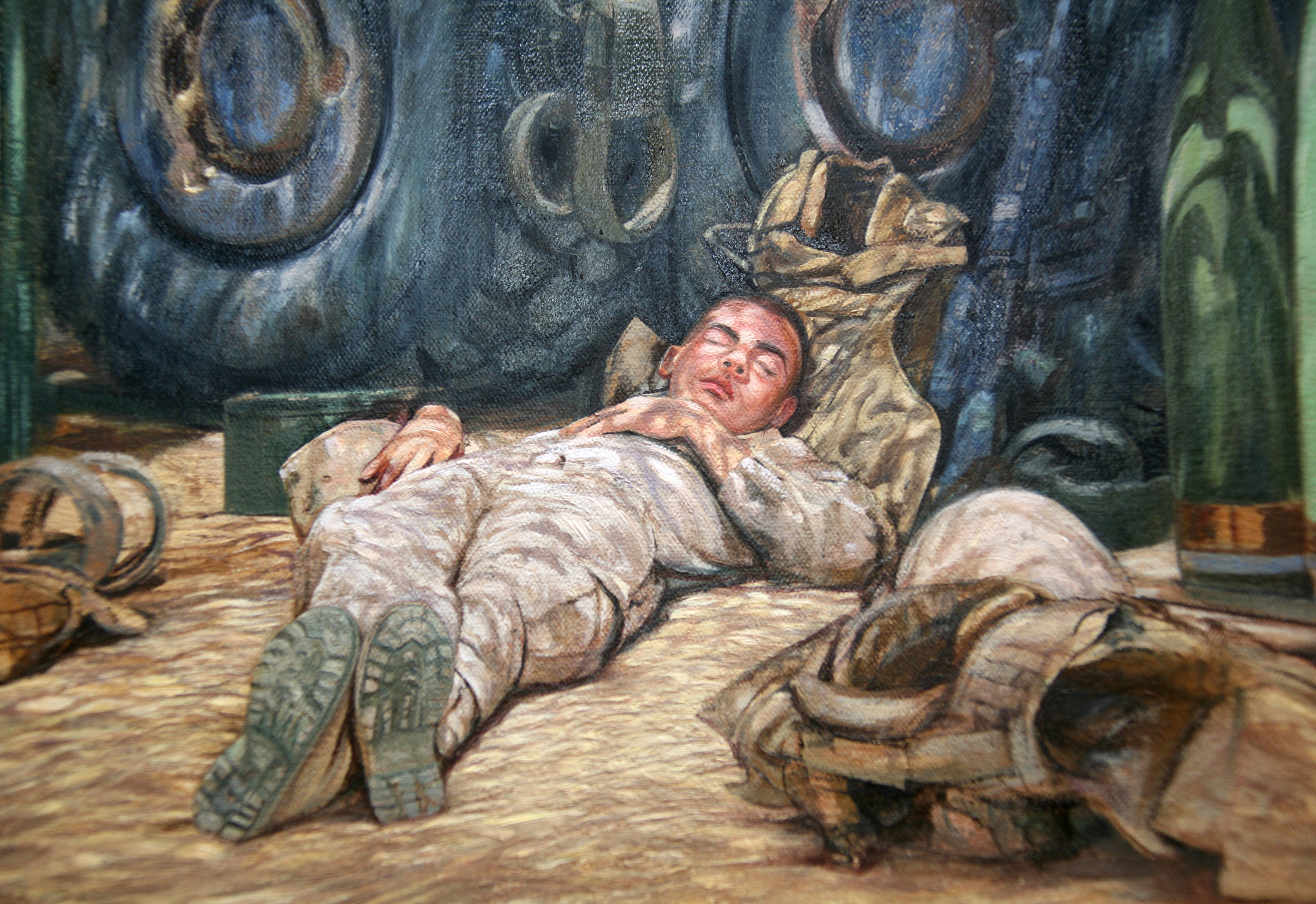
War zone. Huddled under protection of stone, the dusty clamour of steaming trucks file past, carrying explosives, ammunition; the all-potent death of armed men. The sky burns under a 40 degree desert sun, magnifying the light of illusion with the bitter disbelief of guts strewn in the angry heat. The moonlit fox scatters beyond the floodlit path, and I sit, knowing I'm under the eye of a flagrant bomb pattern, patiently scanning the sky for my fate. 

Cpl. Alicia R. Giron
Down the gravelly road, an older man, built strong and lean, walking assuredly through hell's gate. In this valley, the shadow of death casts invisibly, as the omnipotent fear, that cutting vibration that pierces as it electrifies. Every last medieval hell of our wildest imagining is child's play in comparison. The daytime moon fills my mind, obscuring the passion of escape into the dizzying architecture of mythology, roasting in this Middle Eastern world fire.

Collateral Damage by James Miller
The black fly of fire-bomb death squeals past overhead, and I run, sliding my fingers along the desert rock, the stone crumbles into rough sand. My fingers, mysteriously blackened, feel into the stone. A black liquid seethes. Viscous, thick, it's oil. I realize I can't leave. The desert spring overpowers my body in a storm of evil lust. I treasure the root of all fleshly worship in this age of fire as the swarm of madness overcomes, and in a blinding instant, the stone implodes, my hand flits to dust, the Earth gives way to pools of ash, and I sink in the quicksand of eternal war, condemned to modern night. 

On the Impacts of the Iraq War, Read COMMON DREAMS
_____________

For an ecstatic and mesmerizing experience, listen to this album while watching SAMSARA. There are new waves of sound yet to break on the open mind who might stand to listen on these ancient shores.


Delighting Destiny: Selections of our best during a live performance with audience. All proceeds from this album sales will go towards producing future performances and future recordings. Thank you for your continued support.

Monday, 30 September 2013

Source of New Media: Resonant Lives Harmonize in the West


“What I began by reading, I must finish by acting.” Henry David Thoreau

Where is our all-inclusive local media source, one that is not generic, yet doesn't cater to only one group, one that embraces local lore, custom and myth, one that encourages people who live the story, who are located downtown or in the community, whose lives are on the pulse of the daily, local narrative? They are to tell their story, to emphasize selected statements said by their own voice, and to speak from experience, because good media should begin with experience and end with experience. Good media should not begin with inexperience and end with inexperience. Good local media should reunite with social cause, and ultimately, incite action.

The introduction, history, structure and funding of The Media Co-op is explicitly written out in, Know Your Co-op, a nineteen page document prepared by journalist Dawn Paley in 2007 and self-published by The Dominion editorial collective. What began in 2003 as a newspaper, The Dominion (still circulating nationally), was reincorporated as a multi-stakeholder cooperative in 2007, now known as The Media Co-op.

“The multi-stakeholder is a situation in which you have more than one class of membership within the cooperative and they collaborate together to meet the needs of the different classes of membership,” Peter Hough, Fund Manager of Tenacity Works Fund at the Canadian Worker Co-op Federation told the Calgary Working Group of The Media Co-op. “In a retail store it would be trying to produce good working conditions for the employees but also trying to produce good service and fair prices for the consumer members. And then all of them would share in any surpluses.”

In 2009, the first local of The Media Co-op formed into the Halifax Media Co-op. In the next three years, Vancouver, Toronto and Montreal formed locals (in that order). “Each local has an editorial collective that meets face-to-face to discuss stories and coverage in their cities and surrounding areas,” wrote Dawn Paley, in Know Your Co-op. “The new model has required the creation of a web platform where contributors can upload news, videos, audio and photos, as well as interact through comments, working groups and discussions.”

Cooperative and local media is a process of decentralization, essentially giving media back to its rightful source: the people. In this way, the oft-repeated slogan, “Own Your Media” is The Media Co-op mantra. With stories such as the 2004 Haiti coup d’étatand the Vancouver Olympics, The Media Co-op and its locals transcend corporate media coverage, connect with untapped readership in the Canadian public and have worked with larger media organizations internationally, such as Democracy Now!

Yet, as typical to news media, the bad news is ever-present. As reiterated in Know Your Co-op, Montreal Media Co-op founder Dru Oja Jay, bore the bad news that The Media Co-op could not accept new locals in the 2010 article, How to start a local of The Media Co-op. Due to the overwhelming commitment and the underwhelming budget, The Media Co-op instead encouraged incipient Working Groups. The Calgary Working Group was opened under the direction of Jay in 2010 with top-notch international reportage on the challenges to a national election in Manila, Philippines.

Since then, the Calgary Working Group has received over 120 members with contributions on topics ranging from the G20 Summit to The Alberta League Encouraging Storytelling (TALES), to Environmental Justice, to Café Koi to Young and Future Generations Day. Articles, podcasts, photo essays, editorials and blogs are among the many mediums of cooperative journalism local to Calgary. After a new (and very active) Calgary Working Group contributor corresponded with Jay earlier this year, the momentum shifted. Dialogue on starting a new local of The Media Co-op reopened.

The potential for the Calgary Working Group to become the Calgary Media Co-op is a vision that has since been shared in the local community, and the support is gaining. The Calgary Working Group started meeting with this objective in May of 2013. Besides forming a basis of unity, and establishing an editorial collective, the Calgary Working Group requires sustained and significant contribution in order to shift gears into the full-fledged Calgary Media Co-op.

The initiative is mutually coordinated with The Media Co-op, where all posts contributed to the Calgary Working Group (and in the future the Calgary Media Co-op) will appear as published on The Media Co-op nationally-syndicated, online news source. Stories written by a local, such as the Montreal Media Co-op, also appear as such when published in The Dominion. The Calgary Media Co-op is a vision for local cooperative media, in advocating for the publication of local stories, connecting them to a national community of journalists, activists, communities and leaders.

The basis of unity and editorial collective has been organized successfully since May with core organizational capacity developed with Daniel Rodriguez, a graduate of SAIT Journalism and Melissa Manzone, who holds an M.A. in Journalism from Kingston University (U.K.). Our basis of unity establishes a rational, concerted response to the inadequate agenda of dominant media to address and give voice to local concerns, perspectives and narratives. The unity is also founded on a deep appreciation for journalism as a public base of knowledge where cooperative values are formed, maintained and encouraged.

The editorial collective organizes a weekly program of contribution. Each piece submitted to the collective will be edited by at least two other core or guest editors. Three pieces a week are to be contributed by one regular contributor and two guest contributors. The publication schedule will be organized according to three themes – Uncovered, Alternative and Editorial.

On Monday, the focus will be on misinformation in the dominant news sources. Simply, we ask, “What is the popular news not covering?” The same issue published in dominant newspapers will be assessed and critiqued with regard to the uncovered angles, perspectives and stories. Not only will contributors critique, their articles and/or multimedia pieces will address and give agency to the unvoiced, and unknown, in our community.

On Wednesday, pieces will map alternative press locally, in Calgary, and Alberta. For example, we ask, “What is being voiced by independent media sources, non-English newspapers, podcasts and blogs?”

On Friday, the editorial collective will publish editorials spotlighting special voices from within the community. This new initiative of the Calgary Working Group aspires to convene with the entire political spectrum, including all identities of class, religion, gender, and ethnicity into a refreshingly local forum to reenergize debate, understanding and willpower in the community.

The Calgary Working Group still has a long way to go until the proposed momentum is established, and finally, there is a new local chapter of The Media Co-op in Calgary. According to the latest draft of New Local Policy (pending issue by The Dominion editorial collective), the Calgary Working Group remains in Phase 0 of 5 successive stages until a full-fledged Local can open in Calgary.

First and foremost, what this means is that the Calgary Working Group may not use The Media Co-op name to raise money. All funds currently fostered through the voluntary leadership of media activists involved in developing the Calgary Working Group are nominally channeled through AlternativeMediaYYC.com, an independent media and podcast source for Calgary-based voices. At Phase 0, the Calgary Working Group may not refer to itself as the Calgary Media Co-op. At this initial stage, administrators at the Calgary Working Group helping with site content do not have editor access through working group admin privileges.

Currently, the Calgary Working Group is developing from a working group (Phase 0) to a website working group (Phase 1). In the first stage of the working group’s becoming a local new content is posted weekly, collective membership is stable and meets regularly; collective processes, membership criteria and operating principles are formed; editorial policies are adopted; formal agreement is made with The Media Co-op basis of unity; and lastly, the collective (Calgary Working Group) agrees not to use The Media Co-op name to raise money nor refer to themselves as the Calgary Media Co-op.

At this transition, the working group applies to The Media Co-op Board of Directors (in this case, through Dru Oja Jay). Leaders from this Calgary Working Group initiative are currently organizing a conference call with Dru and The Media Co-op Board of Directors. [To get involved, please contact us via the Calgary Working Group coordinator, Matt Hanson (mhanson1717@yahoo.com).]

______________

In the context of modern literary history, Hungarian-American Jewish newspaperman Joseph Pulitzer set the quality standard for publishing at the turn of the century. Pulitzer, best known for the eponymous award for not only journalism, but also photography, literature, history, poetry, music and drama is attributed with the quote: “The newspaper that is true to its highest mission will concern itself with the things that ought to happen tomorrow, or next month, or next year, and will seek to make what ought to be come to pass.”

Good media begins with the very real ground-level experience of people who are the subject of good stories. The middle ground is where people read and learn. Finally, good media ends when the lives of the people voicing their story are changed as often as the people who learn that story. Good media compels and instills action.

Mediocre or god-awful media begins with inexperience, namely the daily political rhetoric, hearsay, or at best a secondary source. Next, its core value is the repetitive sound of a cash register receiving a dollar and some change for a paper. For the tremendous act of reading is enough for some literati, however news media should be a call to extroversion and community.

Oftentimes, media consumerism ends with apathy, inaction and at best a satiated boredom, and at worst, accepting that life merely boils down to hearsay. More subtly, office-enclosed research on secondary sources so conveniently bolsters today's social (and unsocial) media frenzy; a frenzy that can overwhelm experience into the dull silence of an unprovoked voice in an abyss of unquestioned answers, facts, statistics, records.
"It's as if newspapers have broken their bargain with democracy in turning away from editorial excellence and towards profit, marketing and cost-cutting...fewer of us can turn to our papers and see what we all have in common, or what our common stake might be if we participate in our democracy." (Yesterday’s News, John Miller)
The glossy overdub display of empty space is often filled with meaningless advertisements, meant to convince people that their lives are as empty and meaningless as an unfulfilled consumer niche, such as the newspaper; slowly becoming a dying, trivialized miscellany for the intellectual exploits of the few.

The media less and less provokes action because it never quite does anything for anyone, yet still somehow exists because of the inkling that it could. If only media behaved as it once did before politicized buyouts and delegitimizing advertisements, when a paper was a conduit of experience through which new learning passed to connect, share and welcome all voices to truly and transparently voice an urgent cause to act!

Dominant news sources less and less provoke action, and more and more reveal mere dangers. Is our fear-based culture a result of the classist leadership in dominant sources of media and information in the public sphere, where stories are always politicized according to the dominant agenda? As a result the rhetoric dissuades change, i.e. delegitimizes alternative perspectives. The narrowing national and public debates are also a resultant of the unremitting and domesticized war on [domestic] terror and its repercussions within the consumer identity crisis of the West.

Local media often promotes reliable, ongoing coverage, because people are interested in the longstanding nature of their community. Merely because a story is told does not mean the story itself is over. Ongoing coverage on a topic that immediately concerns people, on which they have daily experience as a default to their local lives, provides opportunities for readers to learn more, gain news perspectives, contact key leaders on the issue, and most importantly, become involved in currents of change.

Dominant papers don't often voice underprivileged perspectives because they are the least marketable consumers. Instinctually, good journalism bolsters weak areas of coverage, not simply profit margins. As Pete Hamill wrote in News Is A Verb, “True accomplishment is marginal to the recognition factor. There is seldom any attention paid to scientists, poets, educators, or archaeologists.” Traditionally, papers lead communities toward mutual solutions and shared vales. Consumer marketing instills myopia and is, finally, beside the point, and decidedly antithetical to providing true information.

The advent of community, as opposed to commercial, journalism can teach citizens of a democracy (and more, a democratically inclined world) how challenging it is to create consensus. Journalists are practitioners of democracy. Their work necessitates service and humility. Community journalism cultivates voluntarism, and promotes education, vision and friendship. An unknowing public spawns a culture of denial, impotence and misinformation. The more a society realizes its source of community, the more its people are independent, thoughtful and generous.


References:

Hamill, Pete. News Is A Verb: Journalism at the End of the Twentieth Century. The Ballantine Publishing Group. New York. 1998. Page 80.

Miller, John. Yesterday’s News: Why Canada’s Daily Newspapers Are Failing Us. Fernwood Publishing. Halifax. 1998. Pages 15-16.

Kennedy, Dan. The Wired City: Reimagining Journalism and Civic Life in the Post-Newspaper Age. University of Massachusetts Press. Amherst & Boston. 2013.

Paley, Dawn. Know Your Co-op. The Media Co-op:http://www.mediacoop.ca/index.php?q=knowyourcoop. Canada. 2011.

Jay, Dru Oja. How to start a new local of the Media Co-op. The Media Co-op:http://www.mediacoop.ca/blog/dru/4378. Canada. 2010.


The article above, Community, Not Commercial, Journalism, was written and published exclusively for The Media Co-op on September 27, 2013. 
_____________
I cross a deep green field. The sky, overcast, rains on a dark earth. Dusk spells weary and wayward bands of lonesome greed. The marijuana burns. I, cold in dank clothing, trail beyond the grey horizon. Smoothly, with a gliding wind, I escape across the open shield. My mind breathes awake. 

Pluie de mai. Pays basque by Darío de Regoyos y Valdés
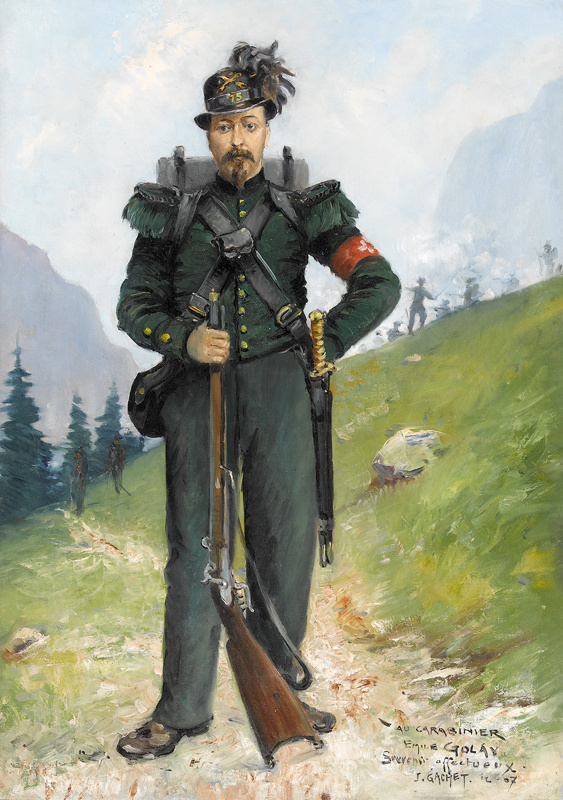
Cautious, I walk slow. The friend waits, cold, faceless. I unwrap a fabric, revealing the value of our exchange. Sweetgrass fills the air. Moved, life graces. Forlorn and ungraspable, we stretch out to reach the fleeting air. Police siren. The air becomes a noxious haze of suspicion. I fly. 

Le carabinier by Jules Gachet
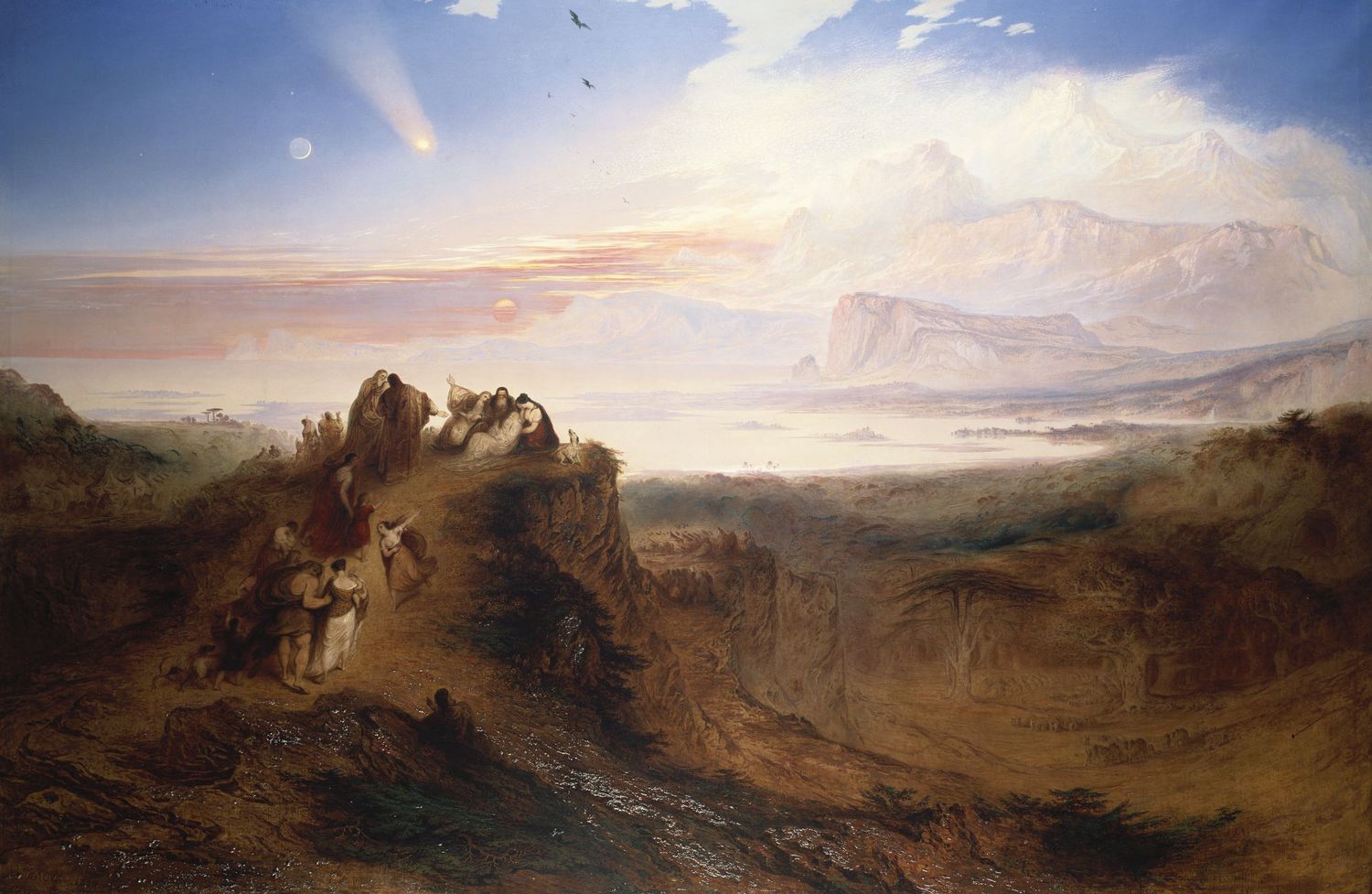
The sweetgrass confiscated. Our lives are in our hands. I look up. Abyss. Black. Open. Dead light fades. Escarpment of the human gargoyle decaying, and erased from the map of heaven. Sharp and hard, the light petrifies, crystallizes and vibrates of the endless spectrum. 

The Eve of the Deluge by John Martin
Galaxies enervate spines, nerves, veins and nodes of wonder; cosmic laughter at the sound of a split gong. Through, I, again, look up. Cobalt azure. Blinding, solar, pure and naked, sky. Cloud obscures. Rain, a memory. Summer passes in the afterglow noon. 
____________
First time in Vancouver, my love and I stayed with our dear friend Buckman Coe. I left early, leaving her to an extraordinary night with rich music and great friendship, and leaving, on my way back home, I played Buckman's first CD on my headphones. The first track, "Give Up The Fright", began "If you must go overseas / If that's where you feel that you ought to be." 

And tears streamed. I shook with the fear of love as I watched my one exit from the bus station and into the west coast cityscape. It was the first step on my way to Cairo, and further and further away from her. "Don't know if it was wishful thinking on her part / For now, this little rogue has got my heart," ends the song, a wishful lament to the ambiguity of human relationship, the lyrics struck so many chords with perfect accuracy. 

Years later, our dear friend's second CD, By The Mountain's Feet, opened with Not So Farfetched, a brilliant rhythmic melody to the course and rush of love - and again, the lyrics spoke with impeccable insight as we schemed our return west, to our Pacific lust of belonging - "This is how the story of you and I begins / And it's not so farfetched..." 

To the resounding continuity of love in our hearts. We grow to return. 

Multimedia Video on Jewish-Chinese Intercultural Music

Jewish and Chinese. The pot boils. Visiting the coast, we accompany a friend staying in the home of Lan Tung and Jonathan Bernard, whose special hospitality warms with musical instruments of a deep and resonant heritage. Their contemporary fusion music of world union reconciles the magic of our hearts with an unspoken quality of communal love - an uncanny similarity to our own strength of heart, soul and mind in the music of our coastal upbringing. 

Monday, 2 September 2013

The Art of Nonintervention: Rumi on Syria and Virtual Exhibit


"Last night I had such a wonderful dream. That today, I feel great and satisfied. You said, 'Go, for you are the king!' True and may I be merry and glad! I am drunk without cupbearer and wine! I am King Ghobad without throne and crown!" Rumi, Masnavi

Last night, I performed music for an Afghani community celebration of the legacy of Rumi. It was a clear night. The sun melted over the horizon an incandescent vermillion azure, and a mountain silhouette graced the starlit west. I accompanied  a dear friend, who plays the Persian santur, with 
wind and percussion instruments. The audience was cheerful at hearing our unique musical expression of global community, and our hosts delighted. 

One young woman at the event, born in Canada, proclaimed, "I am from Afghanistan." As the Afghani and Persian language commingled in a unity of mind and understanding, the political discussion turned to musical appreciation. Music is the one common language, they agreed, Persian and Afghani, who speak a common language, are not divided by the bounds of modern nationalism, war and custom, because they share culture, language and music.  

Yet, even in Canada, where a military imperialism curses the blood-stained earth of Afghanistan, the people of that country remain proud and honour the sacred unity of their cultural heritage beyond national boundaries, and into the language of unity, peace and wonder. So, as one proponent of Sufism, Rumi and Peace said in Canada to close the June 6, 2012 podcast on World Democracy Discussion speaking in reference to the Iran-Israel Nuclear Crisis: 
"Rumi was sitting was sitting with his students in his academy and one of his students ran to him and said, 'Rumi, two wise men are fighting, come and do something.' Rumi didn't react. The second student came and said, 'Rumi, two wise men are fighting, they are beating each other, come and do something.' The person soon asked, 'You don't care?' And Rumi answered that if they were wise, they wouldn't fight.'"

URGENT: Citizen Response to Syria
Letter to Alberta Members of Parliament

Dear Alberta Members of Parliament,

I am a citizen of Alberta for over five years. I arrived as a resident of Calgary directly from Cairo, Egypt, where I was a student at the American University of Cairo (2007-2008), and then University of Calgary (2008-2010).

Please recognize my plea to all Members of Parliament not to support military intervention in Syria.

In 2010, I returned to Cairo, Egypt and the Middle East through the Consortium for Peace Studies at the University of Calgary. The Consortium was formed in response to Canada's response to the Iraq War of 2003, which Canada did notparticipate in. What has changed in Canada during these ten years?

It is a well-known fact that the Canada Pension Plan Investment Board (CPPIB) invests in war manufacturing. In effect, the Canadian Federal Government is complicit in war crimes through the investment of such weapons manufacturing as cluster bombs and nuclear arms, in spite of such international agreements as the Global Landmines Treaty and the Nuclear Non-Proliferation Treaty. Due to the fact that our tax and revenue system is inextricably tied to the arms industry, every Canadian is complicit. Why are we furthering our complicity in the deaths of 100,000 and the forced exile of over 2 million Syrians?

Why is the Canadian government demonstrating support for the U.S., who used chemical weapons in Fallujah during the invasion of Iraq, and now purports to protect Syrians and the global community from the very same belligerence?

As Foreign Affairs Minister John Baird says, "we are of one mind" in promoting America's call for an international coalition to intervene in Syria. Prime Minister Stephen Harper warns of the risks involved in not intervening. As a citizen of America and a permanent resident of Canada, I am embarrassed to be from a part of the world that seeks to undermine international order for the sake of economic investment.

Please regard my concern and stand with the British Parliament in denouncing all support for the mounting American military intervention in Syria.

Respectfully,

Matt Hanson


References:

Syria

http://www.ctvnews.ca/canada/is-canada-going-to-war-in-syria-here-s-what-our-military-could-do-1.1431117
http://www.democracynow.org/2013/8/30/headlines#8301
http://www.mediacoop.ca/story/syria-intervention-or-diaspora/16492

CCPIB

http://www.huffingtonpost.ca/amy-macpherson/cpp-war-crimes_b_2487424.html
http://www.cbc.ca/news/business/taxseason/story/2012/12/21/f-rrsp-2013-cpp-portfolio.html
http://www.vivelecanada.ca/article/101709523-cpp-landmine-investments-are-we-breaking-the-global-ban-treaty

General Interest

http://www.mediacoop.ca/story/persian-jews-and-iran-israel-crisis/17264
http://www.ucalgary.ca/md/PARHAD/studentships/student-2010-mhanson.htm

This letter was also posted on The Media Co-op

TAKE ACTION AND CONTACT OFFICES OF YOUR LOCAL GOVERNMENT
 & MORE IMPORTANTLY,
CONTACT OFFICES OF YOUR LOCAL GOVERNMENT AND TAKE ACTION 

EndNote: 

Alberta is not only the economic engine of Canada, it provides the lifeblood of economic energy for much of the world. Globally, Alberta's oil industry is the third largest in the world, behind Saudi Arabia and Venezuela. The U.S. is the largest consumer of Alberta oil. When war is at our doorstep, it is economic investment in energy resources that prop up the debate in the minds of politicians who influence the direction of billions of dollars on a daily basis. Whether from the U.S. or Canada, or elsewhere around the world, we need to remind the Alberta government that their actions, whether to wage war on the Earth (industry) or its people (war), are wrong and obsolete, and must be diverted in providing the means to renewability in energy resources and sustainability in human resources.
____________
northern nights
pastel horizon
Persian-Afghan Rumi
rooted wings
watery spectrums
______________

Education is the lifeblood of our culture. Contemporary miseducation conjures cultural remnants still felt, yet which are now practically nonexistent. As the government slashes the limb of theatre and jazz from the roots of culture - our education - it is the artists, and more accurately, artists' collaborations, that resurrect obsolete forms of creativity. Our art reshapes and polishes the dusty, antique lenses through which other forms of learning, knowledge and truth are remembered and reinvigorated.

This virtual exhibit is interactive, kinetic, visual, aural, and potentially recycles the space and redefines it through an exploration into its space as connected with viewers/participants. The conduit of such activity is the exhibit.

There are three essential aspects to the virtual exhibit before you.

Firstly, the original digital artwork, Mountain Reflection on Cyclical Wordplay is displayed. Below, a listening station plays the album, Compilation Vi An under Mountain Reflection on Cyclical Wordplay.


After listening in and seeing, become the seer of music by using a calligraphy brush and red ink (or creative equivalent) on blank space. Find blank space around you, the unused, neglected, under-appreciated, unassuming areas straddling the bars of existence and nonexistence. Such a space could bet the utilization of your present surroundings, depending on the configurations. However, at the very least, do not draw a blank.  As a participant/viewer, engage with the calligraphy brush and red ink, the acoustic harmonies and naturalistic/vintage aesthetic of the artwork meld to produce an inner ambiance of memory, culture, history, tradition and nature.

Secondly, the original digital artwork, Present Sound, Silent Space is displayed. Through another listening station and a black pen (or creative equivalent) are to be employed. Below, the listening station plays the album, Endangered under Present Sound, Silent Space. As a participant/viewer, engage with the black pen (or creative equivalent).


The melodious electronica beats merge with the technological fragmentation represented in the artwork, instilling a cold, metallic atmosphere of aspiration, impermanence, destruction, chaos defined by 90 degree angles. Virtual attendants to the exhibit are welcome to draw and write on the empty space while listening through the station(s) and using the appropriate material(s) made available.

The visual artworks within the recorded music re-contextualized in this virtual space represent the creativity of local, independent artists as reintroduced a lost branch of independent self-education. The implications draw from a wealth of meaning in relation to institutionalizing (and budget-cutting) culture and education as the final straw in forgetting our even more archaized, unconventional cultural and educational backgrounds.

Monday, 10 June 2013

The Value of People: Voices of Struggle and Creation in Western Canada

Crystal Lameman - Conference 2013 from Public Interest Alberta on Vimeo.

"Enbridge is so poor all they have is money." Wet'suwet'en hereditary Chief Na'Moks of the Tsayu (Beaver) Clan

"Living in an impacted community, in the frontlines of the Tar Sands, we get so caught up in our own issues that we forget about human beings, Indigenous people on a global level." Crystal Lameman of Beaver Lake Cree Nation on Treaty 6

The crowd cheered to the tune of ejecting the filthy rich from Calgary proper, the"most unequal city in the country" according to the University of Alberta’s Parkland Institute. Well over a hundred people crowded into a sold out hall at Parkdale United Church on a favorably tepid spring night. The beginning of the 11th Annual Public Interest Alberta Conference, “Fighting For Our Future: People Power versus Corporate Control” opened with investigative journalist Linda McQuaig, author of The Trouble with Billionaires. In a bygone era, the audience would have grabbed pitchforks on their way to Mount Royal Village.

McQuaig began by invoking the economic history of Canada. 1940-1980, also known as The Golden Age of Capitalism, when economic growth was widely shared, crystallized in the “social contract” to curb classist polarization through high taxes for social programs. “That’s the period of greatest economic growth in North America that we’ve ever had before or since,” said McQuaig. “Average income was doubling every twenty years.” The result was a society looking forward to increased leisure time.

Before tax cuts for the rich became an institutionalized affair, public wealth was palpable. “There was no trickle down,” McQuaig said referring to the propaganda of the 1% in favor of neoconservative economics. “In fact, there was a gushing upwards. All the income gains since 1980 have gone to the top ten percent, and particularly, of course, the top 1% and the top .01%.” Factoring in the inflation, the median income in Canada is lower than it was thirty years ago.

Where did leisure time go? The Conservative government of Canada has set the retirement age back two years. “That economic dividend went entirely to the top 10% and the top 1%, that’s where you’re leisure time has gone,” McQuaig pointed out assuredly. “Economic equality, the progress has been stopped dead in its tracks.” One solution is a wealth tax, especially in Alberta where the Heritage Fund is $16 billion in comparison to Norway’s at $700 billion. Federally, Canada saves exactly zero dollars for a rainy day.

Research on a “millionaires tax” by The Globe and Mail illustrated how a one percent wealth tax imposed in Canada by 2020 would cover all federal and provincial deficits. The Deloitte Centre for Financial Services projected the number of millionaires in Canada to rise to 2.5 million by 2020. Yet, in contrast to Linda McQuaig’s warning to Albertans that the rich will leave if a wealth tax is implemented effectively, what she did not warn is a far more sobering possibility. “But it’s easier to defer taxable income than to move,” Neil Reynolds wrote on October of 2011 in The Globe and Mail. “When you levy disproportionate taxes on the rich, you serve eviction notices on the poor.”

Referring to the income of the American sub-prime mortgage beneficiary John Paulson, “In what moral universe is that hedge fund manager worth 82,000 nurses, in what moral universe is he worth even one nurse?” McQuaig exclaimed to a bright wave of laughter and applause. “Today’s corporate elite and wealthy elite, has not only the power to wreak havoc on our lives, but to actually destroy the planet, because of the modern technology and the human capacity now for destruction.”

READ MORE (4580 words) @  Public Interest AlbertaThe Media Co-op, IndyMedia & Readers Supported News

LEARN MORE @ Tar Sands Healing Walk
__________
“What’s that smell?” I could see his thoughts writhe like a cold snake. My bedded flesh, wrapped in fallen hair besmirching the unwashed blanket coiled around my nude body. Eyes went crooked. Noses were covered. I stepped barefoot over the austere, carpeted floor, civilly, in line. The teller remained a smile, famously in keeping with the workaday service kitsch of probable positive personality. My own face with mirrored emptiness. “Next.” I bloomed overfull, with gold coins. Prosperity is a mark of weight and valor.

Earthbound by Evelyn De Morgan
“Be stilled.” The Earth shrank under dim folds of burly disgust. The masculine prowess burrowed in the vainglorious poverty of inhuman disguise. Artifice and loss, nature spun with fire and bones fleshed with greed. Concrete paralysis, the wading gush of darkness floods this garden of hate. Alone, I scan the tramcar, brushing past the ire of misbegotten wards, floundering hands warmed in the blue flame of intimate ruin. Silence grounds, but for the rumbling dirge of the railway, clattering like a mad skeleton, of deadly fear. A ghastly presence, my reflection, I turn.

 Casella Rail Stuttgarter Platz by Otto Schmidt
Of large girth, unknown terror unseen, unheard, the unassuming weight of an unreal body: HER. A heavy-set African woman of eyes, sitting, a rock entrenched in my spectral pallor. Looking through staring eyes, the mutual end of oceanic reflection. Hitting through to rock bottom, as the ocean-floor seethes with the volcanic murder of all that rests atop the ground of life, I saw through to a fear; unknowing. There is a fear beyond the nerve, beyond the knock of bones, and the bristle of hair. I have seen her, and vanished before a breath.
__________

The album, "Evocations: Exotic Settlers" is an evocative musing on the sound language nestled deep within the poetic substance of orated selections from a collection of works under the same title. In continuity with the theme of "exotic settlers", the album is an experimental narrative-sound art exploration into the imagination of a journey of settlement, both archaic and modern.

Here, voice soundings are mixed with one instrument at a time, to convey a sense of the traveler, whose light pack is ideal for the road ahead, and whose voice traverses the simple grandeur of sonic revelry from a single instrumental accompaniment.

Themes of travel are juxtaposed with settlement, both in the settlement of tradition and ecology, and the inner and outer journey to that destination. To settle on one instrument at a time is a metaphor for the inward/outward experience of settlement for the migrant, who eventually becomes an "exotic settler".


Exotic Settlers charts the journey of experiencing the naturally transformative process of ending a period of transitional residence, and beginning to live in one place exclusively. Questions of home, travel and what is foreign are approached creatively through a lens adjusted through self-reflection on these themes, which led to my own "settlement" within. As I have become more permanently resident in a specific place, I have realized that earthly geography flows with the transient impermanence of nature itself, and that the only true settlement is in one's heart.

Monday, 20 May 2013

Dreamers Reconcile with Harsh Truths: S. Sudan and the Music of Memory


One thing that keeps me pushing these painful stories; the dreams I have. Sometimes, like, the voices of the dead that I have seen would tell me don't give up, keep on going, because sometimes I feel like stopping and not doing it, because I didn't know what I was putting myself into. (Emmanuel Jal, 2009)

What are your hopes and dreams?

I want to fly an airplane.

What else?

I want to be able to study in the daytime. And in the morning. And I want a day that I can just live…so I can build my house…where there aren't any problems that could destroy it.

Emmanuel Jal, age 9 (War Child)

On April 8, the Peace and Reconciliation Conference in Juba, the capital of South Sudan, began an unprecedented step forward in the nation’s history. On Monday April 15, South Sudan President Salva Kiir Mayardit suspended the conference indefinitely. Besides the $885 million contributed by the Canadian federal government to Sudan for humanitarian assistance between 2006-2012, many of the 4 million plus South Sudanese displaced have resettled in Canada to remain active in community rehabilitation. Activist groups, both based in South Sudanese communities as well as larger Canadian social organizations continue to sustain the meaning of reconciliation not only as an example for South Sudan, but for the globe.

            The most pressing issue with regard to reconciliation in South Sudan is creating an inclusive society where larger social participation is grassroots-oriented. In a country with one of the lowest literacy rates in the world, with over sixty unique spoken languages, democracy is a precarious notion for most. In an open letter to South Sudanese Vice-President, Dr. Riek Machar, David Mabior Atem of New Sudan Vision wrote:

Healing those long inflicted wounds against one another cannot be dealt with in 3-4 days as well as top down approach instead of bottom up approach…Another added advantage of beginning at grassroots level is the flexibility of language (dialects), which can result into high interactive and productive engagement.

            Dr. Riek Machar launched the official opening of the conference, which trains 200 peace and reconciliation mobilizers. “The newest nation on earth has embarked on a journey of healing for the national reconciliation,” the Sudan Tribune noted. Dr. Machar had also been married to British aid worker Emma McCune. International recording artist Emmanuel Jal, winner of the 2013 Calgary Peace Prize, had been rescued from Waat, South Sudan by Emma McCune as a Lost Boy. Jal took refuge in Kenya, eventually leading him to the UK, and Canada. Emmanuel Jal’s acceptance of the Calgary Peace Prize on behalf of all South Sudanese marks an especially significant moment in the common reconciliation efforts of Canada and South Sudan.

            “He uses himself as an example in his storytelling of how hard and difficult and long it's taken for him to begin the process of healing and of reconciliation with his former enemies, and that's the story that he told,” Consortium for Peace Studies director George Melnyk told The Media Co-op. “He's also very careful to not critique the South Sudanese who made him a child soldier.” The Consortium awards the Calgary Peace Prize to global visionaries working towards peace, beginning with Hiroshima Mayor Tadatoshi Akiba in 2006. The Consortium is currently the only post-secondary Peace Studies initiative in Calgary.

            James Nguen, founder of Biluany Literacy and Water project, responded with deep concern in an Op-Ed piece in South Sudan News Agency, decrying the indefinite suspension of the Peace and Reconciliation Conference in Juba. “This unfortunate development shocked everyone in South Sudan and around the world. There were no further details why the project was suspended,” Nguen wrote to The Media Co-op via email. “If people reconciled, then there will be no petty tribal raids which the past 8 years cost South Sudan government and the international community millions of dollars.”

            Although the Second Sudanese Civil War, which ultimately led to an independent South Sudan, started in 1984, the world did not respond until 2004. The political situation in Sudan, and now in South Sudan as well, is very complex and is steeped in both European colonial history as well as Egyptian foreign policy. The legalities of genocide with regard to reconciliation have remained unparalleled in controversy ever since the United Nations adopted the Genocide Convention in 1948. “There was a genocide in Darfur, and there was genocide in South Sudan from the beginning,” James Nguen said to The Media Co-op. “In order to secure the CPA [Comprehensive Peace Agreement], they could not force Al-Bashir to step down without confidence that his successor would respect the CPA. Only one of the three agreements of the CPA was met, which included peace agreements with Abyei, secondly, and Blue Nile and Nuba Mountains as a third agreement.”

            The outstanding agreement to respect the right to self-determination with the people in the Nuba Mountains has especially intensified on the issue of genocide. Global activism in solidarity with the Nuba people has followed in the wake of the independence of South Sudan in 2011, including the End the Nuba Genocide Coalition. The only area not consulted in drawing the new national border, Abyei, is directly impacted and holds outstanding land disputes. Abyei territory is a priority for the Juba Conference.

            South Sudan’s independence was “the most significant redrawing of the map of Africa since the colonization,” Angel Batiste, Area Specialist with the Africa and Middle Eastern Division of the Library of Congress in Washington D.C., noted, before introducing the lecture, Cultural Heritage in South Sudan in November 2012. 

            During the Calgary Peace Prize events this March, Emmanuel Jal raised eyebrows concerning the latest news from South Kordofan, where another genocide in Sudan seems to be taking shape with unprecedented momentum. “UN people down in Sudan are saying there’s a possibility that in South Kordofan that the genocide there could be worse than in Darfur,” said Jal to an eager crowd at the University of Calgary on March 1, 2013.

            The diaspora is truly integral to peace activism for South Sudanese. “They actually support their family members more than even the government does,” Jal told The Media Co-op, referring to the diaspora of South Sudan and their role in the reconciliation efforts ahead. “If you’re educated, if you have a degree in whatever form, don’t go home to look like you’re going to be employed by the government. You go there as an employer. Go there and use the skills we have there and establish something, because the country is still new. Whatever you touch will prosper.”

            Since late last year over sixty genocide scholars and anti-genocide activists initiated a letter writing campaign in response to the genocide atrocities in the Blue Nile and Nuba Mountains. These letters have fallen on what South Sudan’s leading independent news source, South Sudan News Agency has called, “absolute silence”. The Atrocities Prevention Board (APB), founded by U.S. President Obama specifically in response to the lack of U.S. governmental initiative towards preventing crimes against humanity and genocide, became the most important, and also most unresponsive, target audience. This April, South Sudan News Agency published the latest letter, sent to U.S. Ambassador to the United Nations Susan Rice. An excerpt from the letter reads:

We never expected, though, to have our letter (and now letters) go unanswered… when we, scholars of genocide studies and human rights activists, fail to receive a reply to a letter that we first wrote back in December 2012 and have now sent five times to four different individuals affiliated with the APB, it, indeed, feels as if the APB and its focus/work is little more than “a sideline in our foreign policy.”

             Similarly, in recent news, the only head of state in the Americas to be tried for genocide crimes, U.S.-backed Guatemalan dictator Efraín Ríos Montt, saw amnesty on April 18 after the current Guatemalan president intervened to have the case annulled. “It was the first time that any nation had been able to use its domestic criminal courts to try a former head of state for genocide,” said investigative journalist Allan Nairn on Democracy Now!

            Despite ineffective government intervention, independent non-profit and charity organizations, spearheaded by leaders from South Sudan, continue to work towards a sustainable society through reconciliation efforts. Biluany Literacy and Water Project, a development initiative led by James Nguen based in Calgary, has been active for over three years in building wells and providing educational resources in South Sudan. “There is no sustainable infrastructure in South Sudan, and without a lot of assistance from the international community, trust cannot be rebuilt,” Nguen said to The Media Co-op. “The greatest struggle is to represent ourselves, to know who we are as one community. The war eroded our cultural values, our history, our society.” Nguen recently partnered with Gua Africa, the charity of Emmanuel Jal, to fund well development and to organize a conference in Canada to mirror the Peace and Reconciliation Conference in Juba.

            Since winning national independence, other organizations in the Calgary area, home to the predominant South Sudanese community in Canada, are working towards reconciliation. South Sudan Peace Building International Foundation Inc. (SSPBIF) is one among them. Secretary of the SSPBIF Kuir ë Garang is also a prolific multi-genre author of six books. “People in South Sudan tend to regard literature as ornamental, they don't see how it can help relate people, to help people find relations between one another, so they can get together and have mutual understanding through education,” Garang told The Media Co-op. “Through literature, we can better represent ourselves. Now up to 70% [of people in South Sudan] are dissatisfied with their government.” Garang is currently working with a publishing house and bookstore in Juba to open a forum on multiculturalism and diversity for professional writers from Canada and South Sudan.

            Rural South Sudan is reputedly the most marginalized and underrepresented, effectively causing the need for grassroots inclusivity in Juba’s Peace and Reconciliation Conference and beyond. Resource conflicts both at national (oil exploitation) and grassroots (cattle raiding) levels have been at the root of social disorder in South Sudan. Augustino Lucano, a South Sudanese migrant from the Equatoria region living in Calgary, shares an unrivalled success story in bringing together divided rural ethnic groups and organizing incipient meetings with government representatives.

            Lucano received personal permission from South Sudan MP Joseph Lokodo Kolombos to open a peace center in his home region of Equatoria after presenting to the MP a research paper inspired by an Initiatives of Change workshop. “The problem is that people in rural South Sudan are still very divided, they do not see a way to live together yet with the whole nation yet,” Lucano said to The Media Co-op. Lucano, a member of the Didinga ethnic group, lost two brothers in conflicts with the neighboring Toposa people. “The Maaji peace centre is located in the middle of Didinga and Toposa land, in a flatland valley, where both tribes can meet peacefully,” Lucano conveyed to The Media Co-op. “So far there has been no raiding at the peace centre in Maaji. First, it was necessary to establish the peace centre where resources could be shared, and then we can discuss reconciliation.”

             In February 2013, the South Sudanese Minister of Wildlife’s visit to the Maaji Peace Centre drew tears from elders and children alike who had never before seen a car, no less a government car. “It showed how marginalized these people had been in the national developments, and also that the government was starting to establish a relationship with rural people, including them in the dialogue of the upcoming Peace and Reconciliation Conference in Juba,” Lucano told The Media Co-op.

             2013 is quickly becoming a year of unprecedented global reconciliation movements. The Peace and Reconciliation Conference in Juba is especially significant to Canada with its direct relationship to the activism of the Canadian diaspora of South Sudan. With the first head of state in the Americas having faced genocide charges, a more intimate link can be made with Indigenous peoples’ history in Canada. Will Canada renew its role as a global human rights leader in the wake of mounting genocide awareness around the world? Ongoing debates in Canada, spurred by Idle No More, emphasize reconciliation with First Nations as an inclusive reconciliation with humanity. 

This article previously appeared for The Media Co-op on April 29, 2013
___________
the road to rome is paved in bones by RK
madness by RK
the human rabbit hole by RK
old west art by RK
papercut & stoned by RK
____________
conjuring a sense of the once roaming herds of mammals that lit upon the open horizons of our once naked landscapes - the frame drum evokes a sacred connection to our mammalian evolution through a heartened soul brethren with large mammals, and our precarious evolutionary stability as one of the most vulnerable types of living creatures on planet earth - in the piece, i speak of the charge of the electric pole of patriotic industry over the breadth of our continent as the sacrifice of ourselves, as male-female witch, burned on the flagpole of national identity, a sacrifice brought about by the all-devastating silence of voice, speaking of a way of life not bound to the dominant settler society, yet existing now only in negation to the sedentary ecology of consumerism and vacation, with regard to the lost history and memory of our true selves in communion with the deeper movement of life as we once knew it


Placed Anonymity, like the chapbook, "A Sick Society Amuck" is inspired by the words of Jiddhu Krishnamurti, iconoclastic spiritual philosopher, who said, "truth is a pathless land". Truth lies in the anonymity of place as is, without meaning, as a river is in essence meaningless until commemorated by a name and story, whether of scientific or folkloric mythologies.

in a pathless land, how do we come to know the land, or know what is true, HERE? that exploration is the foundation for this four poem chapbook, eventually culminating in collectivist thinking, to aspire towards a basis of unity evading the muddled institutionalization of creative freedom


Monday, 13 May 2013

Sky IS the Limit: Sustainable Architects Transform Our Militarized World

"If all of the soldiers in all of the armies in all of the world were to put down their weapons and pick up tools and start making sustainable housing for all the people in the world, life would just begin on this planet." Michael Reynolds, Garbage Warrior, on Democracy Now!

Jorg Ostrowski and his wife Helen are two trained architects who have trail blazed sustainable housing in Canada and around the world. On April 20, Jorg opened his home on Scurfield Drive in northwest Calgary to the public, in celebration of Earth Day, for RecoSolutions, offering free tours on sustainability. “All of my projects since 1972 have been sustainable,” Jorg wrote via email. “We have built with rammed earth, straw bale, stack wall, double log, EcoStuds, prefab, Blackie Block and stick built. I have given ‘hands on’ workshops on rammed earth and straw bale in various provinces, including a 6 day workshop for the David Suzuki Foundation, in BC.” 

Arriving at the doorstep beneath the iconic sunray-painted awning above the front door, Jorg announced, “Transportation is part of the equation,” pointing to two automobiles in the driveway. Behind the Smart Car is a VW Golf that is converted to run on waste vegetable oil as part of a continuing R&D program. Recent trips to Vancouver and back, and cross-country on other excursions have cost zero dollars. People often donate vegetable oil. Japanese restaurants are reputed for the highest-grade waste vegetable oil. "The goal is to download electric and thermal energy into batteries, grid and slab," Jorg wrote. 

Along the outside porch, the most noted sustainability measures are various blue water bins collecting rainwater that goes into a cistern able to store enough water for many months, based on low consumption and average rainfall. An apparatus below the front porch is shaped like an oversized foghorn with a square container fitted inside with a cooking pot. The solar cooker concentrates enough sunlight that even in -25 Celsius on a clear day, the inside temperature rises to 100 degrees centigrade.  

Inside the home, a large office space to the left leads down a short hallway to a cozy living room reception. About ten people attended the ecoTour at three o’clock in the snowy afternoon under unlit LED lights, also fitted throughout the home. With over 140,000 guests so far in its 20-year history, the Alberta home/office is unique in Canada for not using city water, sewer, gas or furnace. The ecoHouse is heated by passive/active solar, internal heat gain and left over waste as backup. 

On any given month, schoolchildren will graduate from the ecoTour given by Jorg Ostrowski himself, chock-full of architectural knowledge (the legacy of a career spanning four decades beginning with an M.I.T. graduate education in architecture) and an astounding display of hands-on examples for small-scale, local sustainability. Beginning in the living room, natural light pours in from all angles, especially south-facing, including an “experimental window” featuring unrivalled five-pane krypton-sealed glass. On the coffee table, a seemingly unimpressive array of likely architectural samples is strewn about. As conversation ensues, each item reveals itself as highly innovative environmentally friendly material or technology, including organic wool carpet, flaxseed Marmoleum flooring, recycled newsprint insulation, and solvent-free adhesive, motorized airtight damper, and the latest LED lights, among many others. 

The moral of the story: making the home airtight is the key to conserving energy. Utilizing natural heat sources like the position of the sun, and even body temperature are integral and often underwritten in the dominant modes of contemporary architecture. A centerpiece of the home is a traditional fireplace and oven common to many European and Asian traditions, known as a Russian Stove, Korean Ondol or Chinese Kang heating systems among many other names. The fireplace is used for central backup heating and cooking, including for heating water. After priming the central heating mechanism before a recent month-long trip during the winter month of March, the empty house only lost about eight degrees centigrade without additional oversight. 

From the living room through a concave hallway into the kitchen, numerous plants line windows and vegetation of all kinds hangs from the ceiling. A beautifully set deadfall tree acts as a post for second floor beams. Allowing live trees is important to continue to absorb CO2. Especially abundant are aloe plants for their exceptional capacity to purify the air and provide a natural source for glyconutrients and medicine. The energy mainstay of the kitchen is the refrigerator. Used for only about six months in the year, an indubitably pragmatic cold closet replaces the need for a refrigerator in the cold climate, substantially reducing kilowatt-hours per year and extending the life cycle of the very energy efficient fridge/freezer right beside it. 

Next, Jorg leads the ecoTour into a personal office space, where small portholes, reminiscent of a ship’s cabin, line the wall. Behind the glass at least six examples of alternative insulation are exhibited, including sheep’s wool, an expensive though probable example. Around the house, vents are fitted to facilitate heat and air circulation, and air-to-air heat exchangers minimize heat loss.

The middle of the home features the dry compost toilets on both levels, with the upstairs fully functional for guests. The system is “not perfect” said Ostrowski, although an exemplary means to recycle human waste, and in addressing a crucial need for water management in mainstream housing infrastructure. All biological waste goes into an engineered multi-purpose year-round composting chamber, combining 3 critical household operations.

  1. Major blue box recycling centre and deposit box of the house to receive all biodegradable waste, including all human and kitchen waste                                                                                                                                    
  2. Major water conservation equipment to save 200,000 litres of drinking water per year (family of four)                                                                                                      
  3. Fertilizer plant to produce healthy earth, and compost tea, a great liquid fertilizer

"In summary, although not perfect, it is the stomach of the house, quite efficient and critical to the sustainable future of the planet," wrote Jorg.       

Upstairs, bedrooms are designed for accessibility. Two smaller rooms on one side have a connecting doorway, to facilitate spatial linkages for small children and potential opportunities for bed & breakfast hospitality or simply an office-bedroom combination. The master bedroom is flooded with natural light from a panorama of south-facing windows tastefully mirrored, with ceiling windows, two hallways, and a catwalk built of metal grating above the living room, offering a distinctly interconnected ambiance between the master bedroom with the rest of the home. Ventilation above the center of the bed draws from the central, water-based heating system. An antique tub is installed in the adjacent ensuite, with consideration for recycling the work and material required to reuse such conventionally obsolete fixtures. With adequate attention, there is natural light enough to grow tomatoes aplenty on the windowsills. A small addition alcove to the master bedroom, located above the greenhouse, provides much needed sanctuary. 

Outdoors, solar panels are fitted on ground level around the ecoHouse with mind to wind, dust and snow that often collects on often poorly conceived roof-installations. Ground placement allows optimal accessibility in maintenance, and effectively the highest degree of energy output. 

All in all, RecoSolutions was a lesson in successful, off-the-grid sustainable housing within the limits of a major city in North America. With a single prime mover, such as the 70 HP power mechanism used in the VW Golf to provide heat and electricity for a long-distance car ride, over one hundred homes in the likelihood of Jorg Ostrowski’s ecoHouse can be sustained. These homes not only sustain renewable energy sources, but also reduce the risks of outgassing from chemicals in standard building materials, contaminants in public water and damage from power outages. Furthermore, the ecoHouse can facilitate the production of energy, exporting power back into the grid. 

The lack of sustainable housing development in Canada, especially when so willfully and ably illustrated as in the RecoSolutions ecoTour in Calgary, only adds to the shameful prerogatives of national priority. Helen Ostrowski, who co-organizes events and activities at the ecoHouse, also active with international development work in the Philippines, China and most recently Iran, among others, commented that when they were starting out in the 1970s, there was no opportunity for young people to be involved with sustainable housing in university programs, or in applying environmentally friendly architectural products as today. When they had built their ecoHouse nearly twenty years ago, the city of Calgary was uniquely open to their alternative housing development with respect to their work as two highly trained graduate architects, active and recognized in the field.    

At the end of the ecoTour, a very intelligent participant was flabbergasted that mainstream society continues to neglect the most important of these very simple and doable measures. Western lifestyle identifies human settlement first and foremost through consumer values. Modern human life is defined by consumerism, and is inextricably linked to the catastrophic waste-chains of urban and suburban housing. In the normative social and political agenda of North America, human existence depends on consumerism. True productivity and actual development does not merely contribute manufactured material to the growing waste stream but reciprocates human life with natural energy cycles.  

In the growing petro-state policies of the federal government of Canada, energy consumption far outweighs energy production. Without public awareness campaigns such as the RecoSolutions ecoTour, ignorance perpetuates the consumer mode of being as the only way of being. Yet, in this the same world as that of increasing urban sprawl, one energy/grid independent, sustainable ecoHouse illustrates how human beings also produce energy and give back to what Jorg named as the three most important points of sustainable living; clean water, healthy earth, and reusable energy. 

On June 1 and June 8, the Calgary ecoHome will be open for public tours.
Please see the Calgary ecoHome website, ASH - Autonomous & Sustainable Housing Inc. AND/OR Contact Jorg Ostrowski at ecojdo@gmail.com for more details. 

This article is also published on The Media Co-opIndyMedia
____________
Authentic Greenwash by RK
The Point of Return by RK
Sky Paint by RK
Empyreal Intersection by RK
Gloom & Hollow by RK
Urban Landing by RK
_____________
"I drank in the stupor", founded on the original Latin meaning of the word stupor, as, 'to be amazed or stunned,' the piece draws from an experience during the Day of Lady Guadalupe in Mexico, where I observed my future wife from afar as she street performed music in a city square. The overshadowing presence of Lady Guadalupe breathed the immense breath of the goddess of compassion Kuan Yin, through her Chinese zither music, and both protectresses mirrored their gaze through mine, visually and aurally with a searching heart bursting and blooming with the stupefying gift love. As French writer and philosopher Paul Valery said, "Love is being stupid together."  

Listen in to a sound art vocalization-exclamation of "I drank in the stupor" on my newest album, "Evocations: Exotic Settlers" on www.menachem.bandcamp.com, featuring an epic wave of shakuhachi improvisations. 


In two parts, A Sick Society Amuck features twelve pieces, and three original art interpretations on the theme and collection "Exotic Settlers". Four of these pieces were published in the 29th issue of Steel Bananas Quarterly "how in the year of the rabbit, the pure still need things," "I drank in the stupor," "interpretive direction," and "where is the mind in life?" 

The phrase, "sick in a sick society" is based on the spiritual wisdom of Jiddhu Krishnamurti, who said "It is no measure of health to be well adjusted to a profoundly sick society." So follows various observations and expressions supporting and steeped in this wisdom of seeing. Many of the pieces are satires equally on personal and collective health related to addiction and nationalism, where both divide and dismantle the health of human consciousness, which requires holism. Complementary themes of travel and history juxtapose subjection with abjection.