Primarily a writing exercise, this dream journal-inspired blog is a quiet introspective sojourn into the process that we traverse in going from private dream to public art. I see our dreaming as an internalized mythmaking. As I philosophize and expressively exhibit dreams, both private and public, I encourage and delight in creative language as a way to practice experiential metaphors through a “public dreaming." Writing Theory: Creative Dream Fiction
Showing posts with label people. Show all posts

Monday, 10 June 2013

The Value of People: Voices of Struggle and Creation in Western Canada

Crystal Lameman - Conference 2013 from Public Interest Alberta on Vimeo.

"Enbridge is so poor all they have is money." Wet'suwet'en hereditary Chief Na'Moks of the Tsayu (Beaver) Clan

"Living in an impacted community, in the frontlines of the Tar Sands, we get so caught up in our own issues that we forget about human beings, Indigenous people on a global level." Crystal Lameman of Beaver Lake Cree Nation on Treaty 6

The crowd cheered to the tune of ejecting the filthy rich from Calgary proper, the"most unequal city in the country" according to the University of Alberta’s Parkland Institute. Well over a hundred people crowded into a sold out hall at Parkdale United Church on a favorably tepid spring night. The beginning of the 11th Annual Public Interest Alberta Conference, “Fighting For Our Future: People Power versus Corporate Control” opened with investigative journalist Linda McQuaig, author of The Trouble with Billionaires. In a bygone era, the audience would have grabbed pitchforks on their way to Mount Royal Village.

McQuaig began by invoking the economic history of Canada. 1940-1980, also known as The Golden Age of Capitalism, when economic growth was widely shared, crystallized in the “social contract” to curb classist polarization through high taxes for social programs. “That’s the period of greatest economic growth in North America that we’ve ever had before or since,” said McQuaig. “Average income was doubling every twenty years.” The result was a society looking forward to increased leisure time.

Before tax cuts for the rich became an institutionalized affair, public wealth was palpable. “There was no trickle down,” McQuaig said referring to the propaganda of the 1% in favor of neoconservative economics. “In fact, there was a gushing upwards. All the income gains since 1980 have gone to the top ten percent, and particularly, of course, the top 1% and the top .01%.” Factoring in the inflation, the median income in Canada is lower than it was thirty years ago.

Where did leisure time go? The Conservative government of Canada has set the retirement age back two years. “That economic dividend went entirely to the top 10% and the top 1%, that’s where you’re leisure time has gone,” McQuaig pointed out assuredly. “Economic equality, the progress has been stopped dead in its tracks.” One solution is a wealth tax, especially in Alberta where the Heritage Fund is $16 billion in comparison to Norway’s at $700 billion. Federally, Canada saves exactly zero dollars for a rainy day.

Research on a “millionaires tax” by The Globe and Mail illustrated how a one percent wealth tax imposed in Canada by 2020 would cover all federal and provincial deficits. The Deloitte Centre for Financial Services projected the number of millionaires in Canada to rise to 2.5 million by 2020. Yet, in contrast to Linda McQuaig’s warning to Albertans that the rich will leave if a wealth tax is implemented effectively, what she did not warn is a far more sobering possibility. “But it’s easier to defer taxable income than to move,” Neil Reynolds wrote on October of 2011 in The Globe and Mail. “When you levy disproportionate taxes on the rich, you serve eviction notices on the poor.”

Referring to the income of the American sub-prime mortgage beneficiary John Paulson, “In what moral universe is that hedge fund manager worth 82,000 nurses, in what moral universe is he worth even one nurse?” McQuaig exclaimed to a bright wave of laughter and applause. “Today’s corporate elite and wealthy elite, has not only the power to wreak havoc on our lives, but to actually destroy the planet, because of the modern technology and the human capacity now for destruction.”

READ MORE (4580 words) @  Public Interest AlbertaThe Media Co-op, IndyMedia & Readers Supported News

LEARN MORE @ Tar Sands Healing Walk
__________
“What’s that smell?” I could see his thoughts writhe like a cold snake. My bedded flesh, wrapped in fallen hair besmirching the unwashed blanket coiled around my nude body. Eyes went crooked. Noses were covered. I stepped barefoot over the austere, carpeted floor, civilly, in line. The teller remained a smile, famously in keeping with the workaday service kitsch of probable positive personality. My own face with mirrored emptiness. “Next.” I bloomed overfull, with gold coins. Prosperity is a mark of weight and valor.

Earthbound by Evelyn De Morgan
“Be stilled.” The Earth shrank under dim folds of burly disgust. The masculine prowess burrowed in the vainglorious poverty of inhuman disguise. Artifice and loss, nature spun with fire and bones fleshed with greed. Concrete paralysis, the wading gush of darkness floods this garden of hate. Alone, I scan the tramcar, brushing past the ire of misbegotten wards, floundering hands warmed in the blue flame of intimate ruin. Silence grounds, but for the rumbling dirge of the railway, clattering like a mad skeleton, of deadly fear. A ghastly presence, my reflection, I turn.

 Casella Rail Stuttgarter Platz by Otto Schmidt
Of large girth, unknown terror unseen, unheard, the unassuming weight of an unreal body: HER. A heavy-set African woman of eyes, sitting, a rock entrenched in my spectral pallor. Looking through staring eyes, the mutual end of oceanic reflection. Hitting through to rock bottom, as the ocean-floor seethes with the volcanic murder of all that rests atop the ground of life, I saw through to a fear; unknowing. There is a fear beyond the nerve, beyond the knock of bones, and the bristle of hair. I have seen her, and vanished before a breath.
__________

The album, "Evocations: Exotic Settlers" is an evocative musing on the sound language nestled deep within the poetic substance of orated selections from a collection of works under the same title. In continuity with the theme of "exotic settlers", the album is an experimental narrative-sound art exploration into the imagination of a journey of settlement, both archaic and modern.

Here, voice soundings are mixed with one instrument at a time, to convey a sense of the traveler, whose light pack is ideal for the road ahead, and whose voice traverses the simple grandeur of sonic revelry from a single instrumental accompaniment.

Themes of travel are juxtaposed with settlement, both in the settlement of tradition and ecology, and the inner and outer journey to that destination. To settle on one instrument at a time is a metaphor for the inward/outward experience of settlement for the migrant, who eventually becomes an "exotic settler".


Exotic Settlers charts the journey of experiencing the naturally transformative process of ending a period of transitional residence, and beginning to live in one place exclusively. Questions of home, travel and what is foreign are approached creatively through a lens adjusted through self-reflection on these themes, which led to my own "settlement" within. As I have become more permanently resident in a specific place, I have realized that earthly geography flows with the transient impermanence of nature itself, and that the only true settlement is in one's heart.

Tuesday, 25 December 2012

Season's Greetings from the Wilderness of the Imagination

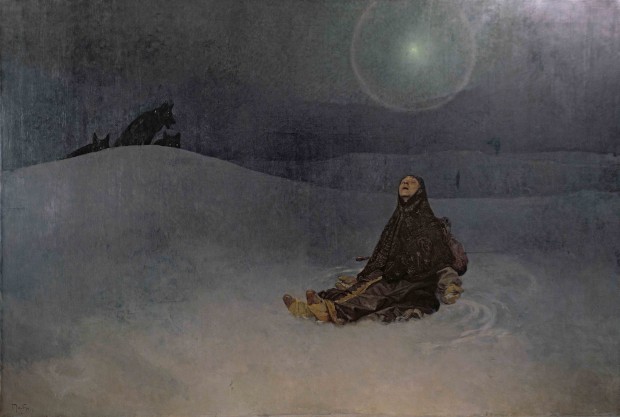
Woman in the Wilderness, Star or Siberia by Alfons Mucha 
“Listen: in dreams and particularly in nightmares, caused by indigestion or whatever you like, a man sometimes sees such artistic things, such a complex and actual reality, such events, or even a whole world of events, woven into such a plot, full of such astonishing details, beginning with he most exalted manifestations of the human spirit to the last button on a shirt-front that, I assure you, not even Leo Tolstoy could have invented it, and yet such dreams are sometimes seen not by writers but by the most ordinary people, civil servants, newspaper columnists, priests…” Fyodor Dostoyevsky in The Brothers Karamazov, p. 751-2
I recently read the last masterful work of Dostoyevsky, one of the world's greats of classic literature. The book is a testament to the sheer mental strength and quality of such a writer as experienced a mock execution ritual and incarceration in the labor camps of 19th century Siberia. Nearly one thousand pages, I received a copy of this masterpiece from a friend with a peculiar literary collection practice. The two volumes within which the book is contained were of different publications, yet corresponded to the page. This friend, while often aloof, has been a great literary mentor and companion. And as a final note, during the holiday season, I feel that Dostoyevsky's inkling as quoted above invigorates our lives especially today. The popular cult of the Christmas tree and its European folklore breeds a kind of mundane public dreaming, where the workers of the world unite in myth and imagine a complex world full of reindeer, gifts and traditions fabricated from the ordinary, to the ordinary. 
_________  
I have not remembered. Feelings unfamiliar slip away with the light of the world. Yet, in my waking night, before a small crowd of onlookers, I played along to my imagination, manifest with the unconscious origination of a dream reality. 

Whirling Dervishes by Jean-Leon Gerome
I swung Near Eastern rhythms towards her vibrating zither with emotive haste. As I felt the sway of awe form in my hands and heart, a lightness filled the room. I saw. A Sufi dervish began whirling. The air moved in circular deftness to my rhythmic accompaniment. The dancing figment continued unalloyed by the uninitiated crowd of the living; those led to dream only in the deepest dark of night. 
_________
Freeing the foundations of homeward longing onto a single raft
Out on the high seas,
A perplexed guide of Jewish law

Betrayed in the relaxed mystic fire
An American marijuana-seeding mind, Nepalese beauty
Direct from the magic psalm pinned against a “Tat Tvam Asi” wall

Frail pencil marks casting the Odyssey’s modern sequel
Into a vulnerable fasting mind, bled forth into the marathon sky
Massachusetts rain, following me to Calgary in rare consecutive days

Our literary giants, peering upwards, finally
In a New England fog haze through the mirrored mushroom mind
Whose perception flowered into feared atomic explosions

The true sexual freedom in nature
To lay soft stonework ground,
Firm with utterly expressed wonder at the world ‘round

Knowledge timed perfect with musical escapism
Into the bold motionless greed of a trapped metallic girl,
Re-born as prophetess in the unknown seed of Western belief

excerpt from "Grand Repertoire of Failure"


Wednesday, 19 December 2012

Dream and Love: All Our Relations

From Ben Okri's Mental Fight in London by Alessandro Lucia
“Only those who truly love and who are truly strong can sustain their lives as a dream. You dwell in your own enchantment. Life throws stones at you, but your love and your dream change those stones into the flowers of discovery. Even if you lose, or are defeated by things, your triumph will always be exemplary. And if no one knows it, then there are places that do. People like you enrich the dreams of the worlds, and it is dreams that create history. People like you are unknowing transformers of things, protected by your own fairy-tale, by love.” - Ben Okri

I found the above quote on THE DREAMING of shamanic drummer and creative writer, Lindsay Dobbin. It is such statements from the most brilliantly expressive minds of our time that draw one in to reflect on the substance of one's own nature. This is the creative spark. Ben Okri is so intuitively accurate in feeling out the subtle vibrations of the human heart that I feel as if he has literally been watching me. The relationship between love and dream is the strongest seed of self-knowledge. Those who forget their dreams are not awake to love. 
________
The sky is open. Light blue, and an atmospheric glow, passes through my eyes with serene pleasure. Delicate moisture fills me with a cool air. I exhale all the grandeur of my inspiration, each breath an offering to the immeasurable beauty above. Sky is a translucent goddess.  

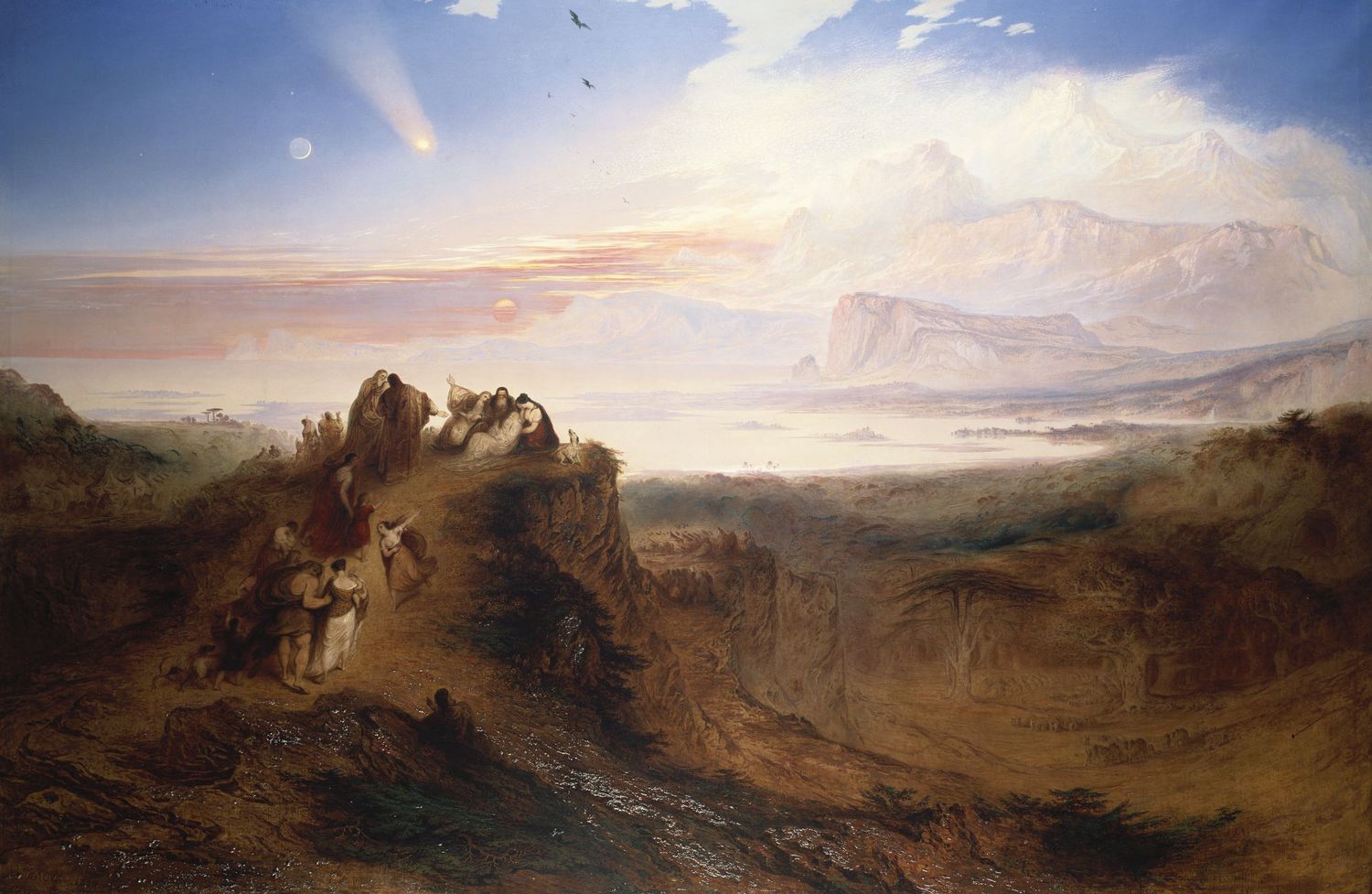
The Eve of the Deluge by John Martin
As I gaze forward, I see Christ standing atop the water. From afar, his face still affixes to my eyeballs with the cosmic presence of mystic flesh. I am reminded of Alex Grey's Christ painting. Then, in a moment's whisper, a pair of Bison crash through the water. I see the lake is barely a foot deep. The age old prophet is lost to my sight. The Buffalo steam through the water, carrying themselves with the charm of a sibling rivalry. The sacred flesh of the plains opens a revelation of the land's own history. 
__________
"…the apparent flood of a bleeding anorexic paradise…drowned in the furtive beckoning towards malformed reasoning…my Anglo-eyed drug…rushing forth into the magi of atheistic awe…the lawless prism of deep endless failure…gone astray in the fatalist’s catastrophic underpinnings…during midnight conversation…"


Monday, 22 October 2012

The Twilight of a Psychopathic Civilization


We also, when building a relationship with people, believe that they are real. What a psychopath does is they weave a picture of a person that’s really a dream. It’s a spirit. It’s not real...When the psychopath is done with you, they leave. They’ve never had a bond with you. It’s all been a game…feeling no empathy…” Paul Babiak, psychologist, author of Snakes in Suits in I Am Fishead

I've showed this film to a friend of mine who has worked in mega corporations, and been subsequently laid off for his personable style of mitigating interrelationships between different interest groups. Simply  put, he was not a megalomaniac nor a psychopath, increasingly necessary prerequisites for keeping one's job in the field of human indecency, the corporate world.

I live in a city where oil corporations run amuck, seen as the life of the party, and there are Fisheads among us here, this is a city ruled by psychopaths, and the status quo lauds them. My friend, mentioned above, who worked for an oil company described their worldview well, "they are a storage and pipeline facility, and their worldview is as narrow as one looking down a pipeline."
________
Arctic light fills the top of the room with a brittle delicacy, like the tooth of a gentle jaw in the unknown hours of a white night. I sit across from a well-known theatre music composer. In his characteristic black jacket, he eyes me with the filling presence of boreal light, as a friend in the mysterious haunts of a northern dream. I’m at work on an essay. The title marks a conscious turnabout towards the psychic rush of art in the unconscious; a memory become prophecy as the light dims and the man disappears with my thought.

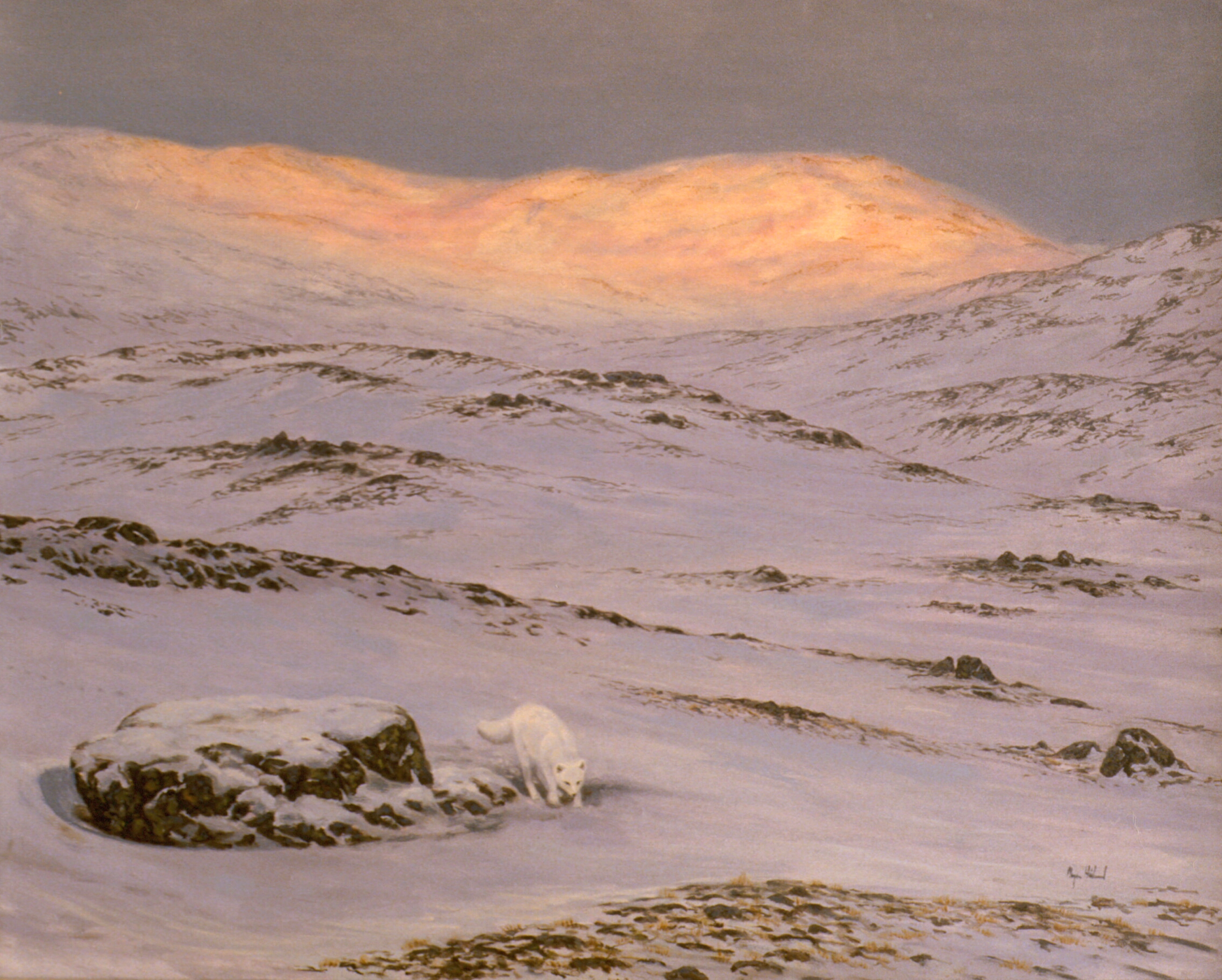
Arctic fox in winter mountain by Magne HÃ¥land
Leaving my room for the main complex of the northern university, I feel on edge as concave walls cut with sharp angles into grass-laden gardens, while up above the window glass refracts the incessant sun with chilling delight. As I move through a room, I am accosted for passing over an international boundary.

Mikak and Tukauk by John Russell
An Inuit woman breathes with intensive definition as she explains the national boundary, seemingly on the grounds of the school. With a bright empathy, I willingly and pleasantly follow the guidelines and roam across the border daily, with attention and respect for the defense of physical difference. 
________
        Throughout the sanctified fields of one human home
                  Lived to the final digression into creative madness 
The right to be
        As connected as all beings
                  With electric happiness
                          Outside

Monday, 21 May 2012

Engineering the Unconscious


“…there exists a barrier in you, all our minds, which prevents these hidden and unwelcome impulses of the unconscious from emerging.” (Dr. Ernest Jones) 

“…the very idea of examining and analyzing one’s inner feelings was a threat to their absolute control.”

“By analyzing dreams and free association he had unearthed, he said, powerful sexual and aggressive forces which were the remnants of our animal past. Feelings we repressed because they were too dangerous.”

“If human beings were driven by unconscious irrational forces than it was necessary to rethink democracy.” 

- from the film, "The Century of the Self" (Part One on YouTube)
________
We wait aimlessly. The school cafeteria transforms into the living room at my grandparent’s house. The light brown rug gives off a beige boredom, as I sit amongst friends and family, waiting, so patiently, as if for the return of Christ. Eating is drudgery. There is an unlikely foment of pleasing silence about, precipitated by my power-hungry relatives. I have had enough. I clasp my hands and in a manner to mock Christian prayer, I bowl over carelessly in front of my father and uncle. “Christmas is within you!” I say to them with lifted humor. They smile with vagrant attention as my grandmother proceeds to welcome me to sleep downstairs. As I take up her offer, the entire upstairs rumbles with festivity. Smoke pours in dreamily as brass instruments are uncased and steamed with the strong breath of celebratory music. “Is it time?” I ponder, wistfully.
________
Christmas
"Symbolizes family togetherness, reunions and celebration. It is also representative of new beginnings and fresh starts." (iDream)
________
There are four deities.
Each represents a characteristic prevalent in creatures, stones, places, and thoughts.

Creatures are animals, plants, water and air.
Stones are celestial bodies, crystals and money.
Places are meaning, stories, songs and art.
Thoughts are actions which emanate from the center of being, the heart.

Each of the four deities has an age,
and each has a name with which it is remembered
by People.

The first deity is called,
Haumah; Nation,
the second is
Hakhalah; Community,
the third is
Mishpachah; Family,
and the fourth is,
Aahtzmi; Self.

Today, we are in the age of Aahtzmi.


- excerpt from "Deadly Vision Part I"