Primarily a writing exercise, this dream journal-inspired blog is a quiet introspective sojourn into the process that we traverse in going from private dream to public art. I see our dreaming as an internalized mythmaking. As I philosophize and expressively exhibit dreams, both private and public, I encourage and delight in creative language as a way to practice experiential metaphors through a “public dreaming." Writing Theory: Creative Dream Fiction
Showing posts with label theory. Show all posts

Monday, 28 January 2013

The Madman Within: Valery and the Personal Energy Crisis


Paul Valery par Jullien

"The best way to make your dreams come true is to wake up."
 
"Breath, dreams, silence, invincible calm, you triumph." 

"To enter into your own mind you need to be armed to the teeth." 

"At the end of the mind, the body. But at the end of the body, the mind." 

"A man who is of 'sound mind' is one who keeps his inner madman under lock and key." 


Here, I continue on the themes of an essay regarding a theory of sleep cycles, and the natural course of the human experience of time as espoused in my previous post, Metaphors in the Art of Goya: A Theory of Unconscious Development. Beyond the bounds of the twenty-four hour time bomb, the seer lives to posit the cyclical nature of time in the natural course of creativity as it rises and falls based on the "internal clock" or "the internal orbit" as I will more aptly describe it. Leading through to an experience of time in the twenty-four hour day as much like the seasons, at different stages of life, or the year, we will be naturally disposed to certain times of the day. 

To keep a fixed schedule of waking and sleep throughout one’s life is unnatural and unhealthy, leading to an incomplete understanding of one’s self in relation to the ecological rhythms of the earth, and one’s own nature. Put more concisely, the mad genius intellect of Paul Valery writes, "A man who is of 'sound mind' is one who keeps his inner madman under lock and key." So, continuing on this theme, I would say that, a great foreshadowing to the resolution in thought from the prose essay writings on SoJourn(al) can culminate in formulating a creative practice so that any person can discover the certain time of day that best suits their activity and temperament. 

When allowed to our own devices, we naturally settle into a certain time of day based on the kind of activity with which we are engaged as our primary focus in life. For example, if one is studying texts, the predawn hours may be optimal in terms of the energetic rhythms and ecological harmony involved in the practice and the setting in which one lives. This could potentially lead to invaluable developments as a repertoire of useful information for employers seeking to offer work-life balance and optimal efficiency and motivation based on the kind of work in which they are engaged. 

All of this, in both theory and practice, is based on variables of ecological distinction (the character of a place), individual temperament (how one relates to a certain time of day), and the focused activity (one’s primary work or occupation). Regardless of the person or type of work, with the application of guiding principles, one can find a harmonious relationship with time and productivity through attention to details of place (ecological awareness), energy (sleep cycles), and activity (work medium). 
__________
He is silent and still as stone. His face a petrified grey, staring blankly into an off-white wall. His mind has long gone, and yet his body remains. 
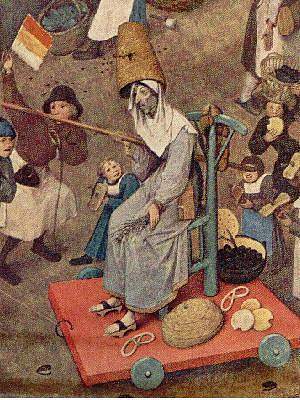
The Battle between Carnival and Lent (detail) by Peter Bruegel the Elder
A rodent gnaws into its raw skin. Dirt falls from its brittle hair. The animal dies before my eyes. I was happy and excited to see what once meant my life, and now...
________
As the tired groaning of racist America brews a proud glory of personal despair,
more,
An interpersonal contemplation on the theme of color:
Hair,
Eyes,
Fingers,
Pubis,
Nose,
And Shape,
Body of form,
And the formless desire

White against the all-escaping cloud of solar obscurity,
Who rushed civilization into the neighborhood of the absent & poor

Breaking the long arduous fast
with an unwelcoming community,
founded not on Love,
only on a hope to pray
before the Cyclops’ rise
over the crossed horizon
...

Stretching beyond the bounds of individual reaction,
To choice.

excerpts from "The socialist epoch"


Thursday, 10 January 2013

Metaphors in the Art of Goya: A Theory of Unconscious Development

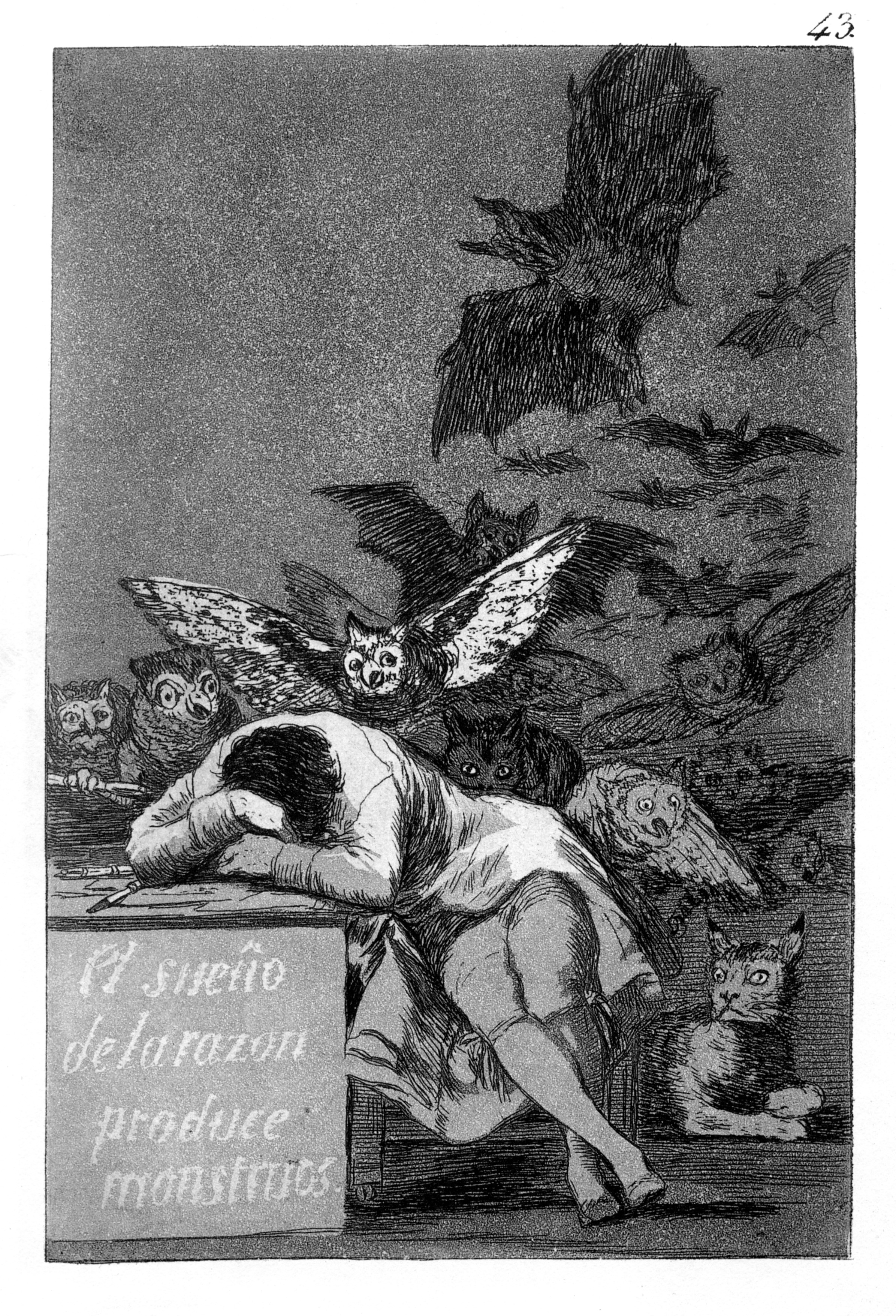
The Dream (preparatory drawing) by Francisco de Goya
The Dream (print) by Francisco de Goya
"The dream of reason produces monsters." Francisco de Goya (source)
The purpose for exhibiting the creative process of a master painter as Francisco de Goya, showing his initial sketch, and final print, runs parallel to a theory I have in relation to the role of the unconscious, and its impacts on the life of both the sleeper and the awake. 

Firstly, my theory is founded on lived experience. The foundation is as follows: If a person follows their natural sleep-awake patterns, without conscious intervention, the body cycles through an internal clock more expansive than the twenty-four hour day. Incrementally, each day one wakes later, sleeps later, and eventually earlier. In the course of over a year of practicing this experiment of consciousness, I have found the twenty-four hour clock to be limiting and a mere fixed point around which my sleep and waking cycles orbit, as a celestial body around its true source of gravity. 

Is this an effect of seasonal, environmental, or psychological pressures? The theoretical part now kicks in. With the exhibition of Goya's creative process in visual representing the night of Man, he is accosted by a host of demons, and in turn, upon waking, those demons become monsters of reason. So, if we allow the regenerative natural patterns of sleeping and waking to unfold, with complete abandon and in lieu of the normative twenty-four hour clock, we give way to a natural creative energy sourced deep within our unconscious, that nourishes our very life-breath with the heartbeat of self-knowledge. 

With this, the world of dream is merely a doorway, as is a metaphor or a myth, towards a more holistic regenerative consciousness of self-awakening. 

See related post: In Defence of Sleep: Regenerative Sleep Cycles of Archaic Man
__________
After hours downtown mall. Winter night. Midwestern city. The street is dim, and I stand, as to wait for a companion, or a bus home. Alone, my eyes scan the glass exit doors with a longing nostalgia for company. As I consider my absolute solitude, two prostitutes brush up against me. They closed in out of nowhere. After a moment of disdain, I begin to hear an inner curiosity.

Cocotte on the Road by E.L. Kirchner
"How much?" I ask, imploringly. "500 dollars" she says with a soft smirk. "I don't have that much." I respond, with dry humour, having never intended to act on my curious insides. Surprisingly, my wife steps through the hall behind us and into the background. She sets up her instrument and begins to play. I drift, flying towards the awake. Her unconscious body, her subtle spirit had called me forth, from the fantastic night of isolation.
___________
What of human sound,
The frequent lust to prepare noise in strength of intellectual wonder
and produce unfathomable beauty
            of the entire body
                        descending to and from the ear’s tragic centering
In our musical society, and what to compare “human music” to the grandiose law of nature, expressed in the mere calls of bird and beast revolving their unchallenged voices around the veil of a gross acoustic hall,
            whose rendering dreams an unforgiving welcome to the Earth’s living
            hall,
                        led to a thoughtless demeanor
                                    yet within the mind of man
...

to find a source,
                                                not necessarily of communication
                                                            between human, bird and god,
                                                but a direct connection
                                                            that spells mystery
                                                                        from an inspired gift to all
her sound.

excerpts from "Of human sound"


Thursday, 1 November 2012

Incontrovertible Participation Mystique of 1492

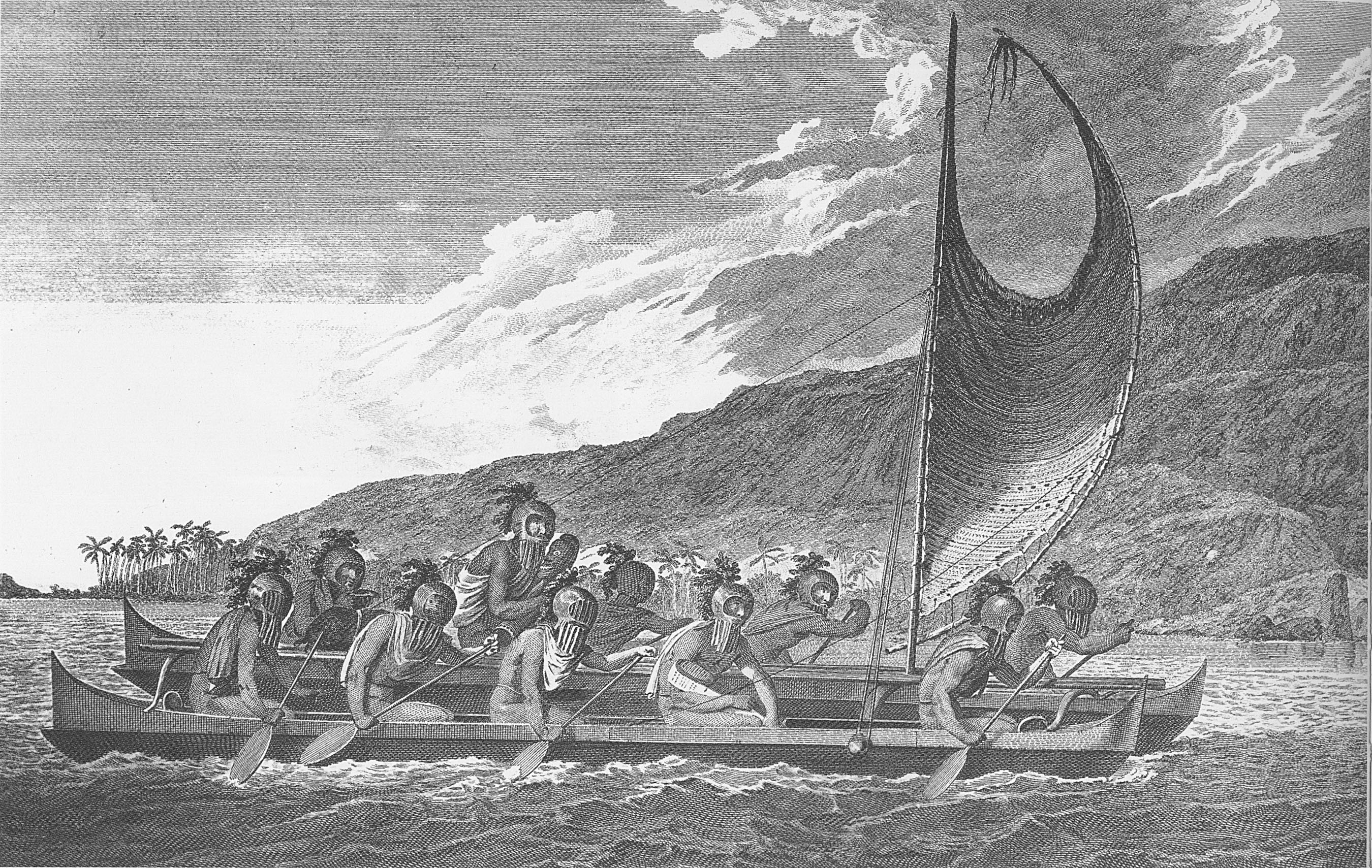
Priests traveling across kealakekua bay for first contact rituals by John Webber
PARTICIPATION MYSTIQUE is a term derived from Lévy-Bruhl. It denotes a peculiar kind of psychological connection with objects, and consists in the fact that the subject cannot clearly distinguish himself from the object but is bound to it by a direct relationship which amounts to partial identity. (Jung, [1921] 1971: paragraph 781). Psychological Types, Collected Works, Volume 6, Princeton, N.J.: Princeton University Press.
Although Levy-Bruhl later went against his own logic and recanted his theory, Jung continued to affirm his theoretical suppositions.
He later retracted this term under pressure of adverse criticism, but I believe that his critics were wrong. It is a well-known psychological fact that an individual may have an unconscious identity with some other person or object (Jung et. al., 1964:24). Man and His Symbols, New York, N.Y.: Anchor Books, Doubleday.
Jung quotes from Wikipedia article, "Participation mystique"

Related article, "Particpation mystique: mythological cosmologies are functions of dreams and visions" on Mythic Dreams

It is wildly fascinating when we apply the logic of "participation mystique" to the impact of the mythic 1492 first contact, as the beginning time when dream and reality were clearly delineated in global history. Dream being the riches of the orient and our pre-contact Eurocentric notions of the world and Reality being another continent inhabited by non-Christian and thriving societies. Both of these two separate European lenses through which the Americas were experienced illustrate the post-virginal spring of absolute earthly delusion, and thus our entire consensual knowledge base, commenced.

Indeed, our "unconscious identity with some other person or object" has moved from the unconscious to the subconscious of our collective national consciousness, and only fully bloomed in the mind of each individual of mindful conscience.
_________

On a concert stage, a fantastically roomy floor for our world fusion quartet, my wife plays on the zheng, and our friend masters the Indian tabla drums, while I gather Middle Eastern style percussion and touches on woodwind. A guest to our homebound trio takes center stage. He is an expert percussionist on the Turkish davul. 

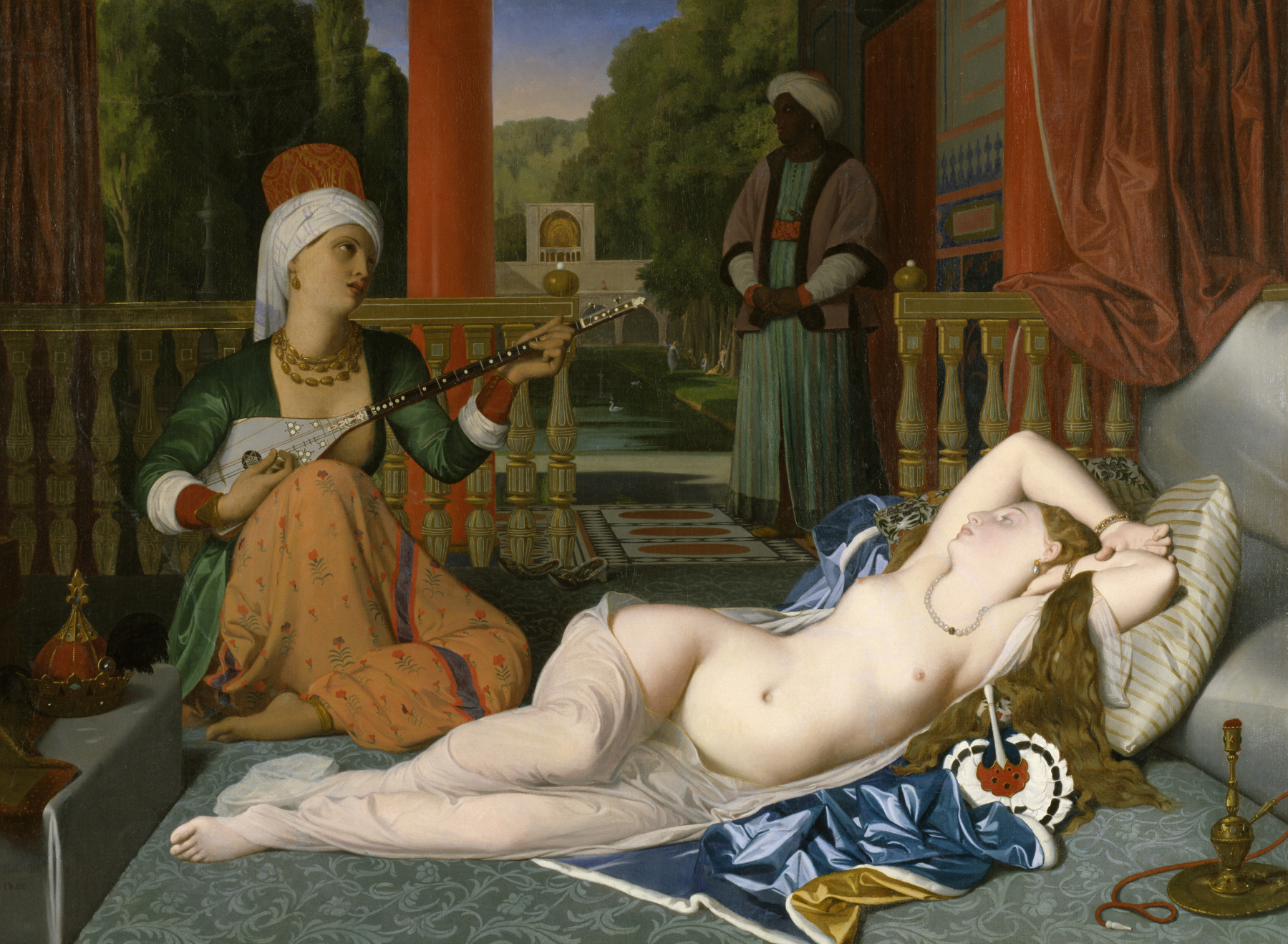
Odalisque with Slave by Jean Auguste Dominique Ingres and Paul Flandrin
When the music begins, he takes the lead rhythm by storm, without mind to our accompaniment. He is so overly animated in his egotistical inertia. I become exceedingly frustrated, so much so that I stop playing altogether, and it seems our other percussionist is contemplating the same. As I talk with my wife about the unseemly course of events, he stops playing as well and begins handing out gifts to the audience, smilingly captivating them with an open charisma that effectively portrays our music with underhanded nonsense. For me that’s the last straw. I grab a glass of milk and throw it at him as I walk out in disgust.

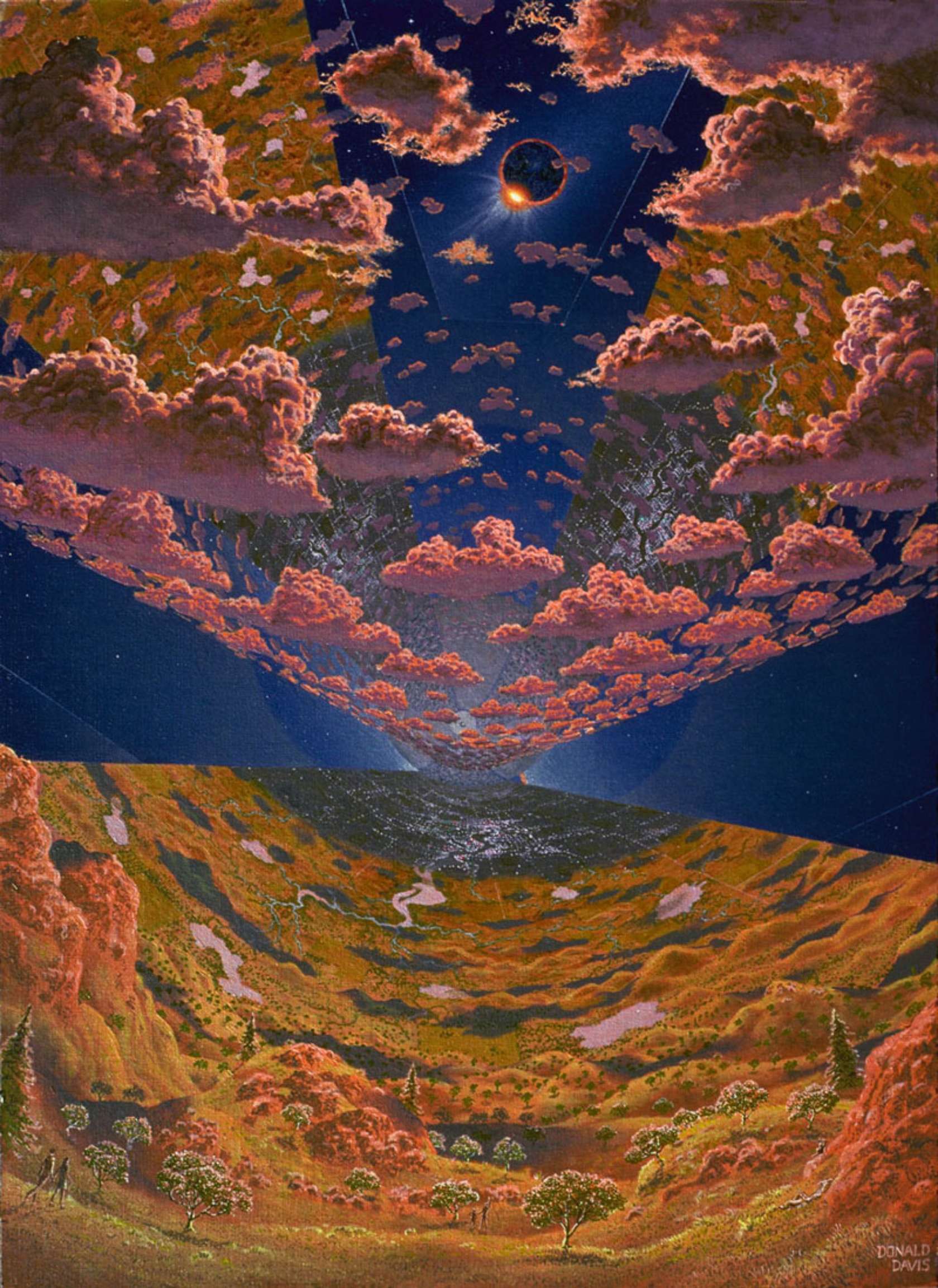
Internal view of the O'Neil cylinder by Donal Davis
On the street outside the concert hall, industrial trucking and convenience store culture intermingle in an altogether drab disarray of poverty and addiction. Over-the-hill men glare at me, wondering about their next fix with vampire teeth and screwy eyes. I silently glide past, entering the dismal folly of a culture affixed to the worthless distractions of fame and light personified in an attractive male with the maturity of an anxious adolescent. I won’t return, and the horizon is still empty. 
_________
Morose, pangs stir my subtle breath, walking up the nerves,
To break down with laughter and see ocean’s rise
From the abysmal core of first being,

The naked home of belief,
Cradling Lover’s net
As a down-pressed skeleton, chained with ire
...
Coldly moving from place to place
Like numbers spit into the viral joke of God
Seeing white rice burn to blackish brown on the needy plate of the human universe

Believed so beautifully
In the back of a working man’s mind,
Stepping to the bold indecision of a wakeful conspiring
...
Across pyramids, tunneled to the foot of known reason
Yet, to be detached from an able body
Now roasting at the offering spit and waiting for mass death

To plummet from our towers, piercing heaven with a sufferer’s torment
Across worlds, times and into the imagined memory of the once-respected
Human insanity behind the art of the worldly races

excerpts from "Art of the Worldly Races"


Tuesday, 30 October 2012

To Dream in Red is to Uncover the Veil of Consciousness


Judge

"Yesterday, I had a dream – I had a dream about you. You were 40 or 50 years old…and you were happy."

Student

"Do your dreams come true?"

Judge

"It’s been years since I’ve had a really pleasant dream." 

Dialogue between the two principal characters in the classic filmmaking masterpiece "Three Colors: Red" by Krzysztof Kieslowski

Along these lines of artistic development towards a pseudo-scientific theory of colour, the iconic German poet, Goethe, produced a volume entitled, "Theory of Colours". While not being received as proper theoretical discourse by the scientific community, this was Goethe's prideful involution into the realm of human experience beyond the sublimities of intellectual life. 

Should your glance on mornings lovely
Lift to drink the heaven's blue
Or when sun, veiled by sirocco,
Royal red sinks out of view –
Give to Nature praise and honor.
Blithe of heart and sound of eye,
Knowing for the world of colour
Where its broad foundations lie.

— Goethe

(Quoted from Wikipedia article, "Theory of Colours")

Also, see my previous post: Reflection on Zbigniew Preisner's "Silence, Night and Dreams"
_________
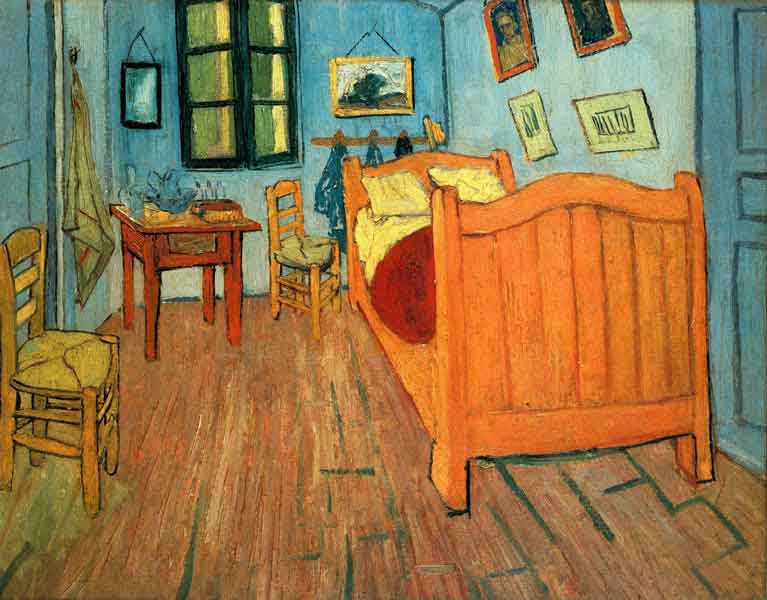
I wake with eyes closed. I won’t open. I can’t look. The bed feels dishearteningly unlike where I know myself to be in my present life, yet strangely familiar to the one bedroom I never wanted to wake in again. It’s my father’s, and stepmother’s.

Bedroom in Arles by Van Gogh
Cat litter sheets and the nauseous sky pelt the window by my ear, as I smell the cheap havoc about in tepid condensation of humidity, a feeling of being too close to home, where abuse reigns on every familial plane, as a tree bespattered with the lifeless trembling of a deadly morning earthquake.

The woman at the window by Jozef Israels
I sink deeper, and the outdoors opens as an unsheathed bronze, polished and brandished for timely wielding about the nascent plain of equal hue, enlightened by the western sun. As a beckoning from Manifest Destiny herself, I trudge through the yonder horizon with a mind for exploratory happiness, in pursuit of the ear and chaff of corn and grain, the dizzying panorama of emptied wilderness, where the Vanishing Indian now only lives as a politically corrected name.

Westward Ho! by Emanuel Leutze
I tip my hat squarely to the north with scythe in hand. I wander through the flooding dusk lit pasture, a son of the mindless hate staring me in the back, now buried in the lightless flat of night’s self-awakening. 

This and two other dream narratives (21st Century Space Race of Sustainable Housing & Mindscapes Interpenetrate Dream with Reality) feature subconscious experience surfacing amid the sensual spheres of daily waking.
_________
The western pathway to slavery lies feebly
over the chasm
         As a vile whore reminds us
         to put grace before prayer

In motionless wonder,
personifying the lush diligence of an ancient society
         Dismembered at the plan of a cursed monotony
               To stare into the black façade
               and feel dreams slip through sleep,
                         In and out

excerpt from "Blind Daemon"


Monday, 18 June 2012

Writing Theory: Creative Dream Fiction

Dream Vision by Albrecht Durer
(Click for TRANSLATION of Text)
As with all of my short fiction thus far, my source of inspiration is from the rough sketches of dreams which I interweave with creative interpretation from cultural references and my own repertoire of creative literature on my weblog "SoJournal: Private Dreams to Public Art"

My theorem for this prose fiction writing practice consists in self-psycho-analysis through lifting the burden of creative psychological confrontation with mental productivity. Such weightlessness is experienced in the imaginative, unconscious narratives found in the space of dreaming.

My writing practice overall runs along similar lines. I see the practice of writing to encompass a non-interventionist exploration into the raw activity of mind, or the nature of mind. Editing is merely another term for the extended reflection on the initial source of inspiration. Ultimately, this reaches towards a quickened perception and re-conception of the epigenetic functioning of the human being and thus an essential facet of the conscious universe.

Spontaneous writing complements my improvisational approach to world fusion music. Improvisation provides a way to emphasize ecological context through unconscious aspects of our surroundings, thereby hinting at an insight of awareness through sound.

With regard to the post re-titled, "The Lake between Egypt and Iran" this dream vision chronicles subconscious metaphors which I create both unconsciously and consciously through lived experience and mythical-emotional projections which breathe with visceral life in the realm of dream.

Based on Wikipedia, a theorem is "...a statement that has been proven on the basis of previously established statements..." Although, I must add, that the wellspring of individual creativity, as unbridled by the throes of formality, may indeed take place in all form, and more accurately from the seeds of emptiness from which form issues. Whether in number or letter, the truth is undefined and the spontaneous instant is where the magic of all life mysteriously prevails and finds its equilibrium of continuity. While this may read as contradictory to the definition of a theorem, indeed it supports the notion of a theorem by positing the basis of proof as the ground of being or the present moment, and previously established statements, as the substance which lies before us, bound by the interwoven presence of time, memory, dream, imagination, or succinctly, fiction.

(Read my first publication of Short Fiction inspired by Dream @ Haggard & Halloo)