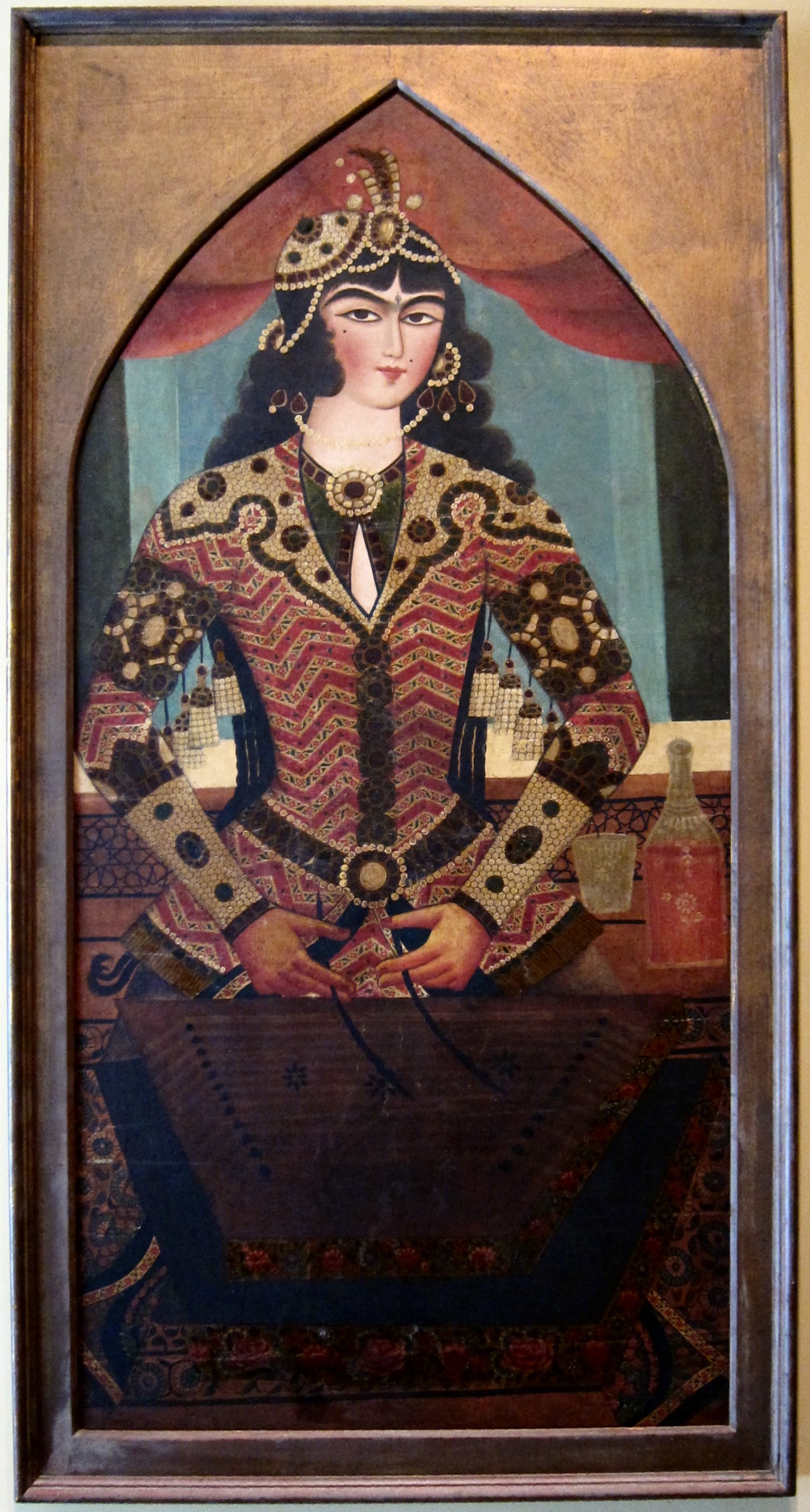
Primarily a writing exercise, this dream journal-inspired blog is a quiet introspective sojourn into the process that we traverse in going from private dream to public art. I see our dreaming as an internalized mythmaking. As I philosophize and expressively exhibit dreams, both private and public, I encourage and delight in creative language as a way to practice experiential metaphors through a “public dreaming." Writing Theory: Creative Dream Fiction
Showing posts with label Earth. Show all posts

Tuesday, 17 December 2013

Create You: Fearless Artistry and Creative Identity


"I began to dream heavily, violently, every night, and then I learned how to wake up…" 

"Consciously or unconsciously, all writers employ the dream, even when they’re not surrealists. The waking mind, you see, is the least serviceable in the arts. In the process of writing one is struggling to bring out what is unknown to himself. To put down merely what one is conscious of means nothing, really, gets one nowhere." 


Creation is life. More, the incipience of creation is the life of the creator. The life of the artist is bound to their creation, in the same way that a mammal survives on each breath of fresh air. As long as the air is fresh, the artist will continue to create, and as long as the authentic substance of heart issues from the core of the artist's own vision, the arist-seer will align and harmonize with all of creation. 

To forego a path without heart is acceptable. The great mystical physicist of our age, Fritjof Capra, began his famed text, The Tao of Physics, with that realization. Yet, on the path of heart, a different narrative runs its course. To remain true to oneself is to hold fast to the consciousness of one's life source as not merely the beginning precepts of one's physical subsistence, but of the visionary path onto which one is led through to the heights of meaning and becoming. 

The proud artists will realize their vision in the instant of a moment, at simply being the processional experience of creation, the ever-beating heart of co-unity with individuality and universality on Earth. To not over-think is the key to strengthen the creative momentum, reminds Henry Miller, the American author with a self-professed Chinese ascetic's nature. 

So, in holding fast, the artist and author of self-creation, is near-shattered, sensitized by the flood of the fleeting that files down the materialism and consumerism of an all-pervasive cultural fear, to belittle the uncultivated mind to ignorant non-being and blind negativity. In this way, the inner sanctum from where the creativity of an artist is strengthened by the water-like ability to be vulnerable, naked, raw and emotive in a full and unbridled formless truth. 

To all artists, and to the Self, I call on you to be strong, and to claim the ideas and visions and dreams in your mind and heart and being as you would claim your rightful place on Earth. For that creativity, and the perfect imagination of its fruition in your life, is your truth, your heart, your mind, your being, your soul, your foundation, your meaning, and all your own, it is you, your nature, your life, all yours, be it and be proud. 

Everyone, as with one mind and one heart, is capable of becoming sensitive to the expression of your truth as an unheard knowledge that only you possess and that is invaluable, necessary in its tragedy, absolute in its humour, refined in its judgment, authoritative in its experience, wild in its reason, cautious in its aspiring, and pure in its love. Create you. 
___________
Around this circle danced the flame of eternity. In the green spark licked the tongue of heaven. Spring in the Jungle bloomed with effervescent majesty among the ruined foundations of another remote, human wasteland paradise. The veils of fame and belonging passed like a soothing tide, recoiling in the abyss of oceanic depth. We smoked the herb of forgetfulness, harmony and love. 

Ernst Haeckel's 1905 Wanderbilder (Travel Pictures)
The smoke coiled around our lazing necks, floundering amid the slow-moving river, her brown body motioned like a heavy emotion. One among us, an artist of metal and flowers spoke up as paper and marijuana stung our eyes, blinded by the greedy moment, a fleeting light. "Native community leaders announced their wish to use our space. They will hold facilitations, meetings and workshops on the militarization of the Indian people; their War." 

Coolies on the Road near Kalicut, Malabar by Edward Lear
A shade lifted and a heaviness shrank as our hearts wept and our minds faltered along the brink. She, the speaker, high as the azure, fled to the banks, to swim and cleanse in thoughtful reflection. She swung on a low-hanging vine, falling into the naked river, dressed still in paltry coverings, now a resident of the Amazon for well over a decade. Her eyes spoke of what her tongue could not shake. 
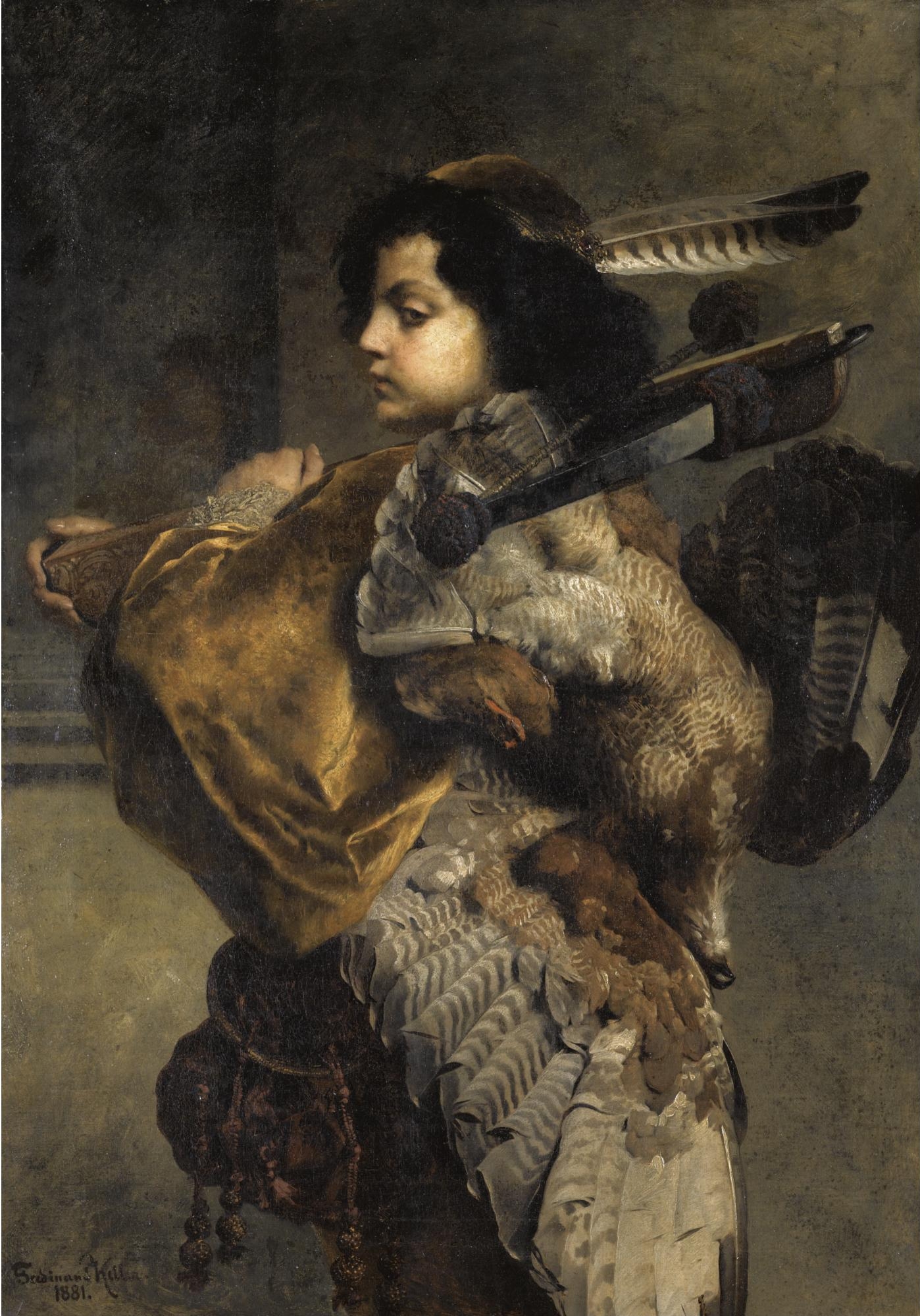
Young hunter by Ferdinand Keller
They arrived, and we vacated the area, as a show of respect. And one day, on the top floor, whereon we store our arts, with wood canvases lain and strewn, I saw her. She was not Native. She was a woman of the Old Country. Her heart was cold as a perennial shadow. Her moonlit face eyed me with an inhuman glare, and her blood then boiled, raising her hair, intoning a voice as harsh and ghastly as the screaming bite of a bullet ant. 
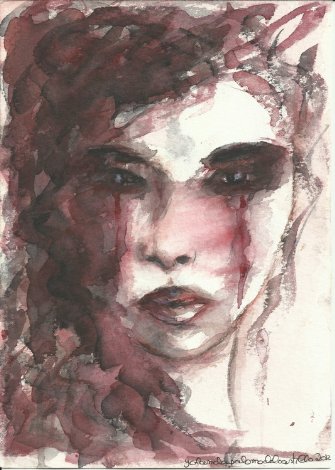
14 abril by Yolanda Palomo del Castillo
I ran. And then falling with desperation in the rushing river, we were swept along. In the instant of our near-death, she lunged towards my angular body, stretched out above the surface, in full display of my superior experience on these riverine lands. I watched as the infamous cult leader, impostor of the Cocama ethnic struggle was buried in the open jaw of the current, as her bones cracked in the turbulent stream. Awash, I lay at the edge of reason. 

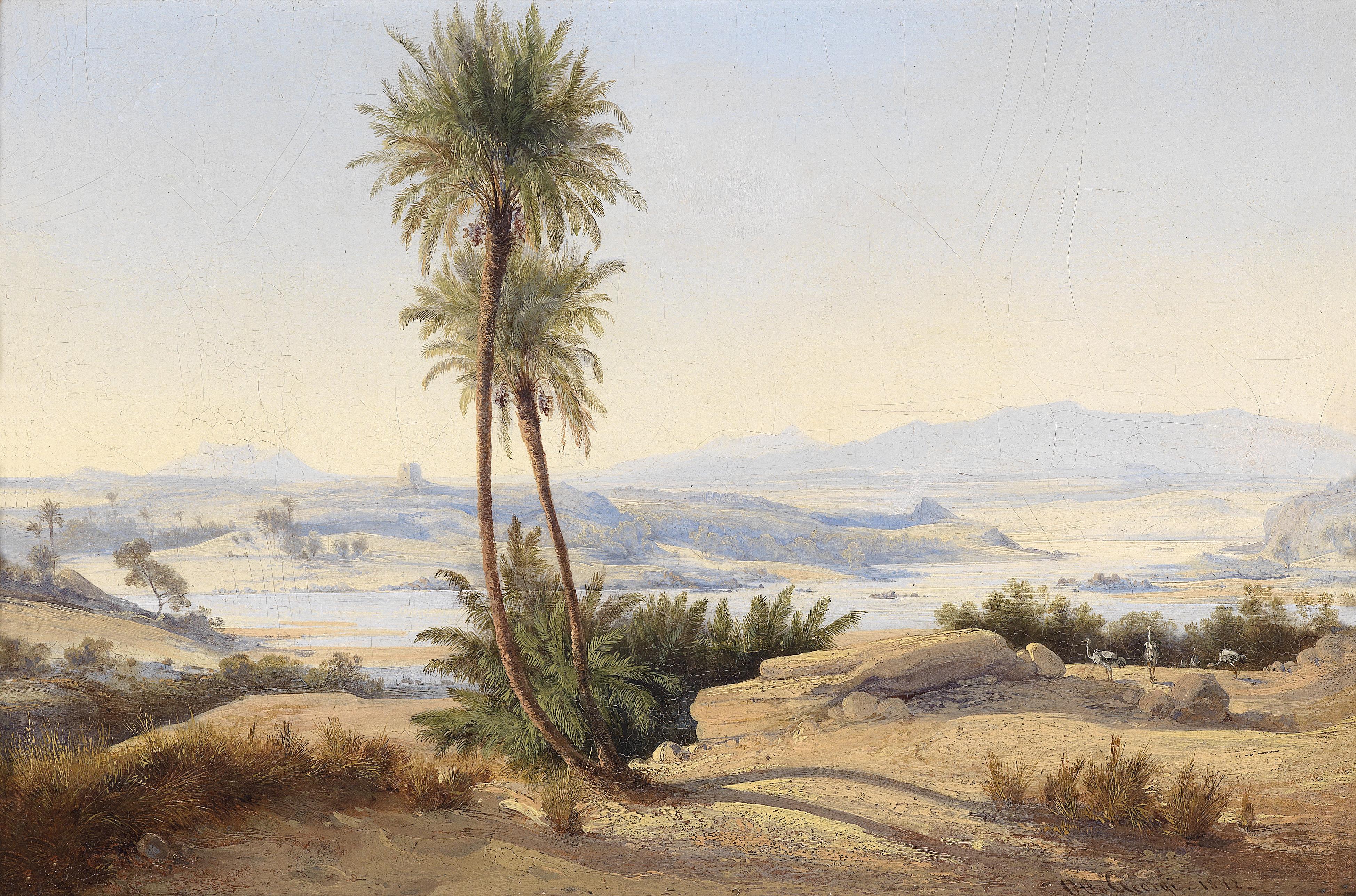
Giant tree in Brazil's tropical forest by Johann Moritz Rugendas
Then, I saw the body. The tattooed flesh, gouged and lacerated. Two arrows pierced the man's underside, widening a deep, mortal wound. With bowels distended, his blood having since let almost completely of his sunken frame, I cried, lowered to the wet jungle floor, bleary-eyed. Not only had his own turned on him, but the man also suffered bullets. Scarred and mutilated, his body is the story of his people, dead to the world, brutalized and beaten down by the perpetrators of human trust, by invaders and blood alike. 
_________

Monday, 16 September 2013

For the Love of Humanity: An Essay on the Ecological Auschwitz of Canada

Dostoevsky's notes for chapter 5 of The Brothers Karamazov
"You see, I so love humanity that—would you believe it?—I often dream of forsaking all that I have...I close my eyes and think and dream, and at that moment I feel full of strength to overcome all obstacles." Fyodor Dostoyevsky, The Brothers Karamazov

“It's a scandal,” environmental activist Tzeporah Berman shouted to an encamped crowd at Indian Beach the night before the Healing Walk. Imagine, each and every CEO to all the employees of the oil and gas industry, blatantly raping their mother and profiting obscenely in the act. The Tar Sands scandal has gone viral. The proposed Enbridge Northern Gateway pipeline “is probably the most controversial project in the history of British Colombia other than perhaps Claquoyot Sound logging operations,” said Ben West, Forest Ethics Tar Sands Campaign Director, at a Project Ploughshares event in Calgary on April 27.
It’s been the #1 talked about news story in British Colombia now for two years running. In fact there is a study that was done that shows all the next five stories, in terms of coverage, if you combined all the coverage, still did not get as much coverage as the Enbridge Northern Gateway pipeline in the last two years.
The entire world is a voyeur to the most heinous crime of physical abuse on Earth today. “All fights, all battles for the planet are important, but some are more important than others. And there is no battle on the face of the Earth more important than what’s going on here in Alberta,” Bill McKibben, climate change scientist and founder of 350.org, said for the outdoor press conference immediately prior to the beginning of the Healing Walk. “There are three or four places on planet Earth where there is enough carbon below the soil, that if it gets dug up and burned, then there is no chance that we’ll ever stabilize this planet’s climate, and this is one of them.”

Yet, since 1967, when the first commercial project began to exploit the Athabasca Tar Sands, the crime intensifies to the benefit of a society corrupted by cheap oil across Canada, and around the world. “From the seven pipeline spills in the last five weeks, we know that oil corrodes, and what we’re just beginning to learn is that it’s not just corroding our pipelines,” Berman asserted. “Oil in Canada is corroding our democracy.”

The 4th Annual Healing Walk, attended by about five hundred demonstrators, sent a clear message: local people matter, have voice and are strongly represented across the country and the world. While international activism often necessitates globalization and fossil fuels to wage peace on the Tar Sands, the First Nations in and around Fort McMurray, the Athabasca Chipewyan and Dene peoples, are leading humankind by simply walking, in prayer to the Four Directions. Because of ancient wisdom and the spirit of traditional ceremony and community, industrial traffic slowed to a near halt as far as the eye could see on July 6 around the 14km Syncrude Tailings Loop.

“When I went into that town of Fort McMurray, you know what it reminds me of, it reminds me of going into the town that’s the ecological equivalent of Auschwitz,” Anishinaabe author Winona LaDuke proclaimed during her keynote speech the night before the Healing Walk.
“The town that’s sitting right next to Auschwitz and saying, ‘Hey, we’re good here, you can get a $35 steak, you can get an $18 hamburger and it’s okay.’ There’s something just psychotically wrong with all that.”
LaDuke’s Auschwitz comparison, especially in the light of modern consumer culture, is significant. Another outspoken critic of power politics, Hannah Arendt, had once led a scandal, transforming international dialogue on the perpetrations of Auschwitz into a parable of modern life. Arendt’s notion of the “banality of evil” speaks to the mass consumerism that fuels the current destruction of the planet. Status quo consumer society encourages technology and energy overconsumption. One tier of society justifies through intellectual analysis regarding energy, society and the environment, while most are overwhelmed by the unreasonable complicity of leadership.

Therefore, most people remain ignorant of the fact that their immediate, daily actions cause the very atrocities committed against marginalized people and the environment. Espoused in 1961 during the Eichmann Trial, the philosophy behind Arendt’s “banality of evil” teaches how everyday people perpetrate the greatest crimes of humanity, often more so than their leaders. The idea is slowly gaining acceptance among genocide scholars, such as in Daniel Jonah Goldhagen’s Worse Than War.

“If you breathe air and you drink water, this is about you,” Crystal Lameman, Treaty 6 activist of Beaver Lake Cree Nation, declared at the beginning of the Healing Walk at Crane Lake Park. If the great-grandchildren of Canada look back on the current generation, will they see the current society as people of today see Nazi Germany? As the Jews were liquidated for business purposes, so the Earth and its First Peoples are being bought and sold, and killed in the process, for the liquidation of bitumen tar into petroleum gasoline. Every day, Canadians are told that progress must continue and economic growth must never regress for any sake outside of myopic anthropocentricism and politicized Canadian values.

“On the eve of the NEB hearings for the Enbridge pipeline, when our National Minister of Natural Resources put an open letter to Canadians [in the Globe and Mail], calling anyone who opposed these pipelines a terrorist,” Berman reminded demonstrators camped only fifteen minutes away from Fort McMurray. “Essentially saying that if you express concerns then you are acting against Canada’s national interests, that you are an enemy.” When environmentalists and Aboriginal peoples who oppose pipeline development are deemed terrorists, political-economic rhetoric in Canada begins to look more like that of the Department of National Defence.

Dissuading public debate is typically fascist. The undemocratic nature of the petro-state further supports the colonial Eurocentric project of civilization, where marginalized minorities, such as Indigenous peoples, are meant to suffer the growing pains of modernization. Indeed, modern progress is often underhandedly defined by the achievements of warfare and genocide against marginal ways of life.

The Canadian infrastructure, as with much of the world, is dependent on the continued suffering, and the scandalous crimes, of the continued power imbalances from the colonial past. “We’ve got to feed these people that consume a third of the world’s resources. That requires pretty much constant intervention into other peoples’ territories, whether they’re Dene, Anishnaabe, Cree, or whether they’re in Venezuela,” LaDuke said with a voice of experience and reason at the Healing Walk. “Constant intervention into other peoples’ territories to keep up this level of entitlement.”

Today, there is global complicity in the status quo, in the consumers and beneficiaries of non-renewable energy resources, and its concomitant intergovernmental policies. If Canada survives into the future as a memorable entity, people may look back on the country as yet committers of yet a deeper atrocity, against Earth, and as with a genocidal inclination towards the entire human race.

Will others follow in the example of the First Nations of the Athabasca river basin, whose warnings resound with deep socio-ecological truth? Will Healing Walks spring from the people across the Earth, so that in the name and significance of Mother, the destruction stops and healing starts? Are people around the world willing to stop the destruction and walk for the healing of the Earth, to find a path that slows the destructive course of industry (business) as usual and that offers, not one direction alone, but Four Directions, whole and undivided? When will people begin to pray through movement, action, and participation?

Around the same time that unparalleled innovations in alternative energy came to the fore, there was a great leap in Western consciousness of natural philosophy. Contemporary science is providing the world with unprecedented advances in material technology and innovation. “The last two years, we have seen more advances in clean energy, in renewable energy and technology, than the last twenty years,” said Berman, at the close of her keynote speech at the Healing Walk conference at Indian Beach. “The last two years were the first two years in human history where new investment in electricity generation for renewable energy, for wind, for solar exceeded new investment for electricity in oil, coal, and nuclear combined!” Nonetheless, today there is a greater vacuum of innovation, and that is within the human mind. The current struggle for life on Earth is within each and every human being bridging the great rift between modern life and ancient wisdom.

“I think what has to happen is a change in understanding. It’s not a matter of power, or of muscle or of energy,” the late philosopher Alan Watts said in the documentary, Zen.

It’s a matter of the way in which we understand and feel our own existence, not as strangers in a hostile universe, but as integral parts of that universe, as fruits of the universe, in the same way as an apple is a fruit of a tree we are a fruit of this galaxy, we belong to it, we are something it’s doing, but we don’t feel that.
Similarly, in the name of modern physics, the same basic knowledge that allows for the expansion of physical technology offers renewed integrations between ancient wisdom and modern life. The same way of applied thinking – that might destroy life on Earth when derived from philosophies of conquering nature and ethno-cultural assimilation – would also affirm interconnectedness with all forms of life.

Yet, petro-state fascism muzzles scientific inquiry that affirms rootedness, while ensnaring science with political ideology. “The internationally recognized journal of Nature this year, in an editorial, said ‘It’s time for Canada to set their scientists free,’” Berman, author of This Crazy Time, said at the Healing Walk. Science, as a truly inventive field of human inquiry, would logically presuppose the very undoing of its concurrent technological manifestations.

“The natural environment is treated as if it consisted of separate parts to be exploited by different interest groups. The fragmented view is further extended to society which is split into different nations, races, religions and political groups,” physicist and international best-selling author Fritjof Capra wrote in The Tao of Physics.
The belief that all these fragments – in ourselves, in our environment, and in our society – are really separate can be seen as the essential reason for the present series of social, ecological, and cultural crises. It has alienated us from nature and our fellow human beings. It has brought a grossly unjust distribution of natural resources creating economic and political disorder, an ever-rising wave of violence, both spontaneous and institutionalized, and an ugly, polluted environment in which life has often become physically and mentally unhealthy.
Life is without meaning, not because it is despairing, but because it requires no other meaning than itself. Life itself is significant. Life is self-renewing. Modern human life is more and more devoid of a connection to the sources of life, and so, the mind, and its encouraged symbolic outputs, estranges daily existence from the nature of life. Proactive language (e.g. solutions-oriented media), as with the most advanced scientific thinking, gives voice and agency to ways of life that are self-sufficient, yet still recognize the interdependent nature of life.

The First and Original Peoples of Turtle Island, Aboriginal Peoples of Canada, continue to share the fundamental philosophical similarities with the ecological consciousness of wise, ancient cultures from bygone eras and faraway lands. Understandings that had once triggered a revival of interest in the practical philosophies of interdependence and rootedness are not only springing from Western science itself, but are being voiced by the First Peoples of the Land with greater potency. “Science is important but only if it’s governed and held in check by wisdom, and that wisdom that people have been ignoring for hundreds of years on this continent is finally reasserting itself at exactly the moment when it is most needed,” Bill McKibben said to close his speech only moments before the Healing Walk began.

Bad news is good news. Spotlight triggers response, and, at the end of the day, people think as they please, or, more accurately, as is pleasing. Regardless of what it is called, Oil Sands, or Tar Sands, industry gets the lip service. “I don’t want to squander my energy entirely on being reactive, on being reactive to their craziness. Be clear on where we are going,” LaDuke stressed with grounded intensity. “It’s our choice upon which path to embark. One miikanan [path] is well worn but it’s scorched. The other path, they say, is not well worn but it’s green, and it’s our choice. It’s our choice. That’s what our people said about 800-900 years ago.” The ancient wisdom of the Anishinaabe prophecy for the time of the Seventh Fire shared by Winona LaDuke at the 4th Annual Tar Sands Healing Walk offers all a path, or miikana, to a future that is fresh and green, and very simply, to a future.

Beyond pro- and anti-, beyond reaction and action, there is a beginning; a place, from where all people would begin life renewed. That beginning is the elephant in the room; it is every last man, woman and child. In the name of Mother Earth, the Original Peoples along the Athabasca River, and every Healing Walker: All my relations.


This piece is featured in the current print edition of Dialogue Magazine

(If you would like to have a FREE copy of the issue wherein this piece is printed, please notify the magazine or the author)

Also, read my Spotlight piece, "Tales from the tar sands" in the current September/October print issue of This Magazine in an online exclusive at The Media Co-op.  
_______________
blessed horn
entranced night
korean shades
light buddha
sun hat
_______________
The album "Evocations: district.Columbia" is an experimental narrative sound art exploration into the text of the collection, "district.Columbia" releasing the first single, "New America" to incite the forthcoming album on the inaugural day of Aboriginal Awareness Week in Canada is auspicious and serendipitous in its symbolic import as an album whose narrations were triggered by an inner voice of resistance while in Washington D.C. where I began to dedicate myself to the literary vocation in light of my own personal development in the commission of truth - as in the social justice of 9/11 and Truth and Reconciliation truth commissions - to address political and historical-religious misinformation.

My creative work is in keeping with a lifelong demonstration to voice silenced histories, in honour and recognition of the atrocities committed against first peoples of the land, whose history, while older and more enduring, while land-based and unfathomably rich, is snuffed out by the dominant settler narratives of media and education that continue to ride the oppressive waves of war, colonization and assimilation in the ongoing struggle for american freedom that continues to this day. "Evocations: district.Columbia" is a sounding directly from the heart, unmediated by the delusional independence of exclusive american identity, for an end to the war on freedom


Inspired by the pre-colonial and pre-revolutionist metaphor for America, “Columbia,” a Goddess of Freedom, as an archetypal myth, once proudly personifying poetic optimism through feminine form. Through these writings, I personify the process of mythmaking as a dedication to compassionate awe and voiced protest in the historic confrontation with self and nation. The name Columbia was immortalized immediately before the Revolutionary War in 1775 by Phillis Wheatley, the first African American woman to publish her writing, in her poem, “His Excellency, General Washington.”

Written primarily based on a visit to Washington D.C., this collection is a vocal reclamation. These chronicles present a visitor returning to his home country, where visitation is defined by traversing an international land border. I represent my struggle to reclaim and recognize my unique voice. In these pages, I confront the realization that I am, in certain respects, an inheritor of the American way of life. Regardless, the inheritance is fraught with the psychological complexities of exile.

In this reclamation, I throw off vestigial principles of experience. I attempt to revision a new way of being through the living temperance of the written word, and specifically, my own practice of stream-of-consciousness writing. Such revision includes confronting a natural process of self-awareness, whereby self-expression revolutionizes into an identity with nature as a self-perpetuating source of renewal and life.

Spontaneous word creation, or improvisational writing, is a natural activity of the human mind. There is a power within that endless fount, that when regularly tapped as a spiritual practice, unleashes one’s surroundings with an ever-renewing energy. Such a practice motivates one personally, to interact with one’s immediate environment in dynamic ways. The reason for this effect is because in this practice, which actualizes into a way of being, the present moment becomes central. When the present is cherished with just significance, the mundane begins to breathe with new life.

The practice of improvised writing, in this sense, outlines a processional transformation in throwing off sterile notions of self and environment. district.Columbia begins by defining autonomous interactions between self and environment (as to parallel notions of the “New World” for pre-colonial Europeans and pre-revolutionist Americans) and ends with a declarative pronouncement; to create an openness to uninhibited spontaneity in personal creativity and a diverse awareness in social activity in our public spaces (as to parallel the current fomentation of creative social activity blurring the lines of public and personal art).

Monday, 22 April 2013

Noocide and the Community Within: Legendary Voices on Ego-Dissolution


“I had a dream once that I was at an international conference, debating economics…” by Gilberto Gil, in support of Xingu+23


Dreaming, conscious & active, increases our potential for empathy and curbs egotism. The lucid consciousness of the dream sees from all perspectives through one perspective. The actions and emotions of every dream character are essentially rooted in the dreamer. This is our natural engine of empathy, and our natural organ of humility before the great diversity of human life, and the infinite spectrum of mental expression.

"You want to reclaim your mind," said Terrence McKenna, "and get it out of the hands of the cultural engineers who want to turn you into a half-baked moron consuming all this trash that's being manufactured out of the bones of a dying world." In this talk, McKenna also goes on to convey how we have lost touch with Chaos, and how older forms of ego-dissolution, such as ecological meditation and entheogenic use, are essentially about the meaning of sacrifice, which is the only thing that will solve our current problems. Ego is adamantly focused away from sacrifice, the role of contemporary humanity is to realign ourselves to a renewed sense of the diminished ego, and a healthy sacrificial attitude towards the greater reality, which is our immediate now of earthly presence. 

Chaos is within us, known through the act of dreaming, where the mystery-engine of narrative is spurred on through the natural inborn creative imagination, our promised birth-rite. The inner worlds of nature mirror this internal intelligence, which constantly breathes as an inhale and exhale of sacrificial flow, a reciprocity with the spiritual presence of subtle energy, generated through the noosphere. At once, as there is a crisis bearing towards ecocide and ethnocide (see my earlier post: Genocide and Extinction), there is also a crisis of what I will call "noocide", or the extinction of our natural capacity to think for ourselves, and look past the egotism of individuated consumer consciousness.  

Attention for the contents of dream narrative allow the mind to reorient within, to the source of dreaming that so inevitably follow outwards with the chaotic madness of global consumerism, expensive vacations, and a whole slew of energy misuse in the wake of ego-manufactured externalized dreaming. The inertia of internal dream substance, awakens the mind to the archetypal community that all share. As Jung said, "Who looks outside, dreams; who looks inside, awakes." We can also look for community within. 

Read my recent article on Media Co-op: Resistance to Canadian Oil Extraction in the Amazon Continues
____________
Can you hear life? by RK
Read the signs by RK
Flightless Cubism by RK
National Isolation by RK

Inner Light Cityscape by RK
_______________
The forthcoming album, "Evocations: Exotic Settlers" is an evocative musing on the sound language nestled deep within the poetic substance of orated selections from a collection of works under the same title. In continuity with the theme of "exotic settlers", the album is an experimental narrative-sound art exploration into the imagination of a journey of settlement, both archaic and modern. Here, voice soundings are mixed with one instrument at a time, to convey a sense of the traveler, whose light pack is ideal for the road ahead, and whose voice traverses the simple grandeur of sonic revelry from a single instrumental accompaniment. Themes of travel are juxtaposed with settlement, both in the settlement of tradition and ecology, and the inner and outer journey to that destination. To settle on one instrument at a time is a metaphor for the inward/outward experience of settlement for the migrant, who eventually becomes an "exotic settler".

The choice to accompany the voice with a single-reeded bamboo saxophone or xaphoon instrument is based on my affinity for the African sound of the reeded instrument, as in African-American jazz roots. I put an old vinyl effect on the first improvisation to hearken to these early recordings. Also, the xaphoon is originally from Maui Hawaii, and so, the great waters of the Pacific Ocean that separate the North American continent from Hawaii, with its deep Aboriginal heritage, mirror the poetic river offering through the sound of the instrument as a metaphoric nostalgic passage across the western ocean.


Beginning with a reminiscence of life in Africa, poetic reflections written on hillsides in rural central Mexico, overlooking a wide lake in a small village, I remembered Africa. The words allude to Africa as the Mother of all Humanity, as Mother Africa, where all people can know their origins as one human family. If wondering, "What has Africa given to the world?" The answers are many, including the soul of contemporary music, but also our very biological evolution, as humankind. Africa has given us ourselves, our poetry, our music, our spirituality, our creative eye, as well as other aspects of ourselves not so likened to evolution such as our politics. Yet in the words I have chosen in "I remember Africa", I ruminate on the spiritual origins, beneath the flesh, "our skeletal humanity" where we are all one, where we are one with Mother Mater.

The second haiku-like oration, "Selflessness is the father of human survival" was written down after an impromptu spoken word over a city bridge, overlooking the grandiose ice sheets concatenate and break into the singular northern landscape. In Aboriginal folklore, passage across a river is a time of deep meditation in gratitude and honour for the life-giving waters. Traditionally, a sacrificial offering of tobacco, or a ceremonial smoke, is offered to the sacred life source of all creation. Yet, here, I offer the clear smoke of my worded breath, enunciating an egoless passage of impromptu heart resonance.

The other pieces featured in this chapbook draw from the barebones intensity of visceral experience re-felt through memory and the act of writing. In that process, the emphasis becomes one of awareness that drives one to act. To reflect, ruminate and contemplate the living significance of Africa in our own lives is to be moved onward in the struggle for life and for our humanity.


Monday, 11 March 2013

The Art of Freedom: 2 Years Since Fukushima in the Post-Scientific Era


"The existence of nuclear weapons means we could potentially create a disequilibrium, an imbalance, on the planet and the atmosphere by the launching of some of these systems, some of these systems. There are 27,000 of these systems. This is more than enough to wipe out the whole planet. You also got people working to say, 'you know you gotta save the planet.' Well you're right, we've got to save the planet. And so the whole environmental effort, as laudable and as absolutely critical as it is, can be for absolutely not in the space of hours if these guys actually went at each other." Lt. General Romeo Dallaire (Ret.) Pugwash Canada

Today is the two year anniversary of Fukushima Daiichi disaster. In my previous post, Hatsuyume of Peace, I kicked off a new paradigm in the life of this blog with reference to the apocalyptic transition that nuclear energy essentially means for life on earth. This is an enduring creative metaphor, a source of reflection that begs to be heard and never left in the silent empty ignorance. For, as the unrivalled Persian poet and filmmaker Forugh Farrokhzad said in her landmark film to inspire Iranian New Wave Cinema, a groundbreaking force of thought, emotion and impeccable insight, "There is no shortage of ugliness in the world. If a man closed his eyes to it, there would be even more." Her film, The House is Black is about a leper colony, and the humanization of treatment for a disease that simply requires attention. While the impacts of a nuclear disaster do indeed course through the blood and infect the children of the victims, there is even more recourse to action, to look, and with the kind of remembrance that breathes in the present moment, to see the eyes of the victims as through the eyes of our own children, our own mothers, fathers, and siblings. For there is evidence that it could be forty years or more to clear up the Fukushima disaster, which is the worst of its kind since Chernobyl. The transition of nuclear energy as a weapon, the atom bomb, has essentially moved the world from the era of World War, into an era primarily defined by war over intelligence, the post-cold war era. Vietnam is an example where the government authority of the United States actually never declared war, incapacitating the ability to detonate another atom bomb on a human population in Asia. We are now living in the post-scientific era, and the Age of Reason is long past. Our existence is not defined by scientific knowledge, but of technical know-how.

On an investigative bend, I took the time, as part of the research praxis of a literary arts journal, to go to photographer, Arthur Nishimura's exhibit, "Dream Country" at the largest university in town. In the exhibit, Nishimura creatively interposes landscape photography with prepared or rendered film. I went for the purpose of interviewing others who happened to stroll through the exhibit about the significance of today's anniversary remembrance of Fukushima, not only as a Japanese disaster, but as a world disaster. What do the photos of a globetrotting Japanese nature photographer say about the remembrance of Fukushima? My questions, and my approach to a conscious public as an experimental journalist fell on a silent room. In the last hour of the gallery's opening today, not one person visited Nishimura's exhibit. Instead of heading into abstract philosophic directions regarding the nature of public ignorance, I peered deliberately, patiently and acutely into the breathtaking symbology of a master photographer.


Let me take you through an abbreviated version of the exhibit, and how I related my experience of "seeing" to the memory and lasting impact, and future legacy of Fukushima. Firstly, Nishimura's piece, "The Book of Flatland Dharma - Of Two Religions: Conclusion" (1978) captivated me. It is a juxtaposition of a sacred Japanese temple, as a diptych next to a silo in the Alberta countryside. This struck me first, because Nishimura captures the elegant majesty of mystery and beauty all over the globe, yet Japan and Canada have sacred significance, yet the cultural dissimilarity could not be more clear in the way that aesthetics are a reflection of social expression. Next, in his Homeland Tourist series, "Higashi Honganji Temple (1978) flattened me with its elusive doorway of symbolic insight. The bicycle in the foreground, outside of a sacred temple in the background, emphasizes that while there is a sense of the infinite within us, we are after all impermanent, and as we ride the mundane bicycle of worldly experience to its end, the higher awe of spirituality lives on, with or without us. Finally, while there were others that struck me uncannily, I will leave off with one last one that took even more time to set in than the rest, however after peering into its silvery textures, and its striking imagery, I latched on to a hint of perennial truth. The work, "Pre-dharma Sentience" (1978) in The Flatland Book of Dharma - The Singularities series, a stone lies in the foreground. In the background, an open landscape, with a path leading to the horizon, to nowhere. What this says to me is that, essentially nature, as with our nature, is fundamentally meaningless. Nature, in its raw, open and original forms do not offer the human heart a rest stop on which the mind may imagine and conceive a reason for being. The meaning of no-meaning is the great point of flux in realizing our humanity as vulnerable, fleeting, and if at once emergent with direction, also futile and unimpressive. As Paul Valery said, "God made everything out of nothing, but the nothing shows through."

On my return home, on this unusually warm Canadian winter day, I read a very short Associated Press article buried in Metro Calgary on the legacy of Fukushima. In the article, 'Outlook bleak two years later' a quote read, "Everyone, from bureaucrats to construction giants to tattooed gangsters, is trying to prey on decontamination projects. And the government is looking the other way," said Nakamura, who refused to give his first name out to the press for "fear of retaliation". As I reflected on my train ride home through the downtown corridor, passing above rivers of melting ice and the glare of the profound midwestern sky, where the rich sunlight exposes the midriff of an aging humanity, I had a realization. Being human means taking the responsibility that we have as stewards of the land, as a conscious potential unmatched in the known universe. If we do not take responsibility for being human, then there will soon be no more human beings. We do not write the highest law, and we can not speak the highest truth. 

____________
She sets the stage with a sweeping introduction. In the impeccable garb of a beauty queen in love with life. The public gushes with heart-sleeved pandering. The world is set like a red carpet before her.

Queen by Sten Porse
The musical ambiance, the tone, is grandiose and emergent as the Jonah-swallowing fish of all-conceived breathtaking wonder. Her introduction is the mindful worship of momentary repose, for the elemental truths to seduce all through her sonic dance of grace.

Female Musician by Anonymous
She continues ever on, without me. Frustrated by my own deviance, and in the backwash tunnel of personal failure, I triumph in disaster. The airs of isolation breathe a sad remorse, the regret of guilt itself takes over like an icy bath.

The Ambassadors (detail) by Hans Holbein the Younger
I strain over my broken instrument, and snap its neck in one fell swoop. Not even a ping from the cracked strings are heard in the overarching foment of fanatic bursts and swoons of delight as the mob breathes down the throat of my love the kiss of popular contagion.

Interesting enough, the short dream sketch narrative above, and that described in my last post, where I exhibited a noetic travelogue through Sudan, have coincided with the events of the days to follow. In the previous incident, I had dreamed that I was traveling through Sudan, and had born witness to the social resurgence of positive forward movement. So, on that day, I met and interviewed Emmanuel Jal, as he accepted the Calgary Peace Prize on behalf of all South Sudanese people. Similarly, though without such heavy global precedence, the events within the dream sketch illustrated here preceded a botched concert appearance by none other than myself to accompany my Love onstage.
___________
My first exhibition of an original "sounding" in the internal collaboration of creative music with creative writing. Improbability in Upswing, was published at poeticdiversity: the poetry zine of los angeles in December 2012. In my reading, with relation to the content of this post, I am taking off towards the eye of the sun. The teeming cloud-born sky quakes with the burning rush of human flight. Riding through the energetic outpouring of modern rocket fuel, I feel a beneficiary of similar technologic might that burned the bodies and fuelled the fires of war. Nuclear energy is not far distant, and my body begins to churn with the physical imagination of experiential interdependence, smouldering at the cusp of freedom and death.


To set forth another tradition of self-publishing, every week from now on, as I offer a "sounding" of spoken word and original music, I will release a chapbook of the section from which the "sound poem" derives in the series of collected experimental writings. Enjoy and ponder the experimental imagination through visions of "Aircloudsky".

Monday, 4 March 2013

Electro-Acoustic Improvisations II: A Sonic Narrative from the Far West

Electro-Acoustic Improvisations I (Album Art Remake) 
Electro-Acoustic Improvisations II (Album Art)
"The first question I ask myself when something doesn't seem to be beautiful is why do I think it's not beautiful. And very shortly you discover that there is no reason." John Cage

Essentially one album, Electro-Acoustic Improvisations I & II are to be listened to in continuity, as a single expression of seeking through sound as voice and agency for the soul of the word. Electro-Acoustic Improvisations II is conceptually the final track of I, divided into 4 parts for listening.

Experiment with your ear, and look to the bottom of this post for an aural transport to the Far West.


Electro-Acoustic Improvisations II

On the margins of the vast, interlocking web of technology and nature, with broken instruments (both acoustic and electronic), we are beginners on the road to merging technology with all of life in this the human experience of Earth and the inner world as an evolutionary being of conscious development. 

Imagine sitting at the edge of a fire in the raw, teeming wilderness. The forest is thick. The air is heavy with an unbroken gamut of vegetable breathing. Warming your hands by the fire, under cover of starlight and the faint haunts of a new moon, the mind seeps and seethes with memories, dreams and reflections on the world “out there”. Civilization and its discontented fires of electric madness pour into your brain like an acid flashback. The Earth is still, yet your hands shake. So, before you is the music of the muses, the bare wonderment takes its own course into the heavens and hells of your own nature. Through music, the seeker of solitude purges the concrescence of electro-social distension. Discordant dissonance marries with harmonic essence as the jeering subtle flesh of mad electricity merges in the mind, hand and heart of one in touch with the strings, blood and fire of creative sound.  

Part I - The seeker discovers music as a beginner. The instrument is slightly out of tune, and the playing is imperfect. The melodies are introduced with electronic music, featuring static electric synthetic effects throughout. The seeker gains mental balance by overcoming the first break beyond the shores of civilization into the open expanse of nature beyond, where other, even more trying challenges are to be had in confrontation with the self, exposed and untended.  

Part II – With emboldened consciousness, the instrument and its sound are clearer. A fire has been set and night opens to the gorgeous possibilities of the sonic imagination. Electric distension is transformed into unseen beauty. The grandeur of melodic instrumentation opens up with a new strength of diversity. As the clouds above part to reveal pure sky, memory and reflection are enlightened through joining with traditions of seeking, as with the sonic movement into Middle-Eastern influenced lute music, translated to guitar in creative solitude with the empty awe of all-potent Nature. 

Yet, the seeker soon realizes this is only the beginning of the journey, and there have ever been electric distension scattered throughout the night’s hearth. By the end, the celebratory feel becomes more solemn as the seeker attains the first seed of self-knowledge, and understands the need to set one’s own pace and prepare certain deliberation before embarking on the pathless sojourn ahead. The music ends with the realization that it is dawn, and the horizon welcomes ahead.    

Part III – Reprieve from the journey, alongside a mountain ascent, beneath a cliff. Cool air from a spring entices the cold march of winter’s coming winds to turn and wade in the lush mountain air. Without a fire, music is the warmth. Creative passion warms from the inside with the brightest of flames. At first, blowing hard into the hands and fingers for the warm breath to spread throughout and allow for the wealth of instrumental music to unfold, the seeker stops playing as soon as it begins to rain. As in Taoist tradition, when the rain makes rhythmic motion, and the melodies of the thunderclouds fly with the magical presence of wind, one is to listen, and be humbled by the music of the spheres.  

Part IV – Beginning with a light touch of electronic moments, the music glides atop sounds of weather, especially as the seeker gets closer to the ocean. Following rivers, streams and tributaries, faring flash floods and rain-swept gullies, the seeker emerges from the wilderness with a great boon of discovery. A new instrument to behold! Notice, the music approaches harmonies with the natural way of impermanence and unity, as opposed to listening, where creative interaction with nature breeds a kind of musical kinship among humans and all life on Earth. As the seeker sights the ocean, the new instrument is played, ending the music and the journey. 

The new instrument is the xaphoon. Invented in the 1970’s in Hawaii, the xaphoon, also known as the bamboo sax, is a contemporary single-reed woodwind. The track ends with a homage to Jack Kerouac describing San Francisco, the very edge of the west, to crystallize the final xaphoon improvisation solo; a traversal of the “far west” in sound. 

Influences: Bill Frisell, Hamza El-Din, Vi An Diep, Steve Roach, Brian Eno, stones/minerals, earth, water/ice, winter, landscapes of the North American west, Jack Kerouac, fire, trees, reflection, solitude

See my previous post: Music of the Dream Author: Electro-Acoustic Improvisations I Release 
___________
On a clean, medical train through Sudan, my Nilotic companion eyes me with a piercing grin as we pass south of Juba into the New South. We have arrived at his hard-won home, South Sudan. His smile is buried deep within the pain of intergenerational loss, the hellfire of war still sting his reddening eyes as he tears up, the pictures of his innocent family smolders into the soil. The land speaks with his voice.

Southern Nubia by Friedrich Otto Georgi
A number of tourists from Europe and America depart from the train stop, as we all exit to proudly march through the gates of the newly formed customs center. Before I ready myself to stand up and follow in the foreigner’s line, I see the winking horror of rats, spiders and snakes twice the size of my face, gnawing at my brains in the middle of the first night. I’ve read such stories. This is open country for sub-Saharan life-threatening insects and arachnids galore. If only they sold us preventive supplies before stepping foot on the blood-torched burial grounds of a still cold reconciliation between tribes and kin. The first thing I see is a smile, wide and innocent as the all-embracing horizon. Before I entered Sudan, an asylum seeking Sudanese refugee in Egypt told me, “Sudan is the easiest place to kill someone.”

Tornai Man from Sudan by Gyula Tornai
I heave a sigh of relief as the other westerners depart into the folds of pyramidal shopping and freewheeling nature photography. I journey on, to the heart of the people. My friend is ever stoic, silent, basking in the wonders of a new nation in its infancy, victorious after so many losses, after so many needless ends, there is at least one fresh start to be had, and one that all can have a part in. Concrete residential towers spring up almost before my eyes, fresh paint lingers and drips throughout the dry stinging horizon of African sun.

African Riddle by John Mainga
Men work diligently, with the force of triumph, erecting monumental stone structures, for future generations to thrive, for the plentiful, abundant optimism of the future. The complexes are almost identical to the substandard suburban housing of greater Cairo, where many must have returned from as once-neglected refugees, now with a determined hand and proud say in social affairs. They don sun-deflecting head coverings, and traditional footwear made with scarlet fabric and coins. Women are nowhere to be seen.

Battle of Tamai by Geoffrey Douglas Giles
We drive on, deeper into the south. The more south we go, the fresher the earth, the more bare the optimism, the more innocent the smiles. The more south we go, welcomes are heard with more sincerity. The air is full of potential. The energy is warm, and the harshness that once thrived now sees a chance of dwindling beneath the pulsing chests of hard work. My friend dissipates into the sunlight now flooding our vehicle; as the inimitable human spirit washes us clean of fear.  
____________


The completion of this instrumental music project, "Electro-Acoustic Improvisations I & II " sets the ground for the next stage of my creative development, where I feature my experimental writing as spoken word together with my world music instrumentation. More art, music and writing next week! 

Monday, 4 February 2013

Hatsuyume of Peace: First Dream of a New Creative Paradigm


"Hatsuyume (初夢) is the Japanese word for the first dream had in the new year. Traditionally, the contents of the dream would foretell the luck of the dreamer in the ensuing year. In Japan, the night of December 31 was often passed without sleeping, thus the hatsuyume was often the dream seen the night of January 1. This explains why January 2 (the day after the night of the "first dream") is known as Hatsuyume in the traditional Japanese calendar." [Wikipedia]

As in English, the word for dream in Japanese (yume) means both deep aspiration and unconscious visualization. The significance of the post above signals the beginning of an end; the nature of originality. The nuclear age is a sure sign of the paradigm shift in human life on Earth. Until every nuclear arsenal is disarmed and abolished, we are living in an age of mass oppression, global misinformation, and unyielding aggression. 

Over 2000 nuclear weapons have been detonated since the first two that ended World War II.   

And so, on a much smaller scale, I am beginning to transition into a new phase. SoJourn(al) has seen unprecedented readership in the last month, with over 4000+ views, especially attributed to  growing international interest for the post, Dream and Love

I will be accepting contributions/submissions from readers, writers, artists, and dreamers of all kinds while I post once a week instead of once every two days, beginning with a professional feature ghost-writer. Meanwhile, I will be republishing more from my experimental writing collection, featuring original musical soundscapes by the Dream Author (also a regularly performing world fusion musician), together with the exhibition of new manuscript artworks to complete the seven-cycle series of manuscript art and experimental writing. 

At the same time, I will be creating another site to support a more singly-dedicated, long-term creative non-fiction writing project. My Hatsuyume, my first dream of the new year, or new cycle of seasonal life on SoJourn(al) is to continue to grow creatively, and to welcome all who are interested to collaborate, connect and unite.

In Solidarity, Peace & LOVE
__________
In continuity with the previous wellspring of visual stimuli, the photographic wavelength of colour turns the mind in an outpouring rush, a quaking truth of Earth on a course of unforeseen exploratory, after all, we are visual creatures 
River Styx Canadiana by RK
On the Other Side by RK
Water-and-Sky Medium by RK
A Way Through by RK
Take The One Less Traveled by RK
 _____________
This smile, these eyes…
Not because it’s you that I enjoy…
Nor your surroundings, and our place in them together…

I smile for what’s inside…
The poetries and open-ended music of Love…
...

Loosening the human rope around the oceanic neck…
The great ring of fire…
Lassoed in spring by the Albertan rains…
Toasting to hot chocolate whispers over Mexican breasts…
Sweetened by the oily touch of American tongues…
Piercing the used flesh of an imperfect dream…
...

In Rusty Kjarvik and his chess logic…
Pinching the Grandfather reality…
In the light of Persian mystical nights…
...

My instinct’s crying bold in the proud deep of North American continental strife…
To transcend the borders of national glory and reach the great peak…
Budding with growing concentration camp Israeli trees…
A miracle as grand as the celebrated synagogue of ancestral lies…
Bearing down hard on the smoky aftermath of the beaten Greeks…
Chained to their swollen shields…
Engraved as the shell of Turtle Island…
Beaming with foresight into the sweeping ancient European imagination…
...

Restitution, despised yet somehow completing our entrenched need…
To be and play forward in the shapeless deep…
The unceasing downpour…
And slow drizzling food of creativity…
To give our most valued offering…
To the smallest most insignificant pull…
Which finds our being necessary…
And in that moment die…
Unafraid to the dream inside…

excerpts from "Why, Autopoietic Eternity!"