Primarily a writing exercise, this dream journal-inspired blog is a quiet introspective sojourn into the process that we traverse in going from private dream to public art. I see our dreaming as an internalized mythmaking. As I philosophize and expressively exhibit dreams, both private and public, I encourage and delight in creative language as a way to practice experiential metaphors through a “public dreaming." Writing Theory: Creative Dream Fiction
Showing posts with label myth. Show all posts

Friday, 18 January 2013

I Am A Desert Stranger: Reflections on The Little Prince

Little Prince by Milan Cupka
“A single event can awaken within us a stranger totally unknown to us. To live is to be slowly born.” Antoine de Saint-Exupéry

Last night, I took to reading the entire book, The Little Prince by Antoine de Saint-Exupéry. I have been reading a lot into the similarities between Paolo Coelho's The Alchemist and Jewish-Algerian folklore, particularly the tale of The Sabbath Lion. With The Little Prince I have now found a third counterpart to the incredible comparative mythology and collective archetypal resonance which these narratives offer to a keen mind. I could of course go on and on about the engaging metaphorical richness solely within The Little Prince, however I will stick to a fundamental theme within three of these works. 

The desert is an iconic symbol for the immense solitude that opens before a life lived for oneself, or as Coelho writes, for one's Personal Legend. The desert is the ultimate symbol of regenerative emptiness that provides the ground on which the traveler sets out before ending a journey of the soul. The Little Prince itself, closes with a simple drawing of an imaginative desert landscape. That "single event" as de Saint-Exupéry says above, is the recognition that ahead of us lies an expanse of desert. And on seeing the desert open, our dreaming emerges. As de Saint-Exupéry says, "a stranger totally unknown to us" and as Jung says, "that there is someone else in my house". American expatriate writer Paul Bowles also illuminated the desert similarly in his book, The Sheltering Sky

See my related post: Desert Wanderings: Reflection on "The Sheltering Sky"
__________
There is talk of a global calamity. The sky opens our eyes to the inimitable beyond. The solstice night tempts our minds away into the cold dogmas of apocalyptic paranoia. And then, a shift. The star light bends in a waking instant. I see through the unmoving universe, to an orbital flux in the atmosphere itself. Our planet has moved off course! 

Planet Earth 2 by Lena Luss Luyken
I feel as the only one, risen up to unparalleled sight. As a shifty character in The Little Prince, I inhabit my own planet as a sole entity, unable to move from its narrowing horizon. But my planet moves, and now the cold begins to gather as our sun becomes more and more distant. I traverse the edge of the darkening atmosphere. 

Evening Prayer in the Sahara by Gustave Guillaumet
I see into the Sahara night. Young boys play soccer among the ancient ruins. An old man enters the edge of the desert from a ruined city street. Both ancient and modern meet at the edge of the desert, and lament the last orbit around a dying sun.  
____________
Second call missing
Unctuous pull from the umbilical poor,

My unending desire for a madness
Inherent within revolutionary culture and the curtain’s aftermath

Beyond ironic civil warlords and the innate lust for earthen ore,
Lore and gore,

Multitudes fornicating over oceanic test-tube breasts,
Blessing the fatherland journey past the mother’s nest
...

Out of time
Whereupon sits the cosmic being,
Presidential yet aware of universal law
“To correct the broken backbone of history
Civilization looted in the ashtray night!”
...

To calm social panic
And sweep our American blushing under the oriental rug of timeless intoxication

For a new sky,
Fine-tipped,
Seeded and reading to be…

excerpts from "Reading to be..."


Wednesday, 2 January 2013

Myth of the Writer as Artist in the Inner Space Age

Magic Mountain (after Thomas Mann) By Christiaan Tonnis
"Certainly when a writer has acquired the habit of regarding life as mythical and typical there comes a curious heightening of his artist temper, a new refreshment to his perceiving and shaping powers, which otherwise occurs much later in life...myth is the legitimization of life; only through and in it does life find self-awareness, sanction, consecration." Thomas Mann in his essay, Freud and the Future

Within this essay by the great 20th century writer Thomas Mann, author of the famed Magic Mountain, are masterful insights with which to learn the various modes of self-discovery as espoused in the mythic fires of ritualized, eternalized thought throughout the ages. In the ageless struggle towards self-knowledge, the embattlements are often constructed in defence of the outer world, or the world, and in offence from the inner world, or the self. In the midst of those embattlements, lies a field. As Rumi says, "Between right doing, and wrong doing, there is a field. I'll meet you there." 

To explore self-knowledge with regard to knowing one's place and vocation is to embark on an inward journey. Only by recognizing the bare truths of our life in the present moment, and proclaiming them as such, and in turn, making them an integral part of the conscious, and waking, mind, can we understand that the truth about myth. 

Myth addresses and reveals the ultimate needs of the human psyche. Myth speaks of the search for meaning in the life of humankind. The final lesson of myth is that the ultimate question for life in the modern world, as with all times, is not, "what is my place in the world?" The essential question remains, "what is the place of the world in me?" Every one is the ONE. You are the world. 

The world is of our own making. We are all co-creators in the aftermath of reason. Work is play, and play is work. Play is the life of the universe at work, also understood as LILA in Hindu thought.   
_________
I walk past a prison in southern California. The air is humid. I can smell salt and chlorine. Why am I barefoot? I bend to look through stone latticework. I see peers, young men and women my age, cleaning a concrete prison campground. A dismal gymnasium? A barren bathing area? They wear radioactive protection, in orange suits and gas-masked. 

Lady in Prison by Raja Ravi Varma
I dart across the road. Barefoot, my feet sink unaware into the freezing water runoff from the prison cleanup. My feet are numb as I walk over a grassy knoll on my way to a gas station. The clear sky is warming. There are gas stations everywhere, and I can't seem to get anywhere close to one. My torso is overheating, and my feet are so frozen I can barely stand.
__________
Touring the phantom cloud

At rest between Celtic shores, distressed by multi-lingual borders and rocky soil, and a northern jail for the barbaric tongues who gouge panicked eyes from the skulls of New World kinds

An orgy of ruthless becoming

Among the equestrian speed, famed by pre-teen daughters of class and medieval French dreams, who cast off the Muslim humidity from Spain’s bound whores, and lust after a secretive world of music in the drum talk of yesteryear’s snoring traditionalism

Yet woken alive

Through non-ordinary literary thought and perpetual action, to finally inundate the worldly risks bedding with our species at once in an archaic passion, straying from the lofty

First World throats of progress


excerpt from "Mad artistry"

Sunday, 23 December 2012

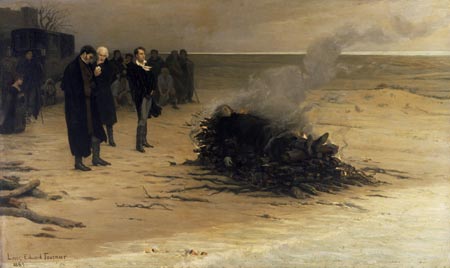
The Cubism of Unity: Shelley and the Myth of Monogamy

The Funeral of Shelley by Louis Edouard Fournier
   Thy wisdom speaks in me, and bids me dare
Beacon the rocks on which high hearts are wrecked.
I never was attached to that great sect,
Whose doctrine is, that each one should select
Out of the crowd a mistress or a friend,
And all the rest, though fair and wise, commend
To cold oblivion, though it is in the code
Of modern morals, and the beaten road
Which those poor slaves with weary footsteps tread,
Who travel to their home among the dead
By the broad highway of the world, and so,
With one chained friend, perhaps a jealous foe,
The dreariest and the longest journey go.

   True love in this differs from gold and clay,
That to divide is not to take away.
Love is like understanding, that grows bright
Gazing on many truths; 'tis like thy light,
Imagination! which, from earth and sky,
And from the depths of human fantasy,
As from a thousand prisms and mirrors, fills
The Universe with glorious beams, and kills
Error, the worm, with man a sun-like arrow
Of its reverberated lightning. Narrow
The heart that loves, the brain that contemplates,
The life that wears, the spirit that creates
One object, and one form, and builds thereby
A sepulchre for its eternity.

From Shelley's Epipsychidion

The dying words of my great uncle, who would have been 92 this week, were "focus on one thing". I've always had multiple affinities. As a creative person, my mixed mediums, cross-genre, multi-instrumentalism frames of mind spill and interweave throughout different art forms. I often wonder, should I commit to one thing entirely, and from that foundational trunk, branch out into the world of infinite possibility? In my arboreal metaphor, I am a forest. 

I think my great uncle might be proud to look upon one of his favourite of the younger generation, and see that I am not following his advice. For he was an iconoclast himself, through and through. Of the first class of Jews to enrol in university in America, he was proud to transcend the status quo, the social norms and family values of his time and explore the hard-won science of novelty through physics and chemistry. 

Yet, in love, I am elastic enough to disagree with my creative self, and traveling beyond the creative-destructive duality, to see the magnificence of love as an enduring unity. I see only One Love, especially when looking upon the dear face of my beloved wife. 

The late Ravi Shankar exhibited a profound connection to intensive unity in life focus in the documentary Raga, while Lawrence Ferlinghetti espoused the delights of being a multidisciplinary artist in both poetry and painting in his essay, "From The Gone World". To each their own, to each their one, and one to each. 

See related post: Shelley and the Old Man: A Poetics of Wisdom
_________
A forest of brains, pantomime expressionism. The canvas is blank. We stare, of ancient rivalry, to whiplash a brush of paint across the rough, splotchy face of collaboration. The collaborative stare ensues. Our eyes lock under a dark cloud of empty highs and lonely madness. 

Les deux amies by Thorvald Hellesen
A pastel cubism intermingles with pointillist ink. Our minds snatch and hiss at the dizzying array of subdued pigment and hints of future colour. It is group inspiration, retching from the distended bowels of two fiercely separate artists of waste. And in a moment of communal haste, aggression holds the creative fire of my murdering hand, and I impale the throat of my fellow artist, friend and comrade with an ink brush. Our painting is finished, our art begins.
_________
"…in a play…a dream play brings up the soundless deep…in the emptied awareness of emptiness…playing on a dreamscape of silent depth…up from the upbringing…strong with remembrance in the absolute living…living among complicit guests and their following remarks…

...

…in the native dirt…and to speak to the stone…and to speak through our pain…the pain of our individuated backs…grated and remaining uncured with the booming fate of a motionless mountain sky…journeying around the headless round of the tailbone crack…remembering through a numbing moment…

…a memory…lost to the unchained back…still writhing with touched passion…"


excerpts from "Fragmentary Being"

Thursday, 18 October 2012

Succubus, Temptress of Mystic Remembrance

Lilith by John Collier
"In folklore...a succubus (plural succubi) is a female demon or supernatural being appearing in dreams, who takes the form of a human woman in order to seduce men, usually through sexual intercourse. The male counterpart is the incubus. Religious traditions hold that repeated intercourse with a succubus may result in the deterioration of health or even death." Wikipedia

In Hebrew and Arabic mysticism, the figure exhibited above, of Lilith, is the central character for mythic remembrance of the succubus folklore, where she is a source of domestic superstition and the root of cosmic evil. Read more from the Jewish Women's Archive.
________

Low-lying jungles emerge only steps from the sea wall. As I enter through the darkening canopy my footprints sink deeper into the unsure ground of dying vegetation. I see a man and woman walk assuredly in Muslim dress. 

Muslim shawl-makers, Kashmir 1867 by William Simpson
This is Mother India, though I feel I am trespassing, at the dangerous edge, where two worlds have collapsed side by side. At seeing their weary countenances, their grimacing jaunts, I recoil nearer to the seaside, where the forest is less thick and try a new entry point. Again, wandering through the sweep of jungle, my mind presses onward with increasingly bleary sight as the landscape closes in and my sight nears my eyes, confronting the formidability of a climaxed rainforest. 

Lovers shoot at a tiger in the jungle.
 Illustration to the mystical Sufi text Madhumalati by Meister des Madhu-Malati-Manuskripts
As I enter through a clearing, I see a young woman, a Punjabi Sikh. She welcomes kindly, and warns me of the dangers ahead, though she reminds me that as long as I travel through the lands of her people, the Sikhs, I will be safe. 

Portrait of Rani Jind Kaur aka Jindan by George Richmond
I wander on, enlightened by the meeting with such a kind and endearing sprite. Increasingly entangled in the impenetrable bush, I come to a massive tree. Immediately, I begin climbing to gain a vantage point. The limbs are smooth and strong, a true jungle arbor. As I feel for a lookout, the branches stretch me inwards, and I rest on a limb as thick as my body, crawling toward a knot of branches creating a homely stand, a shaded hollow within the body of the tree. As I press on amid the enwrapping arms of the humungous tree, a woody formation beckons with the same quality as my bedroom. 

Abu'l Hasan and Mansur Squirrels in a Plane Tree by Abu'l Hasan and Mansur
Again, I wake, remembering the seaside cliffs beyond the jungle’s edge, the grandiose rocks, welcoming my step, as I notice two women of different religious custom playing, bounding from rock to rock with amiable laughter and sisterly freedom, I begin sketching in primary colors and rough lines, with an innocent beauty, and gravity enough to keep my word.   
_________
Where does the apple fall?
From a rootless tree?
A groundless source?

- excerpt from "My Name"

Sunday, 14 October 2012

Reflection on "The Force of Character" by James Hillman


James Hillman, an archetypal depth psychologist, whose post-Jungian conception of the human experience is essentially imaginative, and whose amoral fluctuation between endurance and immaturity lies nascent in the temporal grains of salt which gather and line the throat with ever increasing grab as aging commences upon the personality. Written at an old age, the author speaks clearly against any kind of aging therapy, and humanizes the current malaise which treats aging as a virus.

The author unwraps biological naturalism with the psychological bloom of a mind fermented with insightful, though not inundated, research on the literary and aesthetic character of human aging as a welcoming asset to life, in flagrant contrast to the ceremonial traditionalism of preparing for death, a non-issue in the continuous envelopment of life throughout the growing and falling of seasonal lasting. Dreams are referred to for their imagistic plentitude in bringing the holistic human experience towards fruition in the entire round of consciousness.

In short, Hillman's psychology is life-affirming unto the limits of modern knowledge-bearing with regard to the biological strength of humankind to age well and vigorously, as an essential presence in social reflection, as a memory of characterful belonging in the psyche of an unconscious gathering of the old triumphant spirit of age in all its mythic fortitude and human vulnerability.

Read Scott London's brilliant interview with the late author: On Soul, Character and Calling : A Conversation with James Hillman
__________
Strutting down main street, Northampton, the little city atmosphere in a smaller town, brevity of metrosexual burning. Eyehole of gouged recollection, that there is a grayer hiss over the obscure horizon edge. A paranoiac whereabouts, a drinkability churning in the ingrate stomach as cold rice turns to frothy fluid within mellowed bowels. The attuned ear swings in frantic respite as the free march to movie theatre skies nickels and dimes my racy birth rite beginnings in the stingy hollow of American noonday education.
Northampton (Massachusetts) by William Henry Bartlett
Deeper along the edge of the township, towards rougher pasture, the greener grass gives to a brown floor of the barn stead. Outside, a reenactment of the medieval lance posture, only instead of a game between knights, the Anglo matador speaks in a murderous war with the human horse. I try my hand. With two lances upraised, I pierce the flesh of a gorgeous brown horse, mirroring the hue of the dirt circle fenced by a weak wooden ring and an audience steeped in American farmhouse poverty. As other horses, unsaddled and with fierce eyes, carouse into the ring, I jet from the gathering into a blacker city.
The Present by Thomas Cole
The jurist is deliberate, patient and silent. Instead of an easy interpretation by the passive jury of bored, directionless public witnessing, a guitarist lights the court with unfailing melodies, an original spirit of human will, to impose the individual struggle with death outside of foreign deliberation in the mind of an other. Because truly, in listening, the other melds seamlessly with the brain of a decidedly active witness, pardoning all in the sonic flight of metaphysical charm.
_________
Gazing at my Love's face, I see through the apparent reality to a frameless art. A sacred geometry in the flesh. A timeless elision, going beyond spent energy.

To consume a day; imagining with laughter in the midst of family. 

- excerpt from "Gazing at Love's Face"
 

Wednesday, 26 September 2012

Dreamtime and the Repatriation of Sacred Letters

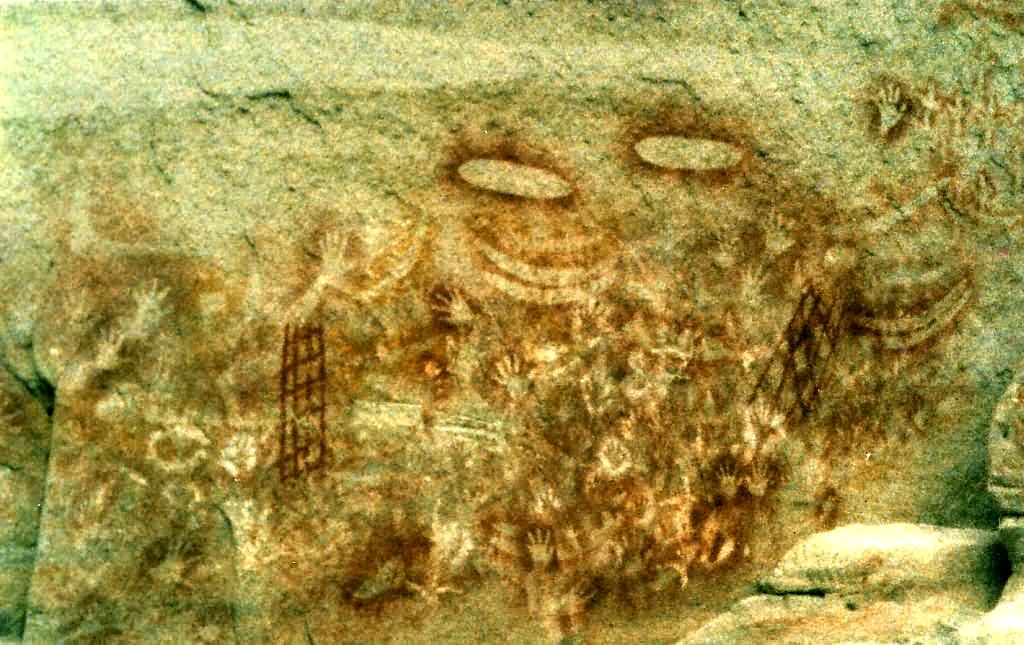
Stencil art showing unique clan markers and dreamtime stories symbolising attempts to catch the deceased's spirit
"The source of the word alcheringa is Arunta, an aboriginal language of Australia. Sometimes translated as “the dreamtime,” it refers to a mythic world that existed at the beginning of time and continues to exist in our own time as a parallel world, revealing itself whenever we dream and whenever someone speaks or sings a myth." Dennis Tedlock, An Introduction to the Alcheringa Archive (From Jacket2, also on Jerome Rothenberg's Poems & Poetics

In the first edition of "Alcheringa" a quote reads, "He who loses his dreaming is lost", attributed to "Australian Aborigine". In opening of the Autumn 1970 journal, the final "Statement of Intention" reads, "to combat cultural genocide in all its manifestations". That being said, it is curious to read such studies as that printed in the Australian Journal of Media & Culture (vol. 2, no. 1 1987), where an article by Vijay Mishra entitled, "Aboriginal representations in Australian texts" reads, 

Forgotten I lost dreaming
Country I left forgotten lost 
which is epigrammatieally reduced, by the translator T.G .H. Strehlow, to "He who loses his dreaming is lost," is directly related to a failure to perceive the radical difference between oral poetics (the fluid verse translation) and the wrillen text (the epigrammatic reduction). Obviously no one can maintain a total separation of the oral from the written.

Meanwhile, if one searches in the active publications of Australia's Central Land Council, an Indigenous repertoire of activism and scholarship dedicated to principles of sovereignty, there is a very interesting article on the Strehlow, the subject of lost attribution in Alcheringa's English translation from "Australian Aborigine"entitled, "The Strehlow collection of sacred objects" regarding further issues of repatriation, while focusing on the repatriation of sacred object collected by the modern anthropologist, as opposed, in the case of Alcheringa, the repatriation of sacred letters, collected by post-modern anthropologists of world literature.

Headgear worn during dancing (wood, human hair, kangaroo hair, feathers); Arrernte people, Australia
________
My mother visits her perception of my reality. North of here, it gets even colder, earlier, and winter is almost perpetual. I ask her exactly what her interests are. She is unresponsive. There are two streets that accommodate visitor appeal, with cafes and the like. We walk on the frozen sidewalk ground. A haze of white ice sheathes the panorama, compressing the moment into one look of sheer petrification. Walking down the main street, it seems as though no one lives here, the outside aesthetics are drab and unused, mere coverings for the inside hospitality, driven by weathered necessity. As we walk into a café, I realize I have enemies here. In the back hall, awaiting our hot teas, a youth of my age wrestles my muscles and joints in a twisted bout of unwanted pain. Unable to satisfy his need for violence, I ask that we exit the café, and so we return into the cold, sunless ache of our thirsting feet. 

Shoes (made from feathers and human hair); Arrernte people, Australia
Midway through the year, I go south to visit my father, to witness birth. With video camera in hand, I capture my contracting stepmother on the front lawn overlooking the St. Lawrence River. In great joyful upheaval, she cries, “it’s a boy!” as the body emerges. 

Ku-ring-gai_Chase - petroglyph, via Waratah Track (Rock is triassic Hawkesbury Sandstone, 220 million years of age)
That night, sitting lone by the coal-burning fire, I am visited by a presence. A naked Indian, greeting me with the power of a thousand friendships, unites in my melodrama with healing insight. He teaches me the power of the directions, North and South. The cold childless North of human danger and the impenetrable forces of nature, and the warm South of youthful diversion in the over-ritualized haunt of abundant fires. He reaches out to me, to plead with him for the stars to answer in earthly illumination. While with eyes closed, he recounts the bitter tales of repatriation, colonization and the staggering visions of post-genocide rehabilitation, for the entire world. And I wake, alone. The sun, directly overhead in a cloudless sky, is in full eclipse.
________
A presence belied in the soft air aglow with diligent drizzle
         From this, our American lighthouse heaven,
                 Alit with dream
                 in stories told by great-grandmother’s
                          Life lived outside the pages of the “true”
                                      And into the truly earth-quaking
                                      of dream
...
Men whose throats burn with the soil of their unloved mother
        Croaking up agro-fossil drains
                Reaching from modern skylines to prehistory,
                issuing from our Christ-death
...
In the housed mystery of our yet undiscovered world
        Beneath each colonial home
                Shot out of the ugly worldview
                        Misplaced over the moral genealogy

In an ecological philosophy
        To dry the eyes of our spectral hosts
               Who watch and wonder
                        With still unborn eyes

- excerpt from "With Still Unborn Eyes"


Thursday, 23 August 2012

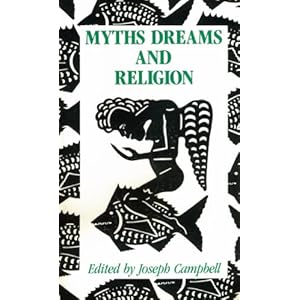
Reflection on "Myths, Dreams and Religion" edited by Joseph Campbell


In this collection of eleven essays, edited by Joseph Campbell, I found a wealth of impassioned research into the mystagogy of our literate foundations. My reason for reading this piece of fine literature, was to creatively unmask the roots of a new mythology to re-identify with humankind, i.e. humanity, fashioned by my own literary aspirations. With essays by Alan Watts, Joseph Campbell himself, and other fascinating minds embedded in the culture of mythological literacy, I mainly focused my reading on the traits of human self-identity as it has evolved throughout mythic time. With regard to dreaming, the essays touched on the subject in the light of religious cultural referencing, often comparing Levantine with Indian dream philosophy, as either a visionary or intermediary state burgeoning natural self-transformation; an acorn, if you will, planted in the rough soil of the unconscious by the prehistoric mind of our mysterious bio-archetypal origins. And the perennial quote, from the final essay by Richard A. Underwood, "Myth, Dream, and the Vocation of Contemporary Philosophy" a reference to Heraclitus' Fragments reads, "Even sleepers are workers and collaborators in what goes on in the universe."

See my reflection on Amazon

_________
Shrapnel of memory in the ephemeral reflection of a broken shard forced up the neck. Checkerboard flooring sprayed with clear blood. I loosened my grip around his slippery esophagus-cored flesh, dripping with the moldy puss in long-neglected balloon, deflated in the workman’s hand. In the dense obscurity where the long way back from the faint escape route memories still linger. Drinkable, luring, the tidal flush of shared pain extorts the constant sleep, the blathering, ongoing consciousness, never put to rest by the wasted highs of an unceasing mind, running off the bare edge of a fleeting freedom to simply be, and not be moved to contemplate homicide and escape in the backdrop imagination of the unreal & surreal & real fire of raw instinctual creativity.    
_________
Strangle/Strangling
"To dream about strangling someone, or being strangled yourself, means you have been hiding an important part of personality - one that you need to express to be happy - just to please someone in real life." (iDream)
_________
of memory and the strange
the lofty touch,
reminiscing beyond the treasured wine of death
as an end to meaning
in the fingertip and pupil
shone lunar and astral
with vanished luck

- excerpt from "hallelujah"


Wednesday, 1 August 2012

To Dream Is To Conceive An Other

"I had a dream also before you were conceived which was quite interesting, there was a being there standing in the corner, it was a male, and said to me in the dream, said, 'please will you give me a place in your body.'" - Mother of Tulku, from the film by Gesar Mukpo

I have a friend whose named their first son a Tibetan name after she reportedly had seen the child himself appear in full bodily form prior to conception, asking if he could be born through her. Is he a Tulku? What does this say about the mother? Do you have any similar experiences, first-hand or otherwise? 

As a reclusive student of Buddhism, who became delightfully initiated into Green Tara devotions with a Rinpoche Geshe Lobsang Tsetan at a chance meeting, and in that series of meditational initiations befriended a forest hermit who's been a lifelong supporter of my work ever since, I will add my opinion on tulkuhood (please see my Green Tara Post for more). 

In my reading and meditation, I see Buddhism as an enlightened practice of seeing, in the way that Joseph Campbell saw myth as creative perception, and the way that Terrence McKenna saw shamanistic hallucination as an archaic mode of seeing through the phenomenal nature of human subjectivity.

In other words, I see tulkuhood as a universal expression of a natural phenomenon that is experienced every day, in every moment, by every one always. That easily said, without having redacted with much scholarship on the matter, I can humbly reflect on the notion that a Tulku is simply the ancient wisdom of indiscriminate practice, which resides in all social and personal forms, within all sentient beings. 
_______
We met in bars, malls, cafes, and sidewalk parks. The entire time, it was as though we met in the privacy of his home, even more, in the secrecy of his mind. He had let me into his imagination of himself. The way he was so sweet, surreal. Figments of smiles and laughter lit up our shared space as from a shared brain. He spoke with a borrowed voice.

The duplex works well for me, a single man on one side, my best friend and his family on the other. One day, they show me their leaking roof, a madhouse of water and anxiety. Unable to help, we attend a nearby gathering, an awe-inspiring array of human diversity, as an earmarked page in an unassuming book. A busker presents his CD release. On a new accordion, he plays the delight of all, while my best friend retreats back into our house, ready to subsume the difficulties of an entrenched domestic struggle. I continue on through the peopled havoc, stirring blindly with blissful listening and warm-hearted aspirations, to embrace the heart of our local culture and be drawn into its imperfect cultivation.

This is the last day, he said. No visitation, no indrawn temptation, not a flicker of need. What happened? I decided to see for myself, the state of this new loving presence, his shape-shifting personality beckoned me, although I had not seen another side, I knew his face does change.

Entering his house, no one welcomes me. Walking up the austere mahogany stairway, the banister is buffed and shining with inestimable taste. The doorway to a study is slightly open. A deep, unwavering silence overtakes my curiosity, I am driven through with the pain of loss, a reality I had known all along, though served so politely, mind-to-mind by the loving acquaintance. He sits at a high leather chair, bearded as not before with elder white beard, square-faced and unmoving. His countenance, exposed in the antiquated sepia light, is only recognizable as an acrid tinge of sentiment and memory, subtly issuing as from within, between our speechless minds. The instant is nigh, as he looks at me, stone-faced, an unseen floodgate opens from his untamed eyes. Then it fades and I leave, pained with eternal mystery of who.
_______
Age
"To dream of age, portends failures in any kind of undertaking." (iDream)

When I read the dream above, I immediately think of McKenna's statement, "you become unrecognizable to yourself
_______
donating beautiful soundless hearts
through world music motion

our one universal language emotion
& the commonly evolved ground broken through violent social awareness

meant to survive generations
with the traumatic blessing of the great earthly groan

from
MA, virgin, temptress,

my Kuan Yin

- excerpt from "I drank in the stupor"

On another poetic note: check out my latest publication, a very buddhistic haiku posted today on Marco Polo Arts Mag


Wednesday, 18 July 2012

Spiritual Murder of the Mythopoetic Role


Fuxi and Nuwa by Anonymous
"Mythopoeisis is the act of shaping a myth into a new form, of making it anew; now I believe each of us does this poetic act daily, only we are not conscious of it, but myths, if alive, are always being renegotiated; we cosign them once more each day we wake up and go about our lives; but the action is unconscious. Poetry makes these processes conscious."

"...the individual psyche cannot, much as often it would like to, to be separated from the collective. Understanding the archetypal nature of our waking life and of our dream life would go a long way to revealing this truth."

- Dennis P. Slattery, from an Interview with Archetype in Action
________
“I have never traveled through West Africa! I have only seen East Africa.” I shout to the unconcerned on a bus through mud flats on the outskirts of town in Ghana. “It’s more industrialized here.” Suburban homes, colorful and well-roofed lie interspersed atop the unstable ground. Nothing grows here.

The plains shake off their sanded winds out onto a horizon as flat and majestic as any under a dim gorge of sky above. We approach an underprivileged village. The beams of their homes show with skeletal fright, a ghost of a shelter buries the inhabitants under a schema of incongruous monetary divisiveness. I am let out here with a group of excitable travelers. After a few bitter hours gazing into the masked poverty, the rest saunter off, straight into the shale-thin horizon, across the plain desert, leaving me behind to my shameful enjoyment.

The first unusual occurrence I notice is an old man, an elder, conducting witchcraft rites from a burlap, animal hid covered hut, half-emerging from a height of wires in the modern town center. He presses his hand up against a carved, convex piece of bone and wood overhead, pressed into the ceiling of his dusty keep. With that, the town comes alive. Animate devotion is surpassed unto grandiose might through communal dance, a powerful music enticing all to couple and find happiness in group intercommunication through a thankful greeting of sprites.

Then, chaos breaks loose from the fire. I disentangle the group of its emotional stability. I use a dull knife, a metal shard from their central structure. Cutting off hands and brazenly ambushing in an intoxicated insanity, bloodthirsty, I drive the community from their healthy nest. Only a few bodies remain, hanging onto life with the remaining ligaments and tendons still connecting their pulse, vibrating with accepted fate, a spiritual murder.

I flee. Following what I had learned in the village, I begin to collect seeds in the wilderness, these are jujus of flight. I need a new identity. I received wind of another African meeting, in the next town. Before I can get there, the Red Cross identifies me, soon to be incarcerated, deadened with madness I swallow the seeds. My flesh speaks of me, it says, “I am guilty.”
________
Murder
"If you commit murder, it signifies that you are engaging in some dishonourable adventure, which will leave a stigma upon your name...If you have a dream of murdering another, this is a warning that you must keep in control of your temper and emotions at all times and not get enraged to the point of murderous intent...You may also have some repressed anger at yourself or at others." (iDream)
________

clockwork porridge
spread over an island tongue
marauding, blasphemous
across seven oceans

timely
with education's pandemic drug:
the book

compromising home speech
on the First People's sand-quipped names
harboring love in their own unique hearts
with a history untold,
forgotten and enslaved to foreign grammar
to safekeep continued histories
of colonial struggle
in the vault of young minds
playing sound asleep
in the therapeutic mud
of their own beautiful creation.

March 7, 2011
Chinatown Calgary