Primarily a writing exercise, this dream journal-inspired blog is a quiet introspective sojourn into the process that we traverse in going from private dream to public art. I see our dreaming as an internalized mythmaking. As I philosophize and expressively exhibit dreams, both private and public, I encourage and delight in creative language as a way to practice experiential metaphors through a “public dreaming." Writing Theory: Creative Dream Fiction
Showing posts with label genocide. Show all posts

Monday, 20 May 2013

Dreamers Reconcile with Harsh Truths: S. Sudan and the Music of Memory


One thing that keeps me pushing these painful stories; the dreams I have. Sometimes, like, the voices of the dead that I have seen would tell me don't give up, keep on going, because sometimes I feel like stopping and not doing it, because I didn't know what I was putting myself into. (Emmanuel Jal, 2009)

What are your hopes and dreams?

I want to fly an airplane.

What else?

I want to be able to study in the daytime. And in the morning. And I want a day that I can just live…so I can build my house…where there aren't any problems that could destroy it.

Emmanuel Jal, age 9 (War Child)

On April 8, the Peace and Reconciliation Conference in Juba, the capital of South Sudan, began an unprecedented step forward in the nation’s history. On Monday April 15, South Sudan President Salva Kiir Mayardit suspended the conference indefinitely. Besides the $885 million contributed by the Canadian federal government to Sudan for humanitarian assistance between 2006-2012, many of the 4 million plus South Sudanese displaced have resettled in Canada to remain active in community rehabilitation. Activist groups, both based in South Sudanese communities as well as larger Canadian social organizations continue to sustain the meaning of reconciliation not only as an example for South Sudan, but for the globe.

            The most pressing issue with regard to reconciliation in South Sudan is creating an inclusive society where larger social participation is grassroots-oriented. In a country with one of the lowest literacy rates in the world, with over sixty unique spoken languages, democracy is a precarious notion for most. In an open letter to South Sudanese Vice-President, Dr. Riek Machar, David Mabior Atem of New Sudan Vision wrote:

Healing those long inflicted wounds against one another cannot be dealt with in 3-4 days as well as top down approach instead of bottom up approach…Another added advantage of beginning at grassroots level is the flexibility of language (dialects), which can result into high interactive and productive engagement.

            Dr. Riek Machar launched the official opening of the conference, which trains 200 peace and reconciliation mobilizers. “The newest nation on earth has embarked on a journey of healing for the national reconciliation,” the Sudan Tribune noted. Dr. Machar had also been married to British aid worker Emma McCune. International recording artist Emmanuel Jal, winner of the 2013 Calgary Peace Prize, had been rescued from Waat, South Sudan by Emma McCune as a Lost Boy. Jal took refuge in Kenya, eventually leading him to the UK, and Canada. Emmanuel Jal’s acceptance of the Calgary Peace Prize on behalf of all South Sudanese marks an especially significant moment in the common reconciliation efforts of Canada and South Sudan.

            “He uses himself as an example in his storytelling of how hard and difficult and long it's taken for him to begin the process of healing and of reconciliation with his former enemies, and that's the story that he told,” Consortium for Peace Studies director George Melnyk told The Media Co-op. “He's also very careful to not critique the South Sudanese who made him a child soldier.” The Consortium awards the Calgary Peace Prize to global visionaries working towards peace, beginning with Hiroshima Mayor Tadatoshi Akiba in 2006. The Consortium is currently the only post-secondary Peace Studies initiative in Calgary.

            James Nguen, founder of Biluany Literacy and Water project, responded with deep concern in an Op-Ed piece in South Sudan News Agency, decrying the indefinite suspension of the Peace and Reconciliation Conference in Juba. “This unfortunate development shocked everyone in South Sudan and around the world. There were no further details why the project was suspended,” Nguen wrote to The Media Co-op via email. “If people reconciled, then there will be no petty tribal raids which the past 8 years cost South Sudan government and the international community millions of dollars.”

            Although the Second Sudanese Civil War, which ultimately led to an independent South Sudan, started in 1984, the world did not respond until 2004. The political situation in Sudan, and now in South Sudan as well, is very complex and is steeped in both European colonial history as well as Egyptian foreign policy. The legalities of genocide with regard to reconciliation have remained unparalleled in controversy ever since the United Nations adopted the Genocide Convention in 1948. “There was a genocide in Darfur, and there was genocide in South Sudan from the beginning,” James Nguen said to The Media Co-op. “In order to secure the CPA [Comprehensive Peace Agreement], they could not force Al-Bashir to step down without confidence that his successor would respect the CPA. Only one of the three agreements of the CPA was met, which included peace agreements with Abyei, secondly, and Blue Nile and Nuba Mountains as a third agreement.”

            The outstanding agreement to respect the right to self-determination with the people in the Nuba Mountains has especially intensified on the issue of genocide. Global activism in solidarity with the Nuba people has followed in the wake of the independence of South Sudan in 2011, including the End the Nuba Genocide Coalition. The only area not consulted in drawing the new national border, Abyei, is directly impacted and holds outstanding land disputes. Abyei territory is a priority for the Juba Conference.

            South Sudan’s independence was “the most significant redrawing of the map of Africa since the colonization,” Angel Batiste, Area Specialist with the Africa and Middle Eastern Division of the Library of Congress in Washington D.C., noted, before introducing the lecture, Cultural Heritage in South Sudan in November 2012. 

            During the Calgary Peace Prize events this March, Emmanuel Jal raised eyebrows concerning the latest news from South Kordofan, where another genocide in Sudan seems to be taking shape with unprecedented momentum. “UN people down in Sudan are saying there’s a possibility that in South Kordofan that the genocide there could be worse than in Darfur,” said Jal to an eager crowd at the University of Calgary on March 1, 2013.

            The diaspora is truly integral to peace activism for South Sudanese. “They actually support their family members more than even the government does,” Jal told The Media Co-op, referring to the diaspora of South Sudan and their role in the reconciliation efforts ahead. “If you’re educated, if you have a degree in whatever form, don’t go home to look like you’re going to be employed by the government. You go there as an employer. Go there and use the skills we have there and establish something, because the country is still new. Whatever you touch will prosper.”

            Since late last year over sixty genocide scholars and anti-genocide activists initiated a letter writing campaign in response to the genocide atrocities in the Blue Nile and Nuba Mountains. These letters have fallen on what South Sudan’s leading independent news source, South Sudan News Agency has called, “absolute silence”. The Atrocities Prevention Board (APB), founded by U.S. President Obama specifically in response to the lack of U.S. governmental initiative towards preventing crimes against humanity and genocide, became the most important, and also most unresponsive, target audience. This April, South Sudan News Agency published the latest letter, sent to U.S. Ambassador to the United Nations Susan Rice. An excerpt from the letter reads:

We never expected, though, to have our letter (and now letters) go unanswered… when we, scholars of genocide studies and human rights activists, fail to receive a reply to a letter that we first wrote back in December 2012 and have now sent five times to four different individuals affiliated with the APB, it, indeed, feels as if the APB and its focus/work is little more than “a sideline in our foreign policy.”

             Similarly, in recent news, the only head of state in the Americas to be tried for genocide crimes, U.S.-backed Guatemalan dictator Efraín Ríos Montt, saw amnesty on April 18 after the current Guatemalan president intervened to have the case annulled. “It was the first time that any nation had been able to use its domestic criminal courts to try a former head of state for genocide,” said investigative journalist Allan Nairn on Democracy Now!

            Despite ineffective government intervention, independent non-profit and charity organizations, spearheaded by leaders from South Sudan, continue to work towards a sustainable society through reconciliation efforts. Biluany Literacy and Water Project, a development initiative led by James Nguen based in Calgary, has been active for over three years in building wells and providing educational resources in South Sudan. “There is no sustainable infrastructure in South Sudan, and without a lot of assistance from the international community, trust cannot be rebuilt,” Nguen said to The Media Co-op. “The greatest struggle is to represent ourselves, to know who we are as one community. The war eroded our cultural values, our history, our society.” Nguen recently partnered with Gua Africa, the charity of Emmanuel Jal, to fund well development and to organize a conference in Canada to mirror the Peace and Reconciliation Conference in Juba.

            Since winning national independence, other organizations in the Calgary area, home to the predominant South Sudanese community in Canada, are working towards reconciliation. South Sudan Peace Building International Foundation Inc. (SSPBIF) is one among them. Secretary of the SSPBIF Kuir ë Garang is also a prolific multi-genre author of six books. “People in South Sudan tend to regard literature as ornamental, they don't see how it can help relate people, to help people find relations between one another, so they can get together and have mutual understanding through education,” Garang told The Media Co-op. “Through literature, we can better represent ourselves. Now up to 70% [of people in South Sudan] are dissatisfied with their government.” Garang is currently working with a publishing house and bookstore in Juba to open a forum on multiculturalism and diversity for professional writers from Canada and South Sudan.

            Rural South Sudan is reputedly the most marginalized and underrepresented, effectively causing the need for grassroots inclusivity in Juba’s Peace and Reconciliation Conference and beyond. Resource conflicts both at national (oil exploitation) and grassroots (cattle raiding) levels have been at the root of social disorder in South Sudan. Augustino Lucano, a South Sudanese migrant from the Equatoria region living in Calgary, shares an unrivalled success story in bringing together divided rural ethnic groups and organizing incipient meetings with government representatives.

            Lucano received personal permission from South Sudan MP Joseph Lokodo Kolombos to open a peace center in his home region of Equatoria after presenting to the MP a research paper inspired by an Initiatives of Change workshop. “The problem is that people in rural South Sudan are still very divided, they do not see a way to live together yet with the whole nation yet,” Lucano said to The Media Co-op. Lucano, a member of the Didinga ethnic group, lost two brothers in conflicts with the neighboring Toposa people. “The Maaji peace centre is located in the middle of Didinga and Toposa land, in a flatland valley, where both tribes can meet peacefully,” Lucano conveyed to The Media Co-op. “So far there has been no raiding at the peace centre in Maaji. First, it was necessary to establish the peace centre where resources could be shared, and then we can discuss reconciliation.”

             In February 2013, the South Sudanese Minister of Wildlife’s visit to the Maaji Peace Centre drew tears from elders and children alike who had never before seen a car, no less a government car. “It showed how marginalized these people had been in the national developments, and also that the government was starting to establish a relationship with rural people, including them in the dialogue of the upcoming Peace and Reconciliation Conference in Juba,” Lucano told The Media Co-op.

             2013 is quickly becoming a year of unprecedented global reconciliation movements. The Peace and Reconciliation Conference in Juba is especially significant to Canada with its direct relationship to the activism of the Canadian diaspora of South Sudan. With the first head of state in the Americas having faced genocide charges, a more intimate link can be made with Indigenous peoples’ history in Canada. Will Canada renew its role as a global human rights leader in the wake of mounting genocide awareness around the world? Ongoing debates in Canada, spurred by Idle No More, emphasize reconciliation with First Nations as an inclusive reconciliation with humanity. 

This article previously appeared for The Media Co-op on April 29, 2013
___________
the road to rome is paved in bones by RK
madness by RK
the human rabbit hole by RK
old west art by RK
papercut & stoned by RK
____________
conjuring a sense of the once roaming herds of mammals that lit upon the open horizons of our once naked landscapes - the frame drum evokes a sacred connection to our mammalian evolution through a heartened soul brethren with large mammals, and our precarious evolutionary stability as one of the most vulnerable types of living creatures on planet earth - in the piece, i speak of the charge of the electric pole of patriotic industry over the breadth of our continent as the sacrifice of ourselves, as male-female witch, burned on the flagpole of national identity, a sacrifice brought about by the all-devastating silence of voice, speaking of a way of life not bound to the dominant settler society, yet existing now only in negation to the sedentary ecology of consumerism and vacation, with regard to the lost history and memory of our true selves in communion with the deeper movement of life as we once knew it


Placed Anonymity, like the chapbook, "A Sick Society Amuck" is inspired by the words of Jiddhu Krishnamurti, iconoclastic spiritual philosopher, who said, "truth is a pathless land". Truth lies in the anonymity of place as is, without meaning, as a river is in essence meaningless until commemorated by a name and story, whether of scientific or folkloric mythologies.

in a pathless land, how do we come to know the land, or know what is true, HERE? that exploration is the foundation for this four poem chapbook, eventually culminating in collectivist thinking, to aspire towards a basis of unity evading the muddled institutionalization of creative freedom


Sunday, 11 November 2012

Remembrance in the Real Imagination of James Nachtwey


"This man was in an NGO feeding center, being helped as much as he could be helped. He literally had nothing. He was a virtual skeleton, yet he could still summon the courage and the will to move. He had not given up, and if he didn't give up, how could anyone in the outside world ever dream of losing hope?" James Nachtwey, speaking about famine as genocide in Sudan

I was young when I first watched "War Photographer" a documentary on James Nachtwey. As a teenager with a thirst for truth in filmmaking, I found photography especially endearing, and especially those photographers who followed the photography dictum, "the best shot is often the closest" with unnerving deliberation in foreign countries torn by war. Soon after,  I met Paula Bronstein, a family friend, who urged me to enrol in a school for journalism. I didn't. Though today, I often write for independent media on Media Co-op. Today in Canada, the country where I currently live, the nation remembers its fallen countrymen and women who served in war. A veteran and local author, Dr. Arthur Clark, reminds us that we do not only remember our own, but all who have fought and died in war; men, women, children, and the elderly included in every corner of the globe. This year, I've begun writing a creative non-fiction tract based on my grandfather's epic 20th century life, and his service in WWII. I've found a serious self-investigation into our relationship to war, whether through an ancestor, a friend, or in one's own life, is one of the strongest sources of contemplation in our modern lives. May we remember with a full heart and a stout mind!
________

in a city park, abandoned by wartime foment, I see my grandfather, alone after battle, on the plains of southern France, with friends, he is glad, and as he sits, I notice the loosened clothing spells an ease of the loins for the local tail 

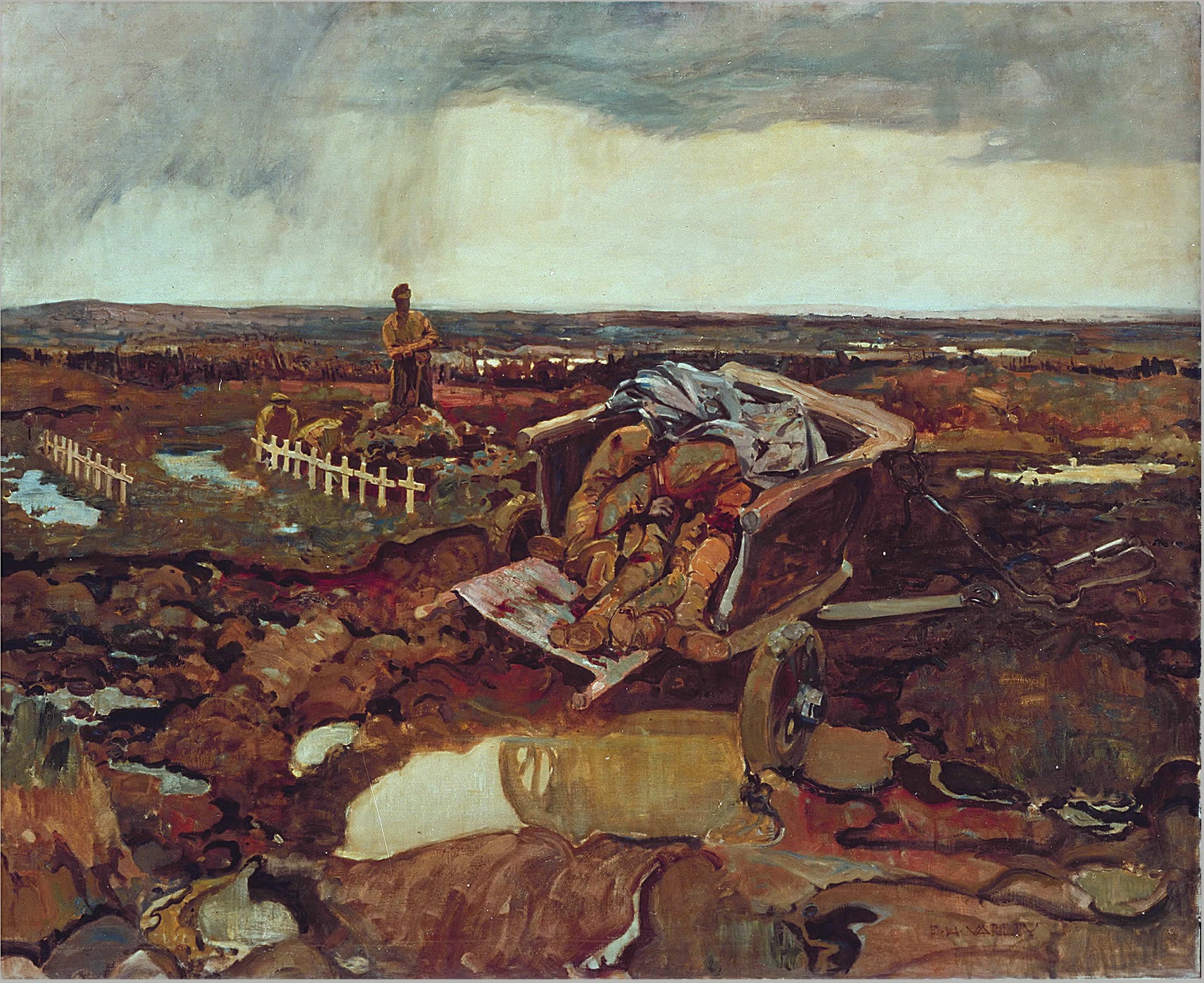
For What? by Frederick Varley
he grooms the horizon with searching eyes, and a local Frenchman arrives with a bounty of breads and cheeses for the sweetened mouths and delighted palette’s of my forefather’s company, happy in the autumn sun of deadening leaves, an old history decomposing at their warming feet
________
“The nation’s economical bosom bleeds with childless milk for the ruffian few who glare amuck into the wild spring of the beatific northeastern kingdom”
...
To bruise the English pace in an overtaking sea
With the magic and force of our forested craftsmen
Dreaming up skyline distances
Across the phantom pages of a medieval Columbian map
...
Our aristocratic exoticism
Bearing down on mountainous floods
To drown the ghastly past and its African boats
Full with the god-forsaken ash of a new America
Burning up with the Phoenix of old Mexico
...
Our human plague and its genocidal awareness
In the 21st century of medicated madness
When poverty turned to poetry in the music of her glory


Wednesday, 26 September 2012

Dreamtime and the Repatriation of Sacred Letters

Stencil art showing unique clan markers and dreamtime stories symbolising attempts to catch the deceased's spirit
"The source of the word alcheringa is Arunta, an aboriginal language of Australia. Sometimes translated as “the dreamtime,” it refers to a mythic world that existed at the beginning of time and continues to exist in our own time as a parallel world, revealing itself whenever we dream and whenever someone speaks or sings a myth." Dennis Tedlock, An Introduction to the Alcheringa Archive (From Jacket2, also on Jerome Rothenberg's Poems & Poetics

In the first edition of "Alcheringa" a quote reads, "He who loses his dreaming is lost", attributed to "Australian Aborigine". In opening of the Autumn 1970 journal, the final "Statement of Intention" reads, "to combat cultural genocide in all its manifestations". That being said, it is curious to read such studies as that printed in the Australian Journal of Media & Culture (vol. 2, no. 1 1987), where an article by Vijay Mishra entitled, "Aboriginal representations in Australian texts" reads, 

Forgotten I lost dreaming
Country I left forgotten lost 
which is epigrammatieally reduced, by the translator T.G .H. Strehlow, to "He who loses his dreaming is lost," is directly related to a failure to perceive the radical difference between oral poetics (the fluid verse translation) and the wrillen text (the epigrammatic reduction). Obviously no one can maintain a total separation of the oral from the written.

Meanwhile, if one searches in the active publications of Australia's Central Land Council, an Indigenous repertoire of activism and scholarship dedicated to principles of sovereignty, there is a very interesting article on the Strehlow, the subject of lost attribution in Alcheringa's English translation from "Australian Aborigine"entitled, "The Strehlow collection of sacred objects" regarding further issues of repatriation, while focusing on the repatriation of sacred object collected by the modern anthropologist, as opposed, in the case of Alcheringa, the repatriation of sacred letters, collected by post-modern anthropologists of world literature.

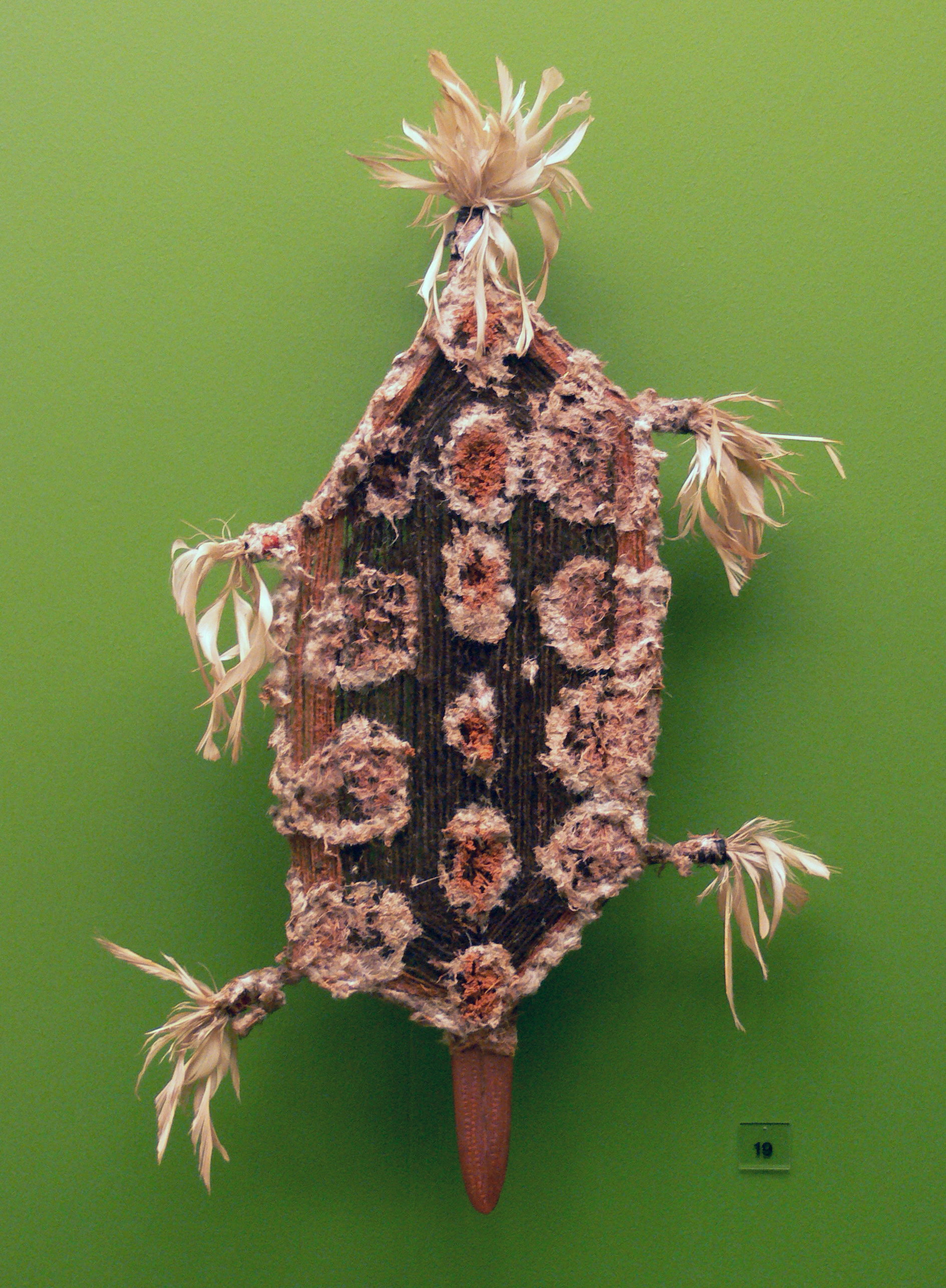
Headgear worn during dancing (wood, human hair, kangaroo hair, feathers); Arrernte people, Australia
________
My mother visits her perception of my reality. North of here, it gets even colder, earlier, and winter is almost perpetual. I ask her exactly what her interests are. She is unresponsive. There are two streets that accommodate visitor appeal, with cafes and the like. We walk on the frozen sidewalk ground. A haze of white ice sheathes the panorama, compressing the moment into one look of sheer petrification. Walking down the main street, it seems as though no one lives here, the outside aesthetics are drab and unused, mere coverings for the inside hospitality, driven by weathered necessity. As we walk into a café, I realize I have enemies here. In the back hall, awaiting our hot teas, a youth of my age wrestles my muscles and joints in a twisted bout of unwanted pain. Unable to satisfy his need for violence, I ask that we exit the café, and so we return into the cold, sunless ache of our thirsting feet. 

Shoes (made from feathers and human hair); Arrernte people, Australia
Midway through the year, I go south to visit my father, to witness birth. With video camera in hand, I capture my contracting stepmother on the front lawn overlooking the St. Lawrence River. In great joyful upheaval, she cries, “it’s a boy!” as the body emerges. 

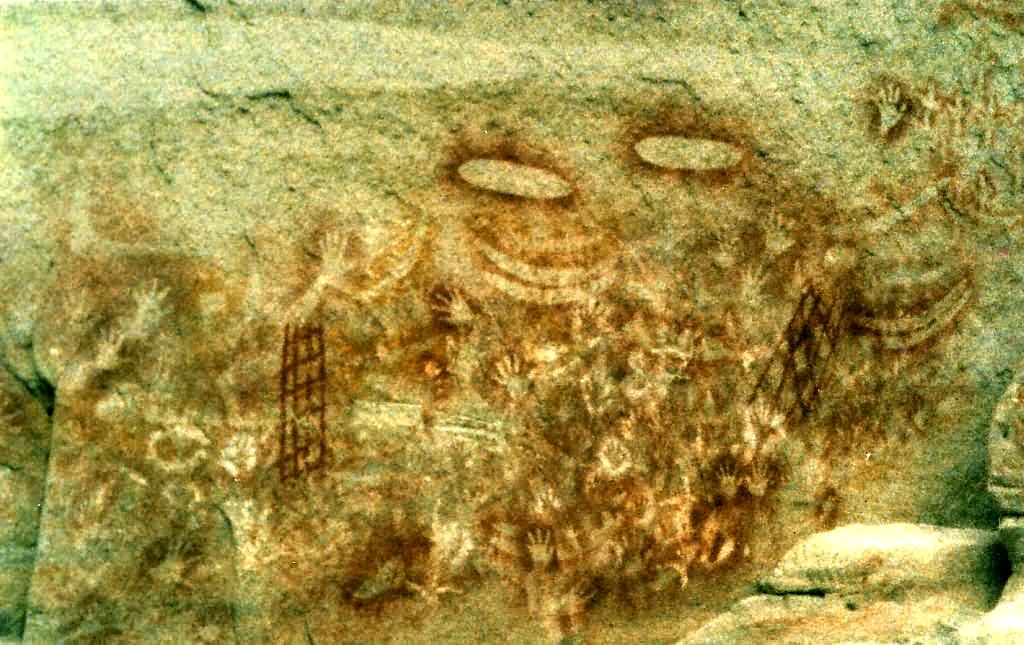
Ku-ring-gai_Chase - petroglyph, via Waratah Track (Rock is triassic Hawkesbury Sandstone, 220 million years of age)
That night, sitting lone by the coal-burning fire, I am visited by a presence. A naked Indian, greeting me with the power of a thousand friendships, unites in my melodrama with healing insight. He teaches me the power of the directions, North and South. The cold childless North of human danger and the impenetrable forces of nature, and the warm South of youthful diversion in the over-ritualized haunt of abundant fires. He reaches out to me, to plead with him for the stars to answer in earthly illumination. While with eyes closed, he recounts the bitter tales of repatriation, colonization and the staggering visions of post-genocide rehabilitation, for the entire world. And I wake, alone. The sun, directly overhead in a cloudless sky, is in full eclipse.
________
A presence belied in the soft air aglow with diligent drizzle
         From this, our American lighthouse heaven,
                 Alit with dream
                 in stories told by great-grandmother’s
                          Life lived outside the pages of the “true”
                                      And into the truly earth-quaking
                                      of dream
...
Men whose throats burn with the soil of their unloved mother
        Croaking up agro-fossil drains
                Reaching from modern skylines to prehistory,
                issuing from our Christ-death
...
In the housed mystery of our yet undiscovered world
        Beneath each colonial home
                Shot out of the ugly worldview
                        Misplaced over the moral genealogy

In an ecological philosophy
        To dry the eyes of our spectral hosts
               Who watch and wonder
                        With still unborn eyes

- excerpt from "With Still Unborn Eyes"


Thursday, 17 May 2012

The Genocidal Unconscious of America


“The U.S. is a strange society because I think consciously the country wants to believe that it does good and that it has, you know, good intentions around the world and it’s not very in touch with its subconscious self that is a lot meaner and a lot more homicidal than the self that it would like to acknowledge.”

- Charles Abourezk, Supreme Court Justice for the Rosebud Sioux Tribe
___________
With an unusual collection of friends who have never before met in person, including my childhood neighbor and my best friend in Calgary, we all set out on bikes through a nearby forest path to the ocean. We are excitable, older and more aware of our environment than ever. There is a confident appreciation for the anticipated wilderness charm ahead. As we exit the neighborhood onto the main street, still lacking any signage dedicated to non-motored travel, there is a foreboding stimulus from afar as an interrupted vacuity of law overtakes the street-laden, forested horizon. We all stretch our necks backward, blithe with eager enthusiasm to find our way to the secluded ocean vista. As we comfortably engage on our briefly paved portion of the path, a paddy wagon stops in front of us. Lights blazing with ingenious madness; the government insinuation is of madness and futility. Officers exit their vehicle, pursuing our humiliated, fading glory with a clown-faced repertoire of deception and misinformation. One cop hands me a crinkled dollar bill. Hesitant, I grab its frayed edge. As soon as the act of derogation ensues, another cop hands one of my friends, visiting from Canada, a ticket of over one hundred dollars. Sitting down, exasperated with inner frustration, my friend refuses the ticket. I take it for him as to not cause a stir.

The cops press on with deliberation, attempting to get a rise out of us through any and every means at their wicked disposal. Soon, our bikes are in the back of the van. “What have we done?” I ask myself with intensive speculation. The air smells of fish and pig, putrid. Their glares are fuel to the fire. Letting us out at my neighborhood friend’s home only a few paces away by car, as to pour salt on our bleary, wounded minds. One cop asks my friend, “What’s your family background?” He smiles patiently and responds, “Well, I’m English, and ummm…” the silence is emphasized by the piercing stare of the officer denouncing his Asian eyes with an understated slur. “And Dutch!” I say, in support of my friend before the awful reception of the savage, unannounced feigning of America’s pitiful counterterrorism. Defeated, the rest of my friends join my neighbor into his house for drinks and an indoor evening, while I angrily bike down the hill to my mother’s house with the ticket in my pocket. “I’ve got to tell them about the insipid brink of justice coagulating around our neighborhood with such asinine hubris.” I consider introspectively.

Red flashing lights drown the usual calm haze around my mother’s suburban home with inconceivable villainy. As I ride smoothly around the back of the house to peer out into the driveway stealthily, I can’t believe my eyes. “Another police raid, we are innocent! The police are the guilty ones these days.” I curse their heavy hog-head presence on our property. They have torn apart the entire garage. My stepfather stands on his smooth driveway pavement dumbfounded, entrenched in the unwelcome malevolence. Domestic counterterrorism laws have been enacted. To the local police, now in full operation as a military state, no heed is recognized for the delicate peace and earnest honesty attributed to the very population whose lives have been dedicated to their government services. Through force, the government takes full advantage of the interlocking mutuality behind the dual inception of insurmountable trickery. “When will America’s children realize they have only cheated themselves?” I clamber on, to ride myself through the neglected wilderness path. There is an ocean beyond.  
_________
Police
"If the police are trying to arrest you for some crime of which you are innocent, it foretells that you will successfully outstrip rivalry...A dream involving the police means you feel guilty for not honouring a promise or obligation...The police could be addressing Karmic Law as well as the laws in our physical world...Old dream interpretation books say that dreaming about police is an indication that you will obtain unexpected assistance with a current problem." (iDream)
________
Preconception, the snowball effect, and the end of humanity.

Thematic Abuse.
Two Versions (one for public, one unmodified).

Lost familiarity.
Generations.

“What blue fire has been found hidden these last few days?”

“It is the tax of the many on the few”

And the brandished awareness of our single life
followed into the brazen evening with full vigour.

The young woman revealed her teeth
and wore a short vision on her ring
that lacked the ability to forget.

Her rhythmic movements lied agape
to preserve our entrenched faculty
to be remorseful and sick.

We lie in the unbounded grease
of a pandemic conspiracy,
a mass confusion,
ringing clear as the empty sky
before each face, it sings wryly
behind a mask of enraged pain.

“It is a race to the beginning!”

“The thieves of fire are out to lunch today and we have no one left to hear…to see…to be…”

The groundless mire of slick urbanized gore
lets a finishing cackle into the murderous air
as we slink in our beds engrossed
in the contemplative gold of our own breath
…softly giving way to the perfected sleep
that buys dreamless jewelry from the rocks of visceral stress.

“Illiterate, unreliable, lazy mediocrity, feigning humanity"

"Who is that
who cherishes the meaningless fog?

It covers our sanity…”

Animals quiver with stagnant pleas
whimpering in their cages
and blinking tears into the loveless dust
of the meat they will sacrifice
to a mouth blocked with a family honor
so loud it tears to fuck
all the beauty of being one species.
Feb. 20, 2010

Wednesday, 11 January 2012

Dream Memory Sketches

Finale by Albin Egger-Lienz


These past few nights, coincidental with the emotional upswing of my transitioning back home, I dream vividly.

Remembered involuntarily, these sketches remain in mind with strong complexities, imprinted with such lucidity as to verify my waking experience of intense questioning.

1

Amid the desert, as drab and steaming with insidious fire as the genocidal, pioneer days of the Australian outback. There is a clamping furor in the air, a dream that dreams in images not only frozen in mind, but in heart, a climbing pull up the mountain of the soul in a delirium of ruthless passion. I wander haphazardly throughout an endless desert at high noon it seems, at high season, unprotected from the ferocious heat. The sun is a deathless predator. I hallucinate the presence of serpents into swords, and I am tunneled into an crime-ridden espionage heatwave in the middle of the Maghrebian deserts of Morocco. In the waving perception, a spackled host of armed thieves rush through my body in and out as if I was one with this burning, naked desert. A snake slithers and at once I am gashed, run through and impaled simultaneously at the sound of a hiss with thin swords resembling how I would imagine heroes of the Arabia to duel. A mental fog is lifted, and I am embedded in a cinematic Casablanca-effect, North African environment. I clamber with hopeless futility in sand-erected surroundings dense with trouble and quick death.

2

A bespectacled retired astronaut, mathematician at NASA and managerial sort of government space programs, clarifies into my vision, a full, bald head with rimless, perfectly circular lenses, covers one eye still with another ocular instrument held by his right hand. He tells me I am to travel to Olympus.

The next moment, I am shot at an immeasurable speed through the atmosphere and far into space through the solar system. I arrive at the destination without hesitation. Time is of no matter.

Arriving on Olympus, which seems to be a lunar satellite of some kind, I enter what appears to be my Grandmother's house in Upstate New York. This is troubling and fascinationg, as I look out of her windows and see the great void of space, smattered with stars over a horizon without an atmosphere.

3

I am walking my bike along a highway in my current city where I currently call home. There behind me, stepping on my shoes, is a homeless man bent on being an obnoxious follower. No matter how hard I try to get onto the bike and continue on my way, I am nearly trampled over by his mysterious presence.

At night, down a dark sidestreet, I suddenly lose my bike, find myself in a scuffle in some suburban bushes and begin to run. There is a great steed, mounted by a medieval knight following my with lance pressed into the windless eve in my direction. Running as fast as I can, I devise a plan while I turn a bend and end up in a backyard which resembles a fortified castle's outer court. Sophisticated narratives of children's stories and escape plots churn wildly inside my mind in the twilight hours of the morning.