Primarily a writing exercise, this dream journal-inspired blog is a quiet introspective sojourn into the process that we traverse in going from private dream to public art. I see our dreaming as an internalized mythmaking. As I philosophize and expressively exhibit dreams, both private and public, I encourage and delight in creative language as a way to practice experiential metaphors through a “public dreaming." Writing Theory: Creative Dream Fiction
Showing posts with label human. Show all posts

Tuesday, 17 December 2013

Create You: Fearless Artistry and Creative Identity


"I began to dream heavily, violently, every night, and then I learned how to wake up…" 

"Consciously or unconsciously, all writers employ the dream, even when they’re not surrealists. The waking mind, you see, is the least serviceable in the arts. In the process of writing one is struggling to bring out what is unknown to himself. To put down merely what one is conscious of means nothing, really, gets one nowhere." 


Creation is life. More, the incipience of creation is the life of the creator. The life of the artist is bound to their creation, in the same way that a mammal survives on each breath of fresh air. As long as the air is fresh, the artist will continue to create, and as long as the authentic substance of heart issues from the core of the artist's own vision, the arist-seer will align and harmonize with all of creation. 

To forego a path without heart is acceptable. The great mystical physicist of our age, Fritjof Capra, began his famed text, The Tao of Physics, with that realization. Yet, on the path of heart, a different narrative runs its course. To remain true to oneself is to hold fast to the consciousness of one's life source as not merely the beginning precepts of one's physical subsistence, but of the visionary path onto which one is led through to the heights of meaning and becoming. 

The proud artists will realize their vision in the instant of a moment, at simply being the processional experience of creation, the ever-beating heart of co-unity with individuality and universality on Earth. To not over-think is the key to strengthen the creative momentum, reminds Henry Miller, the American author with a self-professed Chinese ascetic's nature. 

So, in holding fast, the artist and author of self-creation, is near-shattered, sensitized by the flood of the fleeting that files down the materialism and consumerism of an all-pervasive cultural fear, to belittle the uncultivated mind to ignorant non-being and blind negativity. In this way, the inner sanctum from where the creativity of an artist is strengthened by the water-like ability to be vulnerable, naked, raw and emotive in a full and unbridled formless truth. 

To all artists, and to the Self, I call on you to be strong, and to claim the ideas and visions and dreams in your mind and heart and being as you would claim your rightful place on Earth. For that creativity, and the perfect imagination of its fruition in your life, is your truth, your heart, your mind, your being, your soul, your foundation, your meaning, and all your own, it is you, your nature, your life, all yours, be it and be proud. 

Everyone, as with one mind and one heart, is capable of becoming sensitive to the expression of your truth as an unheard knowledge that only you possess and that is invaluable, necessary in its tragedy, absolute in its humour, refined in its judgment, authoritative in its experience, wild in its reason, cautious in its aspiring, and pure in its love. Create you. 
___________
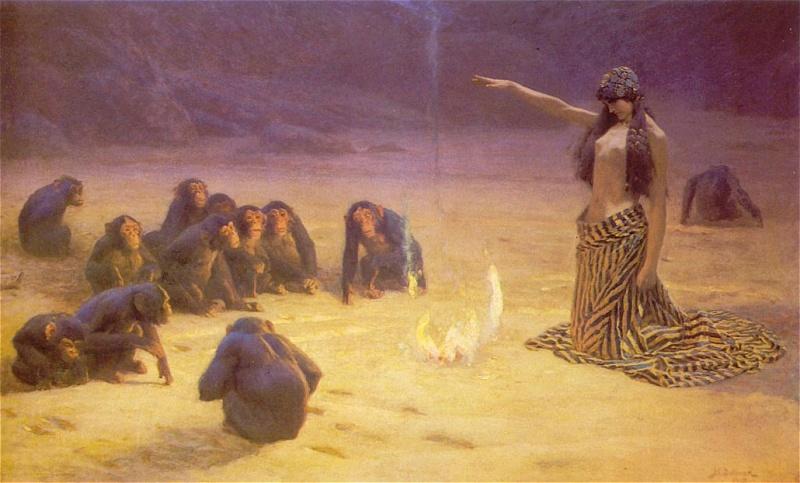
Around this circle danced the flame of eternity. In the green spark licked the tongue of heaven. Spring in the Jungle bloomed with effervescent majesty among the ruined foundations of another remote, human wasteland paradise. The veils of fame and belonging passed like a soothing tide, recoiling in the abyss of oceanic depth. We smoked the herb of forgetfulness, harmony and love. 

Ernst Haeckel's 1905 Wanderbilder (Travel Pictures)
The smoke coiled around our lazing necks, floundering amid the slow-moving river, her brown body motioned like a heavy emotion. One among us, an artist of metal and flowers spoke up as paper and marijuana stung our eyes, blinded by the greedy moment, a fleeting light. "Native community leaders announced their wish to use our space. They will hold facilitations, meetings and workshops on the militarization of the Indian people; their War." 

Coolies on the Road near Kalicut, Malabar by Edward Lear
A shade lifted and a heaviness shrank as our hearts wept and our minds faltered along the brink. She, the speaker, high as the azure, fled to the banks, to swim and cleanse in thoughtful reflection. She swung on a low-hanging vine, falling into the naked river, dressed still in paltry coverings, now a resident of the Amazon for well over a decade. Her eyes spoke of what her tongue could not shake. 
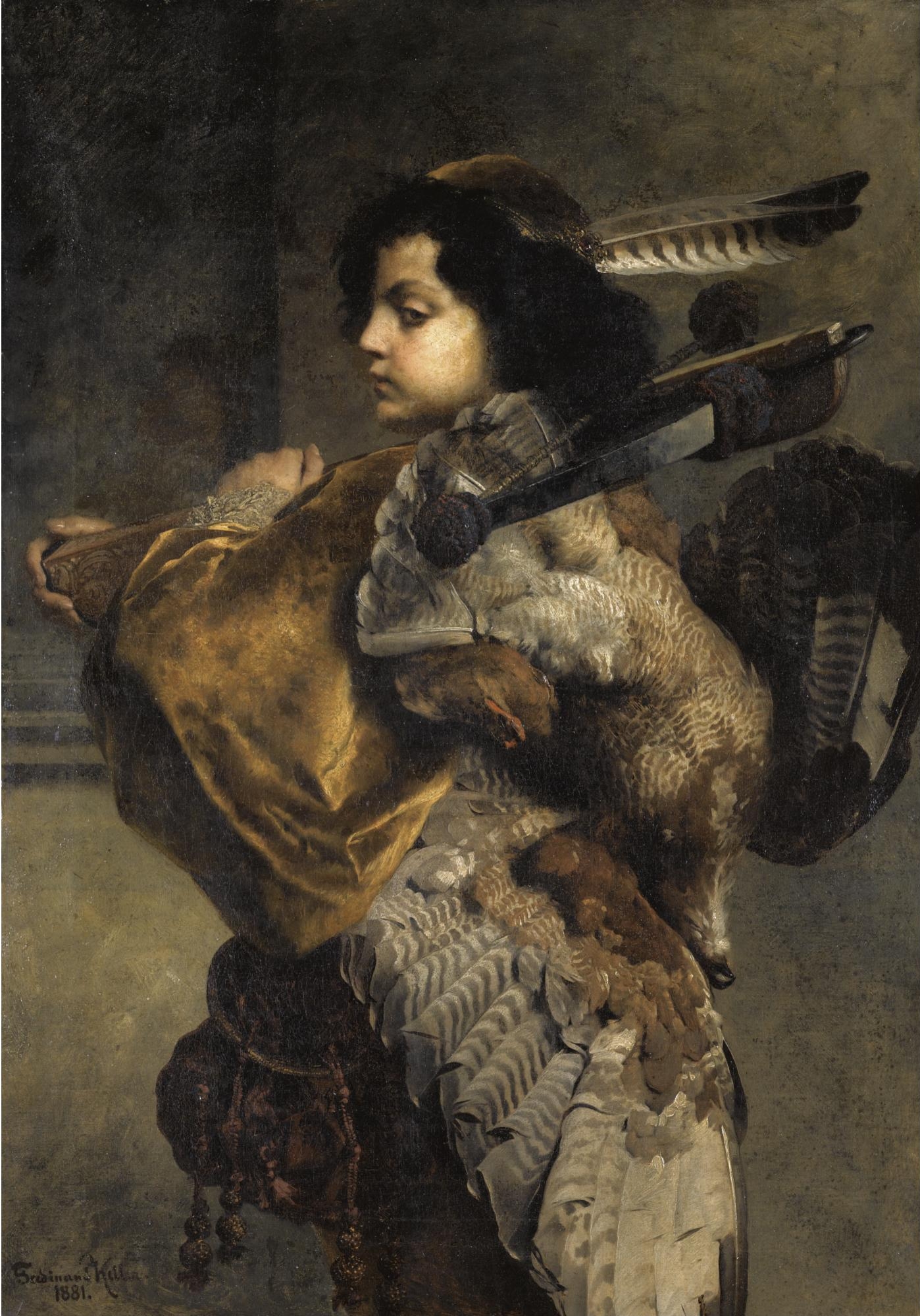
Young hunter by Ferdinand Keller
They arrived, and we vacated the area, as a show of respect. And one day, on the top floor, whereon we store our arts, with wood canvases lain and strewn, I saw her. She was not Native. She was a woman of the Old Country. Her heart was cold as a perennial shadow. Her moonlit face eyed me with an inhuman glare, and her blood then boiled, raising her hair, intoning a voice as harsh and ghastly as the screaming bite of a bullet ant. 
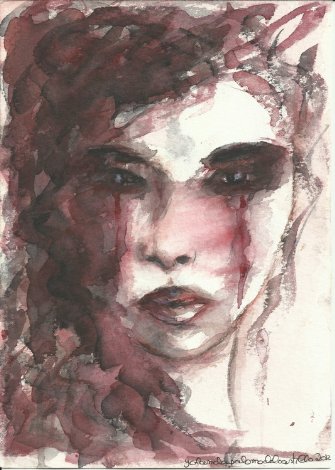
14 abril by Yolanda Palomo del Castillo
I ran. And then falling with desperation in the rushing river, we were swept along. In the instant of our near-death, she lunged towards my angular body, stretched out above the surface, in full display of my superior experience on these riverine lands. I watched as the infamous cult leader, impostor of the Cocama ethnic struggle was buried in the open jaw of the current, as her bones cracked in the turbulent stream. Awash, I lay at the edge of reason. 

Giant tree in Brazil's tropical forest by Johann Moritz Rugendas
Then, I saw the body. The tattooed flesh, gouged and lacerated. Two arrows pierced the man's underside, widening a deep, mortal wound. With bowels distended, his blood having since let almost completely of his sunken frame, I cried, lowered to the wet jungle floor, bleary-eyed. Not only had his own turned on him, but the man also suffered bullets. Scarred and mutilated, his body is the story of his people, dead to the world, brutalized and beaten down by the perpetrators of human trust, by invaders and blood alike. 
_________

Thursday, 24 January 2013

A Triunity of Conscious Remembrance: Writings on Noetic Symbolism

“We can dream about anything, no matter how preposterous, topsy-turvy or unnatural it may be.” Cicero

The three-tiered modes of consciousness, being unconscious, subconscious and conscious are reflected in the synchronous relationship between dream and memory. This is a daily experience from which we may understand the depths of mind on an elementary level. Fundamentally, it is a known fact that all people, and even many animals, are inevitably sent into the subtle realms of dream; it is part of our natural physiology. The three modes are as follows:

1)

Unremembered dreams are phenomena of the unconscious. The subtle emotions that the body and mind feel as a reaction to such dreams are only known by the most acutely aware. 

2)

Dreams that are had, and are known, where the dreamer on waking knows they were dreaming, however cannot remember any specific details apart from references to waking experience, are manifestations of the subconscious. At this point, waking and dreaming states of consciousness meld into a noetic dialogue, an inter-meeting, wherein the fluid exchange of reason and sense are exchanged with imagination and emotion. 

3)

Dreams that are remembered vividly, and dreamt lucidly, are part of the conscious realm. Most people are not fully conscious in their waking life, meaning they are not fully aware and actively engaged in their own lives, as in the source of their own lives, spiritually, mentally, emotionally and physically. A conscious dream is more than a physiological memory of the natural, instinctual imagination, it is a gift from the transcendent inner world, a gate into our inmost being, where we contact that which seems at once incredibly strange and entirely familiar, our fully exposed, and whole selves. 
__________
The sting of marshland rushes bruise and cut the soles while tangling the toes in knots of wet, risen moisture. The earth perspires with enduring anxiety under these blank skies. Emitting the hot sweat of gaseous vents through the decaying roots and bacterial soil, I trudge. 

The Pontine Marshes at Sunset by August Kopisch
On the horizon, a large city is burnt to ash. They say it all begin with the conflagration of a movie theatre, and a plane crash that split the small city in two with massive fires extending outwards. Not a soul survived. The earth feels cleansed by the death of a throaty death rattle. The decay of human bodies seems to rise as from the strength of the grasses rooted in the damp, dank shifting ground. 

The Unknown by John Charles Dollman
Above our heads, a plane spews hot trails of ash. A man behind me loads a rocket and stings the plane through its side. I watch as the behemoth machine incinerates in mid-air, crumbling with a hauntingly delicate rush through the death-consuming land. I am surrounded by a feel of homicidal, at once in the horizon, while within the breast of the alive. The air is heavy with fate. 
__________
The rains bear down hard and long
On these deceased pangs, longing to embrace ghosts
Long shied-away, deep within memory’s misbegotten despair
...
The diminished poor bear arms while the rains fall
Calling them home no more to breath
In the air of pure and raw savagery
Beckoning our rice-fought union to work
In undivided shame across river’s breadth
That brings wealth and a name to the American prince

With breast inflamed
Prepared to reason with his shame
And engrave in the desert an unplanned way
Towards brotherhood
...
Freeing spontaneous whispers
To a last pleasurable remorse
Upraised and sacrificed
As great offering to the Klezmer bonfire
Whitewashing the New York tide with Greek verse,
In one soundless escapade towards relaxed state of being
...
Cyclically bridging the human body with the global fate
In one silent orbital wave that resounds instantly in every curve of lost strength
Between arms where the beat follows to our brethren and kin,
A growing and invisible host to our name, thinking up a sound
And so, calling forth the blessed invocation of being

excerpts from "The rains bear down"

Friday, 4 January 2013

In Defence of Sleep: Regenerative Sleep Cycles of Archaic Man

“In the age of the rude beginnings of culture, man believed that he was discovering a second real world in dream, and here is the origin of all metaphysics. Without dream, mankind would never have had occasion to invent such a division of the world.” From Nietzsche’s Human, All-Too-Human, aphorism no. 5 
 There's a great lesson I have learned during the writing of this arts weblog resting on the role of the unconscious in the creative life. Firstly, let it be said that this weblog is a compendium of writings, research and dialogue on the wealth of inner inspiration that all of humanity possesses by the sheer facts of physiology: we dream. 

I have learned this basic lesson: sometimes in a person's life, they must be allowed to rest. Occasionally, every person must be allowed to sleep to bear witness to the whole nature of their lives inside and out, to witness the natural course of their consciousness as it dips and lingers in unconscious and semi-conscious states. Are we prepared for this timeless need? 

Truly, depending on the individual, one may require years of extended sleep cycles, to allow the mind to explore the natural caverns of its own self-regeneration through the deep psychic image-language of our internal/eternal life that lies exposed only when the body is at full rest. I can imagine that in more matured human histories and traditions, the seed power of meditation engages the body/mind in a life of inner exploration, even more profoundly restful and intuitive than the subconscious dream state. 

As we are not keen, and even unable, to allow the natural course of our inner lives to take hold and draw us inward for much needed psychological rejuvenation, there is imbalance in the world. So, we are guided by a higher power we sometimes call fate, or even God, but in both realities, is actually the seed of our own imaginative creativity too deeply buried to receive the light of our conscious recognition, reflection and inspiration. 

The old, or second world, that Nietzsche refers to in Human, All Too Human, has been divided and cut off from human life in an age of serious neglect, ignorance and escape from our own inner natures. Thus, there is imbalance, and we continue to deny that we are human, all too human. 
___________
What a massive elevator! I arrive at a doorstop to a metallic behemoth of elevation. Inside, a group of stewardesses welcome with open smiles. As I step inside, I am filled with anxiety. Am I ready to ascend to such heights? The levers at the side of the door are reminiscent of a plane cockpit. With a hefty forward heave, one lady initiates our ascent. The ground of Earth is suddenly imbued with an all-pervasive light. 

Light Paint by Rjcastillo
Huddled in a corner, fearing for my life. I notice the elevator has stopped rising. Has it been hours? Days? Years? I had gone blind, deaf and nearly faced death by astonishment as the incredible rise continued unceasingly. I am weak. I can barely look out into the world, whatever world lies beyond the doors at this elevation. The stewardesses are machine-faced, and continue to smile with an unsettling clone-like smirk. I need to descend. This is not my stop. My brain and face go brittle with overstimulated light energy pouring in through the walls, and it's overwhelming. Suddenly, I can't breathe. I am stunned. 

abstract photography by Getüm
Mysteriously, I am back at ground level in the blink of an eye. Looking into the doors of the elevator, the stewardesses welcome with their inhuman smiles, pasted like ice sculptures under their empty eyes. Do I board again? Can I rise this time? Or, return to the world? 
____________
Observing the skull-emancipated wisdom,
Risking vertigo and the sure endless night
Bringing sugar, tea and a companion’s brethren tide,
Bracing a felt language

excerpt from "Manual speech, a felt language"


Thursday, 29 November 2012

A Joycean Saga of Psyche, Muse of Endless Night

Mary Ellen Bute's only feature, "Passages from James Joyce's 'Finnegan's Wake'" begins:

One great part of every human existence is passed in a state which cannot be rendered sensible by the use of wide-awake language, cut-and-dry grammar and go-ahead plot. (James Joyce)


“History...is a nightmare from which I am trying to awake” James Joyce, from Ulysses

As my sleep cycle changes, I wake later in the day. It is winter. I rise at sundown, fall at sunrise. The sun and I keep a syncopated rhythm of broken and drunken days. My consciousness rains down on my dreams with the lucid bearing of a child at home in the nonsense play of indecision and fear. I listen only to night. I am not a human. I am not adapted to earth. I am not a person. I am not adapted to houses. I am not. I am adapted to mind. I think, therefore I am not. 
_________
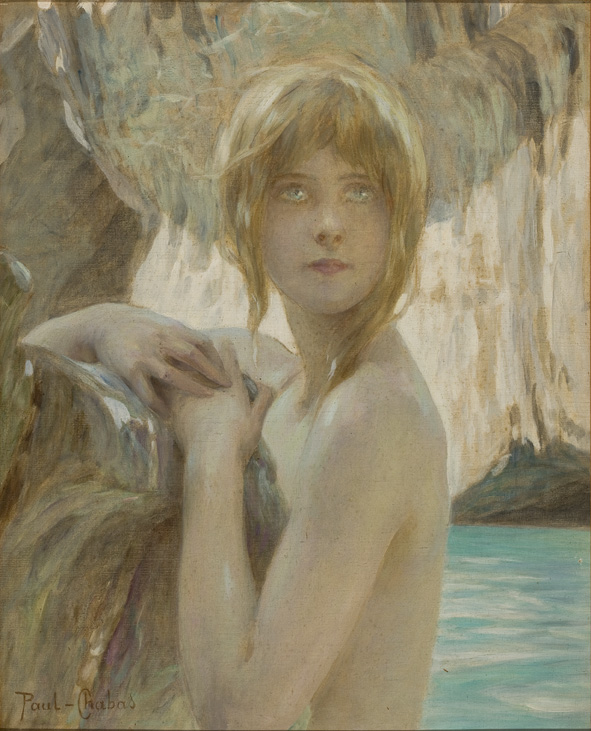
a blonde, a young woman, of especial high class, buries herself in the busy sheets of a paid for hotel room as she awaits her dowry, and her parents exit, content with the happening, for she is to be their high dollar ticket, and they are proud 

Blonde Nymph by Paul Emile Chabas
and in the fading night, she switches rooms to bed in a flophouse, the creaking wooden floors spell prostitution and drug rings, alcohol seethes from speakeasy days, and she cowers belligerently in her room, a knock at the door bleeds into her chest with suicidal unction 

Metropolitan angle (angle whore) by Hans Baluschek
as she opens candidly, two brothers of separate age walk in gently, greeting her with an offering of simple company, yet as the night creaks on with their failed step over the late seeds of a youthful calling, their clothes are shed 

Youth in a Blue Coat by Sasha Schneider
and then she is open arms as they both slide neatly under the covers of anonymous life, and as hours pass, they become good friends, while the older brother hangs his head by the window, all are naked and congenial, the two younger playfully brush paint over a great canvas blocking the doorway and most of the wall

Beatrice Addressing Dante by William Blake
she says, “you’re a fucking brilliant painter!” the Blakean shapes form over the imagistic head of the younger brother at play with the feminine creation as he eyes his brother to gain inspiration into the form and build that supports the color and stroke of their altered midnight state of sudden friendship 

Psyche Opening the Door into Cupid's Garden by John William Waterhouse
a hollowing filled with laughter and unending play, and in other rooms, an inkling leaks through the creaking floorboards and drip-coffee ceiling, filters of sound are pierced through with eager ears, willing to join, and finding true human pleasure of heart in the abuses of Psyche’s night 
_________
An irony to amuse
This, my, and our patchwork of brains,
To walk, or march,
Perfectly balanced in dress
With the polluted eye of an urban observer
Taking in the sidewalk trash as the stuff of inspiration
...

In one outlandish, unruly day,
Simultaneously, all vibrations still,
To skeletal ghosts, ravaging the blank canvas of history
With painted cries

In the evil fornication on a wine-lush express
Down each and every late Saturday street
Dead with incestuous chores

In popularized & Westernized dreaming
Gone, gently in the summer prairie heat,
Dealing prostitution’s cape
...

Breeding a kindred sisterhood
In the tall, and greatly embodied community of passionate grace
In today’s great human victory against the undead tyranny
...

Cyclical pain follows in succession
To unchain confederates, bothered,
From American poverty
Filling the sobbing eyes of migrants, sacrificed
To a brutalized ending, motherless & lost

excerpts from "1st Independence"

Saturday, 17 November 2012

Schopenhauer and the Unconscious Fate of Recurrent Thought

Recognise the truth in yourself, recognise yourself in the truth; and in the same moment you will find, to your astonishment, that the home which you have long been looking for in vain, which has filled your most ardent dreams, is there in its entirety, with every detail of it true, in the very place where you stand. It is there that your heaven touches your earth. Arthur Schopenhauer. On The Wisdom Of Life: Aphorisms
Aphorismen zur Lebensweisheit by H.P. Haack (photo)
Schopenhauer suggests that just as your dreams are composed by an aspect of yourself of which your consciousness is unaware, so, too, your whole life is composed by the will within you. And just as people whom you will have met apparently by mere chance became leading agents in the structuring of your life, so, too, will you have served unknowingly as an agent, giving meaning to the lives of others. The whole thing gears together like one big symphony, with everything unconsciously structuring everything else. And Schopenhauer concludes that it is as though our lives were the features of the one great dream of a single dreamer in which all the dream characters dream, too; so that everything links to everything else, moved by the one will to life which is the universal will in nature. Joseph Campbell. What is Metaphor? 
Here, I continue to find cross-references between three great thinkers of the 20th century, now with their source in the earlier precedence of Schopenhauer. The 20th century, with its unveiling of depth psychology towards the transpersonal meanings of self and agency in the will of the world have risen this line of Schopenhauer's thoughtful development with poignant regard. Joseph Campbell, James Hillman, Terence McKenna, all arrived independently at three concurrent patterns of human behaviour as a self-reflective being; character (self), narrative (fate) and dream (unconscious). The most accurate form of self-identification seems to be when we see ourselves as characters. As McKenna said, "we are in some kind of engine of narrative." Where Schopenhauer linked this to dream psychology underlies the mystic identification of fate by Carl Jung who said, "the unconscious exists in our lives as fate." The unconscious, fate, and the narrative engine of character are central to analyzing dream psychology as the major themes which now lead the humankind towards a humbling before nature as the greater mind of collective agency, and that to know nature, is ultimately to experience self-knowledge from the deepest base of the unconscious to a fully conscious, self-willed awakening of independent and transnational human sovereignty on Earth. 
_________

a city rat friend and I duel with competitive rage, amassing a firebomber brigade of red trucks fuming with the waterless engine of their stolen malfunctioning, and careening past the lights of midtown manhattan we stream as a rapid at open floodgate through the sleepless streets out of town

The Painting Reads: The Neighbourhood Belongs to the People Not Big Business
over a northbound bridge, we find refuge in an overgrown motel lot, the air is sweet, and we are invited to tea inside a cozy, furnished lobby, strangely reminiscent of a personal home, with sofa, television, and toys for young children, and our steam fumigates absently, unaware we separate to each our own rooms 
__________
Playful mortality, and the scream of death
Under stadium lights,
3rd block West Clinton Street New Bedford

And mortality reigns with his eminent consort Time
Ever-gazing into the strict law of entrance into the beyond,
Beyond reclining chairs and horizontal graves
...

Beneath a delicate skin of man
Braving the deforested aftermath of Assimilation
In the name of survivalist migration

After years of subconscious insubordination,
The doorway now flattened with the invincible family bond
Carrying our name and grown humor

excerpts from "Playful Mortality"


Tuesday, 13 November 2012

Alchemical Poetry of Terence McKenna and "the last Renaissance Man"

"Awake is where the laws of physics are fully operable...I've found by observing sleep, and some of you may recall the motto in Athanasius Kircher...that's chiseled over the alchemist's doorway, I can't do it in Latin but it says, "While Sleeping, Watch' 
I've noticed that while going to sleep there is a barrier, a place in the process of going to sleep, that is like the mercurial edge, it's a river, it's a zone of hypnagogia...true hallucination...
At any given moment on the planet, because of the way the planet is, as a thing, some considerable percentage of human beings are asleep always, and many are awake. And so if the world soul is made of the collective consciousness of human beings, then it is never entirely awake, it is never entirely asleep, it exists in...some kind of indeterminate zone...
The real truth that dare not speak itself is that no one is in control, absolutely no one...It's like trying to control a dream, you see. 
The global vesting of the species is somehow unfolding the logic of a dream. Well now a Jungian would say, no surprise here, history is the collective dream of humanity, it is run by the archetypal energies of humanity...
You choose to be asleep or partially asleep or fully awake...if in fact we exist inside some kind of morphogenetic field that is created by the sum total of human minds on the planet, and if in fact in half or more of those minds in any given moment, the rules of the dream hold sway, then it is no surprise that when we make our way into society, or just when we live our lives there is an eeriness to it, there's a fatedness to it, there's a plotedness to it, we are inside some kind of engine of narrative...Greg Egan and others have suggested that this could even be a form of recorded medium...you can see the thumbprints of editors on our reality if you are truly paying attention...
...it is the plasticity of historical time and the acceleration, a sense of an out-of-control spin-up or spin-down into new domains of possibility, that is the strongest evidence at hand that we in some kind of dream.
 The world is made of language...reality can therefore be hacked...if it's code, then it is far more deeply open to manipulation than we ever dared dream."
I stared into the posthumous cyber webs of knowledge and insight, uncovered from the alchemical poetry of Terence McKenna and other renegade pop philosophers of the American psychedelic era. Often listening and reading through the dawn, I touched the cosmic giggle in the meeting of minds, my young sensitivities saturated by the egoless dreamscapes of the oft-unspoken myths of immemorial lifeways in the light of a kind of thought that assumes the entire body of Humanity and the World in a universal freedom of sight and meaning fruiting on the branch of the Tree of Knowledge as a clear and lucid dream of sensual immersion in the core and nature of mind. 

Visit the Alchemical Archives for a fantastic resonance of thought!
_________

the island forest, cycling with parents, where am I leading them? where are you leading me? they gaze interminably confused as we map out the vineyard over a restaurant stave, the dripping loss and upended commotion, a swill of pain in the forgetting distance, they follow diligently beyond manicured brush and antique streets. 

Crescent of Houses II (Island Town) by Egon Schiele
at a rest, I stop into a hotel, and serendipitously meet a band of world music ghosts, swimmingly seeking my attention in their anxiety, and they are old friends, I promise to return, yet with bigger gripes out front, my family argues over plates and glasses in their passive-aggressive fate, and I saunter off, towards a third direction, a middle way, of indifferent pastures in the awake forest of billions of gods

Burial place of Hone Heke, Bay of Islands by Alfred Sharpe
the damp leaves are cool in the thanksgiving autumn wind, as I step forward towards a drying pond, and above its shores, lounging in a rest chair, atop the indiscernible ground of multicolored arboreal death, my professor of ethnobotany, what eyes of fire and livable sight, she sees me above her book, and I admire her smiling countenance in all its simple glow 

Vali and Sugriva Fighting, Folio from the Dispersed 'Shangri Ramayana' by Unknown
and then, to my right, through to the thick of woods, a billow of smoke, and an old friend, luring me forth into the wilderness bed, yet with cooling head, I steam off in another direction, leaving his darkening crown of endless dreads and staggering worldview to dry with the faint bearing of the unreflective pond behind us
_________
The unwritten page, a calming exercise, a psychic intuitive drive measured by release
           
In the catalogue of words strung into structured grooves
     In our common sonic language,
     Yet to scalp the music in speech & create 
     Only the pale imprint and seed
...
     Mindlessly astir on into the human binge on space, land & foam
...
As we enjoy the insane destruction,
The chaotic living wilderness
Dreaming up deadly bared weak sleep into our holy lawless cast,
With land forsaken by mistreated burdens
And the murderous pride in a grieving home

excerpt from "A Gorgeous Nudity"

Sunday, 14 October 2012

Reflection on "The Force of Character" by James Hillman


James Hillman, an archetypal depth psychologist, whose post-Jungian conception of the human experience is essentially imaginative, and whose amoral fluctuation between endurance and immaturity lies nascent in the temporal grains of salt which gather and line the throat with ever increasing grab as aging commences upon the personality. Written at an old age, the author speaks clearly against any kind of aging therapy, and humanizes the current malaise which treats aging as a virus.

The author unwraps biological naturalism with the psychological bloom of a mind fermented with insightful, though not inundated, research on the literary and aesthetic character of human aging as a welcoming asset to life, in flagrant contrast to the ceremonial traditionalism of preparing for death, a non-issue in the continuous envelopment of life throughout the growing and falling of seasonal lasting. Dreams are referred to for their imagistic plentitude in bringing the holistic human experience towards fruition in the entire round of consciousness.

In short, Hillman's psychology is life-affirming unto the limits of modern knowledge-bearing with regard to the biological strength of humankind to age well and vigorously, as an essential presence in social reflection, as a memory of characterful belonging in the psyche of an unconscious gathering of the old triumphant spirit of age in all its mythic fortitude and human vulnerability.

Read Scott London's brilliant interview with the late author: On Soul, Character and Calling : A Conversation with James Hillman
__________
Strutting down main street, Northampton, the little city atmosphere in a smaller town, brevity of metrosexual burning. Eyehole of gouged recollection, that there is a grayer hiss over the obscure horizon edge. A paranoiac whereabouts, a drinkability churning in the ingrate stomach as cold rice turns to frothy fluid within mellowed bowels. The attuned ear swings in frantic respite as the free march to movie theatre skies nickels and dimes my racy birth rite beginnings in the stingy hollow of American noonday education.
Northampton (Massachusetts) by William Henry Bartlett
Deeper along the edge of the township, towards rougher pasture, the greener grass gives to a brown floor of the barn stead. Outside, a reenactment of the medieval lance posture, only instead of a game between knights, the Anglo matador speaks in a murderous war with the human horse. I try my hand. With two lances upraised, I pierce the flesh of a gorgeous brown horse, mirroring the hue of the dirt circle fenced by a weak wooden ring and an audience steeped in American farmhouse poverty. As other horses, unsaddled and with fierce eyes, carouse into the ring, I jet from the gathering into a blacker city.
The Present by Thomas Cole
The jurist is deliberate, patient and silent. Instead of an easy interpretation by the passive jury of bored, directionless public witnessing, a guitarist lights the court with unfailing melodies, an original spirit of human will, to impose the individual struggle with death outside of foreign deliberation in the mind of an other. Because truly, in listening, the other melds seamlessly with the brain of a decidedly active witness, pardoning all in the sonic flight of metaphysical charm.
_________
Gazing at my Love's face, I see through the apparent reality to a frameless art. A sacred geometry in the flesh. A timeless elision, going beyond spent energy.

To consume a day; imagining with laughter in the midst of family. 

- excerpt from "Gazing at Love's Face"
 

Saturday, 8 September 2012

Reflection on "The ABCs of Human Survival" by Arthur Clark


“In a nationalist culture we have a recurrent dream that political leaders and experts will get us out of the cycles of self-destruction. That is a false lead.” Arthur Clarke. The ABCs of Human Survival. Athabaska University Press. 2010. p. 196

It was in the memory of this author's late wife that ultimately sent me to Cairo for my second visit to conduct a full-scale research project with the refugee communities I had worked with two years earlier. I have met the author on numerous occasions, including at his private home for gatherings that would seem to emulate a scene from an F. Scott Fitzgerald novel if not for the prototypical ambiance that persists in Calgary in general.

I found many fantastic references and insights from reading this book deliberately. My immediate attention focused on the author's confession that he in fact is guilty of perpetuating old-paradigm thinking, where " we will perish as fools" in the recurrent words of Dr. Martin Luther King Jr. as he had never once refused to pay taxes to both the American and Canadian governments during the brutal war with Iraq (including the preliminary imposition of sanctions, which is an act of war). 

His repetitious voice on the ills of militancy and nationalistic ideology resembles that of an elderly person telling you the facts of life with a dry voice and welcoming candour, with its occasional seeds of perennial wisdom planted in your mind as interpretive potentiality. It is of this class of intellectual where with the know-how and the social compunction to organize people, there is proof enough for change, however the sphere of influence is mastered only where the personality of the actor's face is shown. 

With this, you have a new initiative to relegate the institutionalization of principles which somehow call to, once again, the era of F. Scott Fitzgerald, where with Herman Hesse and Theosophical Societies a global call to justice and reconciliation sounds from the bastion of its very corrupted centre. Still, I am optimistic of the efforts of the Calgary Centre for Global Community, as the book exhibits time and again, that optimism is the only way through, and cynicism is the bane of a young society propagating aging youth in this overly materialistic cascade of obscurity; the Western city.

In my mind, it becomes too easy to focus on global entelechy when embedded in social contexts founded on colonial principles, and it becomes too easy to focus on local action when fully empowered as a normalized identity in a welcoming society. That being said, this is not a critique of the book, only my personal reflection on themes which I find are also my life struggle as a member of the community. 

_________
“Where’s the washroom?” I turn my head wolfishly. “Is the door locked?” I break into a cold sweat. It’s early, before opening. I empty two crates of ripe oranges on a display. My head spins with discomfort, beginning my first day at work. “Where’s the washroom?” I’m dizzy, fatigued with lack of sleep. My uniform itches. The ammonium floor is rushing into my head. Crooked tags identify the price of two different kinds of orange. I’ve mixed them all up. They look fresh, enticing, I run to the locked washroom door. The echoing emptiness is cruelly fascinating. Oranges, ripen everywhere, with priceless disillusioning. I wallow sheepish, to forever line the halls with my uncooked thoughts.
________
written in the rocky glove of unsettled wild creative youth,
those two pair,
growing in unseeded soil
as a weed tossed into the vibrant dark matter of infinite bliss
by the great American eagle
flowing into the future of Vietnamese bathroom floors
swept of children and memory
...
the knot stifles truth and freedom in a frantic pause to strengthen terror's wave
crashing in the lonesome authority with tasteless glamour
reflected off the stretched mirrors of the disadvantaged, ugly, poor,
and our fate, unified into first expression,
to cast away all memory
and become plainly seen in the absolute center,
mind's eye of the Pacific, drenched in wandering,
an unworldly guise,
blended into worthless machine-eaten jungles
fried in the oil of littered rubbish
alongside a fixed marriage highway

to an undreamed following,
a place deeper than hell,
frozen in the backdrop imagining
where the burned order breeds asinine judgment
flowering into bitter hate for the lost
who stare remembering at the speechless knot,
held in minds full with blame and newly felt sorrow
for ancestors mourning what's to become of their kin
tied in fate with breathless teachings

- excerpts from "Listen to Your Self


Saturday, 11 August 2012

Deathly Assumption of the Premodern Morpheus

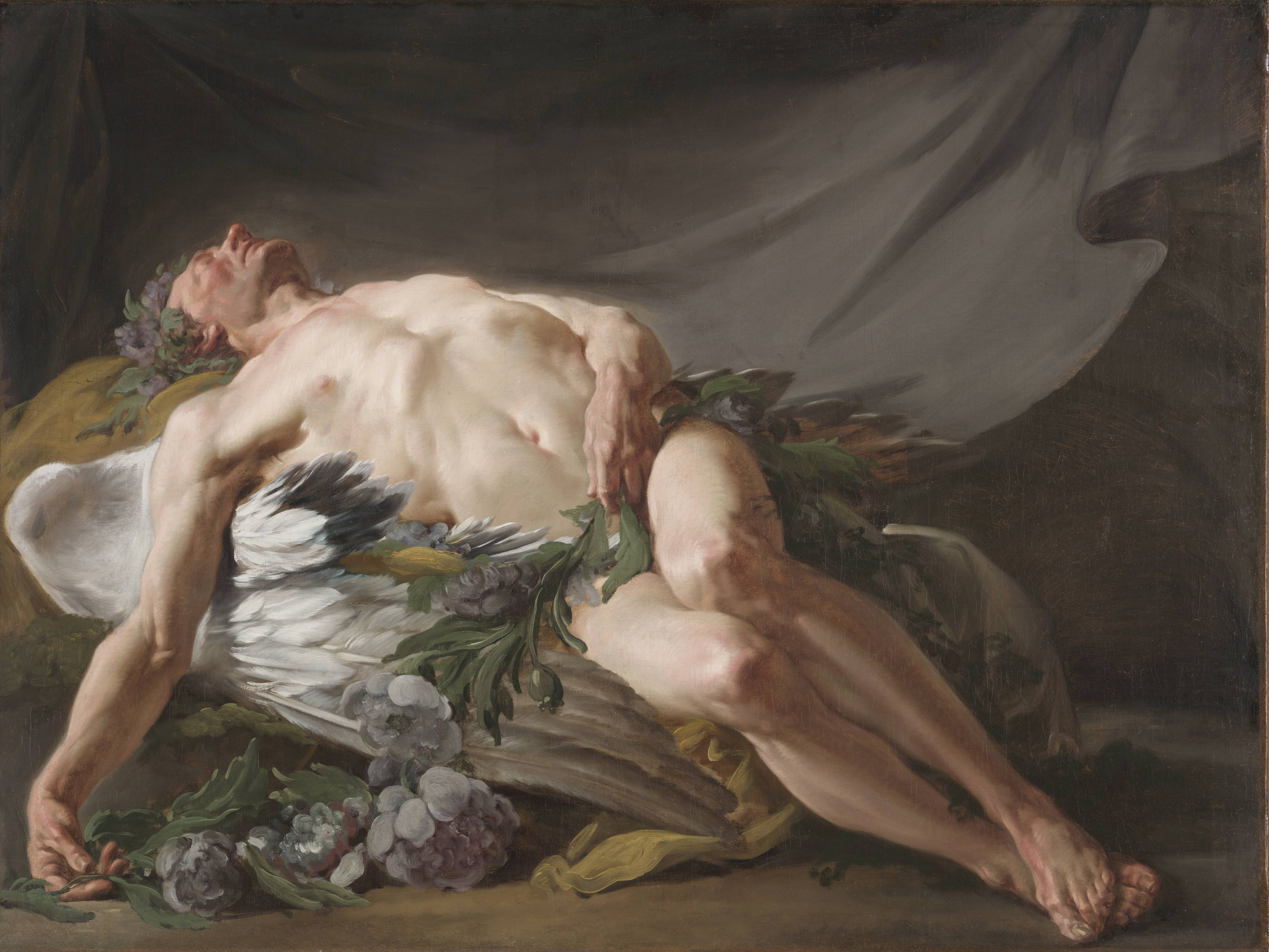
Morpheus by Jean-Bernard Restout
The God, uneasy 'till he slept again,
Resolv'd at once to rid himself of pain;
And, tho' against his custom, call'd aloud,
Exciting Morpheus from the sleepy crowd:
Morpheus, of all his numerous train, express'd
The shape of man, and imitated best;
The walk, the words, the gesture could supply,
The habit mimick, and the mein bely;
Plays well, but all his action is confin'd,
Extending not beyond our human kind.

From Ovid's Metamorphoses, Book XI (Source

Death and sleep, the fading plea of waking form, dissipating under the thin sheets of human comfort, forlorn, the pain of reality is a realization, that death's blood stains the dying hand. 
________
The creaking wood of the log cabin breeds an authentic woodsy order. Inklings and whisperings from the unheard Northern ecology brew spindly mycelium waves into the tragic human desolation, a stolid break from the bitter taste of city life. 

An original inhabitant, with less design for the transitory fading of desire, hides in groves and pains with the aftermath of winter in this warming escape. Unintentional, with drab face, his emotive instances are bare with unknowable sorrow. The rain burns over the frayed wick of lightless trunks under the whistling canopy. 

He has the air of a murderer, more a serial killer. Thin and over-confident, he swaggers into a common room, his flesh woven in knots, gnarled eyes penetrate the pointed vulnerability of my female companion. The tense noose of our isolation bespeaks unforeseen warning. One night, he feeds.

Gathering my things, a fright of blearing raw insanity, my computers, my bags, the endless compartments within compartments filled with this or that, yet my Love is slaughtered in the white heat of this wooden homicidal mystery. I hear his steps and free myself from the burden of automobile and everything I own, possessing only the random trappings of a turning mind. 

I fall, retching in a golden mud, into a hole of wonder, the driven names sputter and churn in this earthen stomach, heaving and ingesting my whereabouts in a timetable of eternity. Blinking water, dripping in the metallic soil, spurns an awakening as I peer into the soft light of the tunnelling ahead, beckoning me to further escape. The wishy-washy sounds pander in my mind with noxious will. 

A funnel of heat presses its ugly scent into my eyes, as I sink ever deeper through a new hole, fainting with near-death experience, dropped beside a bus. Eagerly, a host of newcomers, young as myself, board the bus with all their things. Stupefied, lost faces daydream an unsayable nightmare, their hollow eyes mirror my own mourning. We’re off to Egypt, to face the sun of the age. 
_______
Murder
"To see murder committed in your dreams, foretells much sorrow arising from the misdeeds of others. Affair will assume dullness. Violent deaths will come under your notice...If you are the eyewitness to a murder this is also a warning, but, one that is alerting you to possible changes in your life that you will not like unless you practice self control and not expect others to order the situation for you." (iDream)
_______
roaming to sacrifice

memories
and the aftermath of a wordless crisis,
vagaries of mind bound by geographic boom
into the obscured continental pole,
driven
estranged to unknown homes,
sacrificed to roaming