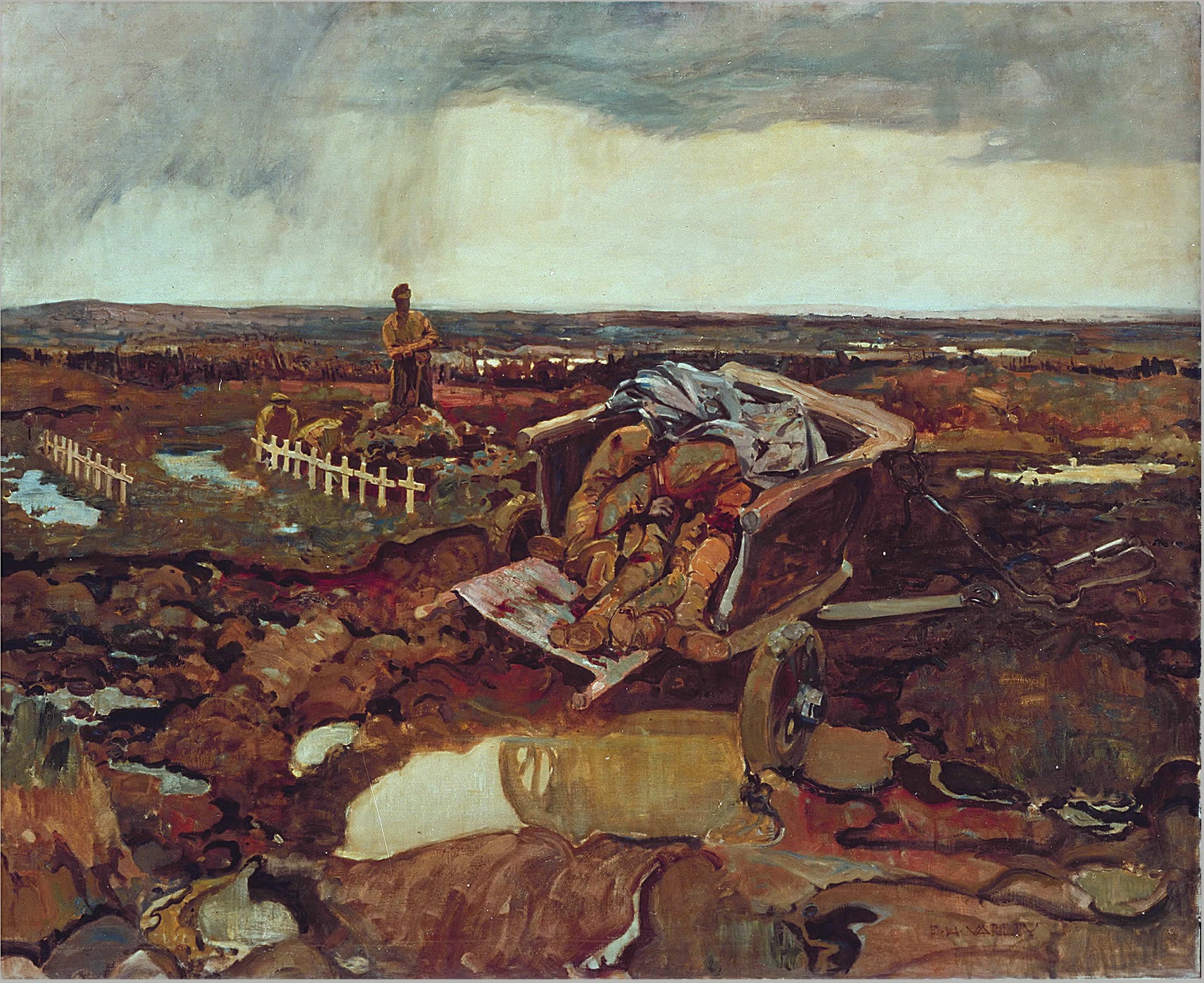
One thing that keeps me pushing these painful stories; the dreams I have. Sometimes, like, the voices of the dead that I have seen would tell me don't give up, keep on going, because sometimes I feel like stopping and not doing it, because I didn't know what I was putting myself into. (Emmanuel Jal, 2009)
What are your hopes and dreams?
I want to fly an airplane.
What else?
I want to be able to study in the daytime. And in the morning. And I want a day that I can just live…so I can build my house…where there aren't any problems that could destroy it.
Emmanuel Jal, age 9 (War Child)
On April 8, the Peace and Reconciliation Conference in Juba, the capital of South Sudan, began an unprecedented step forward in the nation’s history. On Monday April 15, South Sudan President Salva Kiir Mayardit suspended the conference indefinitely. Besides the $885 million contributed by the Canadian federal government to Sudan for humanitarian assistance between 2006-2012, many of the 4 million plus South Sudanese displaced have resettled in Canada to remain active in community rehabilitation. Activist groups, both based in South Sudanese communities as well as larger Canadian social organizations continue to sustain the meaning of reconciliation not only as an example for South Sudan, but for the globe.
The most pressing issue with regard to reconciliation in South Sudan is creating an inclusive society where larger social participation is grassroots-oriented. In a country with one of the lowest literacy rates in the world, with over sixty unique spoken languages, democracy is a precarious notion for most. In an open letter to South Sudanese Vice-President, Dr. Riek Machar, David Mabior Atem of New Sudan Vision wrote:
Healing those long inflicted wounds against one another cannot be dealt with in 3-4 days as well as top down approach instead of bottom up approach…Another added advantage of beginning at grassroots level is the flexibility of language (dialects), which can result into high interactive and productive engagement.
Dr. Riek Machar launched the official opening of the conference, which trains 200 peace and reconciliation mobilizers. “The newest nation on earth has embarked on a journey of healing for the national reconciliation,” the Sudan Tribune noted. Dr. Machar had also been married to British aid worker Emma McCune. International recording artist Emmanuel Jal, winner of the 2013 Calgary Peace Prize, had been rescued from Waat, South Sudan by Emma McCune as a Lost Boy. Jal took refuge in Kenya, eventually leading him to the UK, and Canada. Emmanuel Jal’s acceptance of the Calgary Peace Prize on behalf of all South Sudanese marks an especially significant moment in the common reconciliation efforts of Canada and South Sudan.
“He uses himself as an example in his storytelling of how hard and difficult and long it's taken for him to begin the process of healing and of reconciliation with his former enemies, and that's the story that he told,” Consortium for Peace Studies director George Melnyk told The Media Co-op. “He's also very careful to not critique the South Sudanese who made him a child soldier.” The Consortium awards the Calgary Peace Prize to global visionaries working towards peace, beginning with Hiroshima Mayor Tadatoshi Akiba in 2006. The Consortium is currently the only post-secondary Peace Studies initiative in Calgary.
James Nguen, founder of Biluany Literacy and Water project, responded with deep concern in an Op-Ed piece in South Sudan News Agency, decrying the indefinite suspension of the Peace and Reconciliation Conference in Juba. “This unfortunate development shocked everyone in South Sudan and around the world. There were no further details why the project was suspended,” Nguen wrote to The Media Co-op via email. “If people reconciled, then there will be no petty tribal raids which the past 8 years cost South Sudan government and the international community millions of dollars.”
Although the Second Sudanese Civil War, which ultimately led to an independent South Sudan, started in 1984, the world did not respond until 2004. The political situation in Sudan, and now in South Sudan as well, is very complex and is steeped in both European colonial history as well as Egyptian foreign policy. The legalities of genocide with regard to reconciliation have remained unparalleled in controversy ever since the United Nations adopted the Genocide Convention in 1948. “There was a genocide in Darfur, and there was genocide in South Sudan from the beginning,” James Nguen said to The Media Co-op. “In order to secure the CPA [Comprehensive Peace Agreement], they could not force Al-Bashir to step down without confidence that his successor would respect the CPA. Only one of the three agreements of the CPA was met, which included peace agreements with Abyei, secondly, and Blue Nile and Nuba Mountains as a third agreement.”
The outstanding agreement to respect the right to self-determination with the people in the Nuba Mountains has especially intensified on the issue of genocide. Global activism in solidarity with the Nuba people has followed in the wake of the independence of South Sudan in 2011, including the End the Nuba Genocide Coalition. The only area not consulted in drawing the new national border, Abyei, is directly impacted and holds outstanding land disputes. Abyei territory is a priority for the Juba Conference.
South Sudan’s independence was “the most significant redrawing of the map of Africa since the colonization,” Angel Batiste, Area Specialist with the Africa and Middle Eastern Division of the Library of Congress in Washington D.C., noted, before introducing the lecture, Cultural Heritage in South Sudan in November 2012.
During the Calgary Peace Prize events this March, Emmanuel Jal raised eyebrows concerning the latest news from South Kordofan, where another genocide in Sudan seems to be taking shape with unprecedented momentum. “UN people down in Sudan are saying there’s a possibility that in South Kordofan that the genocide there could be worse than in Darfur,” said Jal to an eager crowd at the University of Calgary on March 1, 2013.
The diaspora is truly integral to peace activism for South Sudanese. “They actually support their family members more than even the government does,” Jal told The Media Co-op, referring to the diaspora of South Sudan and their role in the reconciliation efforts ahead. “If you’re educated, if you have a degree in whatever form, don’t go home to look like you’re going to be employed by the government. You go there as an employer. Go there and use the skills we have there and establish something, because the country is still new. Whatever you touch will prosper.”
Since late last year over sixty genocide scholars and anti-genocide activists initiated a letter writing campaign in response to the genocide atrocities in the Blue Nile and Nuba Mountains. These letters have fallen on what South Sudan’s leading independent news source, South Sudan News Agency has called, “absolute silence”. The Atrocities Prevention Board (APB), founded by U.S. President Obama specifically in response to the lack of U.S. governmental initiative towards preventing crimes against humanity and genocide, became the most important, and also most unresponsive, target audience. This April, South Sudan News Agency published the latest letter, sent to U.S. Ambassador to the United Nations Susan Rice. An excerpt from the letter reads:
We never expected, though, to have our letter (and now letters) go unanswered… when we, scholars of genocide studies and human rights activists, fail to receive a reply to a letter that we first wrote back in December 2012 and have now sent five times to four different individuals affiliated with the APB, it, indeed, feels as if the APB and its focus/work is little more than “a sideline in our foreign policy.”
Similarly, in recent news, the only head of state in the Americas to be tried for genocide crimes, U.S.-backed Guatemalan dictator Efraín Ríos Montt, saw amnesty on April 18 after the current Guatemalan president intervened to have the case annulled. “It was the first time that any nation had been able to use its domestic criminal courts to try a former head of state for genocide,” said investigative journalist Allan Nairn on Democracy Now!
Despite ineffective government intervention, independent non-profit and charity organizations, spearheaded by leaders from South Sudan, continue to work towards a sustainable society through reconciliation efforts. Biluany Literacy and Water Project, a development initiative led by James Nguen based in Calgary, has been active for over three years in building wells and providing educational resources in South Sudan. “There is no sustainable infrastructure in South Sudan, and without a lot of assistance from the international community, trust cannot be rebuilt,” Nguen said to The Media Co-op. “The greatest struggle is to represent ourselves, to know who we are as one community. The war eroded our cultural values, our history, our society.” Nguen recently partnered with Gua Africa, the charity of Emmanuel Jal, to fund well development and to organize a conference in Canada to mirror the Peace and Reconciliation Conference in Juba.
Since winning national independence, other organizations in the Calgary area, home to the predominant South Sudanese community in Canada, are working towards reconciliation. South Sudan Peace Building International Foundation Inc. (SSPBIF) is one among them. Secretary of the SSPBIF Kuir ë Garang is also a prolific multi-genre author of six books. “People in South Sudan tend to regard literature as ornamental, they don't see how it can help relate people, to help people find relations between one another, so they can get together and have mutual understanding through education,” Garang told The Media Co-op. “Through literature, we can better represent ourselves. Now up to 70% [of people in South Sudan] are dissatisfied with their government.” Garang is currently working with a publishing house and bookstore in Juba to open a forum on multiculturalism and diversity for professional writers from Canada and South Sudan.
Rural South Sudan is reputedly the most marginalized and underrepresented, effectively causing the need for grassroots inclusivity in Juba’s Peace and Reconciliation Conference and beyond. Resource conflicts both at national (oil exploitation) and grassroots (cattle raiding) levels have been at the root of social disorder in South Sudan. Augustino Lucano, a South Sudanese migrant from the Equatoria region living in Calgary, shares an unrivalled success story in bringing together divided rural ethnic groups and organizing incipient meetings with government representatives.
Lucano received personal permission from South Sudan MP Joseph Lokodo Kolombos to open a peace center in his home region of Equatoria after presenting to the MP a research paper inspired by an Initiatives of Change workshop. “The problem is that people in rural South Sudan are still very divided, they do not see a way to live together yet with the whole nation yet,” Lucano said to The Media Co-op. Lucano, a member of the Didinga ethnic group, lost two brothers in conflicts with the neighboring Toposa people. “The Maaji peace centre is located in the middle of Didinga and Toposa land, in a flatland valley, where both tribes can meet peacefully,” Lucano conveyed to The Media Co-op. “So far there has been no raiding at the peace centre in Maaji. First, it was necessary to establish the peace centre where resources could be shared, and then we can discuss reconciliation.”
In February 2013, the South Sudanese Minister of Wildlife’s visit to the Maaji Peace Centre drew tears from elders and children alike who had never before seen a car, no less a government car. “It showed how marginalized these people had been in the national developments, and also that the government was starting to establish a relationship with rural people, including them in the dialogue of the upcoming Peace and Reconciliation Conference in Juba,” Lucano told The Media Co-op.
2013 is quickly becoming a year of unprecedented global reconciliation movements. The Peace and Reconciliation Conference in Juba is especially significant to Canada with its direct relationship to the activism of the Canadian diaspora of South Sudan. With the first head of state in the Americas having faced genocide charges, a more intimate link can be made with Indigenous peoples’ history in Canada. Will Canada renew its role as a global human rights leader in the wake of mounting genocide awareness around the world? Ongoing debates in Canada, spurred by Idle No More, emphasize reconciliation with First Nations as an inclusive reconciliation with humanity.
This article previously appeared for The Media Co-op on April 29, 2013
___________
 |
| the road to rome is paved in bones by RK |
 |
| madness by RK |
 |
| the human rabbit hole by RK |
 |
| old west art by RK |
 |
| papercut & stoned by RK |
____________
conjuring a sense of the once roaming herds of mammals that lit upon the open horizons of our once naked landscapes - the frame drum evokes a sacred connection to our mammalian evolution through a heartened soul brethren with large mammals, and our precarious evolutionary stability as one of the most vulnerable types of living creatures on planet earth - in the piece, i speak of the charge of the electric pole of patriotic industry over the breadth of our continent as the sacrifice of ourselves, as male-female witch, burned on the flagpole of national identity, a sacrifice brought about by the all-devastating silence of voice, speaking of a way of life not bound to the dominant settler society, yet existing now only in negation to the sedentary ecology of consumerism and vacation, with regard to the lost history and memory of our true selves in communion with the deeper movement of life as we once knew it
Placed Anonymity, like the chapbook, "A Sick Society Amuck" is inspired by the words of Jiddhu Krishnamurti, iconoclastic spiritual philosopher, who said, "truth is a pathless land". Truth lies in the anonymity of place as is, without meaning, as a river is in essence meaningless until commemorated by a name and story, whether of scientific or folkloric mythologies.
in a pathless land, how do we come to know the land, or know what is true, HERE? that exploration is the foundation for this four poem chapbook, eventually culminating in collectivist thinking, to aspire towards a basis of unity evading the muddled institutionalization of creative freedom
Placed Anonymity, like the chapbook, "A Sick Society Amuck" is inspired by the words of Jiddhu Krishnamurti, iconoclastic spiritual philosopher, who said, "truth is a pathless land". Truth lies in the anonymity of place as is, without meaning, as a river is in essence meaningless until commemorated by a name and story, whether of scientific or folkloric mythologies.
in a pathless land, how do we come to know the land, or know what is true, HERE? that exploration is the foundation for this four poem chapbook, eventually culminating in collectivist thinking, to aspire towards a basis of unity evading the muddled institutionalization of creative freedom