Primarily a writing exercise, this dream journal-inspired blog is a quiet introspective sojourn into the process that we traverse in going from private dream to public art. I see our dreaming as an internalized mythmaking. As I philosophize and expressively exhibit dreams, both private and public, I encourage and delight in creative language as a way to practice experiential metaphors through a “public dreaming." Writing Theory: Creative Dream Fiction
Showing posts with label article. Show all posts

Monday, 11 November 2013

Fear, Incorporated: The Transformative Theatrics of Living


"Never ever forget that you are the future of this country…You mustn't be frightened of life, it's a very exciting life because you can make your dreams come true" Pieter-Dirk Uys, from the documentary Darling! The Pieter-Dirk Uys Story

“In the end it will be up to audiences each time in the event because they will determine the stories,” says Diamond. “My hope is that we have the courage, in a way, not to look at how to change that thing out there, but how to change ourselves.”

That self-reflexive and socially conscious attitude has defined the theatre company right from its humble beginnings in Vancouver in 1981, and it continues to exemplify creative leadership around the most sensitive topics in contemporary public debate. Diamond’s first prominent role in the company, as associate director of the 1982 production Right to Fight, addressed affordable housing. Later, Diamond wrote The Enemy Within, which satirized B.C. politics in 1986. Two years later, he had his directorial debut for the company with one of its Power Plays, which use theatre games and exercises to explore social issues and create community-specific theatre.

Corporations in Our Heads is one of Diamond’s more experimental works in his effort to reach out to community through art. Based on the work of Brazilian theatre visionary Augusto Boal, creator of Theatre for the Oppressed, Diamond’s new work is an original interpretation of Boal’s Cops in the Head, but takes an entirely different approach. “The rules of the Theatre of the Oppressed, I’ve thrown them right out the window,” says Diamond.

The production asks Calgary residents to reflect on, share, act on and change the dominant messages that influence society . “The reason to do the thing for me is there’s a lot of good work happening out there on how the messages of corporations affect our consuming,” says Diamond. “But I don’t think we’re doing a lot of talking about how those messages affect our own images, not just of ourselves but of our relationships with each other. And it’s at the relationship level, in fact, that our consuming originates.

Corporations in Our Heads will be facilitated by (or “joked by,” as Theatre for Living puts it) Diamond himself, who incites the audience to participate. “The power of it, for me, is that it really is a democratic thing,” he says. “While we are framing the general subject matter, Corporations in Our Heads, the actual content really is going to be determined by the people who enter the room that night. And nobody — not me, not the sponsoring groups, nobody — is going to be able to predetermine the content.”

This article, titled, New theatre work examines corporate psychology, continues where it was originally published on November 7 in Fast Forward Weekly. The piece is a continuity on the theme presented by Pieter-Dirk Uys and his arts activism in South Africa, as David Diamond represents a similar following in social consciousness and public engagement in Canada.
__________
Chinatown Delight
_________
Following the trend of the album, Sketches of Style, this sounding is an amalgamation of three instrumental improvisations harmonized and syncopated together with a synthetic rhythm. The beat creeps in, reminding the listener of the abstract organ that touches on soul, as the reeded music blends with darbuka.

Originally published in a comic, the poem that led to the musical expression of the same title, "find Inspiration!" first appeared in Maad Sheep, an illustrated print publication of cartoon and literature that I once found while sitting in an open-air cafe. The issue in which my piece was featured was displayed at a Comic Convention in Canada.

Lyrically, the piece is a foray into the bitter savagery that cooks the great mass of minds; all who are saturated by the consumptive bread of modern life. The challenge of simply being creative in confrontation with the overwhelming burst and pop mirrorscape of infinite self-deception is the subject and of this sketch of style.

The rest of the chapbook is a fourteen page collection of poetry on the subject of gaining respect and appreciation for the superhuman qualities of nature, as more than grandiose, and more than human intellect and possession could ever capture or convey. Many are observational, and drawn from insights into the ground of being as the naked soul of humanity.

Tuesday, 22 October 2013

The Spring of the South is the Fall of the North: Writing on Liberation

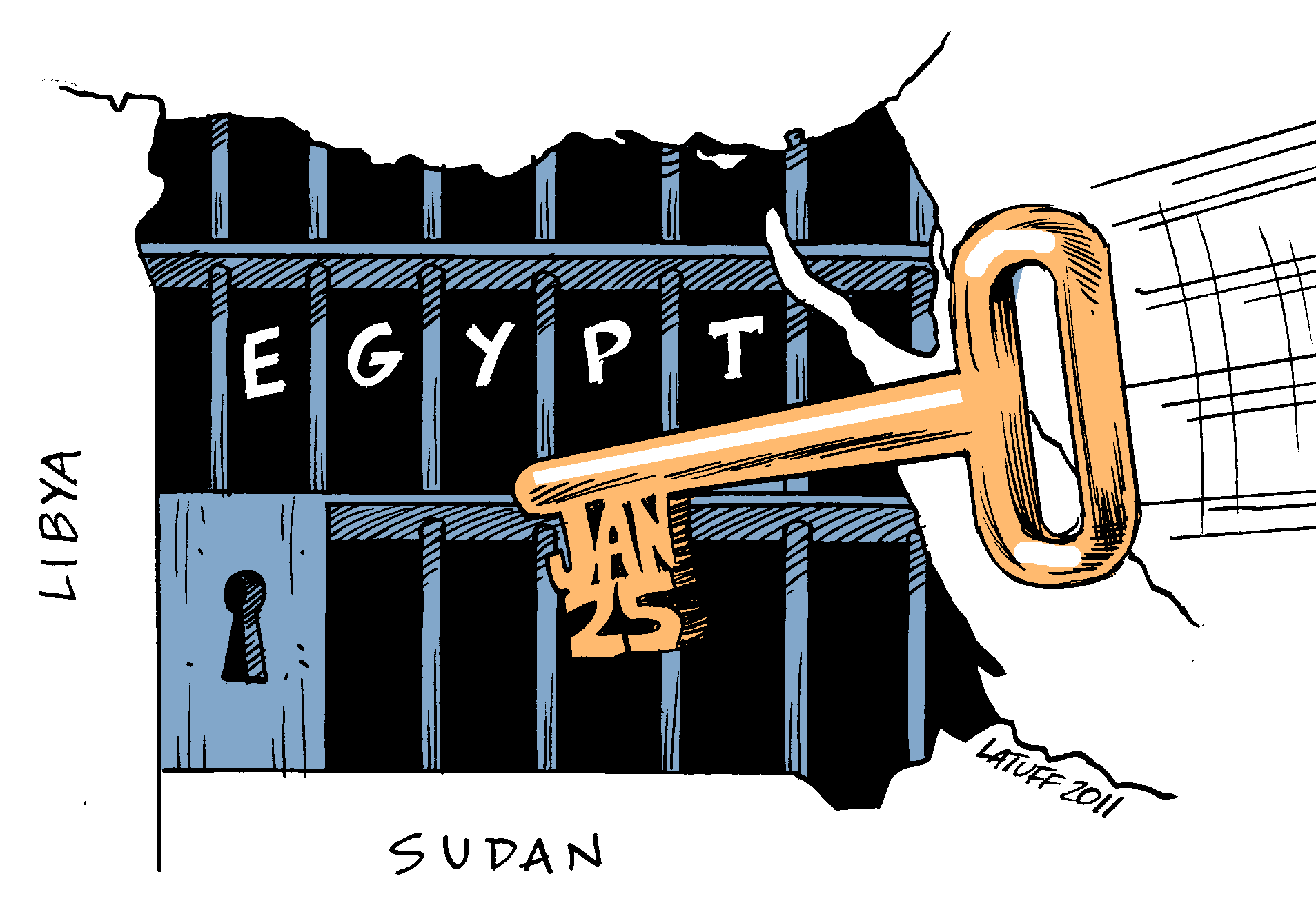
A 25th of January key freeing Egypt by Carlos Latuff
“People who shut their eyes to reality simply invite their own destruction, and anyone who insists on remaining in a state on innocence long after that innocence is dead turns himself into a monster.”

“The poet or the revolutionary is there to articulate the necessity, but until the people themselves apprehend it, nothing can happen ... Perhaps it can't be done without the poet, but it certainly can't be done without the people. The poet and the people get on generally very badly, and yet they need each other. The poet knows it sooner than the people do. The people usually know it after the poet is dead; but that's all right. The point is to get your work done, and your work is to change the world.” 


Regarding the current situation in Egypt, the armed forces and the police backed with thugs are massively shooting and killing suspected pro-the deposed President Mohammed Morsi in streets, at mosques, and in alleys close to demonstration areas. The shooting is happening in all major cities of Egypt. Many religiously motivated violence and shooting incidents have taken place in Christian populated cities located in Southern Egypt.

In Cairo, the violence is escalating and the death toll of Muslim Brotherhood is soaring as the grand son of Hassan El-Banna, the first founder of Muslim Brotherhood organization in Egypt was shot dead on Friday clashes (Source: Al –Jazeera News TV). Another son of prominent Muslim Brotherhood leader was shot dead on Friday evening during clashes with the police force and the army. Egypt’s temporary government has declared a State of Emergency, and all citizens, as well as foreigners, were warned by the police and the army to keep away from street demonstrations and public governmental buildings, and to avoid entering Tahrir Square.

As you may know, most Egyptians have aggressive sensitivity to being photographed by foreigners, whether in normal daily situations or during public demonstrations. That is why we saw many Western journalists attacked at Tahrir Square, and one female journalist raped consecutively by a group of thugs in Tahrir square. It seems to me that the current military regime in Egypt has fully determined to uproot the Muslim brotherhood organization, not only in Egypt, but also in the whole region, and that might lead to the unwanted birth of another Syria in the area.

Most pro-democracy supporters insist to protest. The Muslim Brotherhood protesters are still surrounded inside the Al-Fateh Mosque in Ramses’ Square. They want to come out from the mosque but they afraid that the thugs outside the mosque might attack them. The police force outside the mosque is striking the protesters inside the mosque with tear gas after a gunman shot at police forces from the minaret of the mosque (Source: Al-Jazeera News TV. 6:00 pm. Cairo. GMT.)

Mr. Abdel Rahman Siddiq Hashim, Correspondent in Cairo, Egypt (August 17)

            Thirty minutes by car from downtown Cairo, the predawn sky of Abu-Seer village revealed the most ancient, complete stonework in the world. Alone, I climbed the eroding rooftop of my host’s concrete dwelling. Sleepless, I gazed into the unworldly pyramid landscape with sand-blooded eyes. The quiet rustling of goats and chickens from an adjacent rooftop finally subsided under the mounting sun. The cool desert night slowly began to burn in the morning haze. It was as common a start as any to another harsh day in a small village of Egypt.

On the village margins, Saqqara Pyramid decayed in the encircling sands, humbled by the glowing Sahara Desert horizon. A middle-aged Egyptian man, donning a dark grey jellabiya, cautiously rode his mule across the rubble-strewn sands. Then, an airplane flew overhead.

Three divergent ages of human existence on Earth emerged as one, sharing a moment, side-by-side. The eldest of the three appeared motionless. The Egyptian man meditatively attended to morning duties as his forebears had done for over a millennium. The airplane, a symbol of Egypt’s national independence and economic prosperity, vanished in an instant.

Tahrir Square, meaning Liberation Square, invited all with pleasant cafes hailing from Egypt’s belle époque period. Patrons intermingled with families at the KFC, and all coveted the dollar menu. In the square, historic speakers in the Headquarters of the Arab League heard the call of muezzin belting out the call to prayer. Five times a day, the prayer, known as the adhan, ascended above the city of a thousand minarets: El Qahira.

For a twenty-year old student attending the American University in Cairo (AUC), overlooking Tahrir from the east, there was liberation. The first day of my young life in Cairo opened with one fiery orange dawn in the fall of 2007. Sipping a hot ginger tea, I waited for my cab in Tahrir Square. Mohammad, age thirty-three, chauffeured me to what would become my home for the next ten months. Zamalek, an island on the Nile, stood besieged on all sides by a city of 18 million.

In the past three years, the AUC’s Zamalek student residence went through two evacuation processes during the 2011 Revolution, and again this summer. Due to the unsafe proximity to Tahrir Square, ground zero for the infamous belligerence of military and riot police, international students were sent home. The residence became a safe haven for the AUC community; domestic students and staff were offered free accommodation and complementary meals.

Emotionally overwhelming, everyone present will never forget the bloodied streets paved with the burnt skin of nonviolent protestors. “They all have witnessed history unfold and a lot of them went to Tahrir Square. They all left in tears having to abide to the evacuation request,” Fatma Abou Youssef, Associate Dean for Residential Life at AUC wrote via email from Zamalek, Cairo on August 19.

In 2007, through a yearlong study in the humanities, Egypt held a potent charm. For a child of American suburbia, life in downtown Cairo was a true and magnificent freedom; where a dollar bought cab fare through thirty minutes of scorching highway from the Great Pyramids to the fortress of Salah ad-Din. At ground level, the city was not only safe; it was ever so welcoming. In comparison to crime in the average American city, Cairo was exceptionally low-key.

After many captivating hours learning intensive Arabic from a local Egyptian professor or studying Islamic philosophy with a visiting lecturer from England, the streets beckoned with an extraordinary spirit of discovery. Only after minutes of walking southeast from Tahrir Square, I wandered to the shrine of Saint Patron Sayyida Zeinab during the pilgrimage festival, or ‘Moled’, in celebration of the birth of this special granddaughter of Prophet Mohammad.

Irrespective of prohibitive warnings from AUC’s student orientation the day of the Moled, I decided to traverse the uninhibited grounds where Sufis and rural Egyptians (known as Sa’idis) pilgrimaged. I espied characters from a bygone era. Many had never before seen the pale face of such foreign skin. An elderly man without legs moved with the aid of wooden blocks, another with a gnarled cane and goatskin satchel appeared at the end of an impressive journey. One younger man, about my age, carried a paralyzed companion on his back. With equal wonder, they smiled at both having reached the shrine as staring into blue irises.

For the next months, practically every time I set foot in public in the city of Cairo, as throughout Egypt, children ran to greet me, jellabiyad-graced elders responded generously to my regular salaam alaikums. Peers offered a traditional glass of Egyptian whisky – the joke name for black tea served with a generous helping of sugar. Ordering a freshly pressed sugar cane drink (qasab) from street-side juicers became a delectably regular pastime under the all-pervasive sun. In fact, the original word for sugar (sukkar) is derived from Arabic. Similarly, the tamarind drink (tamr-hindi) was served by charming fez-wearing men (hearkening to Ottoman times) on street corners amid the harrowing traffic in Tahrir Square.

First impressions of Cairo were smoothed over with genuine smiles and hearty laughter. The people of Cairo soon became my teachers, more than any university professor. First having sought to learn Arabic from the locals, I then learned of dignity, humility and simplicity through their open hospitality and street-wise intuition. Uniquely, Ramadan became my favorite time, when a piece of unbroken baladi flatbread always accompanied the savored mulukhiya soup; welcoming any blessed stranger, even if arriving from the next unassuming alleyway.  

Rapidly, the most frequented haunts, such as Cairo Club and El-Bustan, saw mounting anxiety. Sugar, oil and other daily commodities soared in price, both in the formal, as in the informal economy. Conversations became more grave, jokes more cynical and youth were feeling the brunt of a serious economic downturn.

One year before the 2011 Egyptian Revolution, the air was full of gunpowder. Every whisper seemed that moment, when the spark would light and the very social fabric would begin to incinerate. The deep traumas of colonialism, corruption and fear were immanent, and felt by the overwhelming majority everyday. More importantly, an unruly intensity was felt every night, when the mass of people returned to sleep on the bedrock concrete of Cairo’s sprawling suburban slums. In such an environment, the status quo ceases to quell the rage. The traditional café became peripheral to the cyber café, where social media and youth activism quickened into the perfect storm of 2011.

Three years prior, an incipient sandstorm clouded the streets on a day of mass action in the wake of an inexcusable rise in bread prices, while former Egyptian President Hosni Mubarak celebrated his 80th birthday. On that night, we crowded into El Horreya Café & Bar (literally meaning Freedom) on May 4, 2008, as on any other downtown metropolitan night in what was once the Amsterdam of the Middle East. Downing local Stella Beer and chain-smoking Cleopatra cigarettes could not snuff out the bitter cynicism looming like a rickety ceiling fan about to fall and leave the place roasting.

The very earth around Egypt is often as imperious as the social hierarchy itself. The desert becomes part of the inimitable struggle for life in Cairo as trade has nefariously altered the course of most people’s lives around the world, so dramatically in the modern era. One week before the Egyptian Revolution of 2011 commenced on January 25, my uncle, visiting on business, listened with ungraspable curiosity to his Egyptian host talk about the gaining local obsession with Facebook. The word was on its way out, and never to return.

Remembering Cairo before the Egyptian Revolution of 2011, and in light of the escalating crisis, life will obviously never be the same. There is irrevocable damage, and if the people, who lived and worked in the downtown area, survive, they may never return, and if they do it will be to a different place. Tahrir Square has become home to a near impregnable military, a scavenger’s paradise of the most lowly and vicious of thugs, a place of smoke and blood, where tear gas blinds and the storied hangouts of a bygone era are stained with the outrage of a military coup in broad daylight. In its wake rests a throng of massacred civilians.

Will the bartender at El Horreya Café & Bar return, he, who snickered and grimaced with local spite, subtly disproving yet overtly encouraging Egyptians’ mixing with European, American and African socialites over incalculable packs of Cleopatra cigarettes and football? Will the papyrus painter return, who gypped me out of a small fortune, cleverly convincing me into becoming a rare arts collector? Will his son return, learning his trade not only for the trade, but also for the tricks; he who walked with me past the now besieged Ramses’ station mosque to deliver my papyrus paintings home to America? Will the mythic female taxi driver return; she, who dazzled our imaginations by crossing the gender line into such a masculine space as the world-infamous streets and thoroughfares of Cairo’s largely unregulated (or, self-regulated) traffic?

As social critic Tariq Ali wrote this July for counterpunch, an independent investigative journalism source, after all is said and done, “Who will take the Army away?” In the intermediate period between the first Egyptian Revolution of 2011 and this year’s ongoing protests, which began with the presidential coup of Mohamed Morsi on July 3, the Iranian Green Movement receded, while Bahrani and Syrian social unrest continues to derail. After the ecstatic hype following the Egyptian Revolution of 2011, weary voices from the Middle Eastern diaspora warned of immanent crisis. Westerners scratched their heads when the Muslim Brotherhood ascended to power.

As a foreigner in Egypt, one learns that a human connection to anyone on Earth, to anywhere on Earth, from anyone and anywhere can be learned simply by walking in public, in the street, and more importantly, the square, with an open heart, engaging in dialogue and being present. When we listen, we observe how everyone has a backstory, which does not merely explain one’s present situation, but supports and rounds it out with a complex spectrum of life experience.

Today, this truth is more than possible; it is inevitable as more and more people are forced out of their homes, out of the comfort of their lives in their countries and cultures of origin, whether by war, civil unrest or the urge to change things, to meet face-to-face with another, and see the clearest reflection of one’s own life. The deaths of Egyptian protestors are not isolated incidents. They are part of the larger narrative of one unified history of all people. In another two years, will they have fallen in vain, or will everyone empowered with the knowledge of the uprising ensure that they have not?

On returning to the U.S. after three months in Cairo during the summer of 2010, the adage from the American Revolution curiously repeated in my head: No Taxation Without Representation. The city streets should see my sign, I thought, held up on display; the Revolutionary slogan of 1776, concluding with the statement: Stop Funding the Militarization of the Middle East. That sign was never raised.

After over a year of living on the ground in Cairo intermittently from 2007-2010, I had about enough of armed forces on every street corner. As an American, I felt complicit with the military presence. An iconic moment from the Egyptian Revolution of 2011 revealed the ugly face of global militarism when a demonstrator exhibited the “Made in the U.S.A.” stamp on canisters of tear gas.

As in the ancient materiality of Saqqara, the medieval trot of the mule and modern flight were spawned out of an instant on the archetypal sands of time. An airplane summons the precarious future in all its speed, might and, finally, in the local historic context, its fleeting insignificance. The pyramid, now stationary and unascending, contrasted with the way of the mule and the plane moving in the same direction.

Yet, as with today in Egypt, the very power and speed of the plane overhead not only outmatches the mule’s strength, arriving at their common destination first, it leaves nothing behind for those arriving at a deliberate pace, as allegorically, by mule.

The people of Egypt seek development through truly democratic means, as opposed to Western democratic means, i.e. foreign aid, sanctions and war. For Egypt, as with most of the world, true independence is a long-awaited, and as yet unfulfilled promise. When allowed to proceed at their own pace, in step with tradition, and an engaged contemporary society (as demonstrated in the revolutionary context), the people become aware that the plane overhead is exactly as distant and unconcerned as it appears. Contrasted to the pyramid, or the mule, the plane (and the elitism it represents) consumes the country’s (human and natural) resources with it, and all in a passing instant.

During the daily commute through Tahrir Square, one of the largest public insignias near to the square’s Omar Makram Mosque stood out: “Everything Should Be XX” (meaning: everything should be 20th century). Before the revolutionary fervor, quotidian time in Egypt screamed with the anxiety of delay. The rushes of traffic, the strength of the black tea, and the overconsumption of sugar were offset by fitful exhausts, religious rituals, and the sun; and now, an army, sponsored by the most militarized, energy-rich and power-hungry nation in the entire world. Nevertheless, as countless Egyptians stage sit-ins, many say the people of the unmoving Saqqara still live and walk in the streets of Cairo.


NOTE: This article, titled, Fall of the Arab Spring, was published with The Media Co-op on October 16, was produced in partnership with AlternativeMediaYYC.com and the Arusha Centre with the Calgary Working Group initiative to establish a new local of The Media Co-op in Calgary

Read our other recent pieces produced by the project: 

"Vancouver is debating a resolution to divest from fossil fuels"
The 3rd of October
Egypt's War on Terrorism and Extremism
Hayseed Magazine
Corporations in our Heads
Working North
___________
It was our last night. The sirens of Death displaced the air with an eerie silence. The dissonant projection moved us with a most unsettling scream as from the constellations above. In an incomprehensible language, the alien voice bore down on our skulls as through our entire skeletons with the most devastating form of spiritual dread.
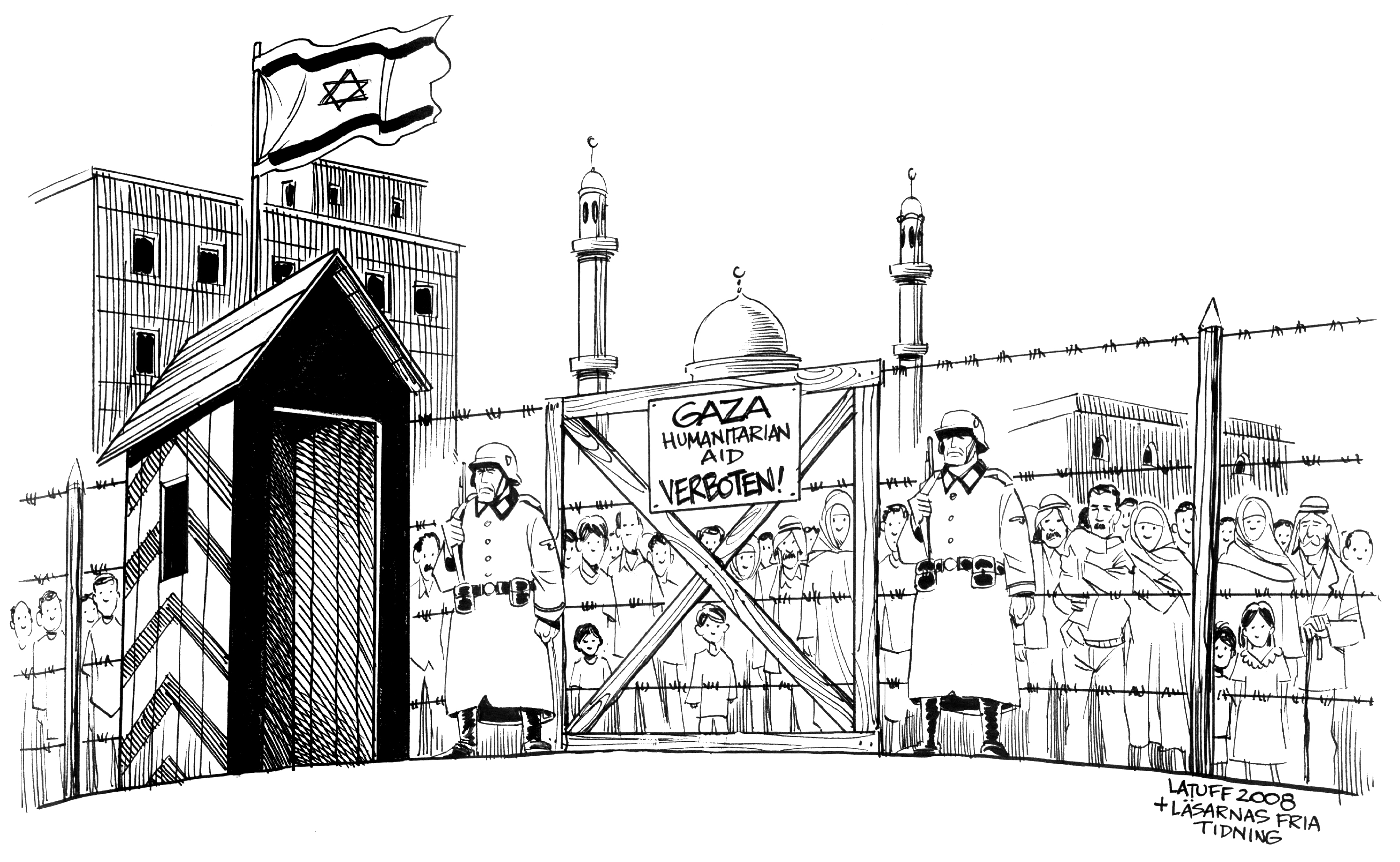
IsraHell's concentration camp by Carlos Latuff
Neo-Nazi ghosts awakened to round up non-Aryan cattle from their millennial imprisonment under the northern cross. Before the first ounce of blood was spilled, I eyed the forest beyond the edge of the encampment, where concentration then turned to liberation. For a reason unknown to me at the time, I saw my way out. Others noticed as I ran through the fencing, bewildered by the transcendent feeling of freedom beyond the barbed hatred that confined my elders, my children and brethren of closest kin.
The Gaza Ghetto by Carlos Latuff
Out into the wayward plain, I fled, alone, veiled under a new moon. The sky enlightened my distance with steps unheard inside the emptying prison. Yet, I could hear wails. As I moved into the dizzying silence, my heart muffled by the fear of no-return, I wept. I felt my skull crack at bearing the guilt, the shade and the humility of survival among my most honoured family and friends, of my blood and spirit, they left behind to suffer excruciating gasp of liquidation.
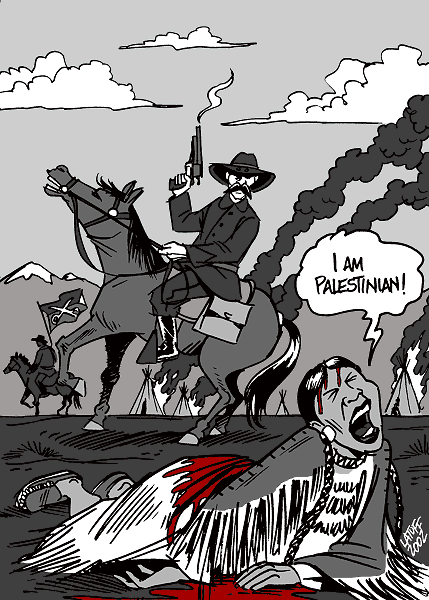
We are all palestinian - Native Americans by Carlos Latuff 
The sky filled with light, and as the fog of my vision cleared, a field of people opened before me, as with the harmonious revelation of a smile. Youth prayed and rejoiced under the morning sun, strong with music, to greet the day with endless festivity. The glow of the Earth radiated as a face after being kissed by a warm lover. The air moved softly, and my skin pulsed with gratitude. I enjoyed the music, spontaneous and ambient, as if I had heard music for the first time. Then, a face stared into mine.

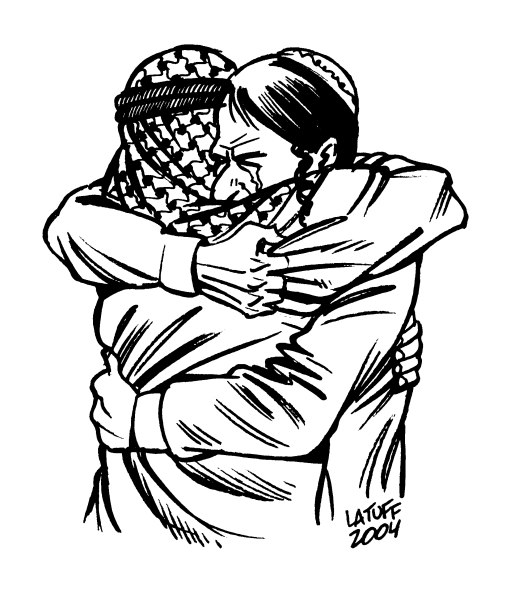
Forgiveness by Carlos Latuff
They recognized me, where I had come from, my origins and imprisonment. I wondered if they had escaped as I had. My first reaction was to run, yet, as the moment passed, I felt their empathy. The young woman, working as an attendant to the open-air music festival, expressed her concern, and showed me the way to a bus station near to the edge of the forest. From there, I could travel on and farther away from the destitute evil of my past.

Che Guevara wearing a keffiyeh by Carlos Latuff
As I approached the station, others noticed me, with fearing eyes, saddened with the truths of human compassion, they earnestly helped me along. I couldn't decide where to go. The schedule was complicated by the tightness of the knot in my heart. Where would I go? What would I do? Should I return and face the death that had me in its embrace, and that had since now consummated its passion with everyone I had ever known? I remain, immobilized. 
___________

Listen to live recordings taken from the Trio's debut performance on October 18th, 2013 in Self Connection Books (Canada). More on Jasmin's brilliant skills, gifts and about her amazing Crystal singing bowls please visit her today at Singing Bowl Music. This live album was produced by Vi An. Funds from this album goes towards artists involved and especially to fund future endeavours together as a collective, to rent venues, promotional material, transportation, meals, accommodation, etc. Thank you for your amazing continued support of these fine artists.

Monday, 30 September 2013

Source of New Media: Resonant Lives Harmonize in the West


“What I began by reading, I must finish by acting.” Henry David Thoreau

Where is our all-inclusive local media source, one that is not generic, yet doesn't cater to only one group, one that embraces local lore, custom and myth, one that encourages people who live the story, who are located downtown or in the community, whose lives are on the pulse of the daily, local narrative? They are to tell their story, to emphasize selected statements said by their own voice, and to speak from experience, because good media should begin with experience and end with experience. Good media should not begin with inexperience and end with inexperience. Good local media should reunite with social cause, and ultimately, incite action.

The introduction, history, structure and funding of The Media Co-op is explicitly written out in, Know Your Co-op, a nineteen page document prepared by journalist Dawn Paley in 2007 and self-published by The Dominion editorial collective. What began in 2003 as a newspaper, The Dominion (still circulating nationally), was reincorporated as a multi-stakeholder cooperative in 2007, now known as The Media Co-op.

“The multi-stakeholder is a situation in which you have more than one class of membership within the cooperative and they collaborate together to meet the needs of the different classes of membership,” Peter Hough, Fund Manager of Tenacity Works Fund at the Canadian Worker Co-op Federation told the Calgary Working Group of The Media Co-op. “In a retail store it would be trying to produce good working conditions for the employees but also trying to produce good service and fair prices for the consumer members. And then all of them would share in any surpluses.”

In 2009, the first local of The Media Co-op formed into the Halifax Media Co-op. In the next three years, Vancouver, Toronto and Montreal formed locals (in that order). “Each local has an editorial collective that meets face-to-face to discuss stories and coverage in their cities and surrounding areas,” wrote Dawn Paley, in Know Your Co-op. “The new model has required the creation of a web platform where contributors can upload news, videos, audio and photos, as well as interact through comments, working groups and discussions.”

Cooperative and local media is a process of decentralization, essentially giving media back to its rightful source: the people. In this way, the oft-repeated slogan, “Own Your Media” is The Media Co-op mantra. With stories such as the 2004 Haiti coup d’étatand the Vancouver Olympics, The Media Co-op and its locals transcend corporate media coverage, connect with untapped readership in the Canadian public and have worked with larger media organizations internationally, such as Democracy Now!

Yet, as typical to news media, the bad news is ever-present. As reiterated in Know Your Co-op, Montreal Media Co-op founder Dru Oja Jay, bore the bad news that The Media Co-op could not accept new locals in the 2010 article, How to start a local of The Media Co-op. Due to the overwhelming commitment and the underwhelming budget, The Media Co-op instead encouraged incipient Working Groups. The Calgary Working Group was opened under the direction of Jay in 2010 with top-notch international reportage on the challenges to a national election in Manila, Philippines.

Since then, the Calgary Working Group has received over 120 members with contributions on topics ranging from the G20 Summit to The Alberta League Encouraging Storytelling (TALES), to Environmental Justice, to Café Koi to Young and Future Generations Day. Articles, podcasts, photo essays, editorials and blogs are among the many mediums of cooperative journalism local to Calgary. After a new (and very active) Calgary Working Group contributor corresponded with Jay earlier this year, the momentum shifted. Dialogue on starting a new local of The Media Co-op reopened.

The potential for the Calgary Working Group to become the Calgary Media Co-op is a vision that has since been shared in the local community, and the support is gaining. The Calgary Working Group started meeting with this objective in May of 2013. Besides forming a basis of unity, and establishing an editorial collective, the Calgary Working Group requires sustained and significant contribution in order to shift gears into the full-fledged Calgary Media Co-op.

The initiative is mutually coordinated with The Media Co-op, where all posts contributed to the Calgary Working Group (and in the future the Calgary Media Co-op) will appear as published on The Media Co-op nationally-syndicated, online news source. Stories written by a local, such as the Montreal Media Co-op, also appear as such when published in The Dominion. The Calgary Media Co-op is a vision for local cooperative media, in advocating for the publication of local stories, connecting them to a national community of journalists, activists, communities and leaders.

The basis of unity and editorial collective has been organized successfully since May with core organizational capacity developed with Daniel Rodriguez, a graduate of SAIT Journalism and Melissa Manzone, who holds an M.A. in Journalism from Kingston University (U.K.). Our basis of unity establishes a rational, concerted response to the inadequate agenda of dominant media to address and give voice to local concerns, perspectives and narratives. The unity is also founded on a deep appreciation for journalism as a public base of knowledge where cooperative values are formed, maintained and encouraged.

The editorial collective organizes a weekly program of contribution. Each piece submitted to the collective will be edited by at least two other core or guest editors. Three pieces a week are to be contributed by one regular contributor and two guest contributors. The publication schedule will be organized according to three themes – Uncovered, Alternative and Editorial.

On Monday, the focus will be on misinformation in the dominant news sources. Simply, we ask, “What is the popular news not covering?” The same issue published in dominant newspapers will be assessed and critiqued with regard to the uncovered angles, perspectives and stories. Not only will contributors critique, their articles and/or multimedia pieces will address and give agency to the unvoiced, and unknown, in our community.

On Wednesday, pieces will map alternative press locally, in Calgary, and Alberta. For example, we ask, “What is being voiced by independent media sources, non-English newspapers, podcasts and blogs?”

On Friday, the editorial collective will publish editorials spotlighting special voices from within the community. This new initiative of the Calgary Working Group aspires to convene with the entire political spectrum, including all identities of class, religion, gender, and ethnicity into a refreshingly local forum to reenergize debate, understanding and willpower in the community.

The Calgary Working Group still has a long way to go until the proposed momentum is established, and finally, there is a new local chapter of The Media Co-op in Calgary. According to the latest draft of New Local Policy (pending issue by The Dominion editorial collective), the Calgary Working Group remains in Phase 0 of 5 successive stages until a full-fledged Local can open in Calgary.

First and foremost, what this means is that the Calgary Working Group may not use The Media Co-op name to raise money. All funds currently fostered through the voluntary leadership of media activists involved in developing the Calgary Working Group are nominally channeled through AlternativeMediaYYC.com, an independent media and podcast source for Calgary-based voices. At Phase 0, the Calgary Working Group may not refer to itself as the Calgary Media Co-op. At this initial stage, administrators at the Calgary Working Group helping with site content do not have editor access through working group admin privileges.

Currently, the Calgary Working Group is developing from a working group (Phase 0) to a website working group (Phase 1). In the first stage of the working group’s becoming a local new content is posted weekly, collective membership is stable and meets regularly; collective processes, membership criteria and operating principles are formed; editorial policies are adopted; formal agreement is made with The Media Co-op basis of unity; and lastly, the collective (Calgary Working Group) agrees not to use The Media Co-op name to raise money nor refer to themselves as the Calgary Media Co-op.

At this transition, the working group applies to The Media Co-op Board of Directors (in this case, through Dru Oja Jay). Leaders from this Calgary Working Group initiative are currently organizing a conference call with Dru and The Media Co-op Board of Directors. [To get involved, please contact us via the Calgary Working Group coordinator, Matt Hanson (mhanson1717@yahoo.com).]

______________

In the context of modern literary history, Hungarian-American Jewish newspaperman Joseph Pulitzer set the quality standard for publishing at the turn of the century. Pulitzer, best known for the eponymous award for not only journalism, but also photography, literature, history, poetry, music and drama is attributed with the quote: “The newspaper that is true to its highest mission will concern itself with the things that ought to happen tomorrow, or next month, or next year, and will seek to make what ought to be come to pass.”

Good media begins with the very real ground-level experience of people who are the subject of good stories. The middle ground is where people read and learn. Finally, good media ends when the lives of the people voicing their story are changed as often as the people who learn that story. Good media compels and instills action.

Mediocre or god-awful media begins with inexperience, namely the daily political rhetoric, hearsay, or at best a secondary source. Next, its core value is the repetitive sound of a cash register receiving a dollar and some change for a paper. For the tremendous act of reading is enough for some literati, however news media should be a call to extroversion and community.

Oftentimes, media consumerism ends with apathy, inaction and at best a satiated boredom, and at worst, accepting that life merely boils down to hearsay. More subtly, office-enclosed research on secondary sources so conveniently bolsters today's social (and unsocial) media frenzy; a frenzy that can overwhelm experience into the dull silence of an unprovoked voice in an abyss of unquestioned answers, facts, statistics, records.
"It's as if newspapers have broken their bargain with democracy in turning away from editorial excellence and towards profit, marketing and cost-cutting...fewer of us can turn to our papers and see what we all have in common, or what our common stake might be if we participate in our democracy." (Yesterday’s News, John Miller)
The glossy overdub display of empty space is often filled with meaningless advertisements, meant to convince people that their lives are as empty and meaningless as an unfulfilled consumer niche, such as the newspaper; slowly becoming a dying, trivialized miscellany for the intellectual exploits of the few.

The media less and less provokes action because it never quite does anything for anyone, yet still somehow exists because of the inkling that it could. If only media behaved as it once did before politicized buyouts and delegitimizing advertisements, when a paper was a conduit of experience through which new learning passed to connect, share and welcome all voices to truly and transparently voice an urgent cause to act!

Dominant news sources less and less provoke action, and more and more reveal mere dangers. Is our fear-based culture a result of the classist leadership in dominant sources of media and information in the public sphere, where stories are always politicized according to the dominant agenda? As a result the rhetoric dissuades change, i.e. delegitimizes alternative perspectives. The narrowing national and public debates are also a resultant of the unremitting and domesticized war on [domestic] terror and its repercussions within the consumer identity crisis of the West.

Local media often promotes reliable, ongoing coverage, because people are interested in the longstanding nature of their community. Merely because a story is told does not mean the story itself is over. Ongoing coverage on a topic that immediately concerns people, on which they have daily experience as a default to their local lives, provides opportunities for readers to learn more, gain news perspectives, contact key leaders on the issue, and most importantly, become involved in currents of change.

Dominant papers don't often voice underprivileged perspectives because they are the least marketable consumers. Instinctually, good journalism bolsters weak areas of coverage, not simply profit margins. As Pete Hamill wrote in News Is A Verb, “True accomplishment is marginal to the recognition factor. There is seldom any attention paid to scientists, poets, educators, or archaeologists.” Traditionally, papers lead communities toward mutual solutions and shared vales. Consumer marketing instills myopia and is, finally, beside the point, and decidedly antithetical to providing true information.

The advent of community, as opposed to commercial, journalism can teach citizens of a democracy (and more, a democratically inclined world) how challenging it is to create consensus. Journalists are practitioners of democracy. Their work necessitates service and humility. Community journalism cultivates voluntarism, and promotes education, vision and friendship. An unknowing public spawns a culture of denial, impotence and misinformation. The more a society realizes its source of community, the more its people are independent, thoughtful and generous.


References:

Hamill, Pete. News Is A Verb: Journalism at the End of the Twentieth Century. The Ballantine Publishing Group. New York. 1998. Page 80.

Miller, John. Yesterday’s News: Why Canada’s Daily Newspapers Are Failing Us. Fernwood Publishing. Halifax. 1998. Pages 15-16.

Kennedy, Dan. The Wired City: Reimagining Journalism and Civic Life in the Post-Newspaper Age. University of Massachusetts Press. Amherst & Boston. 2013.

Paley, Dawn. Know Your Co-op. The Media Co-op:http://www.mediacoop.ca/index.php?q=knowyourcoop. Canada. 2011.

Jay, Dru Oja. How to start a new local of the Media Co-op. The Media Co-op:http://www.mediacoop.ca/blog/dru/4378. Canada. 2010.


The article above, Community, Not Commercial, Journalism, was written and published exclusively for The Media Co-op on September 27, 2013. 
_____________
I cross a deep green field. The sky, overcast, rains on a dark earth. Dusk spells weary and wayward bands of lonesome greed. The marijuana burns. I, cold in dank clothing, trail beyond the grey horizon. Smoothly, with a gliding wind, I escape across the open shield. My mind breathes awake. 

Pluie de mai. Pays basque by Darío de Regoyos y Valdés
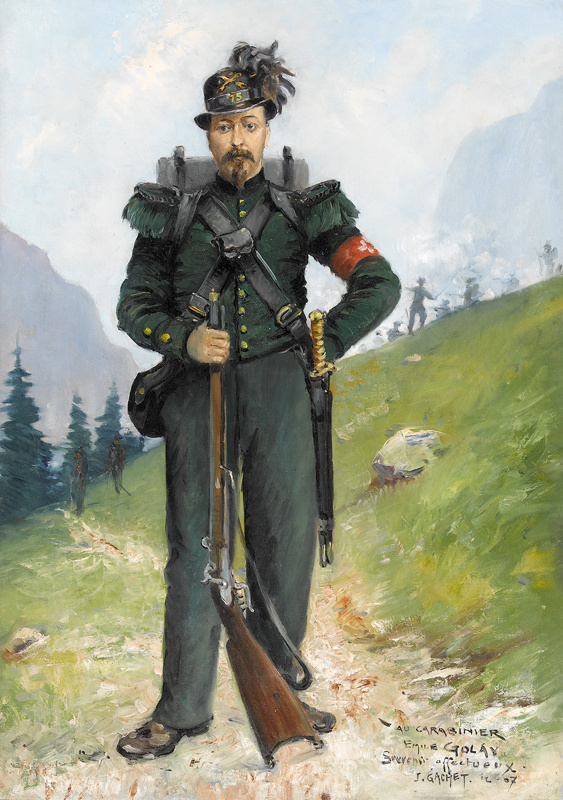
Cautious, I walk slow. The friend waits, cold, faceless. I unwrap a fabric, revealing the value of our exchange. Sweetgrass fills the air. Moved, life graces. Forlorn and ungraspable, we stretch out to reach the fleeting air. Police siren. The air becomes a noxious haze of suspicion. I fly. 

Le carabinier by Jules Gachet
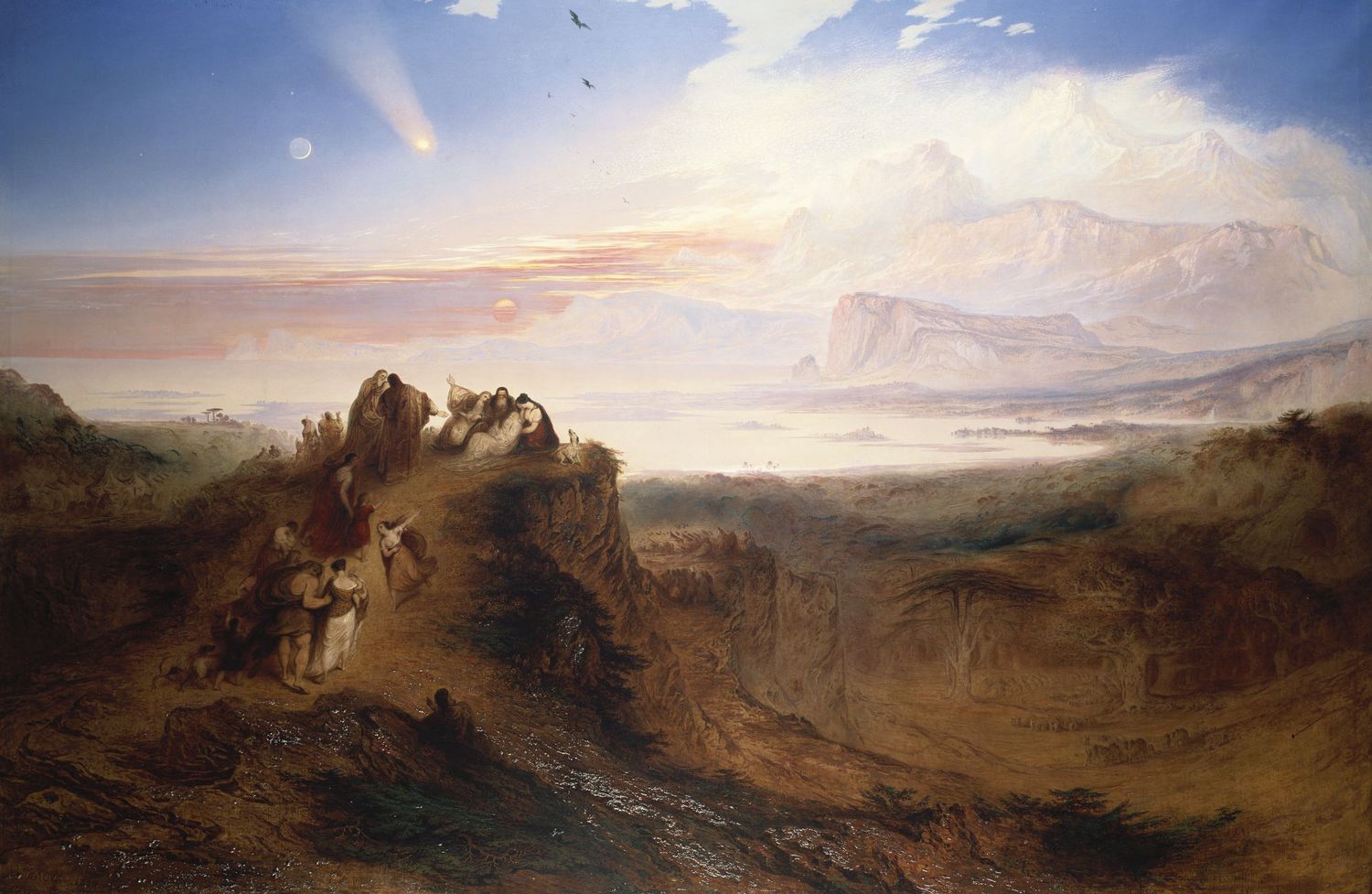
The sweetgrass confiscated. Our lives are in our hands. I look up. Abyss. Black. Open. Dead light fades. Escarpment of the human gargoyle decaying, and erased from the map of heaven. Sharp and hard, the light petrifies, crystallizes and vibrates of the endless spectrum. 

The Eve of the Deluge by John Martin
Galaxies enervate spines, nerves, veins and nodes of wonder; cosmic laughter at the sound of a split gong. Through, I, again, look up. Cobalt azure. Blinding, solar, pure and naked, sky. Cloud obscures. Rain, a memory. Summer passes in the afterglow noon. 
____________
First time in Vancouver, my love and I stayed with our dear friend Buckman Coe. I left early, leaving her to an extraordinary night with rich music and great friendship, and leaving, on my way back home, I played Buckman's first CD on my headphones. The first track, "Give Up The Fright", began "If you must go overseas / If that's where you feel that you ought to be." 

And tears streamed. I shook with the fear of love as I watched my one exit from the bus station and into the west coast cityscape. It was the first step on my way to Cairo, and further and further away from her. "Don't know if it was wishful thinking on her part / For now, this little rogue has got my heart," ends the song, a wishful lament to the ambiguity of human relationship, the lyrics struck so many chords with perfect accuracy. 

Years later, our dear friend's second CD, By The Mountain's Feet, opened with Not So Farfetched, a brilliant rhythmic melody to the course and rush of love - and again, the lyrics spoke with impeccable insight as we schemed our return west, to our Pacific lust of belonging - "This is how the story of you and I begins / And it's not so farfetched..." 

To the resounding continuity of love in our hearts. We grow to return. 

Multimedia Video on Jewish-Chinese Intercultural Music

Jewish and Chinese. The pot boils. Visiting the coast, we accompany a friend staying in the home of Lan Tung and Jonathan Bernard, whose special hospitality warms with musical instruments of a deep and resonant heritage. Their contemporary fusion music of world union reconciles the magic of our hearts with an unspoken quality of communal love - an uncanny similarity to our own strength of heart, soul and mind in the music of our coastal upbringing. 

Tuesday, 24 September 2013

Writing: The Child of Art and Music


"My grandfather Dolmic dreamed that three coffins floated through the door of his brother's house. So, he rode to the next village to investigate, and found his brother, his sister-in-law and their servant girl dead of cholera. The baby, still alive, was sucking at its mother's breast. He built three coffins and arranged the burial, and returned home with the child in his arms. And they say dreams don't come true." Ukrainian Grandmother, Wood Mountain Poems

On May 3 of 2012, Copenhagen welcomed the largest sustainable fashion conference yet seen in the contemporary world. Sustainability and corporate social responsibility are buzzwords in the consumer industry, and are integrated more and more into every sector of the economy. What was once merely one percent of the fashion industry in 2007 – when estimated global sales of the sustainable fashion market were at three billion dollars – would increase exponentially, culminating in the 2012 Copenhagen Fashion Summit with the investment of over one thousand key industry stakeholders. 

One of the largest industries, fashion product lines contribute to the spread of over eight thousand chemicals and twenty five percent of the world’s pesticides into the natural environment. Not only that, most of the environmental impact is made after the consumer has purchased the materials. Yet, sustainable fashion is one growing eco-trend that is challenging the largely unsustainable fashion market by employing alternative textiles with less carbon footprint. 

Organic cotton is effectively transforming one of the most commonly grown crops, and so in doing, is spearheading the eco-fashion movement. Other cellulose materials include hemp and bamboo. Materials, however, are only part of the eco-equation. Renewability and source factor, as does labor conditions. The idea is to create what Rossella Ravagli, Corporate Social and Environmental Responsibility Manager at Gucci, proposed during the 2012 Copenhagen Fashion summit, as a “good compromise between style, quality and new material.”   

Arguably, bamboo fiber is especially capable of meeting the demands of the new eco-fashion market. With an absorptive quality that captures greenhouse gases, bamboo grows in abundance without irrigation or pesticides. As the fastest growing woody plant in the world, bamboo holds a unique place in the fast-paced consumer market. Although, there is controversy regarding bamboo’s claim to fame in the eco-fashion market, as the process required to turn bamboo into wearable fiber, also known as Rayon, is marred with chemical-intensive labor. Yet, relatively speaking, bamboo as a source material for clothing is a more sustainable option than most. 

Yet another alternative textile, hemp, is potentially more eco-friendly than bamboo. Also easily grown, hemp clothing is often a composite of other organic materials. With such diverse uses as building materials, paper, jewelry, and fuel, hemp is largely responsible for complementing the greater trend of sustainable fashion with style. Hemp clothing is often designed with respect to traditional eco-fashion trends, opening interest in ethnic-inspired lines.     

This piece of commercial writing on eco-fashion was originally written for a client in China, and is also published as a blog on The Media Co-op
_____________

dusk fall
full equinox
hell's door
lonely crossroads
still bells
way back
world tree
______________

The week began with the resonant mergence of harmonic mastery still ringing in my ears. A meeting with contemporary legend, Amir Amiri opened my mind to the brilliant challenge of a distant sound's arrival. The shores of my thought curled and folded in a slow tide as I acquired the bittersweet taste of a traditional music's refinement into the beautiful wholeness of world.

The quick hum of the Persian santur danced behind my eyes with the lifted personification of an artist's temptation to unite with the all-breathing life of unity. Yet, nostalgic and principled, remained steadfastly earth-bound to the homely traditions of mother, father, and self. At once, another meeting with the unbound truth stared me in the face through the transfixing metallic song of the HandPan under the voice of LIRON MAN

After Man's show, Puertas, at the Calgary International Flamenco Festival, I then met the opening musicians, one of whom, Tamar Llana is featured in the video below. She sings next to her mother, Judith Cohen - an ethnomusicologist with a special focus on Sephardic music - playing the frame drum. The joyous union of ancestry, tradition, and contemporaneity through music led to a revelation of harmony as the voice of continuity, belonging and meaning.


Monday, 3 June 2013

Sleepless Children of Dream: Composer Vi An Diep Invokes Taoist Grace


"When you sleep your angels stay awake my children
The bombs will kill and destroy
Guns will take my life
Midst the noise and chaos
I will sing this song during your last breaths on earth
Carry you to your next journey far away from this hell
Then I may die in peace"

Lullaby to Dying Children during the Vietnamese War by Vi An Diep

“Be careful what you water your dreams with. 
Water them with worry and fear and you will produce weeds that choke the life from your dream. Water them with optimism and solutions and you will cultivate success. 
Always be on the lookout for ways to turn a problem into an opportunity for success. 
Always be on the lookout for ways to nurture your dream.” Lao Tzu

“Sometimes I feel like the elephant in the room,” says composer and musician Vi An Diep. She is one of more than 20 artists involved in creating Elephant Song, the newest work by Green Fools Theatre. The “pay what you can” all-ages shows will feature an elaborate set for life-sized hand, rod and shadow puppets. The centrepiece of the production features both live and electronic music by Diep, a local artist who immigrated to Calgary from Vietnam two decades ago. Elephant Song is inspired by Diep’s life story, and her music reflects the way humans relate to the natural world.

Writer and director Jennie Esdale has worked with Diep since 2005 (Dancing on Water) and says she always wanted to do a show with Diep as the centrepiece. The story follows two sisters separated during the fall of Saigon. Diep, a refugee, arrives in Canada and teaches herself to play the zither. Through her music, she conjures the life of her sister, raised in the jungles along the Mekong River in Southeast Asia. Rescued by an elephant, the sister embarks on a harrowing journey in search of a lost calf. Along the way, she saves as many elephants from the perils of modern dangers as she can.

The story mirrors the emotional bonds of an elephant family through a human story, and both share a common theme: displacement. “Elephants are like humans in that they form close bonds with their families,” says Esdale. The separation of two sisters by the strife of war is reflected in the devastation of an elephant family by illegal hunting. “Just like humans, when an elephant loses its family it forms a new family,” she adds. “Elephants share an emotional range close to humans — the audience can relate to the elephants through the human element.”

Before writing Elephant Song, Esdale travelled to Chang Mai, Thailand, eventually meeting a woman with land that’s dedicated to an elephant sanctuary. Inspired by this activism,Elephant Song takes place along the Mekong River in Thailand and Vietnam, which is part of the natural habitat for Asian elephants.

The play openly addresses the role of humans in elephant endangerment. Actor and puppeteer Nicola Elson, together with the Calgary Zoo, will provide opportunities for audiences to become involved in elephant conservation.

“The artists can represent the work of the people on the ground, the conservationists and scientists, but at the end of the day we are not the foot soldiers,” says Dean Bareham, actor and set designer. “There are a lot of people who don’t like zoos, but the fact is that zoos actually do a lot to conserve endangered species.”

Elephant Song delves deeply into the emotional landscape of both the human and elephant characters. Set design, supported by music and mise-en-scène, is crafted with an appreciation for the fascinating visual and aural communications that elephants use, including both sign language and low-frequency vocalizations. “Live puppets exhibit the relationship between the humans and the elephants, and the shadow puppets represent the inner world of the elephants,” says Esdale. “Emotion through story can be more persuasive than facts, as it can inspire hearts and minds.”

Diep’s music cultivates introspection, inviting audiences to reflect on the inner worlds of human life. “The act of physically creating a sound connects people to their own feelings and from that they relate with the rest of humanity. That’s the role of music,” says Diep. “Jennie was able to listen to my story and feel the sentiments and elaborate on it in a way that is accessible for any audience.”

Central to the production is the dan tranh, a steel-stringed Vietnamese zither, featured in both puppetry and live performance. Diep’s instrumental artistry draws from a rich Vietnamese-Chinese heritage, with respect for a cultural preservation that is in harmony with the conservation of nature. “The instrument is a part of the immense heritage behind me,” says Diep. “The Vietnamese dan tranh is the only thing that really links me to the natural world and the heritage of Vietnam.”


The above article, "Elephant Song: Composer Vi An Diep performs semi-autobiographical puppet play about wildlife conservation and immigrant heritage" first appeared in Fast Forward Weekly on May 16, 2013 and later in The Media Co-op 
______________
have a ball by RK 
the music of life by RK
early spring by RK
red hiding by RK 
when i grow up by RK
________________
the exotic settler, has become unsettled by the music within, the rhythmic unity of creation instantaneously awakening the dreams of exploration to contented and rooted being that is beyond and before settler intuition, yet speaks of one at their furthest point 

cast astray by the weary exhaustion of travel and the toil of vagrant survival, at our most distant from any sense of self or environmental recognition, yet the voice within provides a means and path by which we may discover the foundation of life within and without and throughout all wherefores and times 

all faces of belonging in the deep runnel of ground churning and swooning with each and every step planted firmly before sitting, to meditate on the self as energy thoroughfare through which sky and ground meet in the cloudy visions of a creative mind at work, entranced by the muse of his own beckoning, the internal void voices VOID! 

Aloud! the name of god, from faraway lands, in the echo of valleys whose echoes resonate to beckon the voice to intone and invoke throughout and within and from and as the windpipe of the valley itself: Allah, is called, where in Arabic, the expression "ya" is used to call out with vocative interrogation, in this way, to see the meeting place of space and sound, of sky and ground, within the human taste for the call to nowhere now!


Four pieces herein envision and voice the foundation of character as Love, the unsettling settlement of dualistic harmony. The holistic fruition of light boundless and earth trembling. The boom and flash of awe and rust, coalescing at the frayed tip of the hangman's rope, blooming a new head of lore and myth. Words are eyes from heaven. 

The second piece, "allahlelujah" is also featured as a sound-art exploration on themes published herein, on the sacred mess of beauty at its core a seed nestled in the crooked ribcage bust of an itchy nude breathing the hoarse and callous gargle of raw touch and the healing blood that runs from a reddened face hot with night  

Monday, 11 February 2013

Food for the Imagination: Contributor Article Completes Sketches of Style

Dream Cuisine by RK
I am happy to present the first contributor article to SoJourn(al): Private Dreams to Public Art. I am especially proud to present this article because it speaks to many themes in the life of the Dream Author. I have been a vegetarian for over seven years, many of which were spent in the Middle East and Latin America, which posed interesting challenges. 

Nonetheless, I stayed true to a time in my life when I was thoroughly exposed to interpretive experience. My mental development was spurred on by alternative living practices, founded on a diet of psychoactive compounds and creative literature. Maintaining an alternative diet has been an essential ingredient in living a life based on principles of subtle recollection and acute awareness. 

Blurring the separation between external causes and their internal effects has been a lifelong inquiry. The experience of how foods have an impact on the subtle realms of dreaming is an invaluable source of critical thinking. As Terence McKenna put it, to "dissolve boundaries" is a natural step towards creative thinking, and becoming a seer of "true hallucinations" of which dreaming is an integral example.  

Food for the Body Equals Food for the Imagination

When Scrooge was visited by the ghost of Jacob Marley in Dickens’ A Christmas Carol, he believed that he was dreaming and put the apparition that stood before him down to ‘an undigested bit of beef, a blot of mustard, a crumb of cheese, a fragment of an underdone potato.’ ‘There’s more of gravy than of grave about you,’ he joked. The idea that foods can influence our dreams has featured heavily in literature throughout the years. There is a commonly held belief that what is going on in a person’s digestive system can have an affect upon his or her subconscious mind during sleep. To what extent is this true though? Can eating the wrong thing really plunge somebody into a world of nightmares?

Does Cheese Give you Bad Dreams?

There is significant evidence to suggest that eating healthily can help to keep a person’s mind to remain healthy. According to the Dieticians of Canada, maintaining a healthy diet can reduce irritability and mood swings and increase an individual’s ability to concentrate. Does this only apply to when people are awake though or does it also make a difference when they are dreaming? The food that has the strongest association with nightmares is undoubtedly cheese. However a study carried out by British researchers in 2005 suggests that there is actually no correlation between cheese consumption and bad dreams. The results of the study actually indicate that different varieties of cheese are capable of inducing specific types of pleasant dream, for example cheddar cheese is thought to lead to dreams about celebrities. The good dreams that cheese can bring about are believed to be due to the fact that it contains the amino acid tryptothan, which is commonly linked to a reduction in stress.

A report published in the Folklore sociology and anthropology journal questions whether the idea that cheese causes nightmares is linked in some way to its association to witches in literature. In ancient Roman writing, women who were viewed as potential sexual partners were referred to as ‘cheese’. In eleventh century English literature, several stories about ‘night witches’ came into being that included references to cheese. Folklore suggests that this was used to imply that the witches had a sexual element to them and wished to corrupt their victims by exposing them to sin. The report puts this forward as a possible reason that cheese might have ended up being blamed for bad dreams.

Spicy Foods

Spicy foods are also thought to lead to nightmares, which is backed up by the results of a study that was published in the International Journal of Psychophysiology in which a group of healthy men were given spicy foods to eat before they went to sleep. They were observed to have a more restless night’s sleep than they did when they had not consumed any spicy foods before they went to bed. The author of the study speculated that this could have been due to the fact that the spicy foods had elevated the internal body temperature, causing the discomfort to work its way into the participants’ subconscious and leading to bad dreams.

Unhealthy Foods

Research cited by Justine Sterling of food magazine Meatpaper indicates that consuming foods that are high in sugar or fat immediately before going to bed can lead to nightmares. The study also indicates that going to bed on a full stomach can bring about bad dreams and low blood sugar caused by going for a prolonged period without eating can lead to vivid nightmares. This is because the body releases adrenaline when it is desperately hungry, which translates into the subconscious.

Mustard

Mustard was another foodstuff that Scrooge blamed for Marley’s appearance – and with good reason as well, as a study carried out by researchers at the Department of Biochemistry at the University of Tasmania in Hobart, Australia, indicates that consuming it can result in nightmares. The researchers concluded that this is probably because it contains capsaicin, which can change the body’s temperature and lead to discomfort. It appears that what we eat really can affect the way that our minds work once we have passed over into the land of sleep. Perhaps cheese was not the main culprit in the case of Scrooge though; maybe Marley was merely a result of too much mustard before bed.

Evelyn Donaldson is a mother of two and full-time writer. She grew up in Idaho, but now lives in Kansas. She recently became vegetarian and has long been interested in dreams and their interpretations.
__________
My blanket drifts up into sky, its multicolored fabric bleeds scarlet and lime into the nearing front of storm clouds gathering. The wind-whipped fabrics touch and scatter the bedroom floor, above without ceiling, empty unto the grandiose firmament. I wake to the numbing air, as on a mountain summit, where the thunder resonates in delicate cyclones. As I rise, the storm pierces the earth with overgrown fingernails of Zeus. A crepuscular storm, breathing in an unwelcome morning, filled with signs of a new god. 

Jupiter and Semele by Sebastiano Ricci
And the machines of war rape our Earth. Nazi terror sweeps as the witch’s broom throughout the countless, destroyed Jewish homes of Europe. My family is strangled and sucked clean through the medical tubes of an astral fire as hot as the blunt knives of torture. I escape. To Russia, I follow the blank news pages with a heart kept earnest. Directions swarm as the buzzing of toxic insects, and my rivals are blended as fruit sap in the teeth of metallic pincers. 

Nude II by Willy Fick
In the heart of Russia, I am free; yet full with a dark heart. The Earth trembles and fades each day with a transparent rush of nostalgia. I wish and writhe for the beating hearts of my beloved mother and father, sisters and brother. The wedding feasts and blind bliss, how we gorged on the salt of the seven seas with triumphant abandon. Every day, there was a moment of repose.

Cigarette Seller (Wandering Jewish Man) by Dome Skuteczky
We knew the day might come, when all would be rent, cleansed by the impotent flood of mad war. Should I wander further astray, eastward to the cold forest sands of Siberia, or westward, to the commercial forge of America, and sleep by the pill of forgetfulness? Lost again, if found anew, will I be recognized? 
___________

As per SoJourn(al) tradition, I have prepared a free PDF for the entire Sketches of Style collection which has been excerpted in the past few months in complement to my dream writings. 

Enjoy!