After a three-day debacle (two very eerily appropriate document crashes), I've finally completed another full online version of the experimental writing collection titled, district.Columbia. At last, overcoming major technological crises along the way, the labours of my passion have come to fruition. The work is free for the creative reading pleasure of all. May the enduring inspiration to share my love of poetic art pass through you.
district.Columbia
I am continuing to offer book length collections to mark the completion of their excerpted contextualization within the creative fields of dream fiction and various intercultural reflections that I post once every two days on SoJourn(al).
The compiling of this collection has seen very interesting public development, as well as private. The art and accompanying writing is featured on OutwardLink.
"Untrained Timeless Tuning", one of the pieces revised for this newly edited and compiled collection, is published with Poydras Review. "Lugubrious background nearing an electromagnetic haze", another piece herein, will be forthcoming with Rio Grande Review in December 2012.
Tuesday, 27 November 2012


Sunday, 25 November 2012
Prophecy in Dreamland and Other Spells of Creative Literacy
 |
| Portrait of Rasputin by Ana Theodora Krarup |
I first read Whitley Strieber's Communion, which stretched my understanding of non-fiction as a young reader, surveying a gamut of fiction, history, philosophy, mythology in my family library.
Another genre-bender, who influenced my appreciation for literature in a more grounded way, was Jack Kerouac, who together with Allen Ginsberg, prophesied a shift in American social norms through their collective literary breakthroughs. They had noted that in the second half of the 20th century, Americans would shift from their hardline Christian upbringing to a more Buddhistic sensitivity.
Reading both of their writings thoroughly, I soon interpreted within their work an interesting relationship to what we now call prophecy. More than to pin prophecy within the highly skeptical sensationalism of conspiracy theory, prophecy, in a more mythological sense, is simply the attuning of the intellect to certain eloquence in creatively utilizing timeless wisdom and ageless archetypes, reattributing them as signs.
More often than not, prophecy in mystic circles is not an outward momentum, toward predicting profane outcomes, but simply one of the many old ways toward self-realization. One is inevitably of the infinite. Popular prophets are heady mixes of conspiracy theory or what Terence McKenna called, "epistemological cartoons". In Hebrew mysticism, my understanding is that prophecy is a numerological science, beheld within the Hebrew language of the Torah, encompassing a unitive vision of interpretive science as it meets with spiritual practice.
Recently, I viewed the film, Rasputin, which was another prophetic figure portrayed on the literature on my shelf as a young man impressed by the literati. Rasputin certainly opened the popular discourse of prophecy on the world stage, especially as regards political intrigue, out into broad daylight. His eyes still transfix.
________
With a mug to mirror the
inescapable frame of Kerouac’s joual-toughened jaw, bespoken with the silent
glimmer of streetside grief, walking alone and alone for the infinite mileage
of American wanderings, a cyclical tongue of ruthless freedom, to free the
passions from the word-order of choice and splay will on the open pain of
roadside heat with a thumb and a meek treasury of manly poverty
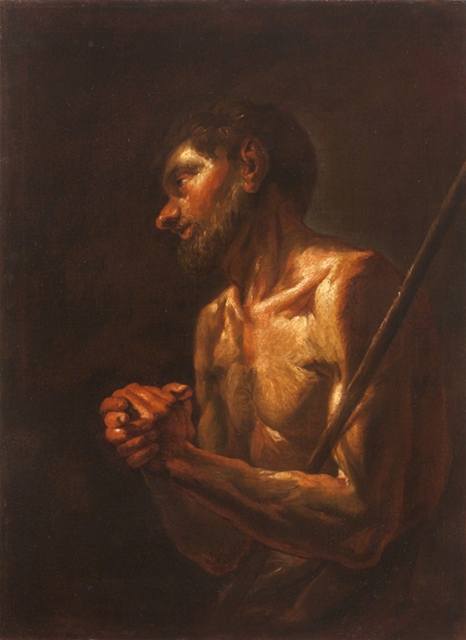 |
| Pauper by Petr Brandl |
that drunken
cry that rang throughout the humbling scope of spectral telephone wires
following with the unheard voice of millions distanced by the wiry nerves of a
social neurosis towards mobility, and with the rootless leisure of a need to
travel as a way of being, that holy rope burned the traveler’s hands as the
writing cooled mind’s belonging on a land of no-land opening
_________
“American body,
May you be cooled,
May the dog days of the final moon in your Roman clock tick no more,
May your fires be dampened in the Fall,
May your body always be replenished,”
“This is a prayer from your navel,
Your own son”
Friday, 23 November 2012
A Taoist Mystic-Musician and the Great Awakening
 |
| Painting of Tao Yuanming by Chen Hongshou |
Possessed by a conflict of opposites, after reading this quote aloud to my wife, she says, "That is totally how I feel." She was raised in a Vietnamese sect of Shamanic Taoism. One day, a local shaman saw her hands before she left Vietnam for Canada. "You have the hands of an artist," said the shaman. As I watch her hands blend with the strings of her instrument, and hear the mystic bent with staggering heart, wrenched from her music of an emotive immensity so tremendous that I am truly floored every opportunity I have to provide her with a rhythmic touch of our in-gathered loving. Through her music she speaks, "listen, and awaken to the source root of creativity." It takes a well-planted seed to take root in such soil, rich with the wisdom of time and its lessons of patience and anticipation. I respond, "let the spontaneity of life sometimes dry, to await the rain, falling not from our own bodies, but from the intuitive atmosphere of our shared life, that to be patient, is a kind of love."
________
pondering the day by the
riverside, my mind blends in the heady fray of sun rope tangling with the
cloudy sky in a disarray of dizzying color, the viscera of imagination pokes
its protruding skeleton in the vine-skinned pathway beside my water-borne home

as I traverse further on, through riverine thicket dense with the swamp-like
craftiness of bitter greenery, filtering the light through a pockmarked memory
of filigree lightning, and I remember the Old Man, a Lao Tzu, of my entrenched longing,
with such wisdom as unknown by my youthful pride, he walks with me with undeviating
eyes, with mind to each thought that arises between our speech of anticipated
mentioning
 |
| Sakyamuni, Lao Tzu and Confucius by Unknown |
and then he stops to show me a trick of the fatherland, a stick of
wisdom, a bone of intelligence, an awakened look into the material fire of all
transparent self-knowing, the crooked daze, the unchallenged light sparking his
eyes to follow mine in the unfailing instant of his true magic
________
A law for the ancient mind of cultural struggles
To be heard through fallen webs of prehistory
Erected above the books and pleasure-peaked Goddess of man
Who assailed Her tribes with red nations
...
Claiming to break the mold
With word thievery and undreamt savagery
...
In the earth’s hidden sky of traveled time
And her rested eye
Wednesday, 21 November 2012
Music and War: A Dream of Youth
When I conducted research with refugees in Cairo, Egypt, I engaged the community in a youth music project. One night, I sat listening to the diverse musical traditions of Sudan, exhibited before me with unrivalled emotion. The room filled with traditional incense as we drank hilo-mor, a Sudanese herbal drink special during Ramadan. The lasting words of the night will forever echo in my head, when my co-researcher, a man from Darfur, asked his friend from Kordofan, a young singer, "Why do you sing your traditional music?" He responded, "Because when we sing, we remember where we're from, our place."
________
as the enlightening face
of my old Israeli cousin, young of age, though old in memory blinks fearlessly
in lieu of horizon’s edge, her eyes brighten in front of mine, a parallel daze,
as she sends through her pupils an image of the bomb pattern of military
flight
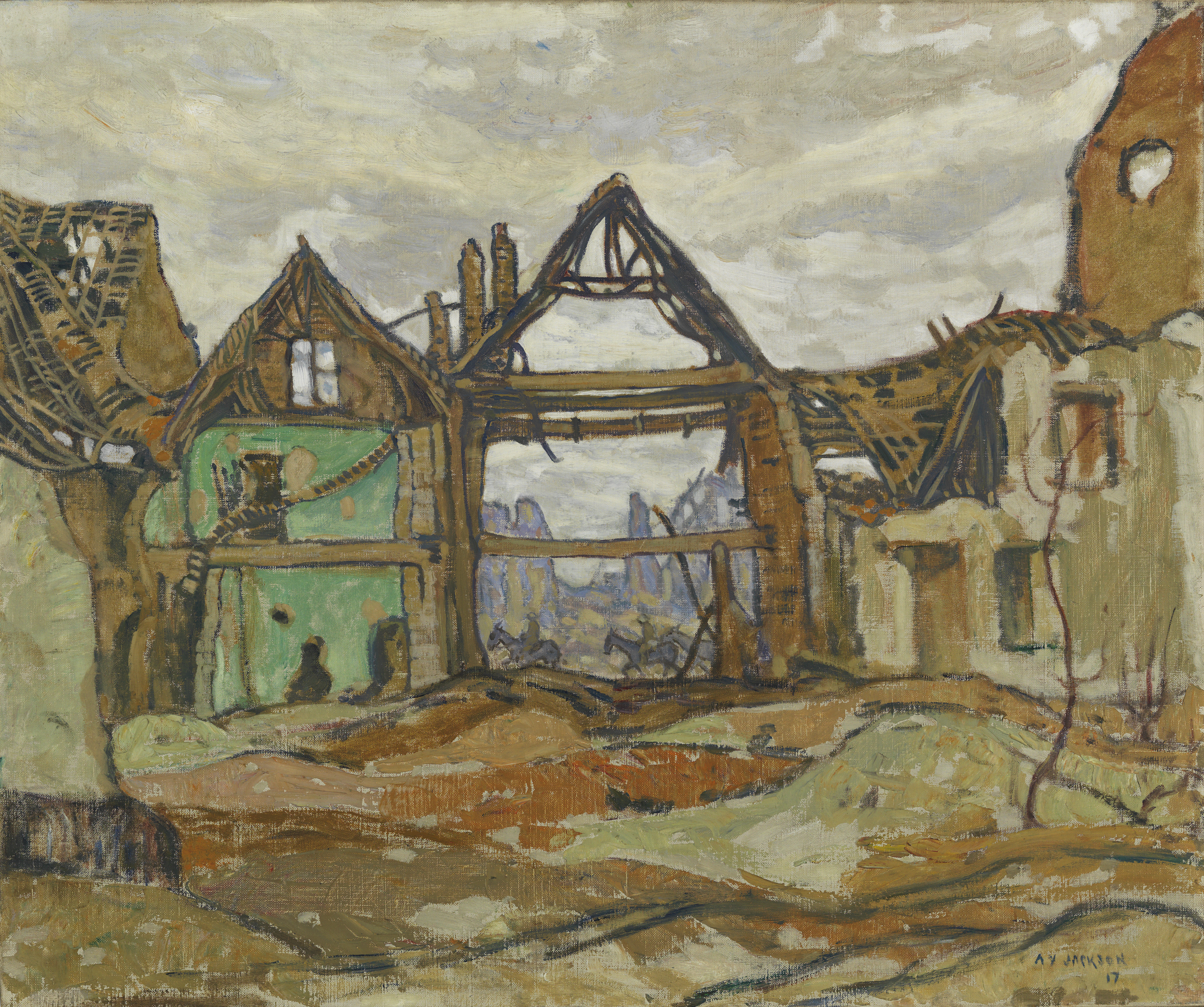 |
| House of Ypres by A.Y. Jackson |
and I see a Dutch friend, an emergent activist on the path to knowing
her similarly, her pale face scans the leaping vigor of machine angst over the
virtual land, upright in a jet, we scan the earth with the dotted map, bounding
over villages destroyed at our mechanical feet as we leap through the air and
finally touch down over a secretive hill, where green earth changes to beige desert
 |
| F-16 over Pentagon 9-11-01 by U.S. Air Force |
and part of a caravan, we gather direction with locals, Bedouin men allies, as
they guide us towards the perimeter of our land, and espionage fills our lungs
with the hot breath of wartime lies
_________
“Where in whose pleasing leisure does our stock grow and go bolder in fields of blank duress from childless talent, filling space and accentuating silent harmony in the ever-widening round?”
To believe in light, and the possibility to endure the ground’s own failing trials
With Her round nature, orbiting in the mess of experience
Without prior knowledge, except when I believe in Her as my own
...dreaming up beauty in the complimentary fold / with airy locks peeled over the dead / sick earth swells with an overwhelming decay of restraint from life / into a confident foray with spirit’s unidentified heights or doorways into the New World / cornered, lightless
excerpt from "A Songster's Realisy"
Monday, 19 November 2012
Dream, or Intoxication: Nietzsche and the Tradition of the Master Singers
 |
| The Ravens (For a poem of Nietzsche) by Margaret Hofheinz-Doring |
My friend, that is precisely the poet’s work—
To figure out his dreams, mark them down.
Believe me, the truest illusion of mankind
Is revealed to him in dreams:
All poetic art and poeticizing
Is nothing but interpreting true dreams.
The beautiful appearance of the world of dreams, in whose creation each man is a complete artist, is the precondition of all plastic art, and also, in fact, as we shall see, an important part of poetry."
Nietzsche, Birth of Tragedy (e-text)
One night I had been tirelessly searching for this very stanza by Hans Sachs, however I'm unable to read German so my stalwart online efforts proved futile. After glossing over Nietzsche's "Birth of Tragedy" a few times within the body of other texts on mythology, psychology, dream and poetry, I have now found a predecessor to Nietzsche, Hans Sachs, embedded in his monumental philosophical work. This is one of my favourite tracts of literature, and yet I've still to read it in its entirety. I continue to draw from this work the kind of lucid understanding of our inner being as it has moved and developed since the first pages of history unto time immemorial. Such an exhibition of prime thought beckons one's mind, as a lure into the opaque night of isolation and longing, yet when nostalgia dissipates the true character of one alone breathes the kind of truth that is our universal whole, a cosmic constancy of holism, triumphant in its lasting mystery.
_________
The air, invisibly
opaque, opaque in its emptiness, invisible in its bodiless humor, I gaze
through the sheathed firmament, a room, a body, jacketed in the empty dark.
Forcing my eyes to move, I see a slight pitch in the cruel nothingness, a fleck
of something in a bruised vacuum of light. Where am I?
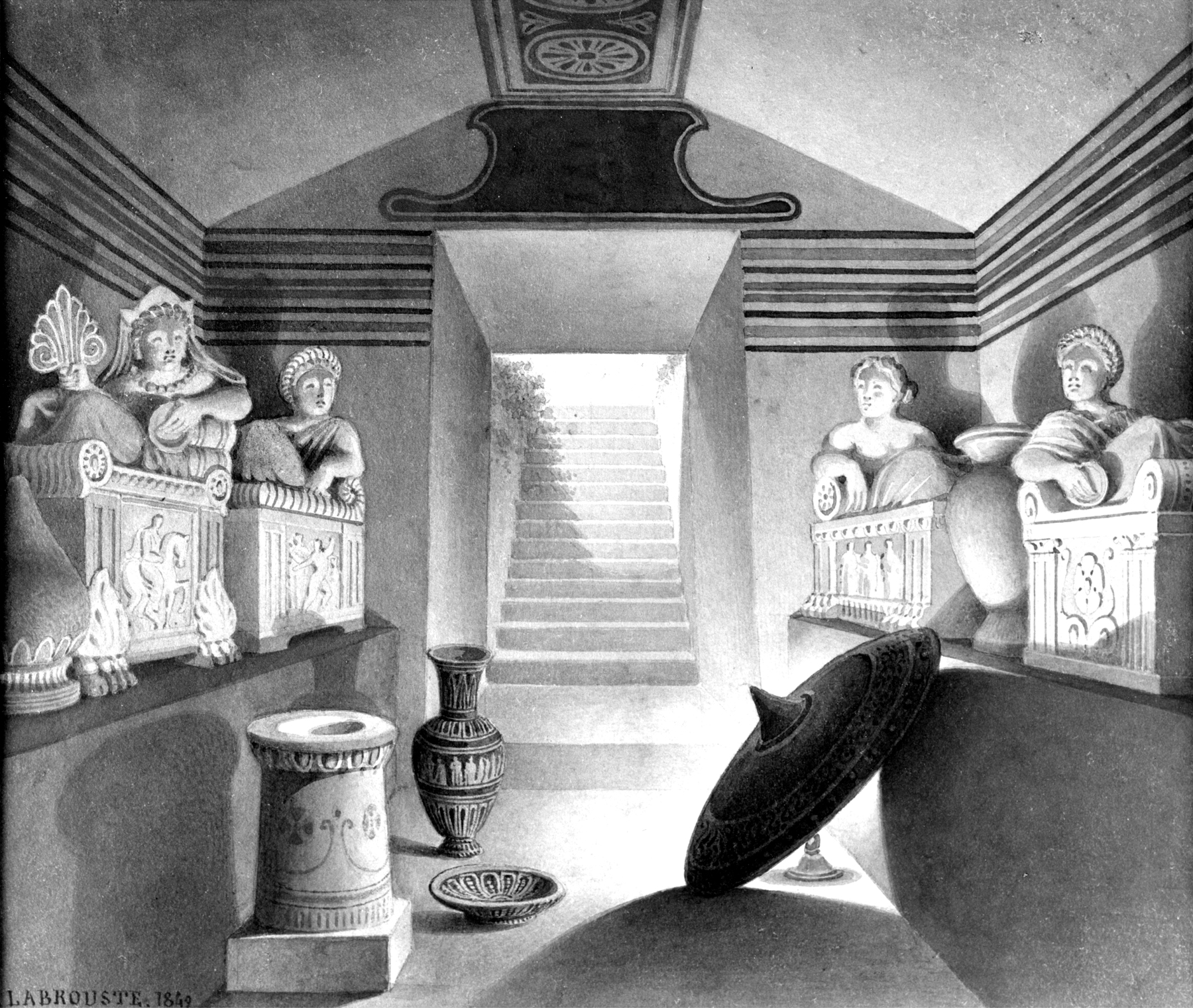 |
| View of an Etruscan Tomb by Henri Labrouste |
I am upraised, I am
raised above ground, on a bunk, on an old bunk of childhood longing, bedside
window staring, the endless bunk of isolated raised up childhood. On my head, a
Viking helmet… It’s sheer weight, it’s ridiculous… My arms flail under a body
weighed by the lowering ceiling, and a head crowned with a horned and vast
slate of crudely nailed metal.
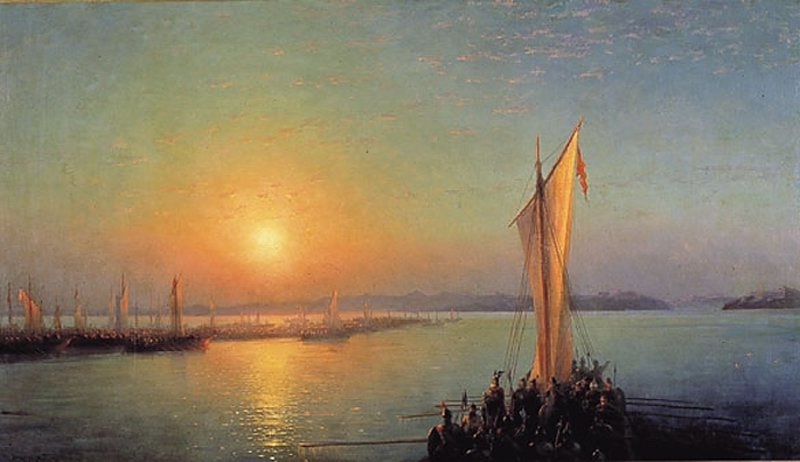 |
| Viking Saga: The path of the Vikings to the Greeks by Айвазовский И.К. |
And as I look up, the ceiling, lowering, eyes me
back with a staring mushroom, with an elongated stem, a fungal growth,
upside-down, to stare at me with its sexual head of strange and auspicious
gloom, a vivid flight of the hallucinating noesis, the natural misplaced in a
mind-born hell of undone pain, to sleep and writhe, in a landless bed of the
upright bunk, swollen helmeted head.
 |
| Winter by Giuseppe Arcimboldo |
And at once, I toss the disfiguring crown
over the edge! It dings off the edge of a television perched on a dresser, and
the reverberation is near-unending, an unnatural sound emits, and sends my
unconscious flesh storming at the gate.
_________
One proud, unseemly yet everlasting hoary wind
Escaping into the breathless fold of a storm-brought love
Escalating above the tumult of grounded trees
Lowered to rest in the silent play of her touch
With Mother Nature in lust at the American shoulder-sculpted God
President of inveterate honor
Failing to maintain true gaze
Into the outpouring blind Persian mystic call
Excerpt from "Untrained Timeless Tuning" [featured on Poydras Review]
Saturday, 17 November 2012
Schopenhauer and the Unconscious Fate of Recurrent Thought

Recognise the truth in yourself, recognise yourself in the truth; and in the same moment you will find, to your astonishment, that the home which you have long been looking for in vain, which has filled your most ardent dreams, is there in its entirety, with every detail of it true, in the very place where you stand. It is there that your heaven touches your earth. Arthur Schopenhauer. On The Wisdom Of Life: Aphorisms
 |
| Aphorismen zur Lebensweisheit by H.P. Haack (photo) |
Schopenhauer suggests that just as your dreams are composed by an aspect of yourself of which your consciousness is unaware, so, too, your whole life is composed by the will within you. And just as people whom you will have met apparently by mere chance became leading agents in the structuring of your life, so, too, will you have served unknowingly as an agent, giving meaning to the lives of others. The whole thing gears together like one big symphony, with everything unconsciously structuring everything else. And Schopenhauer concludes that it is as though our lives were the features of the one great dream of a single dreamer in which all the dream characters dream, too; so that everything links to everything else, moved by the one will to life which is the universal will in nature. Joseph Campbell. What is Metaphor?Here, I continue to find cross-references between three great thinkers of the 20th century, now with their source in the earlier precedence of Schopenhauer. The 20th century, with its unveiling of depth psychology towards the transpersonal meanings of self and agency in the will of the world have risen this line of Schopenhauer's thoughtful development with poignant regard. Joseph Campbell, James Hillman, Terence McKenna, all arrived independently at three concurrent patterns of human behaviour as a self-reflective being; character (self), narrative (fate) and dream (unconscious). The most accurate form of self-identification seems to be when we see ourselves as characters. As McKenna said, "we are in some kind of engine of narrative." Where Schopenhauer linked this to dream psychology underlies the mystic identification of fate by Carl Jung who said, "the unconscious exists in our lives as fate." The unconscious, fate, and the narrative engine of character are central to analyzing dream psychology as the major themes which now lead the humankind towards a humbling before nature as the greater mind of collective agency, and that to know nature, is ultimately to experience self-knowledge from the deepest base of the unconscious to a fully conscious, self-willed awakening of independent and transnational human sovereignty on Earth.
_________
a city rat friend and I
duel with competitive rage, amassing a firebomber brigade of red trucks fuming
with the waterless engine of their stolen malfunctioning, and careening past
the lights of midtown manhattan we stream as a rapid at open floodgate through
the sleepless streets out of town
 |
| The Painting Reads: The Neighbourhood Belongs to the People Not Big Business |
over a northbound bridge, we find refuge in
an overgrown motel lot, the air is sweet, and we are invited to tea inside a
cozy, furnished lobby, strangely reminiscent of a personal home, with sofa,
television, and toys for young children, and our steam fumigates absently, unaware
we separate to each our own rooms
__________
Playful mortality, and the scream of deathUnder stadium lights,
3rd block West Clinton Street New Bedford
And mortality reigns with his eminent consort Time
Ever-gazing into the strict law of entrance into the beyond,
Beyond reclining chairs and horizontal graves
...
Beneath a delicate skin of man
Braving the deforested aftermath of Assimilation
In the name of survivalist migration
After years of subconscious insubordination,
The doorway now flattened with the invincible family bond
Carrying our name and grown humor
excerpts from "Playful Mortality"
Subscribe to:
Posts (Atom)