|
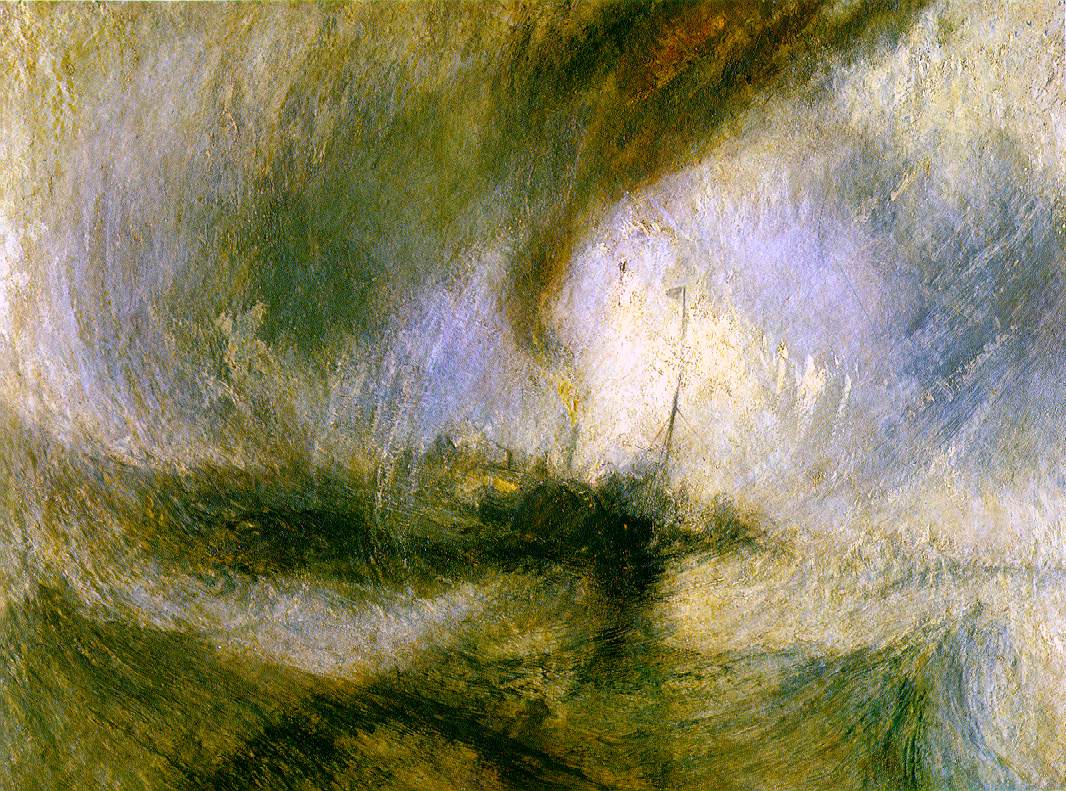
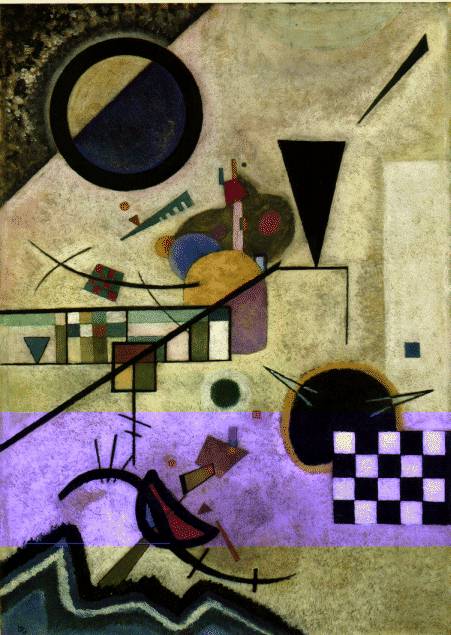
| Electro-Acoustic Improvisations I Album Art |
Electro-Acoustic Improvisations I
Winded Keys Duet for Piano & Shakuhachi
"Winded Keys" alludes to a number of esoteric meanings, the most significant conveys a personification of keys. A key is used to open a doorway, highly relevant for an opening track. The track also relays that in a sense, we are all potentially keys. Through deeply listening to people, they can become as a key, opening the most significant doors. The person speaking at the beginning of this track is a passerby, stranger, and seeming vagrant in a riverine Canadian city. He is a key to Love, yet he is winded by the turmoil of life, and as so, opens the doorway to a key, strung by piano strings, and spinning in the Shakuhachi wind. That key is you while you listen to "Winded Keys".
Northern Shelter 2 Movements for Xaphoon & Percussion
"Northern Shelter" opens with an optimistic frame drum and xaphoon, as a young traveler eyeing the horizon, knowing his loved ones are near, and his bed is made. He traverses the grandiose open that he knows as well as the back of his hand, and with music on his tongue, he enters home. In the north, long stretches of life throughout the year are homebound due to the chronic lack of sunlight, rapid change in weather, and intermittent blistering cold. While under cover of shelter, in the deep, dark of night, an opening of the subtle sky of dream invites human eyes into worlds beyond our greatest imaginative stirrings.
Desert Plains Waves for Darbuka & Xaphoon
"Desert Plains" dramatizes the imaginative soundscapes of any day in the life of a dweller in the "desert plains". The inspiration for this track lives in the landscape. I have spent the last six years travelling between and living in Alberta and Egypt. I have noticed that the desert dry climate is common to both ecologies. The high plains whereon the great civilizations of the Blackfoot Confederation once hunted buffalo and the Sahara desert, wherefrom the ancient glyphs that are the foundation of most living language scripts on earth (except Chinese-derived), are home to an incredible vivacity, enveloped in the mysterious paucity of life. The horizon is grandiose and welcoming, yet equally embracing. "Desert Plains" is essentially in two segments, where at first there is a rhythmic yearning to see beyond the open, and escape the blinding immensity of the seemingly lifeless horizon, then after a time, there is a soulful maturation into the melody of a whole person, rooted in the landscape they call home. In that transition, the harmonic register of the xaphoon alludes to "Caravan" by Duke Ellington, as the traveler sees the mirage of a caravan ahead in the distant horizon of the desert plains, and at once entering the fold, the apparition dissipates. "Desert Plains" is a solemn homage in defence of rootedness, in this our age of heightened mobility.
Inward Flight Sketches for Shakuhachi & Darbuka
At this point in the saga that is "Electro-Acoustic Improvisations I" the desert-plains dweller seeks the gift of a shaman; an end-blown flute. In a clearing, under the starlight of a new moon, the once traveler, now dweller, becomes seeker. At this point, the journey moves from outward-driven to inward-seeking. The journey within is a journey into the infinite. The Self is the immovable point, around which all subjects waver, orbit and grasp in eternal flux. Yet, this is the play of the universe. For the Ancient Hindus, the universe was play, or as they called it, Lila. "Inward Flight" illustrates how the inward journey is playful.
Cold-Blooded River Epic for Frame Drums & Wind
In his inward search, the seeker becomes seer. All that exists on Earth, all that humans have created, the vast plenitudes of universal form in life and art become as ephemeral as an unrecorded improvisation, played aloud to the spirits and muses of a seer rapt in a vision of death. Here, the "Cold-Blooded River" comes into focus, where a visualization not unlike the Ancient Greek River Styx is seen in a vision. As in a buddhist ice hell, the river mists with the deathly cold of a swift and unforgiving seduction. Will the seeker cross the river of death? "Cold-Blooded River" asks the listener that question.
Four Directions Moments for Darbuka, Frame Drum, Shakuhachi & Xaphoon
After making it across the "Cold-Blooded River", that is the river of death and extinction, our spiritual humanity sees the realization that a sense of direction goes beyond the cardinal points of seasonal, ecological and temporal occasion in life's experience. "Four Directions" unites the dream vision, or literal physical manifestation in the mind's eye with a more spiritual vision, which is more like a revelation of insight. In this sense, the "Four Directions" unites four primary instruments; darbuka, frame drum, shakuhachi and xaphoon, where each represents a unique way of seeing, yet no instrument of perception is more clear or true than another. The four directions, or the heart compass is set deep within every mode of will. South, symbolized in the darbuka, is of growth and warmth. The darbuka is the prime origin point of my current growth in music and the creative life. The darbuka is closest to my ancestral heart, as it speaks to Greek and Jewish music, where my blood rests deepest. North, symbolized in the frame drum, is of wisdom and endurance, because it is a humbling instrument, and used in many sacred traditions, for example the Persian Daf frame drum in Sufi ceremonies. West, symbolized in the xaphoon, is of introspection. The xaphoon, also known as the bamboo sax, is a new instrument, invented in Hawaii in the 1970s, yet it follows in the great tradition of reeded instruments. East, symbolized in the Shakuhachi, is of illumination and enlightenment. It is with the Shakuhachi, the renowned end-blown Japanese flute, that I often meet twilight. Breathing through the river-fleshed air, I keep a bit of that sunlight with me as the moonrise enlightens the depths of winter.
_____________
Original concepts formed after hearing the wax cylinder recording of Walt Whitman's voice reciting his poem, "America". An impromptu recording of street voices led to creating an atmosphere of the mood, feeling and soul that goes into voice, and the unintended harmonies of using our speaking voice. Instruments are extensions of the subtle body of the spiritual human form. When recognized as such, our voice speaks through them, as through us.
Electro-Acoustic Improvisations I is the celebration of voice through sound. After my first year as an incipient writer in visual form, my creativity bubbled and erupted with mysterious energy into a realm of creative visual stimuli, of spatial literature, of manuscript art, of asemic writing. Now, as I begin to record the sound of my voice, I first amuse in the imaginative spectrum of voice through instrumentation.
Electro-Acoustic Improvisations I is the first part of a seven track series, mirroring my process in seeing through a cycle of sevens in the creation of manuscript art and experimental writing. Electro-Acoustic Improvisations II will feature a single LP-length track in four parts. A collage from four of my currently finished manuscript artworks have been used as cover art.
Influences: John Cage, Brian Eno, Duke Ellington, Pharoah Sanders, Miles Davis, John Coltrane, Sun Ra, Jan Garbarek, Godspeed You Emperor, Hossam Ramzy, Vi An Diep, Ai Hagiwara, Walt Whitman, Jack Kerouac, street conversation, birds, wind, clouds, river, silence
_____________
See other instances of my musical creativity on earlier recordings: