Primarily a writing exercise, this dream journal-inspired blog is a quiet introspective sojourn into the process that we traverse in going from private dream to public art. I see our dreaming as an internalized mythmaking. As I philosophize and expressively exhibit dreams, both private and public, I encourage and delight in creative language as a way to practice experiential metaphors through a “public dreaming." Writing Theory: Creative Dream Fiction
Showing posts with label English. Show all posts

Wednesday, 16 January 2013

Eye of The Other Tiger: Borges and the Dreamer Within

Triptych for Borges' poem "El Otro Tigre" by Elza Norma Gonzalez
“The mind was dreaming. The world was its dream.” 
Jorge Luis Borges, from “The Circular Ruins” in Collected Fictions, trans. Andrew Hurley (a source)
All may read the entire English translation of Borges' text, "The Circular Ruins." This piece of intensely magical literature breathes a truth rarely spoken. Life is not simply a dream, but a dream within a dream. As one may chance on an ancient temple, or its ruins, there is a parallel labyrinth quality of sacred architecture and geometry in life and consciousness. As we dig deeper into the internal realities of our lives, we find that to dream is more resonant with the truths of our ephemeral existence. More and more, as I live a life of conscious dreaming, I confront the ultimate truth that I am impermanent, and was not made to last. To dream within the dream of life is the beginning of truth-seeking in the creative arts, and in the drama of everyday voice and action. The dream within the dream is the resonant core of our foundation; the heart of our mind. And finally, we are led into the holy of holies, the central chamber of the temple ruins, where we see through the eyes of a Dreamer who is not us, and yet who dreams our lives. Or, as Borges writes in El Otro Tigre (translated by Alastair Reid), "Let us look for a third tiger. This one will be a form in my dream like all the others..."

See my related posts: Borges On Volcanic Riddles of the Unconscious & Borges and The Ancestral Mirror of World Literacy
_________
 She shares with me her dream by being, and I become hers.

Enter Her Image by RK
She Above the Soft Night by RK
Full Moon Pines by RK
Inner City Arboreal Heart Transplant by RK
Face of the Dreamer by RK
____________
...napping between contiguous web-threshed freedoms to a forgotten deafening…and thickening the low-coasted noon of the heat wave forecast…my mind becomes sullen with blank remorse and a violent emptiness fills me…bearing down on memory like a catastrophic angel of the white light…pitch black featureless dusk of interpersonal reason in the long endless fight to be good and seek happiness in the joyful cries of others…

Bingeing on the unnecessary billions…whose lives anger at the human mold in a resounding attempt to save a bit of that home…that once was stolen from the earth’s own sun-dried hands…still cool with the dank earth and her womb of littered seeds

And the rains pour angelic wisdom over the arisen anguish…to craze for the source and defy the powers that be in an unanswered mind of free rationality...

Dreaming of berries in season and wild-crafting the maze of Her swollen lust…turning on the locomotion of boom bang music over the café loudspeaker…three hours into space in the beyond of our lost anxious sound...

“Each to their own” writes back the lazy teacher…beginning with Zen and ending with architecture…bending for no one except the jungle fire steaming behind the glassed promenade…glowering sickly in the mud of visionary astonishment…shaken in a thud…the mortified martyrs’ brought cinematic drip dry skin…to toast their muscular direction to the lunar fist...

excerpts from "Random Parkade of Fences"


Wednesday, 26 September 2012

Dreamtime and the Repatriation of Sacred Letters

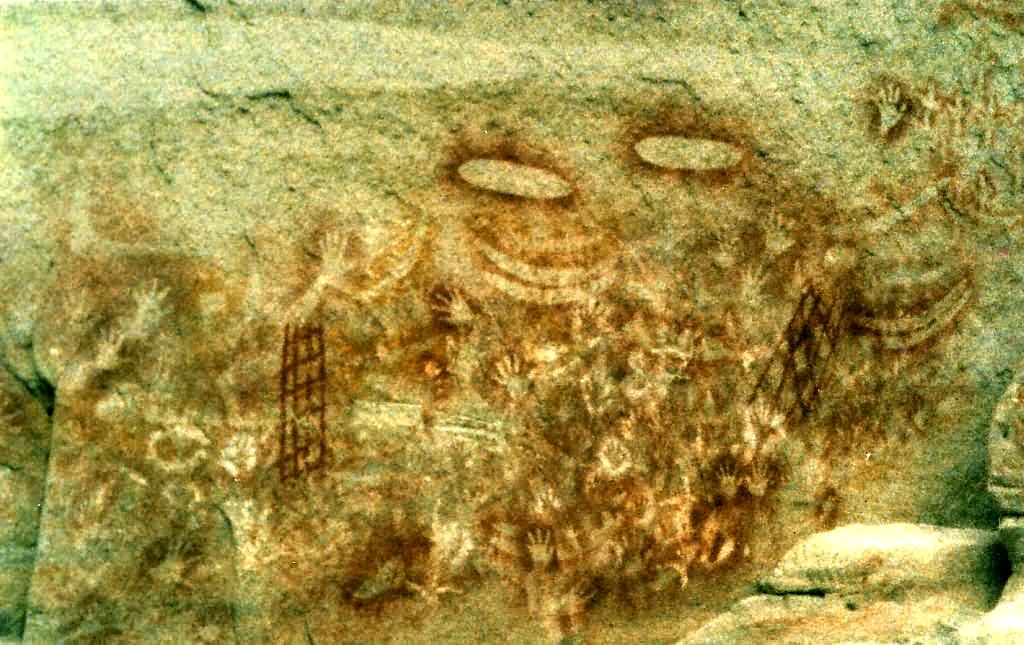
Stencil art showing unique clan markers and dreamtime stories symbolising attempts to catch the deceased's spirit
"The source of the word alcheringa is Arunta, an aboriginal language of Australia. Sometimes translated as “the dreamtime,” it refers to a mythic world that existed at the beginning of time and continues to exist in our own time as a parallel world, revealing itself whenever we dream and whenever someone speaks or sings a myth." Dennis Tedlock, An Introduction to the Alcheringa Archive (From Jacket2, also on Jerome Rothenberg's Poems & Poetics) 

In the first edition of "Alcheringa" a quote reads, "He who loses his dreaming is lost", attributed to "Australian Aborigine". In opening of the Autumn 1970 journal, the final "Statement of Intention" reads, "to combat cultural genocide in all its manifestations". That being said, it is curious to read such studies as that printed in the Australian Journal of Media & Culture (vol. 2, no. 1 1987), where an article by Vijay Mishra entitled, "Aboriginal representations in Australian texts" reads, 

Forgotten I lost dreaming
Country I left forgotten lost 
which is epigrammatieally reduced, by the translator T.G .H. Strehlow, to "He who loses his dreaming is lost," is directly related to a failure to perceive the radical difference between oral poetics (the fluid verse translation) and the wrillen text (the epigrammatic reduction). Obviously no one can maintain a total separation of the oral from the written.

Meanwhile, if one searches in the active publications of Australia's Central Land Council, an Indigenous repertoire of activism and scholarship dedicated to principles of sovereignty, there is a very interesting article on the Strehlow, the subject of lost attribution in Alcheringa's English translation from "Australian Aborigine"entitled, "The Strehlow collection of sacred objects" regarding further issues of repatriation, while focusing on the repatriation of sacred object collected by the modern anthropologist, as opposed, in the case of Alcheringa, the repatriation of sacred letters, collected by post-modern anthropologists of world literature.

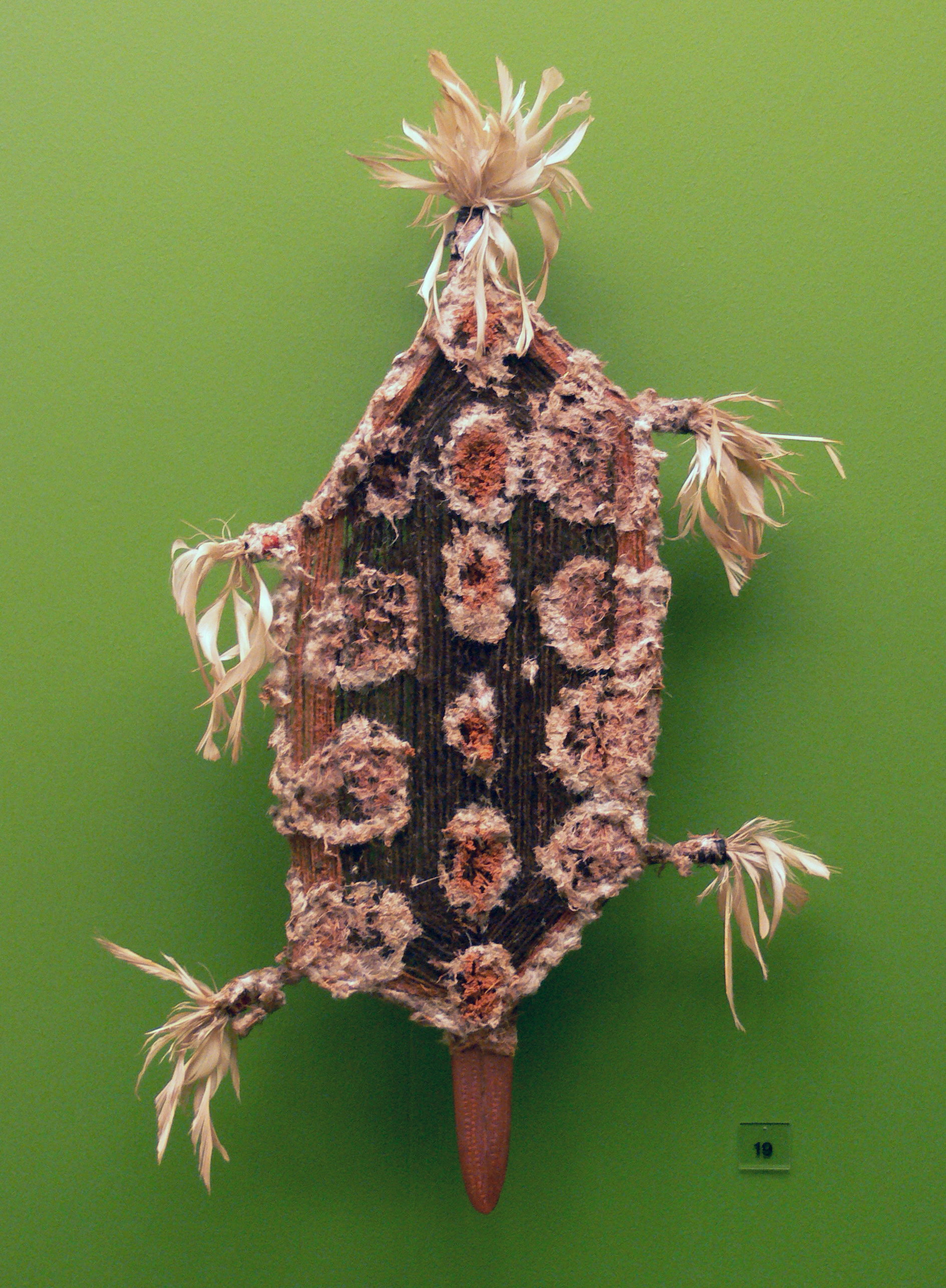
Headgear worn during dancing (wood, human hair, kangaroo hair, feathers); Arrernte people, Australia
________
My mother visits her perception of my reality. North of here, it gets even colder, earlier, and winter is almost perpetual. I ask her exactly what her interests are. She is unresponsive. There are two streets that accommodate visitor appeal, with cafes and the like. We walk on the frozen sidewalk ground. A haze of white ice sheathes the panorama, compressing the moment into one look of sheer petrification. Walking down the main street, it seems as though no one lives here, the outside aesthetics are drab and unused, mere coverings for the inside hospitality, driven by weathered necessity. As we walk into a café, I realize I have enemies here. In the back hall, awaiting our hot teas, a youth of my age wrestles my muscles and joints in a twisted bout of unwanted pain. Unable to satisfy his need for violence, I ask that we exit the café, and so we return into the cold, sunless ache of our thirsting feet. 

Shoes (made from feathers and human hair); Arrernte people, Australia
Midway through the year, I go south to visit my father, to witness birth. With video camera in hand, I capture my contracting stepmother on the front lawn overlooking the St. Lawrence River. In great joyful upheaval, she cries, “it’s a boy!” as the body emerges. 

Ku-ring-gai_Chase - petroglyph, via Waratah Track (Rock is triassic Hawkesbury Sandstone, 220 million years of age)
That night, sitting lone by the coal-burning fire, I am visited by a presence. A naked Indian, greeting me with the power of a thousand friendships, unites in my melodrama with healing insight. He teaches me the power of the directions, North and South. The cold childless North of human danger and the impenetrable forces of nature, and the warm South of youthful diversion in the over-ritualized haunt of abundant fires. He reaches out to me, to plead with him for the stars to answer in earthly illumination. While with eyes closed, he recounts the bitter tales of repatriation, colonization and the staggering visions of post-genocide rehabilitation, for the entire world. And I wake, alone. The sun, directly overhead in a cloudless sky, is in full eclipse.
________
A presence belied in the soft air aglow with diligent drizzle
         From this, our American lighthouse heaven,
                 Alit with dream
                 in stories told by great-grandmother’s
                          Life lived outside the pages of the “true”
                                      And into the truly earth-quaking
                                      of dream
...
Men whose throats burn with the soil of their unloved mother
        Croaking up agro-fossil drains
                Reaching from modern skylines to prehistory,
                issuing from our Christ-death
...
In the housed mystery of our yet undiscovered world
        Beneath each colonial home
                Shot out of the ugly worldview
                        Misplaced over the moral genealogy

In an ecological philosophy
        To dry the eyes of our spectral hosts
               Who watch and wonder
                        With still unborn eyes

- excerpt from "With Still Unborn Eyes"


Monday, 16 July 2012

Borges On Volcanic Riddles of the Unconscious


“The great English writer and dreamer Thomas de Quincey, wrote in some of the thousands of pages of his 14 volumes wrote that to discover a new problem was quite as important as discovering the solution of an old one. But I cannot even offer you that. I can only offer you time-honored perplexities.”

“And in our less beautiful mythology we speak of the subliminal self, of the subconscious, of course those words are rather uncouth when we compared them with the muses or with the Holy Ghost, but still we have to put up with the mythology of our time.”

- Borges, from his 1967-8 lectures "The Riddle of Poetry"
_________
An acquaintance, an intellectual from Latin America sends me an email bursting at the seams of the twenty-five megabyte limit. The prolific backlog of written research, charts, graphs and maps is stunning. He has proved, through simple correspondence, a scenario for the turn of the tide, an epochal shift in the geological age of the planet. The continents will roll, as on a dial, between the ocean currents. Coastal lands will be subsumed one on side by the leeching magma, on the other by tidal waves with enormity enough to swallow entire cities in a heartbeat’s notice. During this time, mythical beasts make themselves known, many from the below, many from above.

The Edge of Doom by Samuel Colman
The swirling aftermath of an ocean-swept city follows us upwards toward the mountain peaks. The shifting plates boom and gush, spitting fire and ash into the sunless sky, raining in metals and the boiling fury of an endless toxic night. We are protected by a subterranean demi-god, hidden to our waking eyes in the days of light. The simian beast grapples a crushing hammer, defeating a swimming ape three times his size emerging from the opaque, deathly soup of ocean water below. The battle is, to our human eyes, a goliath sight, many proportions beyond our own. Greedily, fear seizes as a last hope in the will to life. The blasting mountaintop seethes with equal force as the rising waters. 
________
Volcano
"To see a volcano in you dreams, signifies that you will be in violent disputes, which threaten your reputation as a fair dealing and honest citizen...Volcanic eruptions in dreams usually represent our erupting emotions. Feelings that you may be harbouring during the day might take the form of a volcanic eruption in a dream state. The unconscious psyche might be releasing positive or negative feelings in a safety of a dream (e.g. strong sexual feelings, passion, anger, rage, and fear). Superstition-based dream interpretations say that pouring lava is a warning about poor health. Dreaming about a volcano means the dreamer is in danger of losing a close friendship if she is not honest with that person." (iDream)
________
...
a planetary dissolution,
wavering on the edge,
deemed a wanderer,
stolen soul,
dreamer in artistic wonderland,
or violent binge-seeking parasite,
working miracles inside a silenced freedom,
without home, or conceived place
guiding mundane goals,
roaming vagrant, or seer,
yet still unripe,
recently fallen
from knowledge,
into wish, luck, intuition, and the all ecstatic
passion,
bellowing "good and evil are through"
impaled by the one breath,
strange yet true
...
throughout the known universe,
into the home of a single man,
living atop a mountain,
dreaming in the orbital spawn,
a satellite, the globe itself,
winding round, predictably,
to the course of light,
ending with beginning and finding us along the way
on the way,
all along

- excerpts from "Divorce & Diaspora" 

Thursday, 31 May 2012

Shelley and the Old Man: A Poetics of Wisdom


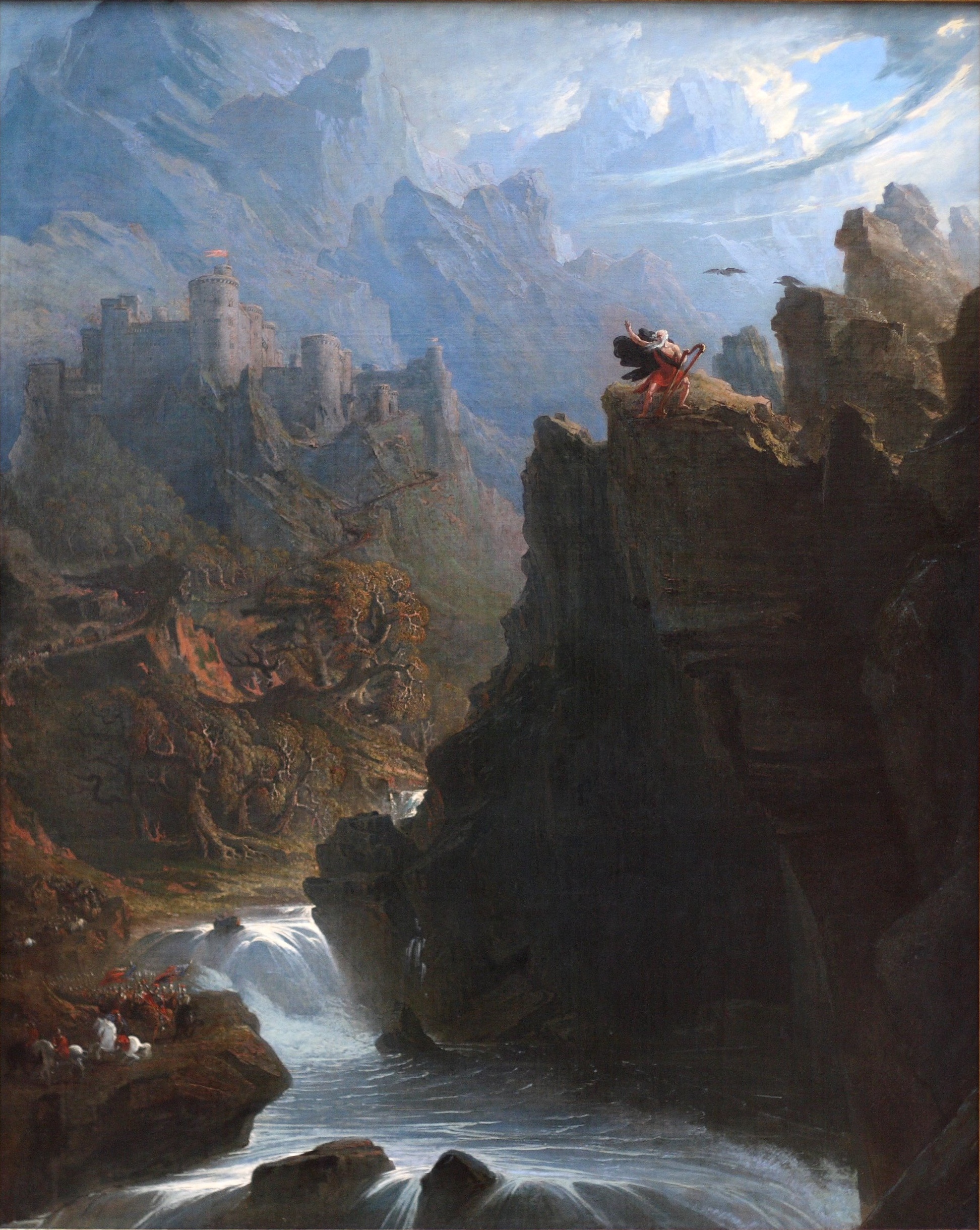
The Bard by John Martin (1817)
"...Thou hast unveiled thy inmost sanctuary,
Enough from incommunicable dream,
And twilight phantasms, and deep noon-day thought,
Has shone within me, that serenely now
And moveless, as a long-forgotten lyre
Suspended in the solitary dome
Of some mysterious and deserted fane,
...
By solemn vision, and bright silver dream
His infancy was nurtured. Every sight
And sound from the vast earth and ambient air,
Sent to his heart its choicest impulses.
...
Enamoured, yet not daring for deep awe
To speak her love:—and watched his nightly sleep,
Sleepless herself, to gaze upon his lips
Parted in slumber, whence the regular breath
Of innocent dreams arose; then, when red morn
Made paler the pale moon, to her cold home
Wildered, and wan, and panting, she returned.
...
Beside a sparkling rivulet he stretched
His languid limbs. A vision on his sleep
There came, a dream of hopes that never yet
Had flushed his cheek. He dreamed a veiled maid
Sate near him, talking in low solemn tones.
Her voice was like the voice of his own soul
Heard in the calm of thought; its music long,
Like woven sounds of streams and breezes, held
His inmost sense suspended in its web
Of many-coloured woof and shifting hues.
Knowledge and truth and virtue were her theme,
And lofty hopes of divine liberty,
Thoughts the most dear to him, and poesy,
Herself a poet.
...
The spirit of sweet human love has sent
A vision to the sleep of him who spurned
Her choicest gifts. He eagerly pursues
Beyond the realms of dream that fleeting shade;
He overleaps the bounds.
...
At night the passion came,
Like the fierce fiend of a distempered dream,
And shook him from his rest, and led him forth
Into the darkness.
...
the infant would conceal
His troubled visage in his mother's robe
In terror at the glare of those wild eyes,
To remember their strange light in many a dream
Of after-times
...
"Vision and Love!"
The Poet cried aloud, "I have beheld
The path of thy departure. Sleep and death
Shall not divide us long."
...
The meeting boughs and implicated leaves
Wove twilight o'er the Poet's path, as led
By love, or dream, or god, or mightier Death,
He sought in Nature's dearest haunt some bank,
Her cradle, and his sepulchre.
...
His eyes beheld
Their own wan light through the reflected lines
Of his thin hair, distinct in the dark depth
Of that still fountain; as the human heart,
Gazing in dreams over the gloomy grave,
Sees its own treacherous likeness there.
...
a dream
Of youth, which night and time have quenched for ever,
Still, dark, and dry, and unremembered now..."

_________
Family festivity! What a roomful of browning noses and brooding eyescapes bleary and peering into the torn pages of emotive remorse, a frequented gasp into the play of genetic strays. Weary, from this we’re born. There is a host of catastrophic laughter, a smiling malaise, distant, nonplussed and concealed with grief all too human. Yet, I am a cheerful sprite. I skip with light movement in between ready-corpsed waylays, the stench of old age drowns the mind in nude happenstance, a picture-perfect stream of inglorious rage, quieted in the mass of group idiocy, stuffing faces with swine and blush. There are those ready to die, they leave through the front door, on crutches, helped by their offspring followers. My grandfather sits, patient as an ancient boulder beneath an old-growth tree, situated in the midst of a construction site. The virgin forest turns to city, as the violent youth pleads with flashy spirituality around the bloody host of tempting boobs and the freewheeling ghosts of enraged awe in the music of the muse. All know me now. A writer! Proud with inherent jealousy, they retch in the folly of pure floosy. Ear to ear my lips point to the insanity ensued, on the asylum Earth with starlight kin, ever distant, asking, “Who flew?”
________
Old Man
"Carl Jung said that the wise old man is the 'archetype of the spirit' and the 'speaking fountainhead of the soul.' Dreaming about him may attempt to bring the dreamer into awareness of the larger meaning of one's life. Old people in dreams represent wisdom and maturity. They may appear in our dream at times of confusion and lack of direction, or when we need consultation and help in decision-making."
________

“Where are we?”

“Land of the children...
though we so want to see god in this lawless factory of memory stored overnight
flickering wildly on the cinematic map of a deep sleep dream,
forgotten with ease and well-fed stupidity,

grinning with slick hair and smoking against the fact of a quickly approaching change
to inspire the muse of the Forgotten.”

“Was it a dream?”

“Not all of it…”

706pm. Feb 22.
On a plane to Seattle. Sitting in between two middle-aged men. A delay northward.


Wednesday, 5 October 2011

Caedmon and Dream

Caedmon is the father of English song. The first poet known in written English.

According to an 8th century monk, Bede, "...he was originally ignorant of "the art of song" but learned to compose one night in the course of a dream..." (quote found here.)


In a recent dialogue/discussion on the source of Caedmon's impact in our collective psyche the following has been written:

The first English poetry is directly intertwined with a fascinating way of exploring and/or identifying "dream"
             as inspiration or even a muse
That is so wildly intoxicating its subject

They under the spell found in the likes of Caedmon's song
             need no other medium
             through which to express their musing,
                          not even themselves

When the muse overtakes,
              all that's left is pure inspired expression
                          cast into history from a seed of dream.

How does the original source of written English "dream-speak" if you will, impart to us the wisdom of written poetic expression in the English language?

How do we reunite our written English poetry with that initial spark of dream which so moved Caedmon to inspire the entire forthcoming history of poetic expression in our written language, in our writing, and finally, in writing our dreams?


In an imaginative revisioning of a response by William A. Sigler

The bifurcation of the dream into experience and meaning is one aspect of the fall of man.


(this image is in the public domain, more info can be found here.)

Joseph, the great dream wizard of the Old Testament,
             whose powers got him both sold into slavery and the most trusted advisor of the pharaoh,

             did not distinguish between dream and interpretation.

But dreams have become,
              as Holderlin put it,

             “the all-perceiving abyss”
                      of this “destitute time.”

I sense this wonderful blog idea of yours to be more than a “waking life” journal
              that urges “dreamers unite” to “ease and relieve the burden of dreams”

              but a Holderlin-like journey
                      to the abyss,
                      the spaces between
                                 where the one is concealed and perhaps retrievable

                                 with the purest of poetic word.

Heidegger,
in his remarkable series of essays on Holderlin,

stresses that this dream space is the only trace left of our enlightened state,

the longing in dreams is the only true longing remaining to us
              now that the gods have left,
 and it is the poet’s singular task to recover these traces
              by journeying into the dream abyss with eyes open.

I’m feeling inspired
to take on a translation of Andenken
in honor of your own
transitional and open-ended state.


End Note:

Let's all continue this breathtaking and uniquely inspired dialogue!

What better place to imagine Holderlin's "abyss" than our own shrinking core of internet communications technology as it challenges us to further our reaches into our most hidden of corners in the home of our minds and most loosely tied knots on the docks of our realism.

Free Dream from Thought and Language...so we may enter Dream's innocent purity preceding its existence beside Ego and begin to imagine its refreshingly catastrophic gorgeous mastery over the human intellect!


(link to the source of this inspired dialoge/discussion)