Primarily a writing exercise, this dream journal-inspired blog is a quiet introspective sojourn into the process that we traverse in going from private dream to public art. I see our dreaming as an internalized mythmaking. As I philosophize and expressively exhibit dreams, both private and public, I encourage and delight in creative language as a way to practice experiential metaphors through a “public dreaming." Writing Theory: Creative Dream Fiction
Showing posts with label language. Show all posts

Monday, 12 August 2013

Nonviolent Dreams of the Mystic Heart: The Sufi Path of Silence


"I have found in every word a certain musical value, a melody in every thought, harmony in every feeling, and I have tried to interpret the same things with clear and simple words to those who used to listen to my music." Hazrat Inayat KhanThe Mysticism of Sound and Music

In the beginning, there was sound, and not only sound - a sound. What was that sound? Was it the sound of one hand clapping? OM? The percussive bang of everything exploding into existence? It was the sound of all sound, the sound from where all originates, the intonation of creation.

In traditional music around the world, percussion precedes music, or more accurately, melody. Percussion is the first sound. From the clacking of bones to the taut skin of the drum, the percussive rhythm announces the beginning of music, and thus art, language and community.

What is the origin of language? Seekers for the origin of language are mystified and further entrenched in mystery by searching through the very device they seek to derive from its source. It is obvious that language originated as sound. It would be only logical to presume that language was derived of music, rhythm and song.

Does music influence language, or more intently, the way we speak and what we say? If music is a prime suspect in the origination of language, then it would not only influence the way we speak and what we say - music will cause us to speak. Yet, speech caused directly by music uses the language of poetry, lament, cries of ecstasy and deep reflection.

Speech caused by music is also self-reflective, sympathetic to the transformative creativity within the subjective life. Imagine, the first sound of the universe - a cry - reverberating throughout time and creation as a lament for the ultimate truth - that beginning ends.

In narrative, beginnings are almost always preceded by an end, giving rise to the potential for beginning anew. Music is a constant affirmation of the cyclic nature of ending and beginning, as sound falls and rises, always with the shadow of silence before, after and throughout. Indeed, great music is often a testament to the musician's play with silence.

Silence teaches of right listening. Music is the result of right listening. Music teaches of right speech. Knowledge is the result of right speech. Knowledge teaches of right action. Enlightenment is the result of right action. Enlightenment teaches of right listening. Silence teaches of right listening. 

In the film, The Way of the Heart, Hazrat Inayat Khan's wisdom is conveyed through his prophecies of music as becoming the future religion of humanity. Inayat Khan taught how all religious and social disputes are founded in the inconsistencies and ambiguities within verbal language. Yet, in music, where profound meaning is clear and immediate, ideas and beliefs are expressed without conflict.  

When speaking is united to the knowledge of music, the silence of listening births a voice of the path. 

Listen to more Dreams of Sufi Music: Mercan Dede
Dream of ShamsDream of PerhanDream of Lover
____________
flightless dragon
memory blast
rash city
silent anger
three ways
urban nature
______________

Created immediately before a Lantern Memorial remembrance for the victims of the bombing of Nagasaki on August 9, the track features a poem published with the University of Texas, El Paso, entitled, "Lugubrious Background Nearing an Electro-Magnetic Haze". The piece, transformed into narrative sound art through the trajectory of experimental music, is essentially about the explosive omnipresence of America juxtaposed with its remoteness. The marginal landscapes of America are the birthplace for one of the the world's greatest questions: atomic energy. The poem, "Lugubrious Background..." begins in the traditional lands of the American Southwest, with its rich history of Original Peoples. That history becomes estranged into small-town marginality by the overwhelming shadow of a towering American presence. Leading finally to the sounds of New York, the sirens of immigration and post-colonial history remove the people further from the true and original history of the land, until, finally, the inside becomes outside, and the electrified modernization of progress displaces connectivity in nature with a sheen of bright lights. The outside has transformed to the inside, and without a way out, people are terminally trapped by misperception and ignorance.

The musical instrumentation on the track, "Lugubrious Background" speaks to another contemporaneous event, namely the 400th year anniversary of the first treaty between Europeans and Native Americans. On the same day as people remembered the bombing of Nagasaki, canoes waded down Hudson River to New York City to meet delegates of the UN to not only celebrate World Indigenous Day, but to remember the beginning of a formal international relationship between Native Americans and European settlers, begun by the Iroquois Confederacy and the Dutch Kingdom. So, the instrumentation on this track, a frame drum (bodhran) and a xaphoon (bamboo sax) speaks to a renewed history of American tradition. The modern frame drumming techniques of North America have spawned an entirely new way of hearing and playing the frame drum. Although using a bodhran, the frame drum is a universal instrument known throughout the Original Traditions of Native Americans across Turtle Island. Similarly, the xaphoon is likened to a refreshed jazz tradition, wherefrom Hawaii a new saxophone was invented only thirty years ago. The sound of the fame drum with a bamboo sax conjures American sentiments from the historical age beyond the contemporary into the imagination of a future where co-existence revives cultural tradition.


The title of the following chapbook, "Truth our Up-Pressing" is a call to evince our oppressive actions, and speak our truth in a humble way. Either through poetry or prose, the human voice is a powerful agent of active creativity in the spirit of life, survival and freedom. "Truth" is here used as a verb, a kind of call to transform our forms of oppression that we often feel entitled to uphold in the name of family honour, and to dismiss that, and in turn, change our language. Therefore, I use "Up-Pressing" instead of "Oppressing" to say go from seeing our oppression as being a burden on others to seeing our oppression as a burden on ourselves. The oppressed oppresses, the oppressive are oppressed. In truth, all are both oppressor and oppressed, and until each and every last human being realizes this, there is no freedom for anyone.


Tuesday, 8 January 2013

The Thinker Who Thinks For One Self: A Reflection on Schopenhauer

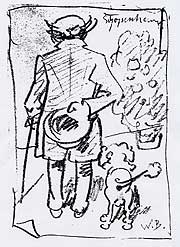
Arthur Schopenhauer caricatured by Wilhelm Busch
"...the greatest amount of erudition, if it has not been elaborated by one's own thought, is worth much less than a far smaller amount that has been well thought over.

...much reading deprives the mind of all elasticity, as a weight continually pressing upon it does a spring, and the most certain means of never having any original thoughts is to take a book in hand at once, at every spare moment. This practice is the reason why scholarship makes most men more unintelligent and stupid than they are by nature.

...he, that is, who thinks for himself, thinks of free will, thinks correctly he has the compass to find out the right way.

...the intellectual acquirement of the self-thinker is like a fine painting, which stands out life-like with accurate light and shade, well-balanced tone, and complete harmony of colour. The intellectual acquirement of the mere scholar, on the contrary, resembles a large palette full of bright colours, systematically arranged indeed, but without harmony, cohesion, and significance.

For the perpetual, the real, in its originality and power, is the natural object of the thinking mind, and is able most easily to move it deeply...In the realm of reality, however beautiful, happy, and cheerful it may happen to be, we move ourselves continuously under the influence of an oppression, which has ceaselessly to be overcome ; while in the realm of thought we are incorporeal spirits...

...how great and how near us is the problem of existence, of this ambiguous, tormented, fleeting, dream-like existence ; so great and so near, that as soon as one is aware of it, all other problems and purposes are overshadowed and hidden by it..." Schopenhauer, On Thinking For Oneself

During the course of writing this blog, from its inception, until tonight, I have been exploring a world of my own making. I have sacrificed a worldly career-seeking existence for a deep exploration into the development of self-motivation, self-learning of thinking for oneself. That being said, while I have risked the mental balance that all face when they dwell profoundly and thoroughly into themselves, I have begun to a feel a feeling of being in the presence of the trackless way, or "the pathless" as Jiddhu Krishnamurti said. To trust the language of dream is a daily struggle to remember the most obscure part of ourselves that the world tells us to deny, forget and leave far behind in the realm of sleep and fantasy. When dreaming begins to encroach on our reality, we become fearful, and as modern people, defensive. The breach of unreason is an affront to all we have been taught. It is the history of our own soul. When the words of great thinkers like Schopenhauer begin to make crucial sense and gain a new sense of pragmatism outside of the allures of becoming privy to an enigmatic philosophic tract, the inner world of one's own making begins with an awakening, illumined by the midnight sun.

See related post: Schopenhauer and the Unconscious Fate of Recurrent Thought
__________
Apocalypse! Apocalypse! We are at bay! The grocery stores are emptying, the streets are empty of cars and the sidewalks are full of an insane humanity. After days of hiding out, I finally emerge from my apartment, bewildered by the blaring sky. A man shouts prophecies from the nearby grocery store entranceway. A crowd of onlookers listen with eager intent. 

Frescoes in the Upper Church of San Francesco in Assisi, southern transept, scene: Apocalypse, Detail by Cimabue
"Fuck you!" I scream at the man. At once, an elderly lady screams back at me, "Fuck you!". I stare at a blinding yellow ring on her finger, absolutely dumbstruck with comic bewilderment. I return to the street side under my apartment building. To sit with a homeless man on his bed of burning fabric. I stare out, deadened by the silence of a lifeless futility creeping into the human domain from the belligerent rage of Earth; her the final hour.
__________
To obviate from this bland mural,
Its strict pull underlies, as a lightning tremor

In the cooled dust collecting raw answers
From the autochthonous matrimony with foreign alliance,

Over the scarred mud-caked plains
Whose agricultural fertility gave way to chemical strife

In the selfish human pandemic,
Lining the hostess and her following with possibility

In the strong-voiced dirge calling back thousands’
Endless anonymity from the last day that rested with holy failure
...
Embracing the nervous mouth of the whole city in one dire expression
To last

excerpts from "Obviation from the BLAND"  


Monday, 31 December 2012

Love is Simple: The Light of Dixieland Music


"Sweet dreams that leave all worries behind you, but in your dreams whatever they be, dream a little dream of me." lyrics by Gus Kahn

My favourite duet with Louis Armstrong is with vocalist Velma Middleton singing That's my Desire. I've been listening to this duet recording on cassette tape for years until I found a rare video performance tonight. These old Dixieland jazz standards bring the kind of simple grandeur as understood by the likes of master improviser and jazz pianist Keith Jarrett, who said, "The more experience someone has, the more their simplicity is profound." Their musical simplicity is spacious enough to offer the needful release of Southern jazz artists mixed up in the lowly roil of dominant American prejudice. Music is the teacher, and with the intuitive language of sound, speaks to all indiscriminately, "Love is simple."
_________
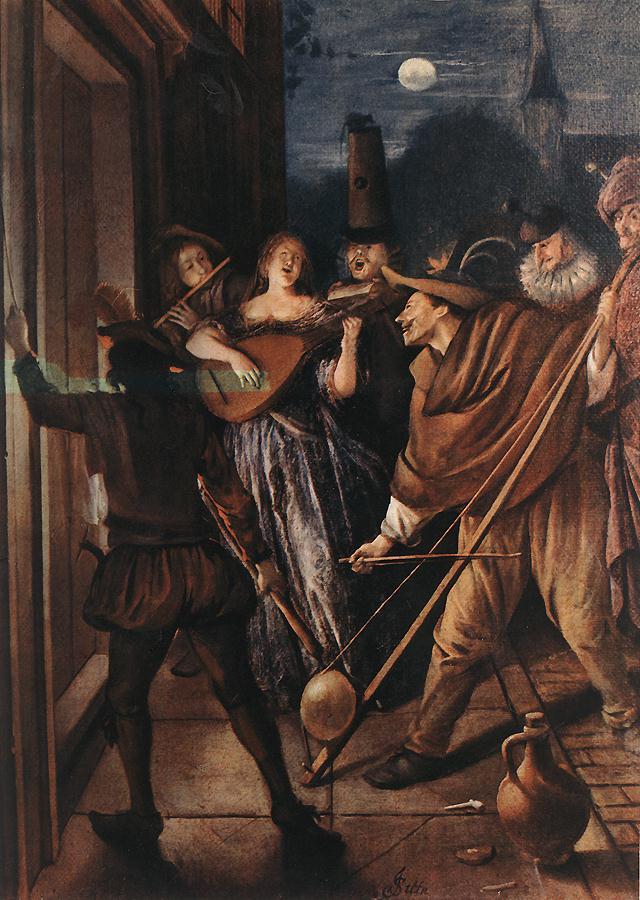
She plays an acoustic piano with a Chinese zither in the body. Virtuosic at the keys and the zither strings simultaneously, the stage ignites with the mysterious vibes of a Native World Jazz fusion. Other musicians bend traditional instrumentation with a creative harmony so seamless its enigmatic ingenuity fascinates infinitely. 

Nocturnal Serenade by Jan Steen
The lead musician, a full-bodied older woman, exudes a singular light as the stage dims and the concert hall empties. She stands in redolent awe and reverence for the magic of music. I gaze at the stage, as the musicians remain immobile. Their colourful clothing bespeaks contemporary First Nations traditions. The light outshines my eyes, as I stagger off with a mind unfulfilled by the enduring silence. 
__________
What must you do to stay and decide
When you decide what to do with your life
When you feel you are alive and not as good as dead inside,
A nothing where you hide…
Not just a nothing
Where you lie…
...

One day you realize you must die,
So how to prepare for death,
First step live,
Second fail life with a smile

To see as clearly as your de-fogged morning
Mirror of bright possibility with pure face,
That freedom is a tear
And Death is a gift from the bosom of life herself.

excerpts from "Live life and Die"


Thursday, 27 December 2012

Bridge to Kafka's Language of Dream-Identity

Kafka, Separated from the Fire by a Mirror by Paul Mersmann der Jungere
"Please, consider me a dream." Kafka

How may we interpret this mysterious quote, passed down through interminable echoes? What, if any, interpretation needs be? Read one interpretation. They say it sums up his life. Can a life be summed up? In the spontaneous trigger of language into the folds of space and listening, when do we hear the contemplative grab of a lifetime thrown into a phrase? 

The peculiar relevance of the painting above by German artist Paul Mersmann der Jungere speaks eloquently to the theme of self-reflection and passion. Self-consciousness, or conscious identity may sometimes block our passage into the spiritual heart of self-annihilation, providing us only with a thin display at which to gawk, and finally, withdraw oneself from participation in life altogether. It may be more useful to identify with the less formal, and more marginal states of mind. Or, as Kafka said in another dream reference, "Last night I dreamed about you. What happened in detail I can hardly remember, all I know is that we kept merging into one another. I was you, you were me." [source

If language is a bridge, we do not always cross it, but sometimes slip beneath, and after speaking in one direction, go our own way. 
__________
Memory fails to awaken dream into day. Here is bridge photography from the conscious state:

Entering the Blue Void by R.K. 
Electric Ice Reflection by R.K.
City Riverbank in Winter by R.K.
Ice Flow of Light by R.K. 
No One Lives Under The Bridge by R.K.
 ____________
Into infinity
            And the terminal plague of survival

Marching by
            Currents stepping like waves over the stone-headed martyrs

Staved off
            From one life inside
...

Painted fame twisting and writhing
            In the soundless urban deep
         
A rustic, inflamed few,
            Whose solemn grasp partakes in the early break
         
From an inevitable aftermath
            Draining the rage from our animal brain


excerpts from "Guise of the Beloved"


Saturday, 1 December 2012

Seven Hours of Music: Natural Sounds of Subconscious Entrancement


When tired, listen. 
Music is the breath of life. 
Listen, I am tired. 
Asleep, I hear a visual language, 
A deeper mind. 
Music, now.
__________
She slips in the doorway while I lay in bed, listening. Grandma Nana’s come to pick me up for a day of visiting. Yet, aren’t those the footsteps of my wife? She enters with uncanny similarity.

A painting of the artist Kete Ephraim Marcus by Kete Ephraim Marcus 
A style of musical motion stamps on the floor of my eardrum with the gentle line of breath, issuing as her unspeaking voice through our apartment of dead morning air. She is memory, alive.

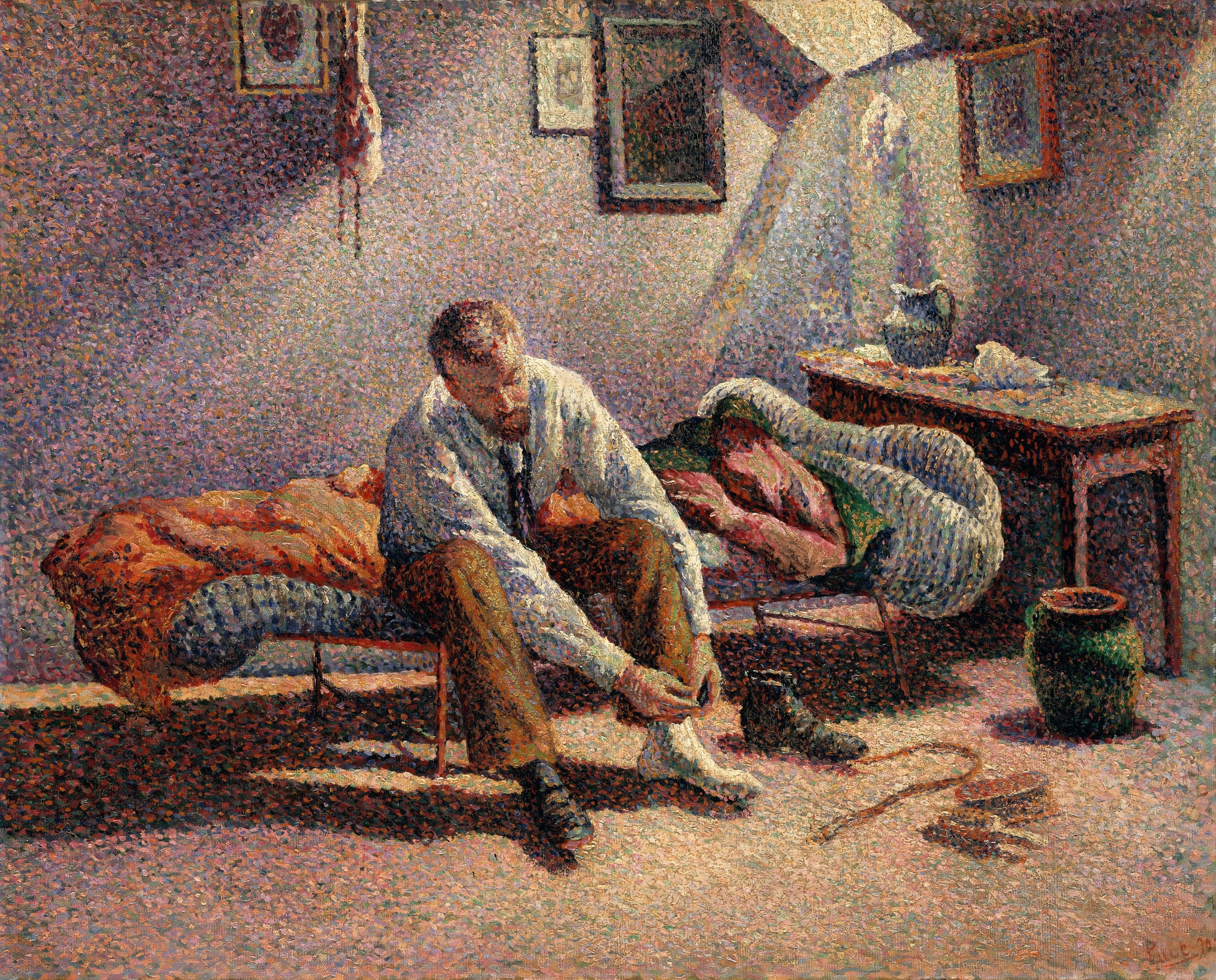
Morning, Interior by Maximillien Luce
As I wake to the glorious open space of an apartment, couched in the warm light of a restful morning, and my friend’s visiting. Apologetic and endeared, he respects my unconventional successes, gifting me seasonal greetings with the cheeky light of a sparkling card and pagan decoration.

Paris: In memory of the young deceased friend by Shalva Kikodze
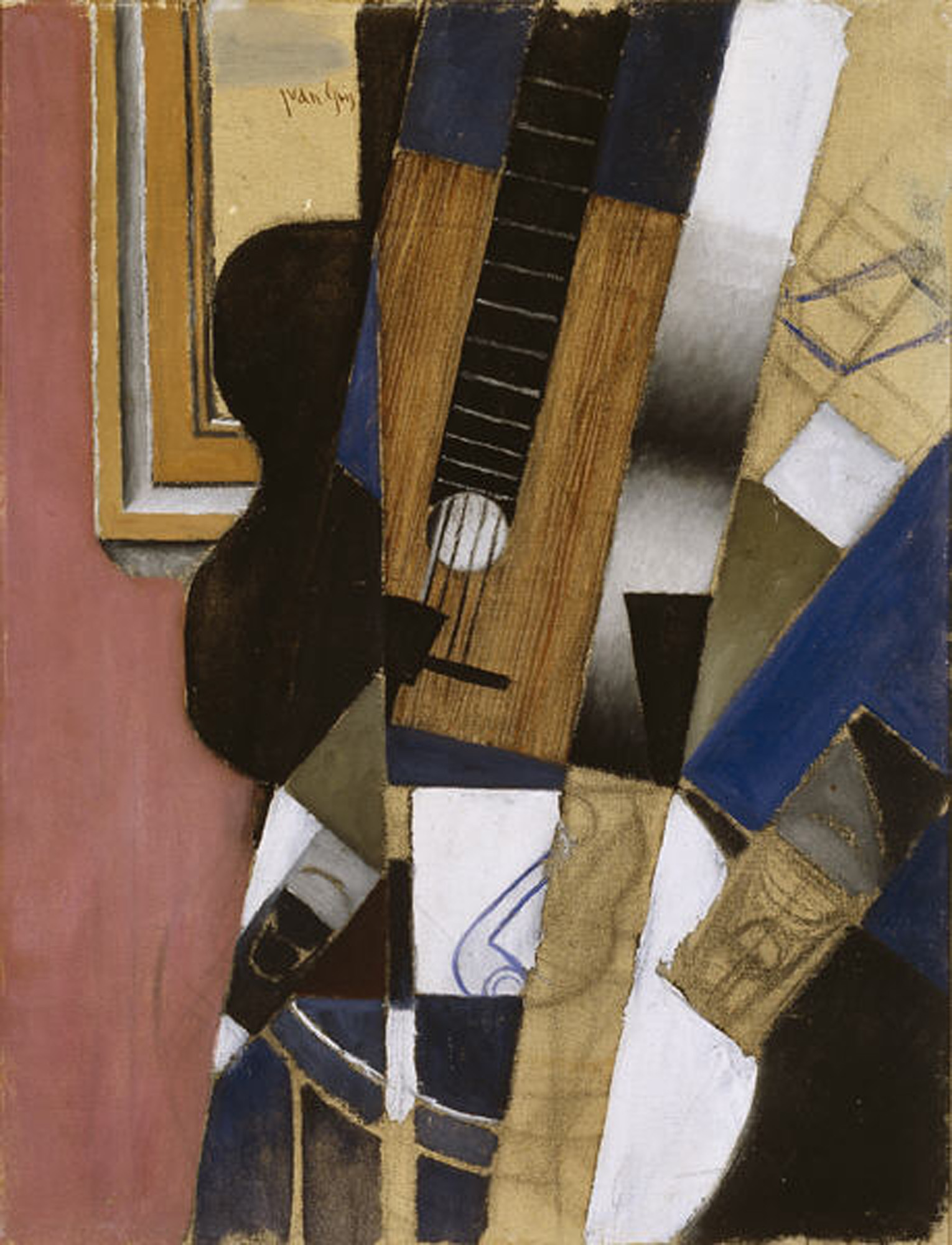
We sit together in the freedom of being up and awake for the sun and its glowing gaze. The room is just so cool to comfort the body in an easy choice of soft, wooly over-garments. He begins to recite the melody of a waltz, for playing on the guitar.

Guitar and Pipe by Juan Gris
With heavenly beckoning, his sweet and delicate face points at the brown stand of Indonesian wood in the corner, my acoustic guitar. I repeat the melody, as it glides effortlessly on the airy surface of my mind.
_________
"The spiritual recluse
On a steep decline

Passing without Failure,
Churning with Thirst,

& Separated


from life"

excerpt from "Age of Fire"


Thursday, 15 November 2012

The Wordless Dream Language of Myth

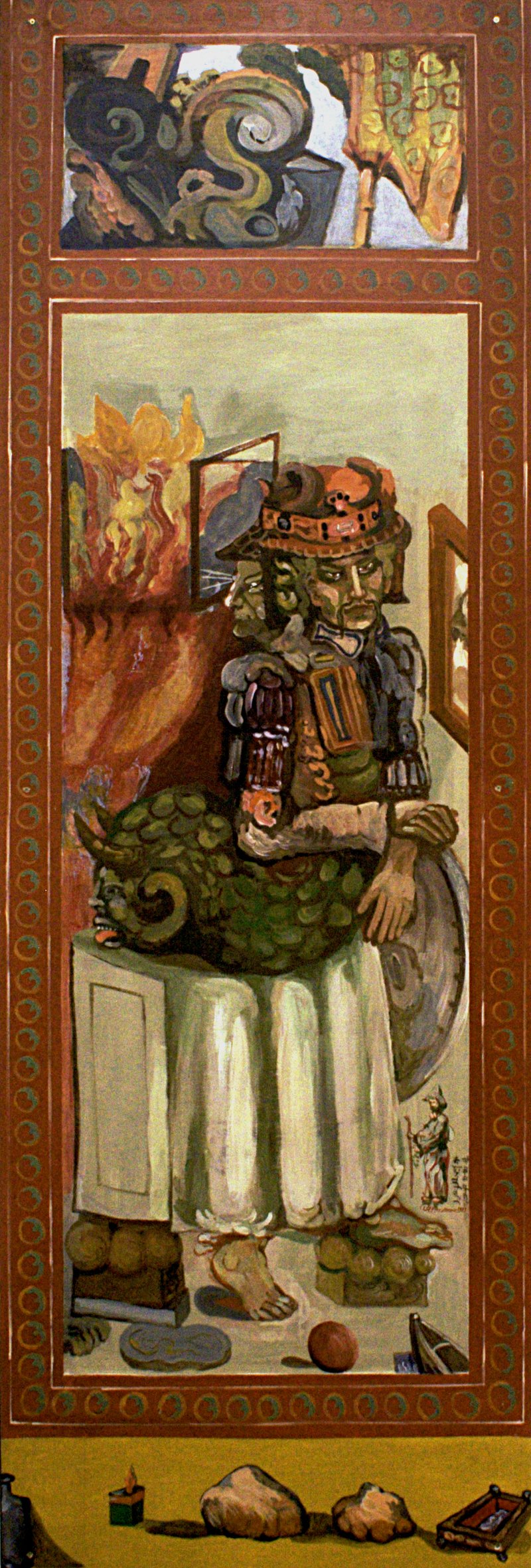
Chinese Goddess Nuwa by Unknown
"Until we get to dreams, there is a tendency to think of stories as 'words.' In dreams we experience stories as structures and patterns that evoke images and experiences, often without words...In dealing with dreams, such noted authorities as James Hillman have instructed us to "hold the image."By 'Holding the image,' the conscious mind can begin to discern patterns and structures that can eventually reveal rich psychic content...Some have said that, 'Myths are cultural dreams.'" Ontogenic Mythotypes by G. Charles Andersen

What is the relationship between language and dream? Dream is a language in and of itself. Language is mutable to Dream Language, when traditional dream interpretation is foregone, and creative writing is utilized as a means to "hold the image" in the mind of James Hillman. Such psychological import brings to mind the psychoactive artistry of Laurence Caruana and others who have respected the imagination as a prehuman remnant of archaic information. "The world is made of language" says Terence McKenna. And so, in using that language, we may hear our mythic vocation, a calling towards that which we had never dreamed, unearthed as from the unsaid and unconscious mysteries of our own psychic invention. 
__________
What a breath of fresh air! To drink, and see. I could feel my brother’s weeping, his heart caving in his shaking flesh as he triumphed again over a nervous breakdown, carrying him by air through the over-privileged dome of Western skies. And into the darkened haunt of old coast bumhood, and the numbing agents of a musical life amid the New England smile of selfish mockery and divulging swine. The ruthless remark, a self intensified in the bitter alcoholic night, the cobblestone streets, swept of hurricane feet and tires of his once-sickened flight returning.

Lombard Landscape by Fulvia Bisi
At home, lost to the time of his forgetting, he returns, an old man in his distant youth. The tingling respite of belonging in the gutters of Eastern fame, the ruinous gold of a mind enslaved to eternal seeking, he clambered down tumbling steps of creaking wood and linoleum brains, as I stared immobilized into the dark porch silhouette. A large man sat there, with dreadlocks lower than his back, and as he lifted an ember of smoke to his lips, his dark skin shone with the muscular life of a physical laborer on break, alone, a nameless body of the historic present.

Man with a Hoe by Jean-Francois Millet
I could only see him clearly under the bar lighting. The dizzying indoor lunacy of the drinker’s habit, a hovel of bored and roughened life spoke through his bristling mouth. After the rare silence of a few pints, he ended the night with means to see each other again. And like that, he disappeared in the great fog of blackness, opaque as the light-polluted air of a once booming industrial city, now smoking upward with the final ashen gasp of smoky incineration. 
__________
“What grievous horror betook these dumb streets?”

Touched with the unkindness of a meek following
From the near elderly, an old town deemed to inquietude
...
Taking off the English hat of a long gone America
Seeing no one in the mist fired laugh from this war

Breathing ocean
Suffocated by the calm before the storm
...
Clucking behind the chicken wire of suburban fate
...
Gripping for death at the edge of the western, manifest

As nature’s law thrives in disbelief

excerpts from "Calm before the Storm"

Sunday, 30 September 2012

Reflection on "green girl dreams Mountains" by Marilyn Dumont

Camping on the prairie by Paul Kane
Scene shows the artist with a Metis guide en route to the Buffalo Hunt
I read the unseen. Her eyes are the milk of a hollow cow, branding the misjudged beauty of a new and timely pride in the human self in all its fascinating breadth. Her words are a first kiss, and the smile afterwords, even if the kiss was a little sour.

This is my first read into Marilyn Dumont's work. A Cree/Metis poet, who is widely celebrated as a must-read in contemporary Canadian literature. Her words are bittersweet, and do not say too much. She uses language for its brevity and with singular pausing, announces the mystic inclination to wonder with a sad grace. One can easily and cathartically empty their mind of doubt when reading page after page of brilliant humility. Her self-knowledge is evident as she prints words into the mind of a page with the delicate necessity of breath.

I read this book from cover to cover in one sitting as welcomingly as opening my door to a new friend. Now, I'm looking forward to welcoming, "that tongued belonging" her latest work.

I heard of Marilyn Dumont through Black Coffee Poet, who interviewed her for Indigenous Sovereignty Week
_________

Entering the distant cottage, there is tranquility. Mindful, the air is welcoming. It is a refuge for Aboriginal intellectuals. A group of women converse softly over tea as I wander the grounds. In the backyard, a lively, well-kept garden is lush with Canadian summer vegetables and medicinal herbs. The light hangs slowly from the deep, curling cloudscapes in the wide, Midwestern expanse. 

Battle of Duck Lake
Overlooking the property hill, a bustling cruelty unearths the dry heave crime of migratory blindness, as settler compunction fills the writhing horizon with a crooked smile. Endless houses, misshapen and identical, curve along the wasted prairie hills, and there is only a dim emanation of life. As I stare into the perfectly reflecting window of the cottage, an aural wisdom speaks in silence, carrying my body to the comfort of our Mother’s home: land.
________
Holy Rope

Holy rope glean
           Setting off the executioner’s raffle
                     In a dream state, turning the mind
                                To a pentatonic, indigenous scale
                                To the antique buzz in our lonely natural surroundings
                                             That prepares a decadent life

Amidst the misty hilltop laughter
                                       That echoes in the contemplative breath on high

Wednesday, 26 September 2012

Dreamtime and the Repatriation of Sacred Letters

Stencil art showing unique clan markers and dreamtime stories symbolising attempts to catch the deceased's spirit
"The source of the word alcheringa is Arunta, an aboriginal language of Australia. Sometimes translated as “the dreamtime,” it refers to a mythic world that existed at the beginning of time and continues to exist in our own time as a parallel world, revealing itself whenever we dream and whenever someone speaks or sings a myth." Dennis Tedlock, An Introduction to the Alcheringa Archive (From Jacket2, also on Jerome Rothenberg's Poems & Poetics

In the first edition of "Alcheringa" a quote reads, "He who loses his dreaming is lost", attributed to "Australian Aborigine". In opening of the Autumn 1970 journal, the final "Statement of Intention" reads, "to combat cultural genocide in all its manifestations". That being said, it is curious to read such studies as that printed in the Australian Journal of Media & Culture (vol. 2, no. 1 1987), where an article by Vijay Mishra entitled, "Aboriginal representations in Australian texts" reads, 

Forgotten I lost dreaming
Country I left forgotten lost 
which is epigrammatieally reduced, by the translator T.G .H. Strehlow, to "He who loses his dreaming is lost," is directly related to a failure to perceive the radical difference between oral poetics (the fluid verse translation) and the wrillen text (the epigrammatic reduction). Obviously no one can maintain a total separation of the oral from the written.

Meanwhile, if one searches in the active publications of Australia's Central Land Council, an Indigenous repertoire of activism and scholarship dedicated to principles of sovereignty, there is a very interesting article on the Strehlow, the subject of lost attribution in Alcheringa's English translation from "Australian Aborigine"entitled, "The Strehlow collection of sacred objects" regarding further issues of repatriation, while focusing on the repatriation of sacred object collected by the modern anthropologist, as opposed, in the case of Alcheringa, the repatriation of sacred letters, collected by post-modern anthropologists of world literature.

Headgear worn during dancing (wood, human hair, kangaroo hair, feathers); Arrernte people, Australia
________
My mother visits her perception of my reality. North of here, it gets even colder, earlier, and winter is almost perpetual. I ask her exactly what her interests are. She is unresponsive. There are two streets that accommodate visitor appeal, with cafes and the like. We walk on the frozen sidewalk ground. A haze of white ice sheathes the panorama, compressing the moment into one look of sheer petrification. Walking down the main street, it seems as though no one lives here, the outside aesthetics are drab and unused, mere coverings for the inside hospitality, driven by weathered necessity. As we walk into a café, I realize I have enemies here. In the back hall, awaiting our hot teas, a youth of my age wrestles my muscles and joints in a twisted bout of unwanted pain. Unable to satisfy his need for violence, I ask that we exit the café, and so we return into the cold, sunless ache of our thirsting feet. 

Shoes (made from feathers and human hair); Arrernte people, Australia
Midway through the year, I go south to visit my father, to witness birth. With video camera in hand, I capture my contracting stepmother on the front lawn overlooking the St. Lawrence River. In great joyful upheaval, she cries, “it’s a boy!” as the body emerges. 

Ku-ring-gai_Chase - petroglyph, via Waratah Track (Rock is triassic Hawkesbury Sandstone, 220 million years of age)
That night, sitting lone by the coal-burning fire, I am visited by a presence. A naked Indian, greeting me with the power of a thousand friendships, unites in my melodrama with healing insight. He teaches me the power of the directions, North and South. The cold childless North of human danger and the impenetrable forces of nature, and the warm South of youthful diversion in the over-ritualized haunt of abundant fires. He reaches out to me, to plead with him for the stars to answer in earthly illumination. While with eyes closed, he recounts the bitter tales of repatriation, colonization and the staggering visions of post-genocide rehabilitation, for the entire world. And I wake, alone. The sun, directly overhead in a cloudless sky, is in full eclipse.
________
A presence belied in the soft air aglow with diligent drizzle
         From this, our American lighthouse heaven,
                 Alit with dream
                 in stories told by great-grandmother’s
                          Life lived outside the pages of the “true”
                                      And into the truly earth-quaking
                                      of dream
...
Men whose throats burn with the soil of their unloved mother
        Croaking up agro-fossil drains
                Reaching from modern skylines to prehistory,
                issuing from our Christ-death
...
In the housed mystery of our yet undiscovered world
        Beneath each colonial home
                Shot out of the ugly worldview
                        Misplaced over the moral genealogy

In an ecological philosophy
        To dry the eyes of our spectral hosts
               Who watch and wonder
                        With still unborn eyes

- excerpt from "With Still Unborn Eyes"


Monday, 12 March 2012

Reading Predators on a Street of Arabic


“Reading, something most of us take for granted, can help unlock remarkable powers. Reading builds new connections in the brain, which in turn allow us to use written words as stepping stones to understand other people’s worlds. A good book literally has the power to change you."

Origins of Reading

"Our ability to use our visual areas to immediately know whether that object is prey or predator is actually being recycled for us in order to be automatically recognizing symbols."

Using Nouns as Verbs

"...it's like an evolutionary tool, that's to say it raises levels of attention, it primes the mind for difficulty, and the chances are, that it may be that it leads on to the mind being ready to take different pathways from the obvious one"

Creative Reading

"...I think that reading is a creative act in itself, as writing is, because you are creating something while you're reading it, you are bringing in your own experiences...when you can get into the minds of other characters and see what they're experiencing, it makes you better at empathizing...fiction has made me see things from other people's points of view”

Literacy and Empathy

"So, when we think of reading as purely about literacy, there's obviously another dimension to it, which is empathy."

From BBC Documentary “Why Reading Matters” documentary
________

Kasr al-Aini Street in Cairo, Egypt is primarily a street for government bureaucracy centers and large and lucrative local banks and other big businesses, however there are a good many small juice stands and cafes tucked away, one is called cafe Vienna. 

I find I am living on this street in a quaint little house, feeling something like the way how in Calgary there are random character homes sparsely interwoven in the city core. The insides and the outer wear reminds me of a ramshackle country house. The first time I exit the home, I am immediately met by a shady individual, a rotund young white male, who offers me money in exchange for delivering a package just around the corner at the gas station. Curiously, I take the package and run inside, asking my wife what to do! She vigorously reminds me that I am being foolish so I return the package to the exceptionally inexpressive young man. He takes the package back without question and rounds the bend, after which police storm immediately. 

In the next instance, we are at the house when a roommate is moving in. He is a man with dark complexion not unlike the local Egyptian man, however he seems more American in his mannerisms. He later tells me he is from Hawaii. He is a nice man. One day he helps us receive two amphibians and a fish. I am not sure why we have these creatures, however another smaller man, a caretaker of such amphibians, helps us all to cut them out of a stomach lining packaging. He says to be careful of the one as it spits mini-bullets. I take the creatures, beautiful and exotic to a pet shop, leaving them there. I return to the house only to find my wife is missing, I look all over our property in the dimly polluted urban backyard for any sign of her, staying awake in a candlelit room all night contemplating her loss. I don't feel she is dead, only that I may be in the wrong place. I am without any impetus to look. I simply wait, despite the presence of our Hawaiian roommate who offers to help.

_______

My fingers press into each letter
with a singular stroke
My head figures weightless across shoulder and palm 
holding up my brain box, short-circuiting

“What actually happened?”

“Conversations of new words
led to the experimental consciousness
of language
as a human creation.”

“What else?” 

- excerpt from "What Else?"

Thursday, 1 March 2012

Forest Flying Beyond Levitation


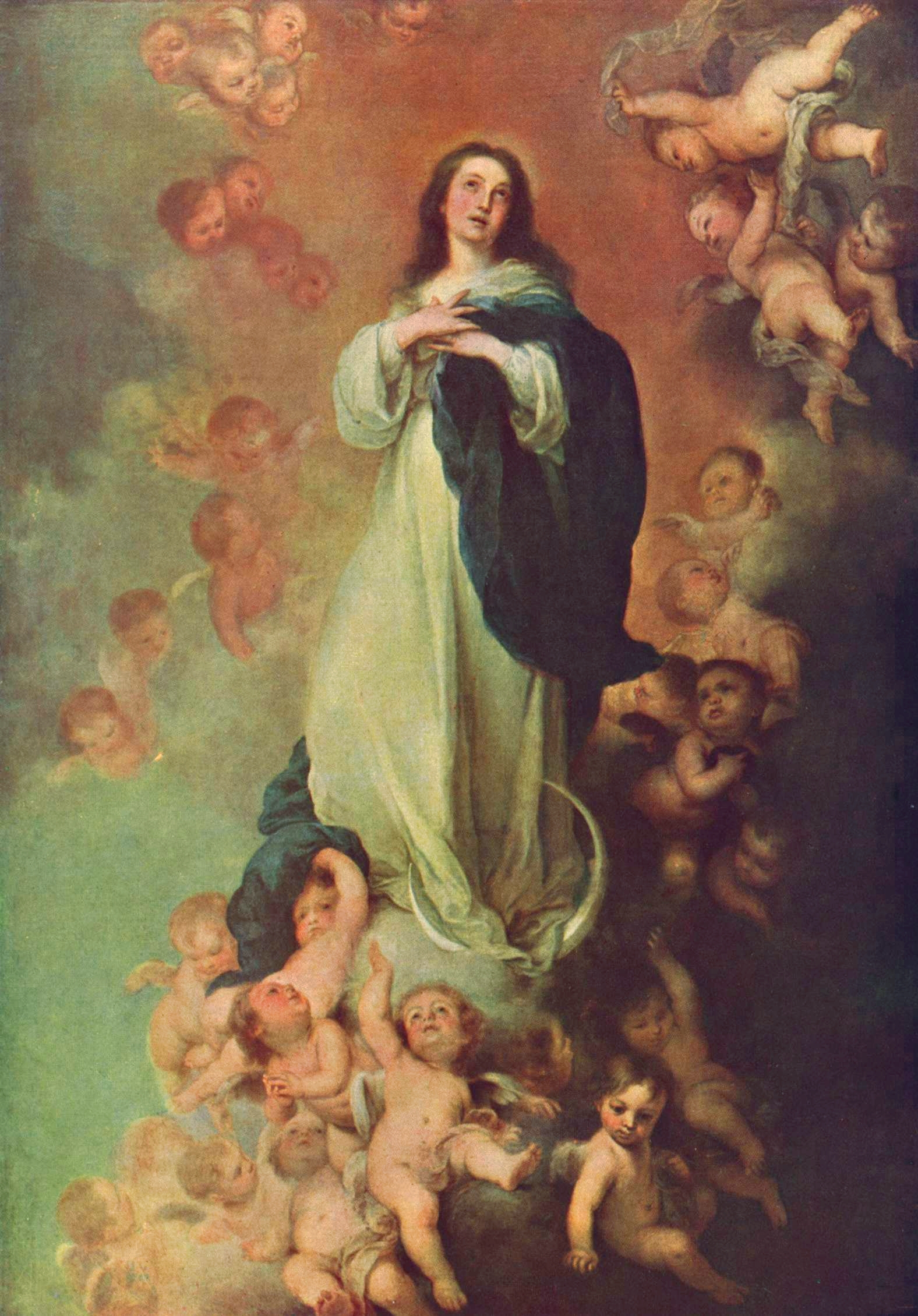
The Immaculate Conception of the Venerable Ones by Bartolome Esteban Murillo
Have you ever heard allusions to dream in your waking life that did not quite settle in your mind during moments of introspection and reflection on the actual experience of dreaming? 

When you hear such statements as, "In my ideal, dream world…” from executive management at high-end corporations or successful enterprises and organizations speaking to "subjects" of lesser value, what is your gut reaction? Why have we committed this double-speak on the importance and reality of dream? Or, have you ever asked a self-proclaimed starving artist or general creative type about their process of creation, to which they reply, “I don’t know…it’s like a dream”? Where does language become insufficient and mere impasse before honest reflection on dreaming? For dream is an involuntary force, which with mirror-like accuracy reflects onto the dreamer their deepest, darkest withdrawing from the eye light of each their own unique path to self-knowledge. 
_________

My wife lays to rest in the apartment building where she had first arrived from Vietnam to Canada. In her early childhood, she was a babysitter for many immigrant children in this Chinatown block, when the city was much different, more spacious, green and communal. In her dream, small children levitate above her, they take her hand but she does not levitate with them, she flies. Transcending the bounds of her childhood brick home, she soars out over the pine forests beyond the city limits.

Levitation Interpretation

To dream of levitating means that you are holding on to far-fetched and outlandish ideas. You need to be more realistic. You are feeling helpless and disconnected with those around you. To dream of someone levitating means your desire to be helpful and supportive to others.

Flying Interpretation


If you notice green trees and vegetation below you in flying, you will suffer temporary embarrassment, but will have a flood of prosperity upon you.


“To dream of flying means being able to control your dreams and project yourself astrally.” Posted in response to the dictionary interpretation by chmee
_________

On Monday’s staked rage, we drain and drain the followings of divinity
throughout pulses of grain and sweat
in the final drink

Before deciding, cross the impassioned switch
into non-being with our lifted sky

Come thunderous!
in the eyes and ears of a late transmigration
into a head of wires and a spotted flame that rises,
breaking in a silence of loss
and drown!
in the oxygen gush of utter perfection

excerpt from "Hawk over a Farmer's Field"


Monday, 30 January 2012

Death of the Papu

St. Catherine receiving the stigmata of St. Benedict and St. Jerome altarpiece, detail: St. Catherine by Domenico Beccafumi


I walk into my grandparents' house. The subdued beige carpet fades against the similarly hued walls. My grandmother, Nana as I call her, barely notices me walk in. This is unusual. She is usually open arms, with hugs and kisses. With her head down, she only pays attention to the baby grand Chickering piano that her deceased brother left her. She seems very anxious. My Papu, which means grandfather in Greek, is strangely absent. I feel I have been away too long and my Nana lets me know that by her body language. They have dealt with too much pain without me, and now I am lost to them. 

There is a black coffin on the porch. It glimmers in the sunlight. The coffin rises to the porch ceiling. 


Folk Taoist Interpretation:

He will live longer…the reality is opposite of the dream.

Sunday, 1 January 2012

Respect for Other Dreams

Codex Aureus of St. Emmeran by Adalpertus


Recognizing the dreams of others is to recognize their whole being, 
beyond sensual affirmation, 

subject-object reasoning, 
no, 
to prepare intuition 
and heart-to-heart communing 
with the natural creative vibrancy of mind 

to speak in a language before tongues, 
to re-create lifetimes of unknowable voyaging 
across depthless oceans, 

the interpersonal subconscious 
moved 
to collective reflection, 

to see the moment as new 
miracle of Earth's divine creation 
and transcend precise memorization of thought 
habit extinguished 
in piecing together a gorgeous message 

of interpretive ingenuity in 

the experience 

of earthly 
self-
awareness...

(((awareness)))
(((((infinite)))))
(((awareness)))

Thursday, 22 December 2011

Statement of L. Caruana

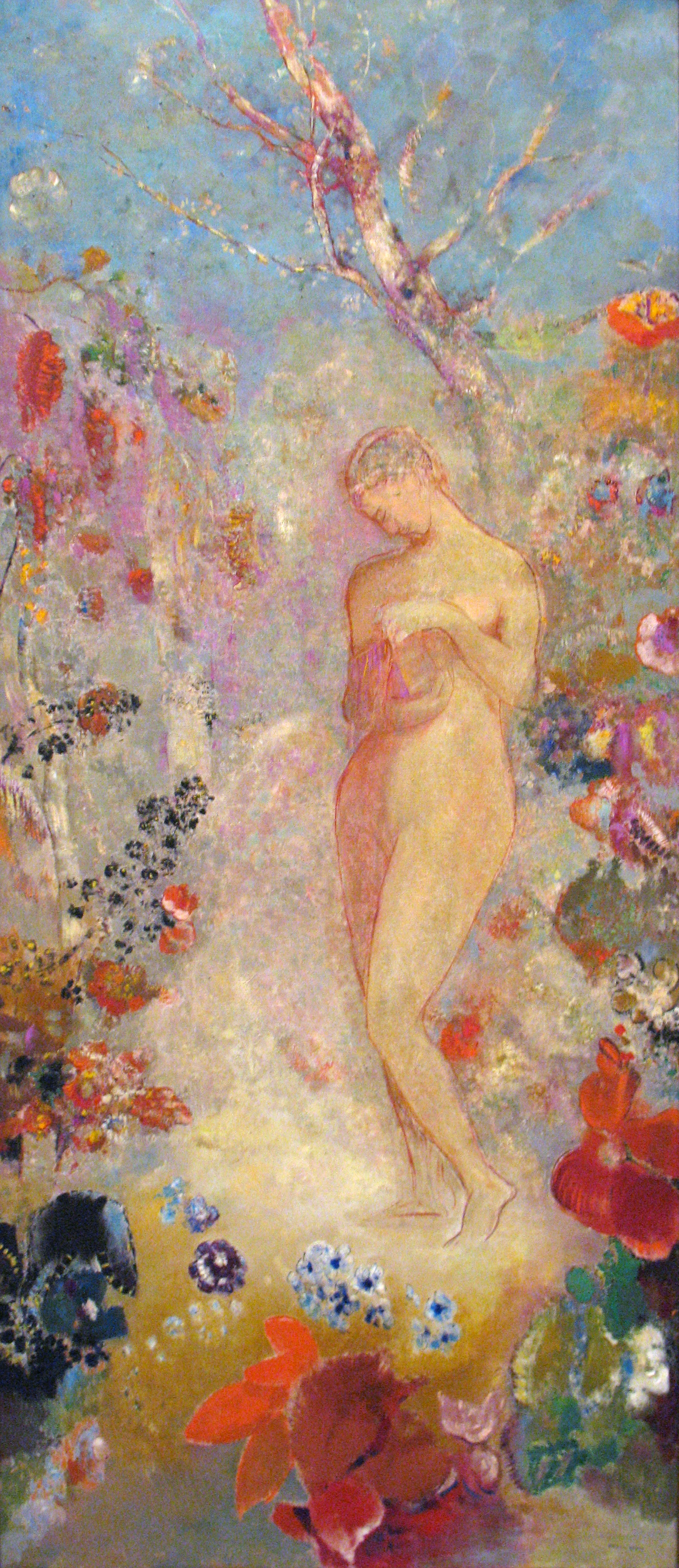
Pandora by Odilon Redon
"Through the endless interplay of art, myth, and dream - and the underlying 'image-language' that they share - I have come to see life as a gradual unfolding of the Sacred.
At night, we speak a more ancient language. During the day, our thoughts are guided by our spoken language, as words fall into subject and predicate arrangements. But in dreams, we think in a much older way, as images fall into enigmatic arrangements which are nevertheless recognizable to us through ancient myth and sacred art."

Friday, 25 November 2011

Dreams from the Ethnosphere

Plains Cree Man from "The Plains Cree: an ethnographic, historical and comparative study" by David G. Mandelbaum


"And in the end then it really comes down to a choice: do we want to live in a monochromatic world of monotony or do we want to embrace a polychromatic world of diversity?

Margaret Meade, the great anthropologist said before she died that her greatest fear was that as we drifted to this blandly amorphous, generic worldview, not only would we see the entire range of the human imagination reduced to a more narrow and more narrow modality of thought, but that we would wake from a dream one day having forgotten that there were even other possibilities.

And it's humbling to remember that our species has perhaps been around for 600,000 years, the neolithic revolution, which gave us agriculture, at which time we succumbed to the cult of the seed; the poetry of the shaman was displaced by the prose of the priesthood, we created hierarchy, specialization, surplus is only ten thousand years ago, the modern industrial world as we know it is barely three hundred years old. Now that shallow history doesn't suggest to me that we have all the answers for all the challenges that will confront us in the ensuing millenia.

When these myriad cultures of the world are asked the meaning of being human they respond with 10,000 different voices. And it is within that song that we all rediscover the possibility of being what we are: a fully conscious species, fully aware of ensuring that all peoples in all gardens find a way to flourish."

from Wade Davis: Dreams from endangered cultures, a TED talk ( http://www.ted.com/talks/wade_davis_on_endangered_cultures.html#.Tswyaa16evc.facebook )

Wednesday, 5 October 2011

Caedmon and Dream

Caedmon is the father of English song. The first poet known in written English.

According to an 8th century monk, Bede, "...he was originally ignorant of "the art of song" but learned to compose one night in the course of a dream..." (quote found here.)


In a recent dialogue/discussion on the source of Caedmon's impact in our collective psyche the following has been written:

The first English poetry is directly intertwined with a fascinating way of exploring and/or identifying "dream"
             as inspiration or even a muse
That is so wildly intoxicating its subject

They under the spell found in the likes of Caedmon's song
             need no other medium
             through which to express their musing,
                          not even themselves

When the muse overtakes,
              all that's left is pure inspired expression
                          cast into history from a seed of dream.

How does the original source of written English "dream-speak" if you will, impart to us the wisdom of written poetic expression in the English language?

How do we reunite our written English poetry with that initial spark of dream which so moved Caedmon to inspire the entire forthcoming history of poetic expression in our written language, in our writing, and finally, in writing our dreams?


In an imaginative revisioning of a response by William A. Sigler

The bifurcation of the dream into experience and meaning is one aspect of the fall of man.


(this image is in the public domain, more info can be found here.)

Joseph, the great dream wizard of the Old Testament,
             whose powers got him both sold into slavery and the most trusted advisor of the pharaoh,

             did not distinguish between dream and interpretation.

But dreams have become,
              as Holderlin put it,

             “the all-perceiving abyss”
                      of this “destitute time.”

I sense this wonderful blog idea of yours to be more than a “waking life” journal
              that urges “dreamers unite” to “ease and relieve the burden of dreams”

              but a Holderlin-like journey
                      to the abyss,
                      the spaces between
                                 where the one is concealed and perhaps retrievable

                                 with the purest of poetic word.

Heidegger,
in his remarkable series of essays on Holderlin,

stresses that this dream space is the only trace left of our enlightened state,

the longing in dreams is the only true longing remaining to us
              now that the gods have left,
 and it is the poet’s singular task to recover these traces
              by journeying into the dream abyss with eyes open.

I’m feeling inspired
to take on a translation of Andenken
in honor of your own
transitional and open-ended state.


End Note:

Let's all continue this breathtaking and uniquely inspired dialogue!

What better place to imagine Holderlin's "abyss" than our own shrinking core of internet communications technology as it challenges us to further our reaches into our most hidden of corners in the home of our minds and most loosely tied knots on the docks of our realism.

Free Dream from Thought and Language...so we may enter Dream's innocent purity preceding its existence beside Ego and begin to imagine its refreshingly catastrophic gorgeous mastery over the human intellect!


(link to the source of this inspired dialoge/discussion)