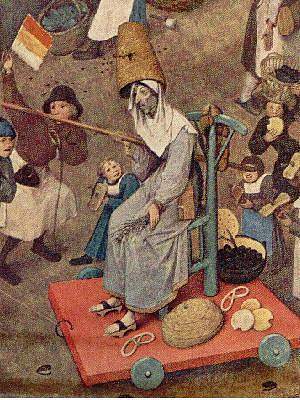
“Moloch in whom I dream angels...Dreams! adorations! illuminations! religions! the whole boatload of sensitive bullshit!” from Ginsberg’s Howl, Part II
What is it to be an independent in thought and action, to be an artist of heart and mind, and, most radically, to live within one's means in the New West? I live in a city where my next door neighbour makes over a billion dollars a month. I, personally, don't make money. Or, more accurately, my profits are nearly zero. Yet, I live life fully and exuberantly. On a whim I could splurge on an evening of luxury fine dining with my wife, or rent a car and go to the mountains, or even purchase a new musical instrument and the latest computer hardware. I am not in debt. In fact, the one and only stipulation to entering higher education, was that I not get into debt. I save, and live within my means, although I don't exactly see my money growing as the incessant growth models of Western capitalism would encourage.
Nonetheless, as a city dweller, and especially in the city wherein I live, considered a global oil capital, the mean streets of capitalism are hawk-eyed and omnipotent on every corner. As an artist, the very ground under my feet is funded by the turning soil of the most destructive earthquake in human history known as the fossil fuel industry. Living the majority of the time through physical self-propulsion as a primary means of transportation balances one's perspective as an outsider of marginal and radical import to the status quo. Energy and economy, in their most fundamental and basic meanings, derive from the physique in relation to the sources of life in the ground (energy) and the way of relating to living exchanges through reciprocity and foresight (economy). Happiness is learned when expense is measured in sweat, growth in a smile and dividends in generosity.
Daily the innocence of play in the mind of art, creativity and community is buried under the debris of an open-pit mine with lightning swift efficiency. Once aware of the mounting genocidal ecocide inherent in the dominant global energy policy, how can one go on knowing that at the end of the day the artists of the world become mere charade, trick and distraction for the bowling force of industrial belligerence? One of the greatest pearls of wisdom that my grandfather shared with me was what he had learned among his Greek family of early immigrants to Lower East Side Manhattan, New York. "We were poor, but we were happy, because we were together," he repeats like a charm against the malevolent truth of Western life: family separates. So, often, I feel, as a communitarian-individualist independent-ecologist artist-worker radical-traditionalist of the 21st century and of eternity, that my life is the epitome of what Ginsberg describes above, as in Moloch, and dreaming of angels.
In the next weeks, I will be transitioning the SoJourn(al) site as a supplement to a new web-source exhibiting an ongoing creative non-fiction work that gives breath and voice to original knowledge. Oral storytelling, family tradition, and cultural literacy are waves of realization that have revealed a sliver of moonlight over the oil-dark sea. I see a way, and directed by intuition, the art of living further breathes a channel of oceanic action towards as yet unseen, inner prosperity. Philo of Alexandria, an ancient who fused Jewish and Greek philosophy at the beginning of the first millennium of the common era, is quoted: "Households, cities, countries, and nations have enjoyed great happiness when a single individual has taken heed of the Good and Beautiful. Such people not only liberate themselves; they fill those they meet with a free mind."
______________
 |
| away up |
 |
| passive aggressive |
 |
| play waste |
 |
| science silenced |
 |
| weary night |
______________
The track, "Columbian Map" is derived from the written piece, "Phantom Pages of a Medieval Columbian Map" from the district.Columbia collection of experimental writing. The meaning of the title refers to Columbia, the goddess myth of precolonial America, the ubiquitous feminine divinity of the land itself as seen and heard through Western European eyes. The "Phantom Pages" open an understanding of the land that transcends European representation through the cartographic delusions of "discovery", colonization and settlement.
A narrative art sounding is embedded between guitar and shakuhachi music. The introductory guitar melodies on the track are resonant of Indian Sitar music, yet also merge into influences from West African blues and Middle Eastern Oud playing techniques. The shakuhachi, through its abject dissonance and airy ambience, bridges two instruments from opposite ends of the globe, that through harmony and chaos move the voice to speak, as middle ground, as the remoteness of truth between directional extremes. My approach to the guitar (a quintessential Western instrument) as the embodiment of non-Western sonic influence further melds with my approach to the shakuhachi without any classical training, thus playing it with a Western ear. And so, western instrument with an eastern ear, and eastern instrument with a western ear redirect the two-dimensional cartographic reality of discovery into the 4th dimension of time through sound as narrative, voice and, more, a pure medium of truth.
A narrative art sounding is embedded between guitar and shakuhachi music. The introductory guitar melodies on the track are resonant of Indian Sitar music, yet also merge into influences from West African blues and Middle Eastern Oud playing techniques. The shakuhachi, through its abject dissonance and airy ambience, bridges two instruments from opposite ends of the globe, that through harmony and chaos move the voice to speak, as middle ground, as the remoteness of truth between directional extremes. My approach to the guitar (a quintessential Western instrument) as the embodiment of non-Western sonic influence further melds with my approach to the shakuhachi without any classical training, thus playing it with a Western ear. And so, western instrument with an eastern ear, and eastern instrument with a western ear redirect the two-dimensional cartographic reality of discovery into the 4th dimension of time through sound as narrative, voice and, more, a pure medium of truth.
A collection of five works from the penultimate chapbook from district.Columbia, "Changing our PERSPECTIVE" includes such works as "An Unknown Pleasure of Respect" and "Phantom Pages from a Medieval Columbian Map". With an ahistorical to contemporary thought in light of the current need to shift from an industrial to ecological society, this chapbook addresses that first perspective, or where we stand is the crucial point of change. Perspective, is also history. Until we transcend the dualistic norms of media consumption and direct experience, there is no way to begin again from a new point in history. The junction of the present and the past affix humanity at a crossroads of time.
Before ascending into the next era of humanity on Earth and traversing the crossroads ahead, each and every last individual will be asked, Who are you and where have you come from? Anishinaabe Elder Dave Courchene wisely advises all people to return to creation, to return to the very beginning of our nature whenever unsure, whenever inundated with a sense of ignorance, confusion, loss. On the path to inner knowledge, light blinds, and the shadows reveal the road home